


Press Start may receive a commission when you buy from links on our site at no extra cost to you.
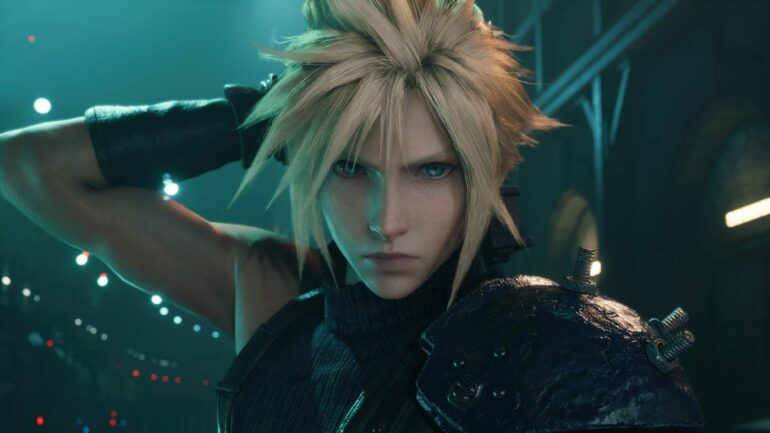
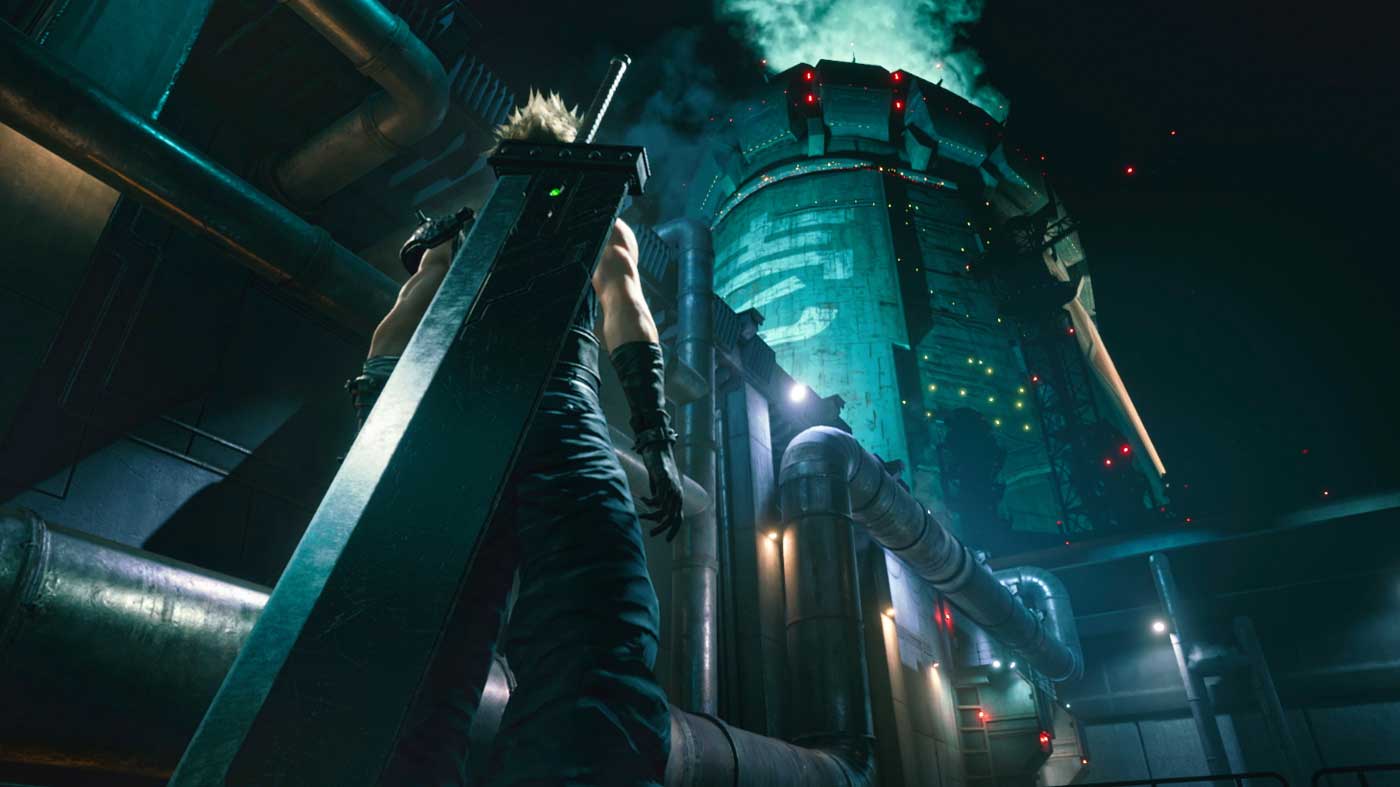
Next year, Final Fantasy VII Remake Intergrade is set to break free of its console exclusivity as it launches on Nintendo Switch 2 and Xbox Series X|S. In anticipation of its arrival on Nintendo’s brand-new hardware, we sat down with Naoki Hamaguchi, director of the Final Fantasy VII Remake project to talk about the process and difficulties of porting Final Fantasy VII Remake Intergrade to new console platforms.
FINAL FANTASY VII REMAKE INTERGRADE IS A MASSIVE GAME, ESPECIALLY WHEN YOU INCLUDE THE INTERMISSION DLC. WHAT WERE THE BIGGEST CHALLENGES THE TEAM FACED IN PORTING INTERGRADE TO SWITCH 2?
Naoki Hamaguchi: As a creator and as a gamer, I really do like the Switch 2 as a platform. I think it’s got a lot of potential, but you’ve got to understand what kind of platform it is and the way Nintendo has made it – especially for the handheld mode. A lot of the difficulty comes from battery consumption and how much power you can actually use for various functions while you’re in handheld mode. While it’s docked, you can treat it like any other home console, but the specs are lowered for the handheld mode.
A lot of other companies have had to solve this puzzle as well. Trying to see how you can get a version in handheld mode that doesn’t look inferior and stands up to the home console versions on other platforms. One thing we put a lot of effort into was actually recreating the whole rendering pipeline for the game that was optimised for Switch 2 hardware. It was a lot of work, but I think it has a massive effect on the final product and has gotten to the point where the Switch 2 version isn’t an inferior experience.
THE PC VERSION OF REMAKE INTERGRADE IS ALSO STEAM DECK VERIFIED, SO THERE’S ALREADY SOME GROUNDWORK LAID FOR HANDHELDS THERE. DID THE TEAM’S EXPERIENCE WITH DEVELOPING FOR STEAM DECK HELP WHEN PORTING INTERGRADE TO THE SWITCH 2?
N.H: The experience we had developing the PC version and making those Steam Deck adjustments and optimisations was really valuable. It was significant that we knew the development environment, so we could hit the ground running. We thought that because we’d done the Steam Deck version and it was running at a fair speed on that hardware, we could just port that over and it would work well on Switch 2.
It wasn’t quite that straightforward. When we did our first experiments, we felt that we had to push even further, go one level higher to optimise for the Switch 2. It wasn’t 100% smooth at first, but it was a huge boon to us that we had ported the game to other handheld hardware before.
One area where our experiences with working on the Steam Deck version came in handy was with the adjustments we had to make to the user experience and user interface to work on a handheld. Certain things, like font size, is vital for a handheld screen, but we had already worked out what the best scale for that is on that kind of screen.
IN TERMS OF VISUAL QUALITY, WHAT VERSION WOULD YOU SAY THE SWITCH 2 VERSION OF INTERGRADE IS CLOSEST TO IN VISUAL QUALITY WHEN IN HANDHELD MODE, AND HOW DOES THAT DIFFER IN DOCKED?
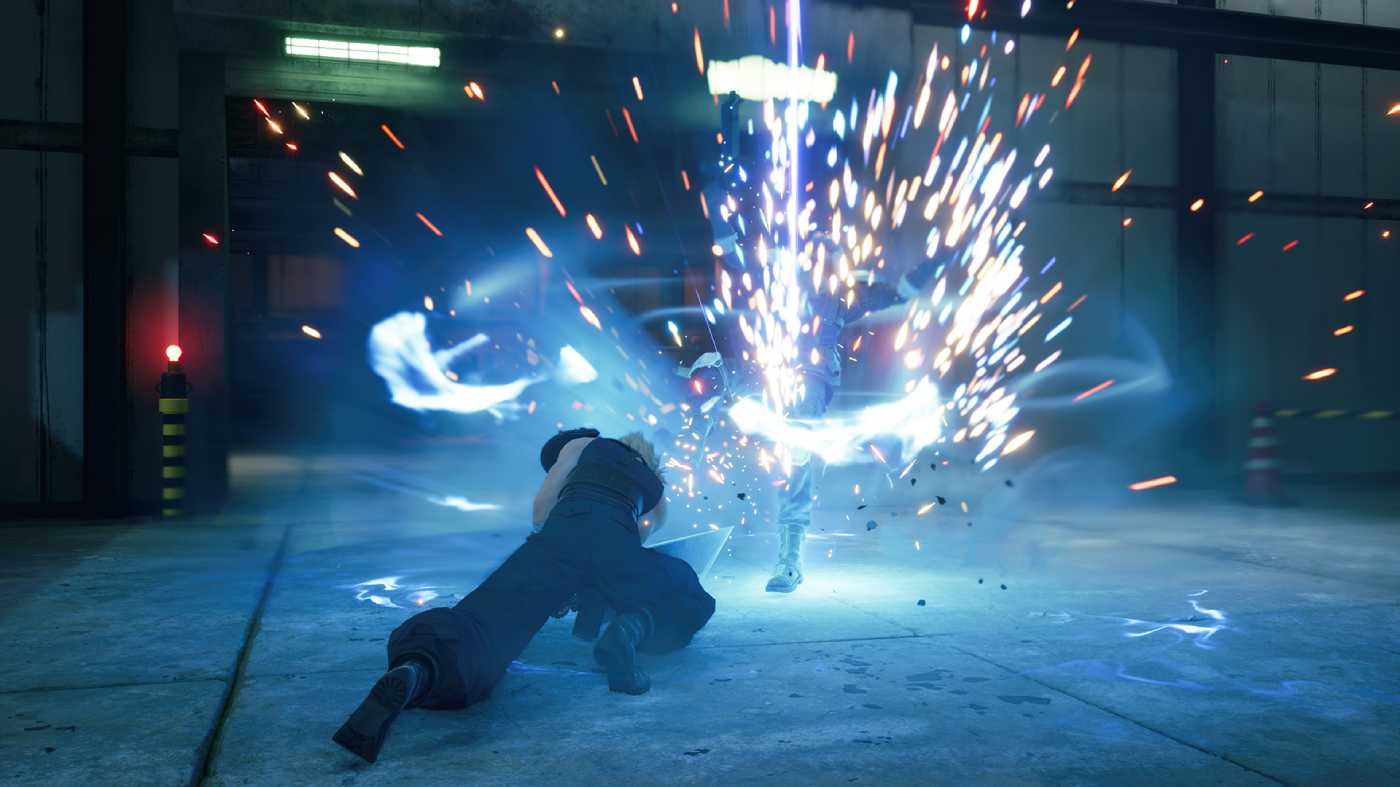
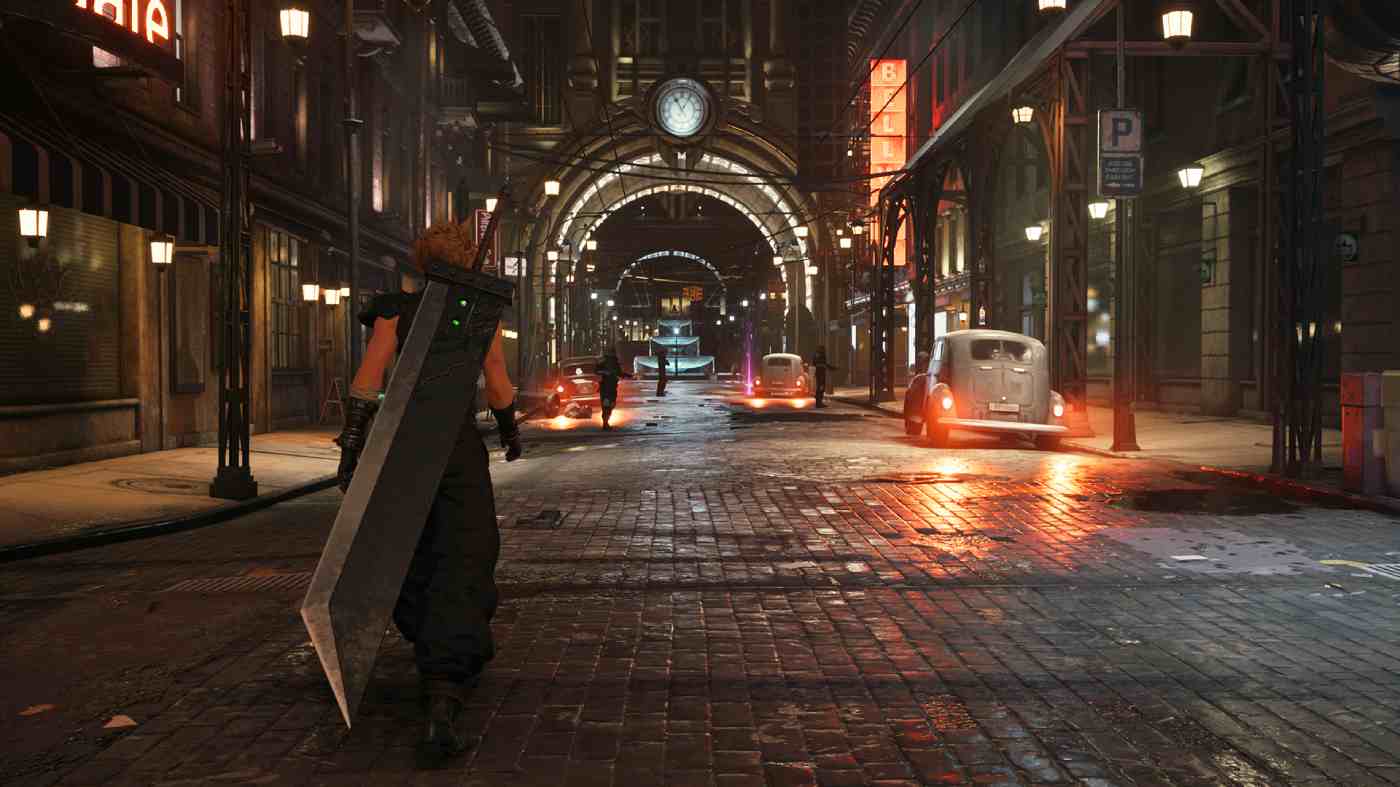
N.H: I’ll start by going off on a little bit of a tangent here, but I will get back to the question at the end of it. A lot of the optimisation done for the Switch 2 version is new and is dedicated to the Switch 2 only. Mainly, things like fog effects and other post-processing effects were done from scratch to minimise the processing burden. All of those calculations were done to be as similar as possible to the other versions without putting too much weight on the processor. That worked well for some of the effects, but there were some things we felt it was vital we kept the same, like the lighting.
I would say the Steam Deck version is a good comparison in terms of graphical quality. We wanted to have as few differences as possible when playing in the Switch 2’s different modes. We started with a 2K resolution, which is what you get in docked mode, and it’s solid and stable. If we tried to do the same thing in handheld mode, we’d end up with some problems. We opted to leverage DLSS upscaling to simulate as close as possible to 2K output, and it really does look very similar. There may be small differences, but we’re pleased with the result.

I MENTIONED EARLIER THAT INTERGRADE IS A BIG GAME FROM A CONTENT PERSPECTIVE, BUT IT ALSO TAKES UP A GOOD BIT OF STORAGE. WAS THE SWITCH 2’s GAME-KEY CARD FORMAT SOMETHING THAT ENABLED A PORT LIKE THIS TO GET A PHYSICAL RELEASE WHERE IT WOULDN’T HAVE OTHERWISE BEEN POSSIBLE?
N.H: I think the Game-Key Card format is in some ways very important. The loading speed on the old cartridges can make it difficult for a developer to make the modern, high-definition, quality-rich games that are common now. If we have to rely on the cartridge’s loading speed, it becomes difficult to make games that work properly.
Having the Game-Key Card, which is close to downloading a game, allows us to make games in a way that works for us. It means we can provide players with deeper and richer experiences, so I really hope that fans come around to it. I understand from a gamer’s perspective that there are some negatives to it, but it simply wouldn’t be possible for us to put these richer experiences out there on traditional cartridges. I hope that some people can see the advantages of this format in that regard.
HAS THE TEAM INCLUDED ANY SPECIFIC SWITCH 2 FEATURES LIKE VRR OR HD RUMBLE 2?
N.H: As I mentioned earlier, DLSS has been a huge help in porting Final Fantasy VII Remake Intergrade to the Switch 2. HD Rumble 2 is also supported by the game. One thing I’ve certainly noticed is that the experience changes when you’re playing on a handheld. With a home console and the idea that you’ve got a screen that is far away from you, you hold the controller in your hands, but there’s a sort of disconnect there. A gap between the player and the screen.
I was surprised when we were doing the early builds on Switch 2. You have the controller in your hands, and the screen is in the same place in handheld mode. It’s physically all in the same place, and I think that psychologically helps to close the distance between the player and what they see on the screen. I think that’s a unique experience in some ways, and I invite players to try that out.
IT’S BEEN FIVE YEARS SINCE FINAL FANTASY VII REMAKE ORIGINALLY CAME OUT. HOW DOES IT FEEL TO BRING THE GAME TO THE XBOX ECOSYSTEM AFTER YEARS OF PLAYSTATION AND PC EXCLUSIVITY?
N.H: In my personal opinion, as a game developer, I want as many people as possible to be able to play the games I make. I really do like the idea of breaking down those barriers between the different console markets; it’s a positive development. I think the reason we can do that now is due to our new CEO, Mr. Takashi Kiryu. He has laid down a new policy and strategy to take as many of our games as possible to multiple platforms. For me, I don’t just want to stop at Xbox and Nintendo hardware; I want my games to be available on as many platforms as possible.
XBOX SERIES S HAS PROVED TO BE DIFFICULT FOR SOME DEVELOPERS. HAS THE LESSER POWER OF THIS CONSOLE CAUSED ANY ISSUES OR CONSIDERATIONS IN DEVELOPMENT?
N.H: I’ve certainly heard of other developers having issues with developing for the Series S, and we did encounter some problems. I think the Xbox Series S is still quite a high-spec machine and isn’t technically inferior in many ways. This port for Final Fantasy VII Remake Intergrade is based on the PS5 version, so processing isn’t something we had an issue with when it came to the Series S.
One thing we had trouble with, and I think this is true for other developers, is the Xbox Series S’s available memory. It doesn’t have a huge amount, so we had to work right up to the line to optimise the memory, all the way to the end of development. We were working every day to make sure it was as efficient as possible and to get around any problems it was causing. It wasn’t the same level of adjustment as with Switch 2, where we rebuilt the entire pipeline; it was really just the limited memory.
Final Fantasy VII Remake Intergrade launches on Nintendo Switch 2 and Xbox Series X|S on 22nd January, 2026.