


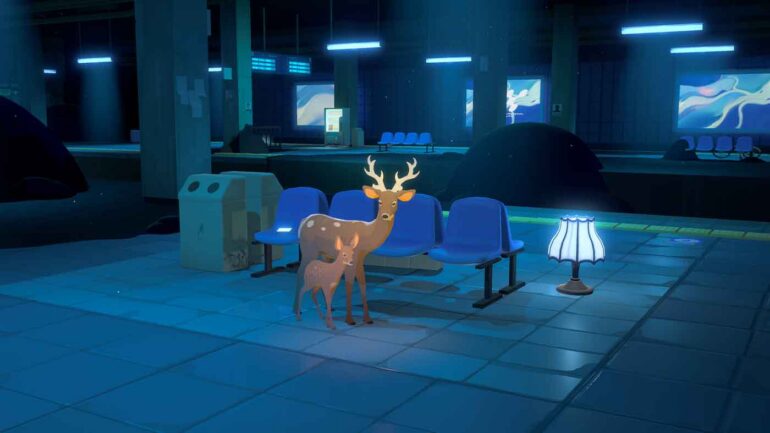

After earning my attention over a decade ago, Way to the Woods developer Anthony Tan, then a sixteen-year-old kid, went to ground and built upon the promise of the game’s first reveal. The game is a gorgeous little tale of a mother deer and her fawn trying to make their way home through an abandoned, urban world that always looked as though it’d pack the emotional dynamite of a Ghibli film.
Finally getting to go hands-on a decade after seeing the game for the first time, I approach it through the totally different lens of parenthood and all of the responsibility that comes with it. I didn’t quite expect the near-life’s work of a still young man to leave me rung out emotionally, and while there are stings of melancholy, it ultimately doesn’t manage to land any major gut punches. There’s still the makings of a special little game here, that’s if you can work through the clunk.
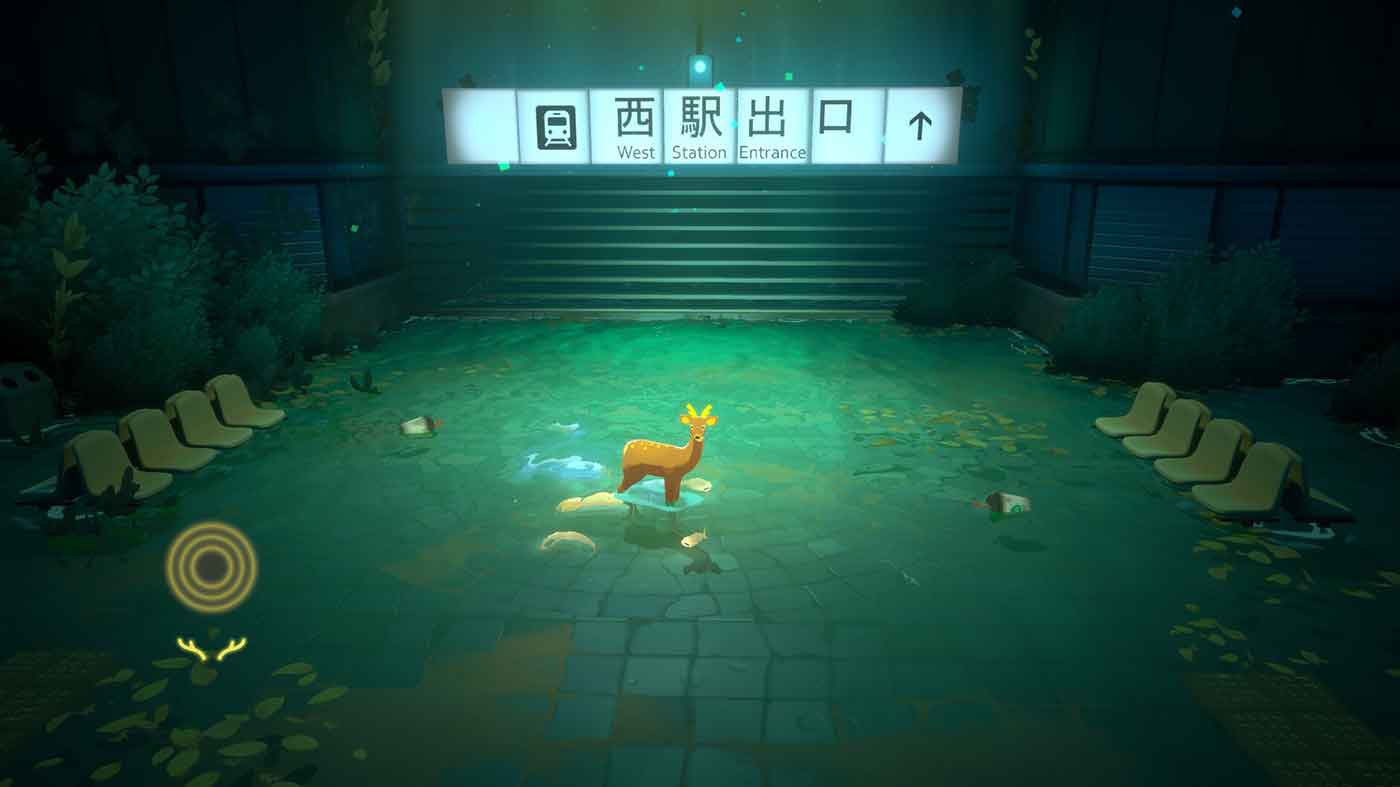
With the demo unfolding over a brisk twenty minutes, I certainly got the sense that Way to the Woods is an experiential, tender little game that’s light on mechanical depth but pushes hard to be heavy on heart. The demo itself powers through a short tutorial in the woods, introducing a couple of mechanics, with the deer’s first abilities being a jump and the power to absorb blue light from objects, which can, in turn, be used to power other things.
The story follows a mother deer and her fawn as they navigate a strange urban landscape, seemingly abandoned by mankind, as they attempt to make their way home to their woods. I had thought coming into the preview that it’d be their relationship that offered up the emotional thread to pull upon, but really, it’s the deer’s place within the natural tapestry of things, and how they long to bring their animal kin along with them for their journey, that most effectively eked a response from me.
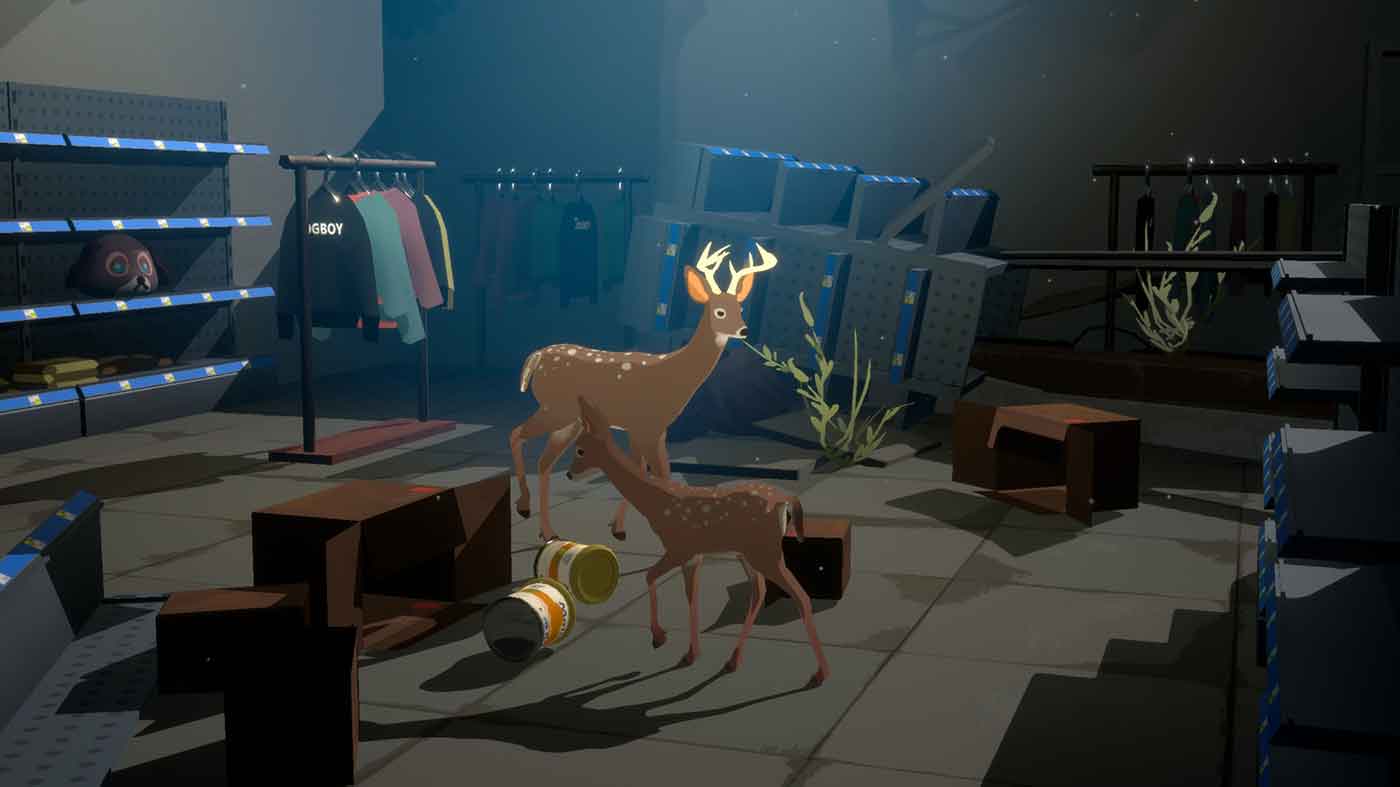
Being a very short sample, we perhaps didn’t get the full extent of what the gameplay loop will be. A majority of the preview took place in a run-down train station, and, although there were only hints at the fact that man once populated it, it was clearly in disrepair.
The idea is to keep working through the station’s many platforms by powering up dormant mechanisms, which you can fire up using recycled light that you’d absorbed from discarded technology throughout the world. It’s a simple concept; the game eventually introduces a ram mechanic. It might eventually have a use case, but from what I played, it only seemed useful for head-butting soda cans out of vending machines.
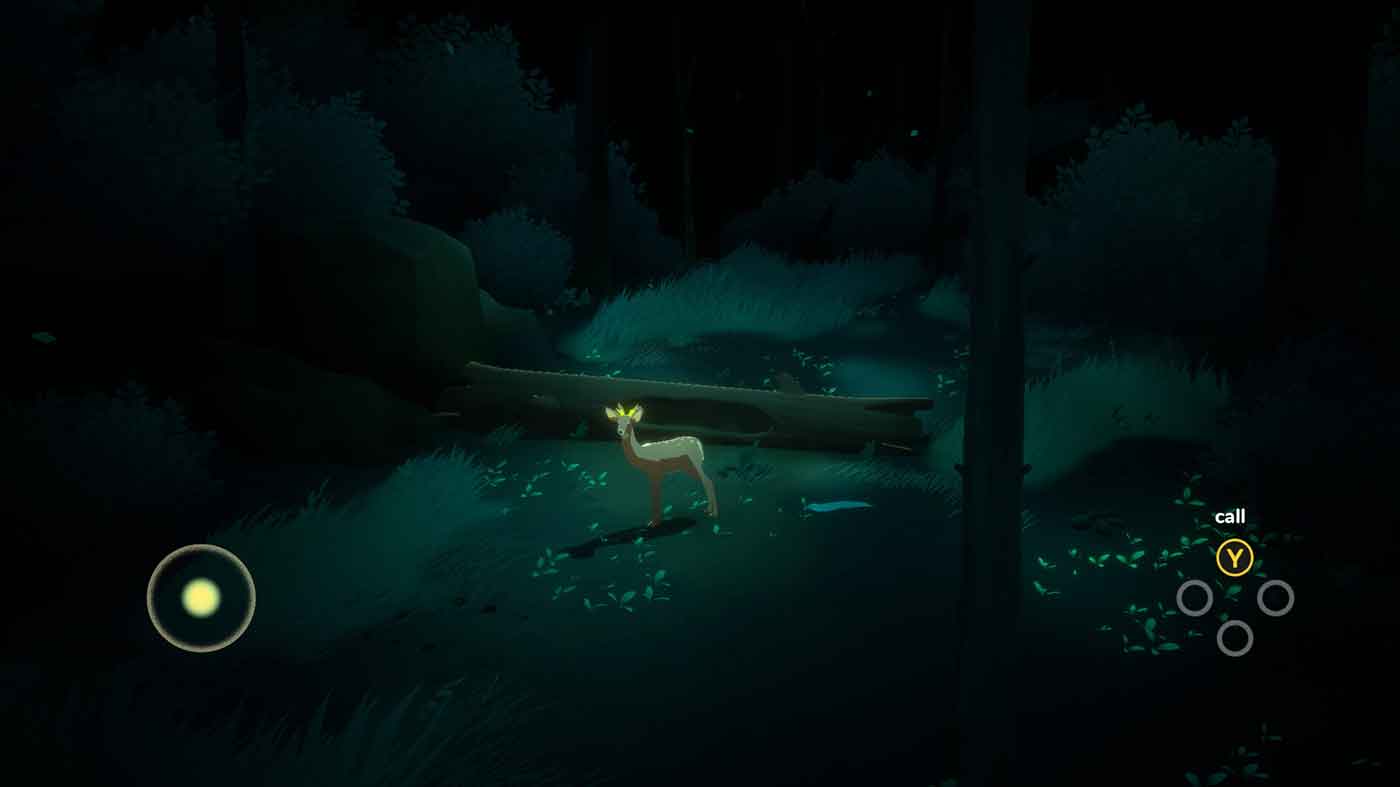
In what feels like a rather clear “heal the world” moment, you use your light to clear a toxic goop from the world, at one point revealing a small opening in a system of pipes. It’s too narrow even for the fawn, who can otherwise wedge her way through gaps in doors and the like.
After earning the attention of a swarm of wind-up mice, you send them into the pipe. From what I could ascertain, this didn’t aid the main objective, and I can’t confidently say anything happened. Nevertheless, the demo culminated with the deer helping a clowder of cats board a train, perhaps the demo’s best example of demonstrating the collaborative nature of the animals in Way to the Woods.
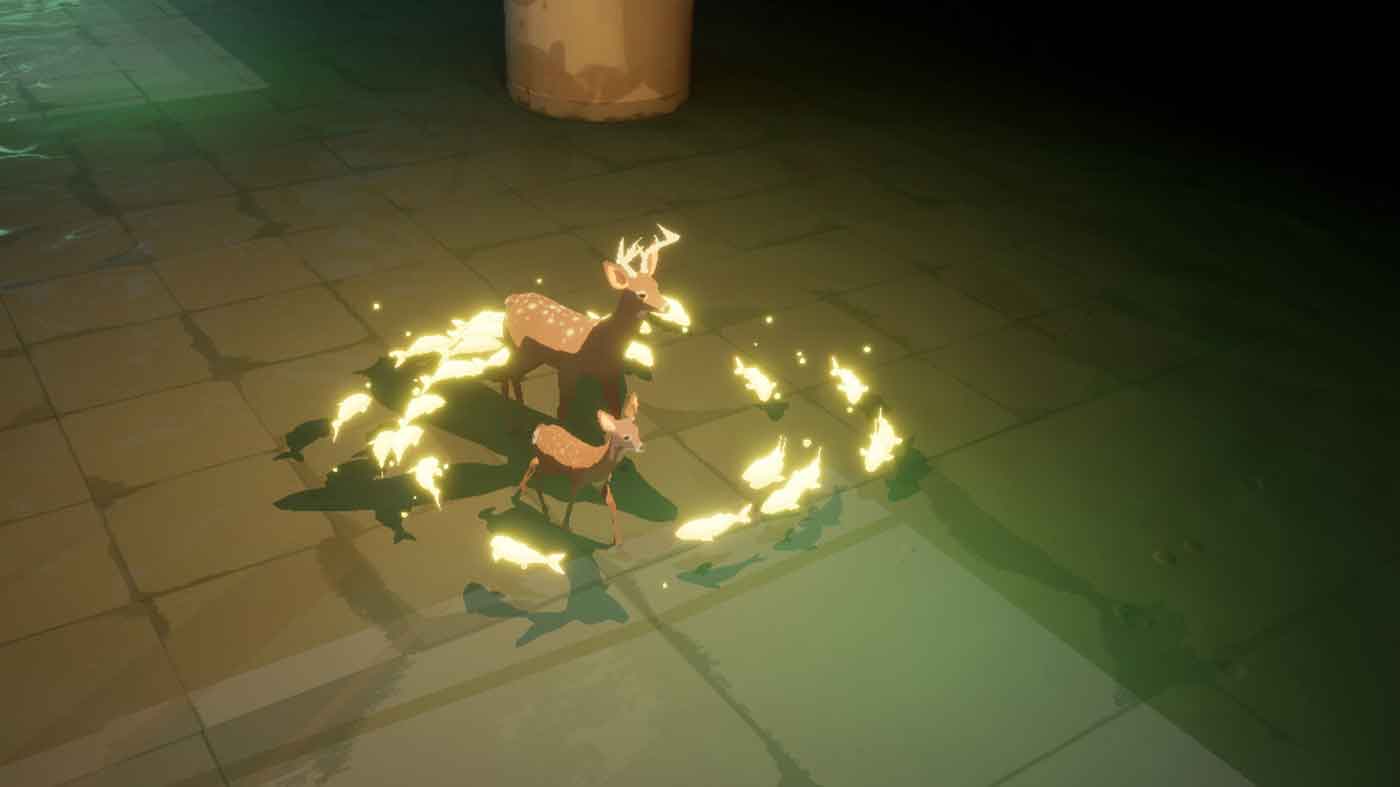
The game’s clear strength is its audiovisual presentation, which feels inspired by the works of Ghibli. And although the animation is a little stiff for certain acts, I do love how perfectly the deer’s canter is realised. As the deer gently trots across the train station’s cold tile, a warm and touching piano score manages to punctuate the underlying feeling that’s conveyed by the story being told.
After a decade, and just like the game’s star deer, Way to the Woods has come along in leaps and bounds. It might be simple, but there’s a lot of heart and a worthwhile message at the centre of it all. But alas, it does feel like there’s still much work to do. Frayed edges and, admittedly expected, imperfections tarnish what would otherwise be a beautiful adventure.