
Press Start may receive a commission when you buy from links on our site at no extra cost to you.
The urge to play a particular genre of game comes along from time to time, like the need to watch a movie or listen to a really good album – and recently I’ve had tactical RPGs on the mind. Enter Final Fantasy Tactics: The Ivalice Chronicles – an expanded remaster of Square Enix’s cult classic Final Fantasy Tactics, which launched a little over 26 years ago.
A spin-off to the mainline Final Fantasy series, Tactics sets itself in the world of Ivalice, just after what is known as the Fifty Years War. After the death of their ruler, two candidates are thrust forward to take the throne; Princess Ovelia, backed by Duke Goltanna of the Black Lion, and Prince Orinas backed by Duke Larg of the White Lion. This new conflict throws Ivalice into chaos yet again – and at the centre of the conflict we see Ramza Beoulve, our protagonist and descendant of the noble Beoulve family of knights. Torn between loyalty to his family and the desire to save everyone and prevent needless death, Ramza casts aside his nobility in order to save Ivalice from those who seek to control or destroy it.
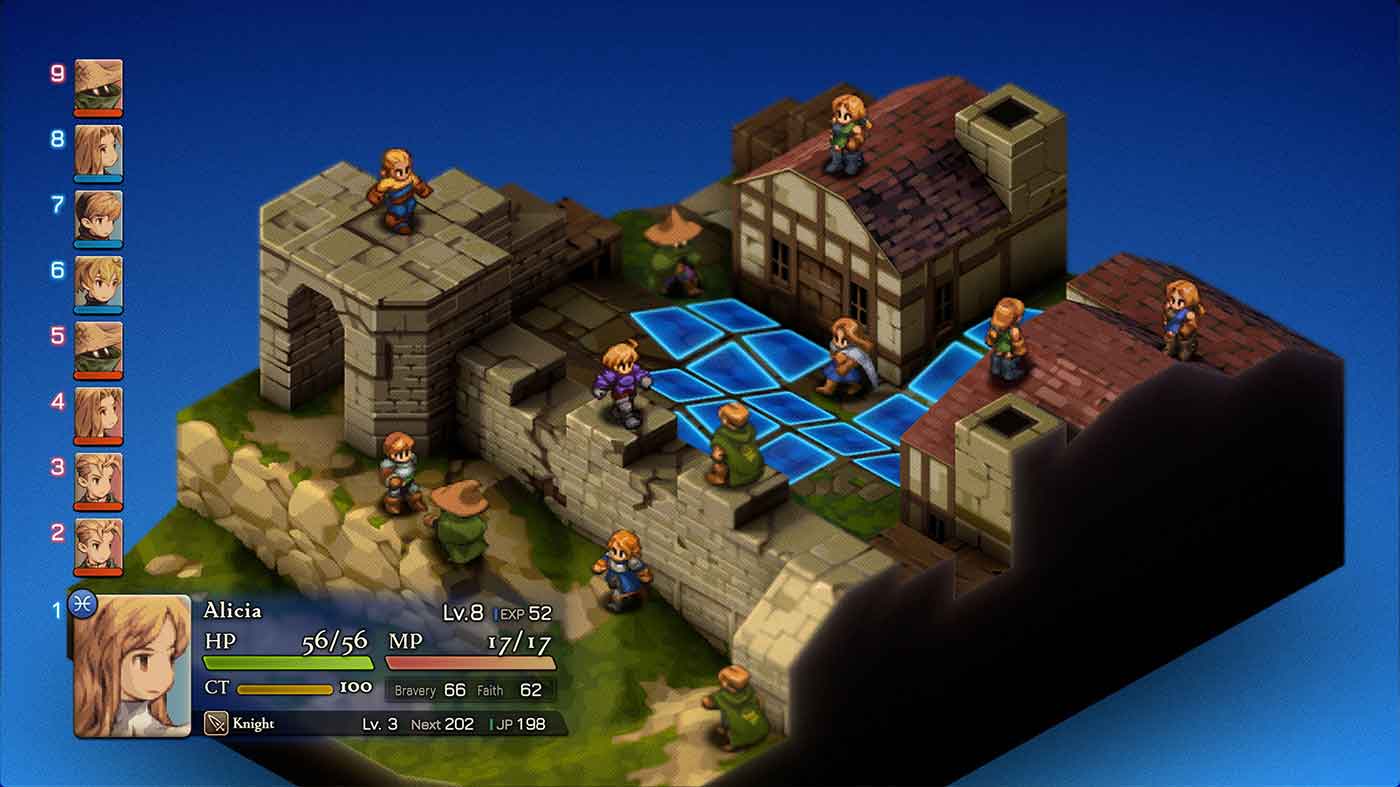
Final Fantasy Tactics: The Ivalice Chronicles is in itself a tale of two games; on one hand you have a sharpened but mostly intact version of the original game released in 1998, but on the other you get a completely reinvigorated remaster, a game that is more than a simple coat of paint for the modern day. Booting up the game you’re given the opportunity to dive into one of the two titles; the remaster keeps “The Ivalice Chronicles” as part of its title, while the original sticks with Final Fantasy Tactics as per its release.
Final Fantasy Tactics carries a deep sense of nostalgia when you boot it up for the first time – the game remains practically untouched since its launch. But from this you also get to see just how dated it has become, and watching the original cinematics on a 4K TV screen is quite jarring – a mess of pixels and distortion accompanying some very stiff generated models as they run through the land of Ivalice. That being said, it’s also a game that doesn’t suffer overcomplication like a lot of modern games – there’s a tutorial menu right on the startup screen, otherwise you can dive straight into the game and start playing, giving you the opportunity to learn all about the tactical ins and outs of the game itself. And believe me; you’re going to need it, because between terrain differences, character class differences, equippable items and more, there are so many variables that can mean the difference between life and death.
Unlike a lot of other tactical RPG games, Final Fantasy Tactics doesn’t sugar-coat things – the gameplay is turn-based, and each party member is able to move when their Charge Time (CT) meter reaches 100 points (which occurs during gameplay). Your characters’ abilities depend on their character class, or ‘Job’ role; most of the party will start out as a squire (warrior) or chemist (mage), with the ability to be switched or upgraded once their EXP and JP (job points) reach their limits. The field of play is an isometric grid, with elements such as terrain, weather and obstacles limiting or impacting your attack or movement methods. It’s here where the game doesn’t hold any punches; the only members of your party that aren’t expendable are those who are integral to the plot, but everyone else can be knocked out – and if you don’t revive them or save them in time, they fade away forever. Should your integral party members be lost in battle, you will receive a ‘Game Over’ and have to restart the fight.
At first these complexities are very overwhelming; being so used to either a ‘perma-death’ option or characters returning at the end of a battle, it is confronting to see your party members falling in battle through a simple mistake or miscalculation of an enemy’s reach. Having a decent balance of job roles through trial and error is what will help you build great team load outs – making sure not only to change Job Roles where possible, but also to upgrade each party member’s skills. These are just as vital, and can mean the difference between your Chemist throwing a basic potion at a team member, or an X-Potion for a complete heal.
For its time, Final Fantasy Tactics’ graphical capability would have been mind-blowing, as were most of the titles of the mid-to-late 1990s – and the original still maintains that charm when viewed through rose-tinted glasses. The battlefields are vibrant, the character models are as detailed as they could be for the time, and even the cinematics look half-decent when you realise their age. But in order to see just how far the game has come, the remastered version is the game that we need to be looking at as a comparison.
Donning an extra moniker in the title and boasting a complete reinvigoration, Final Fantasy Tactics: The Ivalice Chronicles takes what made the original title great and turns it all the way up. No longer are remasters just graphically updated, this game feels like its had a significant overhaul to modernise it for newer audiences, while keeping the core gameplay intact.
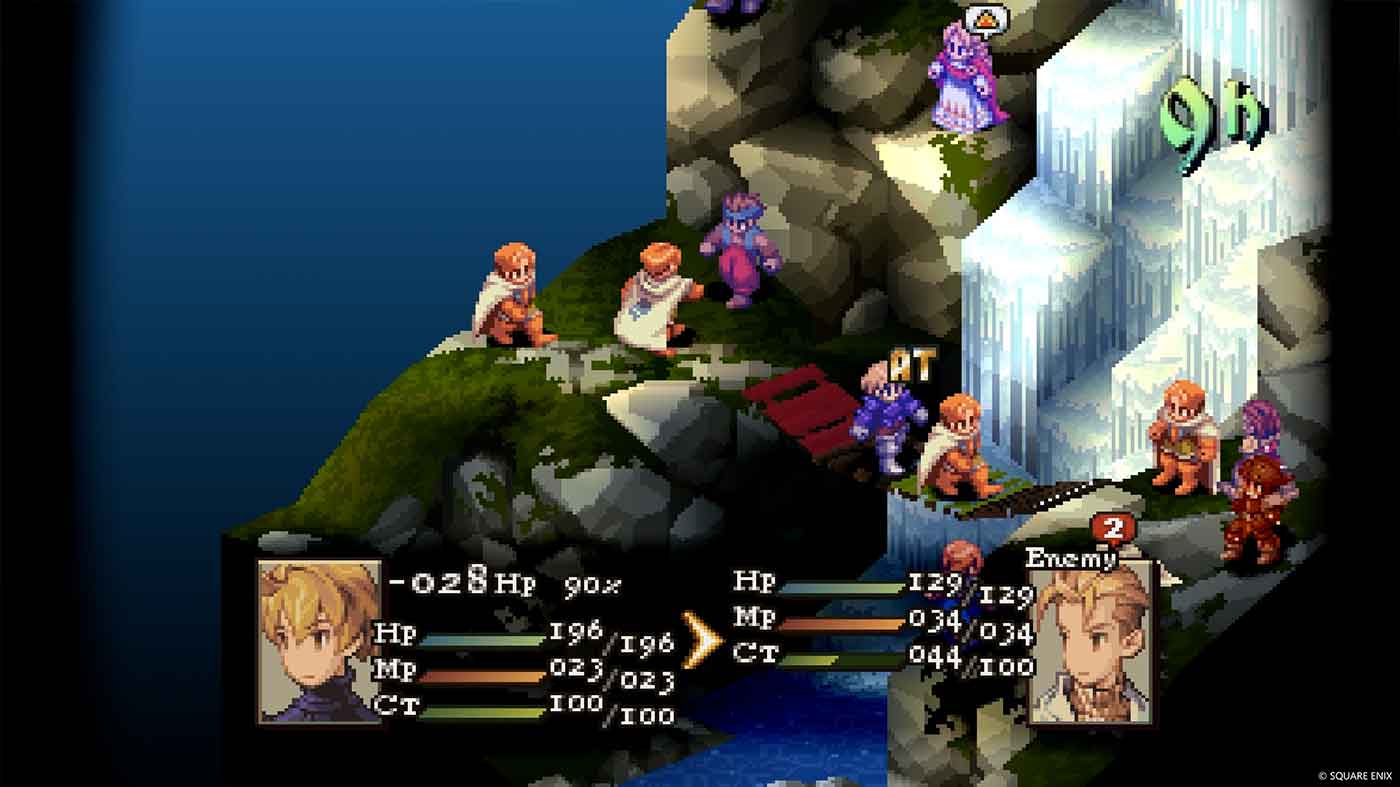
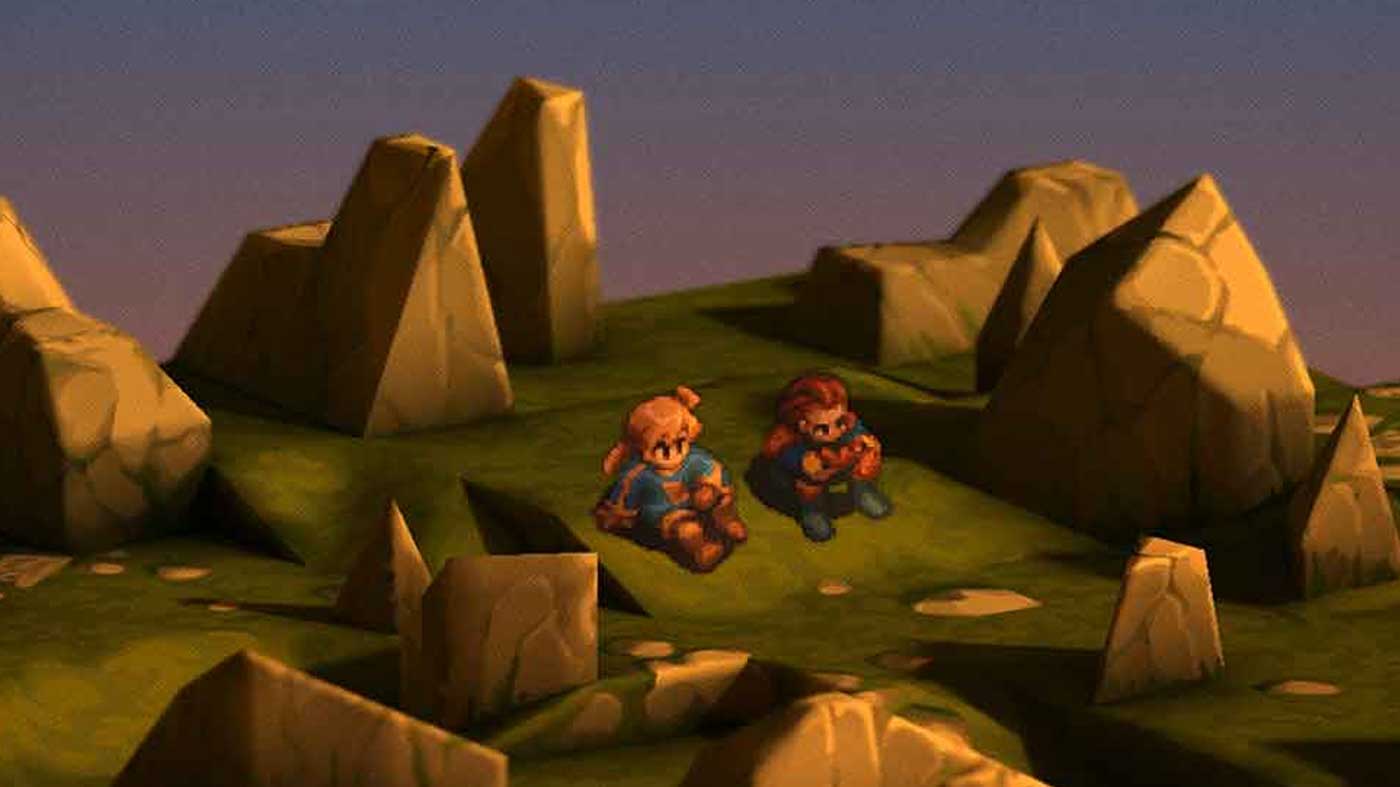
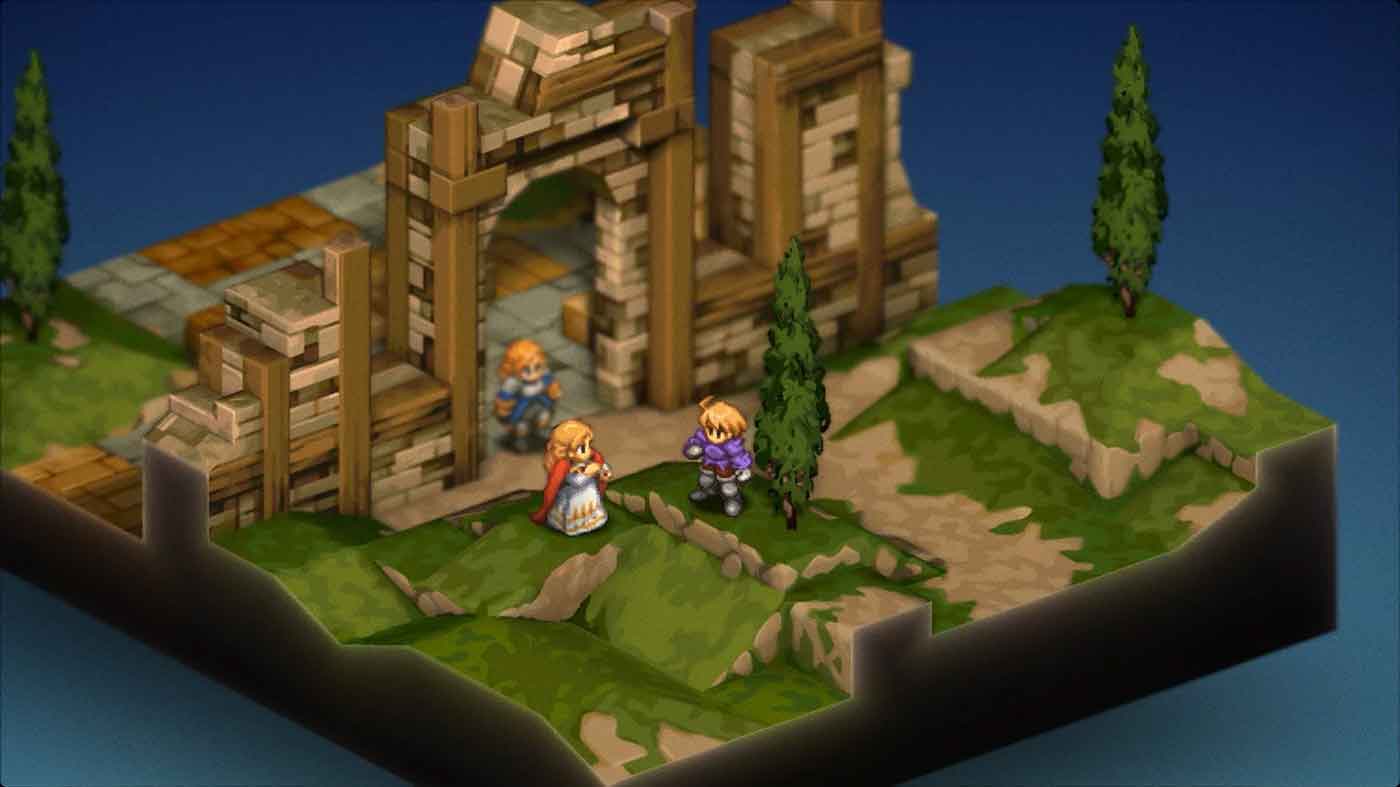
From the get-go its clear there is more than just a fresh coat of paint over the top; the cinematics are reworked, the isometric environments and characters have been upscaled, and the addition of a full voice cast in both English and Japanese is now present to read the dialogue between characters. Some of the fidelity of the original is lost here however – where in battles in the original game you are able to change views, zoom in and out and get a better view of the battlefield, there are less options in-game to adjust the view, so sometimes environments really get in the way. The retention and update of character sprites both in-game and in cutscenes as well as menus is a welcome change, bringing colour and vibrance, as is the flow and appearance of the character screens and job tree menus too.
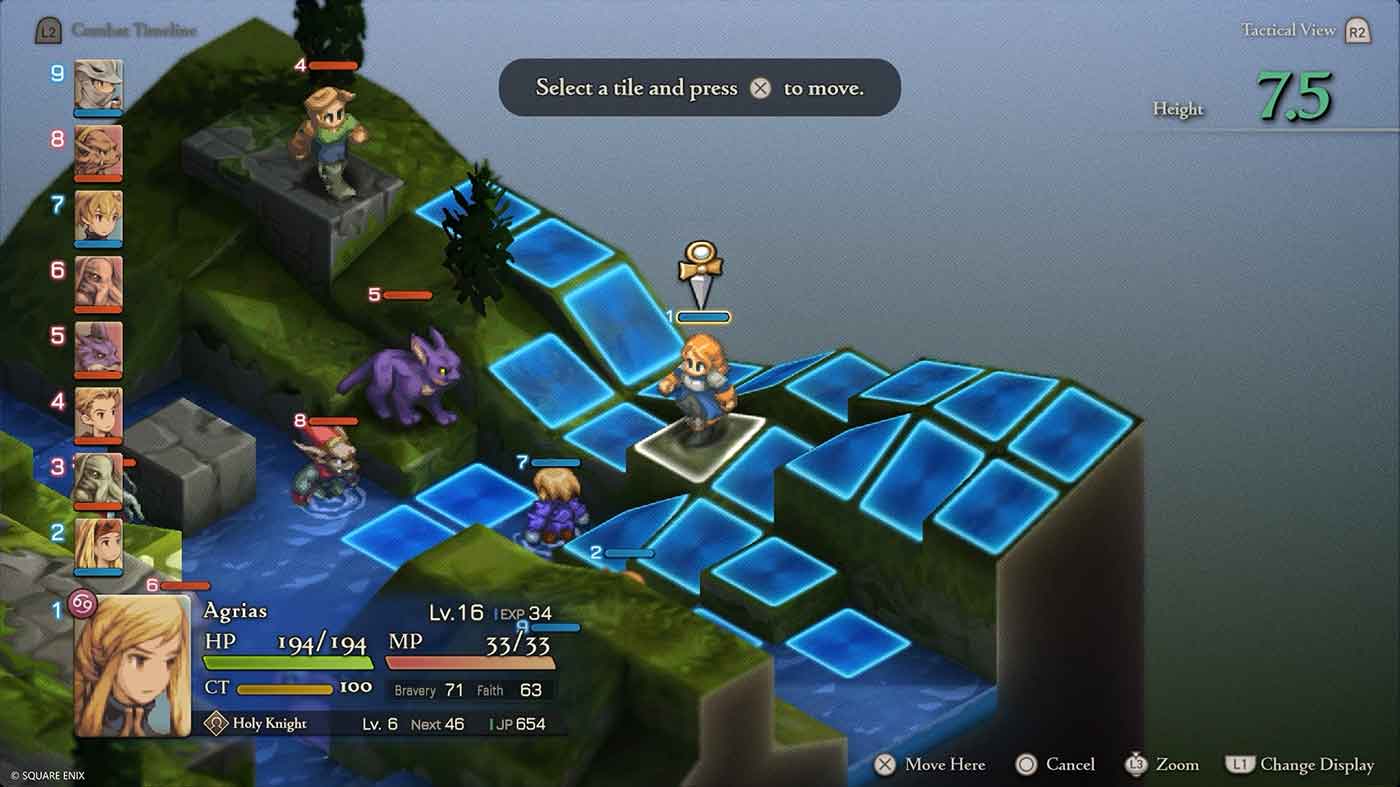
The Ivalice Chronicles decides to teach you how to play as you go along, removing the tutorial menu from the start of the game. While this is great for those who want to dive straight in and learn on the go, there’s a few things that the game leaves out either through purpose obfuscation or by accident – as it was my first time experiencing Final Fantasy Tactics in general, I learned the hard way about ensuring I have the right character balance in battles – it’s all fun and games until you realise your Chemist or White Mage can’t revive your downed allies in battle. The remaster doesn’t quite ditch the CT meter, but instead adds visual cues as to who is next to fight on the battlefield, with small numbers overhead of each character next to a health bar indicating how much life they have. This also is reinforced with a list on the left-hand side of the screen showing the player order, so you’re aware of who’s up next. It is a welcome change, if only one that adds more to the already-crowded HUD than before.
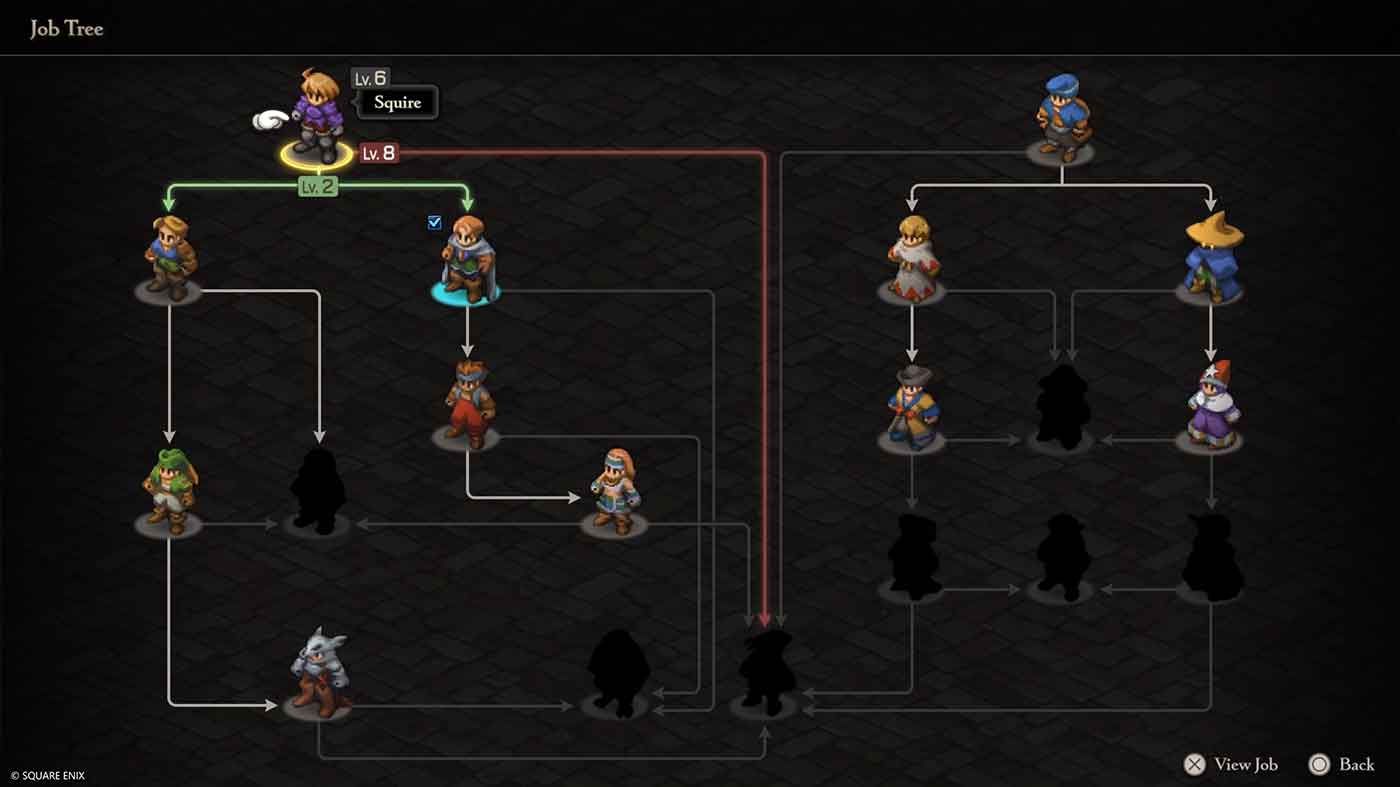
I’ll be honest here and admit I hadn’t played the original before diving into the remaster, and so as a new player a lot of things confused me or I didn’t explore enough; having said that, the game’s depth really makes you want to come back for more, or try different tactics as you go. I had made it through a whole chapter before realising I could upgrade Ramza’s Job role from Squire to Knight, or that I could upgrade my Chemist to a White Mage and still keep his item use perk as a full-time healer. Each Job comes with its own main perk, but with JP you can borrow from other classes and continue to branch out your skills; so you don’t need to stick to one particular class. Coupled with equipment that gives stat bonuses, you can really put together some great teams for the enemies that you are about to face.
A few trade-offs that I would have preferred Square Enix to keep in – the addition of a fast-forward button for cutscenes is good, but takes away the skip button altogether, which is particularly grating when you’ve restarted a battle due to a tactical mistake or copped a ‘Game Over’ screen because Ramza ended up dead (which I may have let happen one too many times). I do love a great narrative, and the game delivers in spades – but sometimes I want to skip a bit and move forward, and the original version of the game allowed me that.