



With Grounded 2 about to kick off early access, we were able to go hands-on with Obsidian Entertainment’s survival sequel. In tandem with this, we were also fortunate enough to be able to chat with members of the team to discuss all things Grounded 2. Chris Parker, game director, and Marcus Morgan, executive producer, shared their insights on what it’s like to work on a Grounded sequel, the team’s newfound familiarity with the genre, and why a full sequel was necessary instead of continuing to update the original game.
Press Start: We don’t often see full sequels to survival games nowadays. What made the team realise it was time to do a full sequel instead of updating Grounded?
Chris Parker: I don’t know that it was as necessary as it was that we realised everything new we wanted to do would better fit in a full sequel. We examined what we might like to do and thought about how we could keep adding things into Grounded versus how we wanted to move the series forward. Doing a sequel gives us lots of new opportunities, including things we’d be able to do with newer technology. If we kept adding stuff into Grounded, we would’ve had to come up with technological solutions for certain things.
We didn’t like having hard loads or having to load into different game modes off of the menu or loading into an expansion area. None of that stuff felt great. After talking about it and discussing some of the things we wanted to do, like add Buggies and expand the story, I think that making a sequel is just what felt right for all of us.
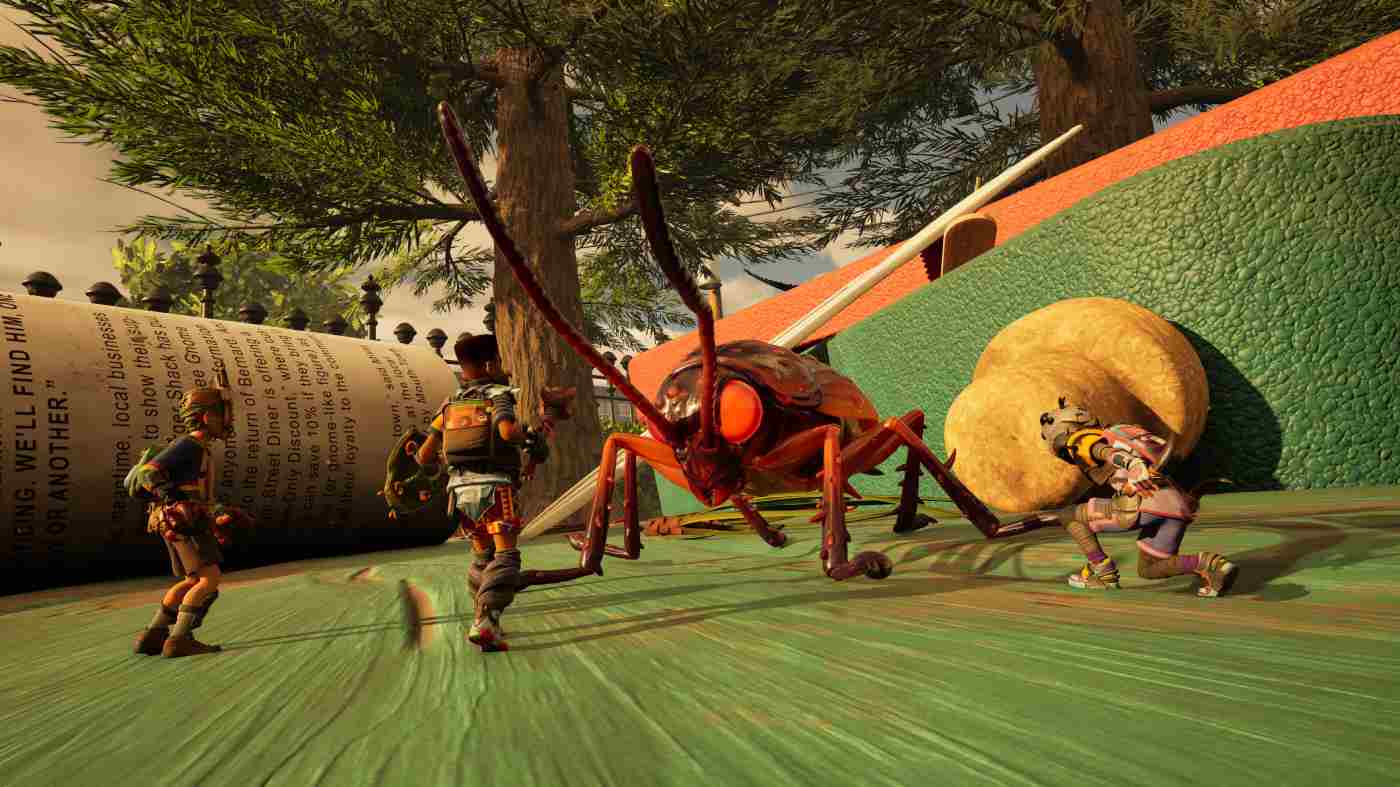
Marcus Morgan: Like Chris mentioned, there were limitations on what we could do on that hardware. Grounded launched on the Xbox One originally, so trying to continue to expand and move forward is difficult when we need to develop for that platform. Then there’s also Unreal Engine 5 and the progress around that engine and especially with what it can do with open-world games.
Then there’s the Buggies; they are the main reason we wanted to do a sequel. The truth is that the first game isn’t optimised to support Buggies in the same way. Some people think you just put a mount system in and that’s it. It’s not that simple; you have to change the way that spaces are designed, how the inventory system works. You have to change the way everything gets touched on, which justified us in developing a whole new space and to grow Grounded into the future.
Press Start: I can imagine Buggies pose a lot of design challenges. What sort of concessions or changes have you had to make to get them to fit into Grounded 2?
M.M: I was talking with someone about this earlier today, and one of the biggest changes that I’m interested in seeing play out is co-op balancing. Grounded is already a chaotic game that can be overwhelming, and now we’ve added four AI creatures that run around, and you also don’t want to die. In a way, we’ve accidentally made eight-player co-op that we weren’t ready for. Four of those players may be reliable or unreliable at any time because they’re AI creatures in the world.
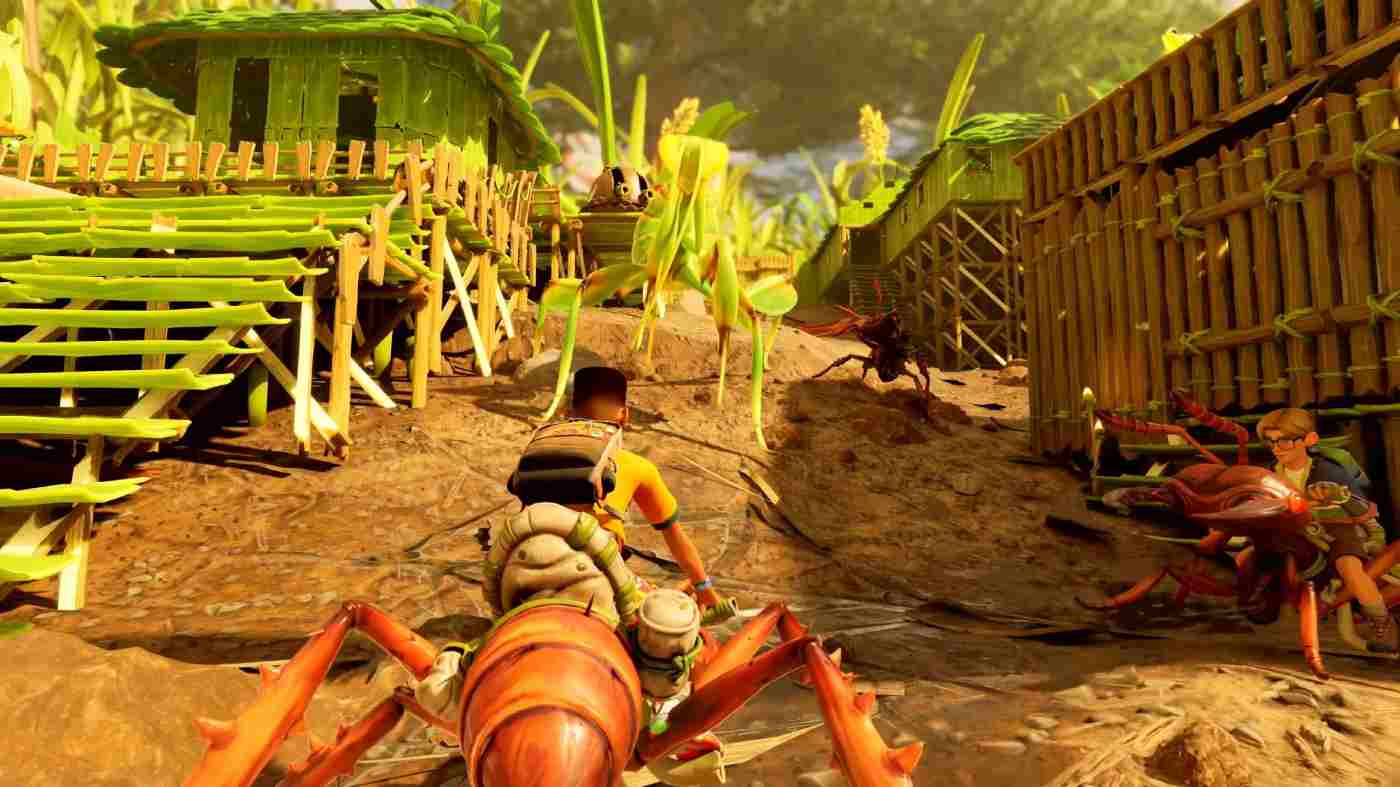
I think that it introduced a new kind of chaos that is either really fun or really frustrating, depending on balance and the situation. It’s been a fun challenge to tackle, but I do think that the chaos is fun most of the time. When your Buggy goes down, for example, a panic sets in. You’re like my Buggy is down, please help me. Then you need to work out where it is and which Buggy is yours. It’s amazing in a chaotic way when it all works out.
In terms of things we changed, the first thing is how we designed the map. The distance between major points of interest, how the topography is laid out to support mounted and unmounted traversal, and how do we alter interior spaces to support? You’re able to take mounts into caves and anthills as well, which is a cool experience. Finding that balance was the big first step and it took a lot of iteration. Everything has to be touched and balanced because Buggies touch every part of the game.
The great part about this, though, and one thing we’re being intentional about, is that Buggies are very much an early access community-driven feature of Grounded 2. It’s something we want to iterate on with the community. That balance of finding the right mix of how do we manage inventory spots, how do we manage combat and damage, stamina, and how many Buggies should there be. All of that will get better with more people playing and us seeing reactions as we build on the system over time.
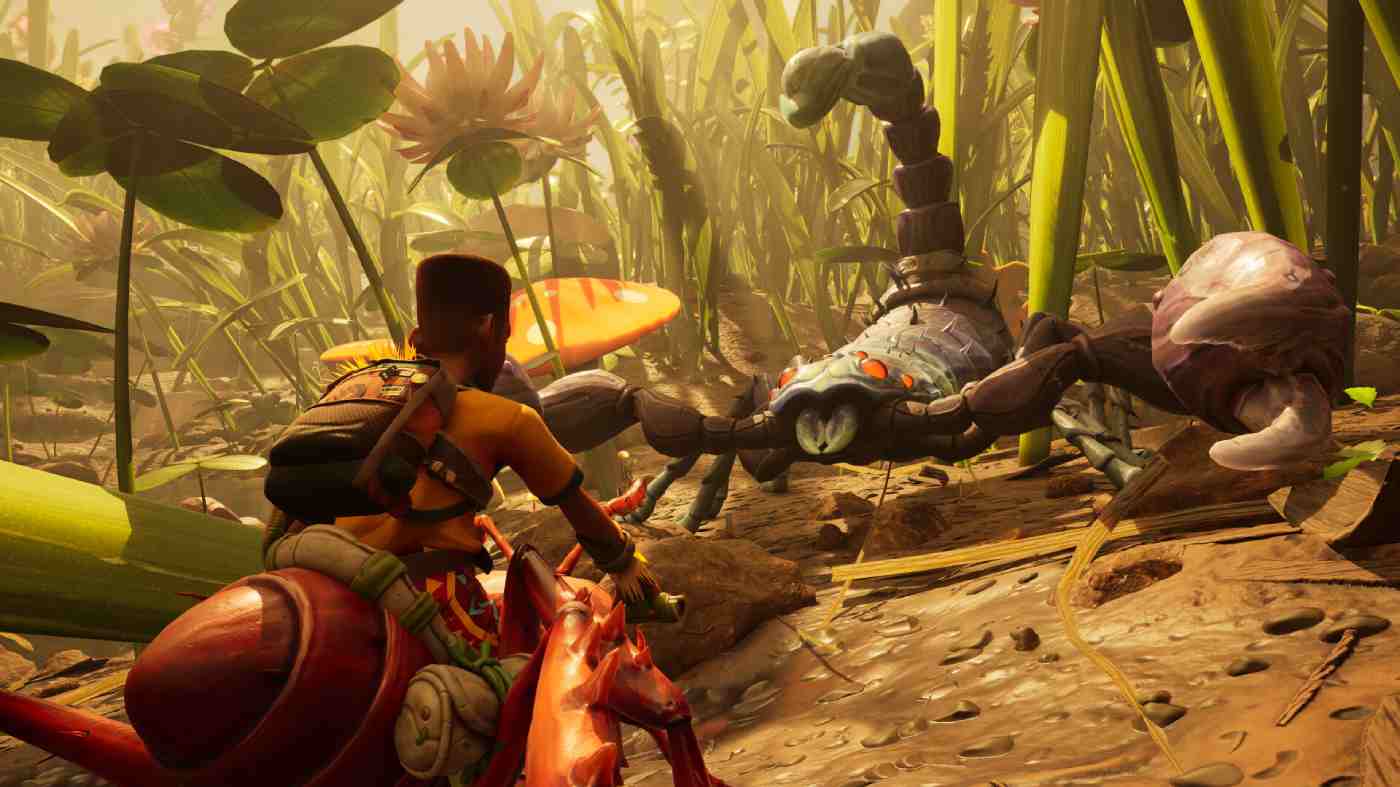
C.P: I remember when we first got Buggies in, it felt like you were invulnerable and could ruin everything as long as you were mounted. It was super fun, but also a terrible game experience, especially for a survival game. Then we were turning the knobs in the other direction, and pretty soon you get to a point where you don’t want to fight on the Buggies, you just want to keep them alive so you can traverse the world faster. It’s been a challenge to find where that balance is. It’s chaotic in co-op, but I think it works.
Press Start: What made the team decide to go for early access again after finding success with it in the first game?
C.P: Marcus and I were talking about early access this morning. It’s kind of funny – I don’t think anyone on the team considered it not being an early access title. I think the model worked well for us. It’s hectic, and you’re constantly working with the community, but it just worked so well for Grounded, and the community was super positive on it. I think it led to really good, productive changes and fun features.
When it came around to working on Grounded 2, one of the first things that determined when we would release into early access was having Buggies in a place where we could have at least one, maybe two, that are completely functional but different in how they play. We’ve been able to make all these changes and develop new features, we’ve been able to build a new world, and upgrade to Unreal Engine 5. It worked well for us the first time, so we knew it would be the plan for Grounded 2.
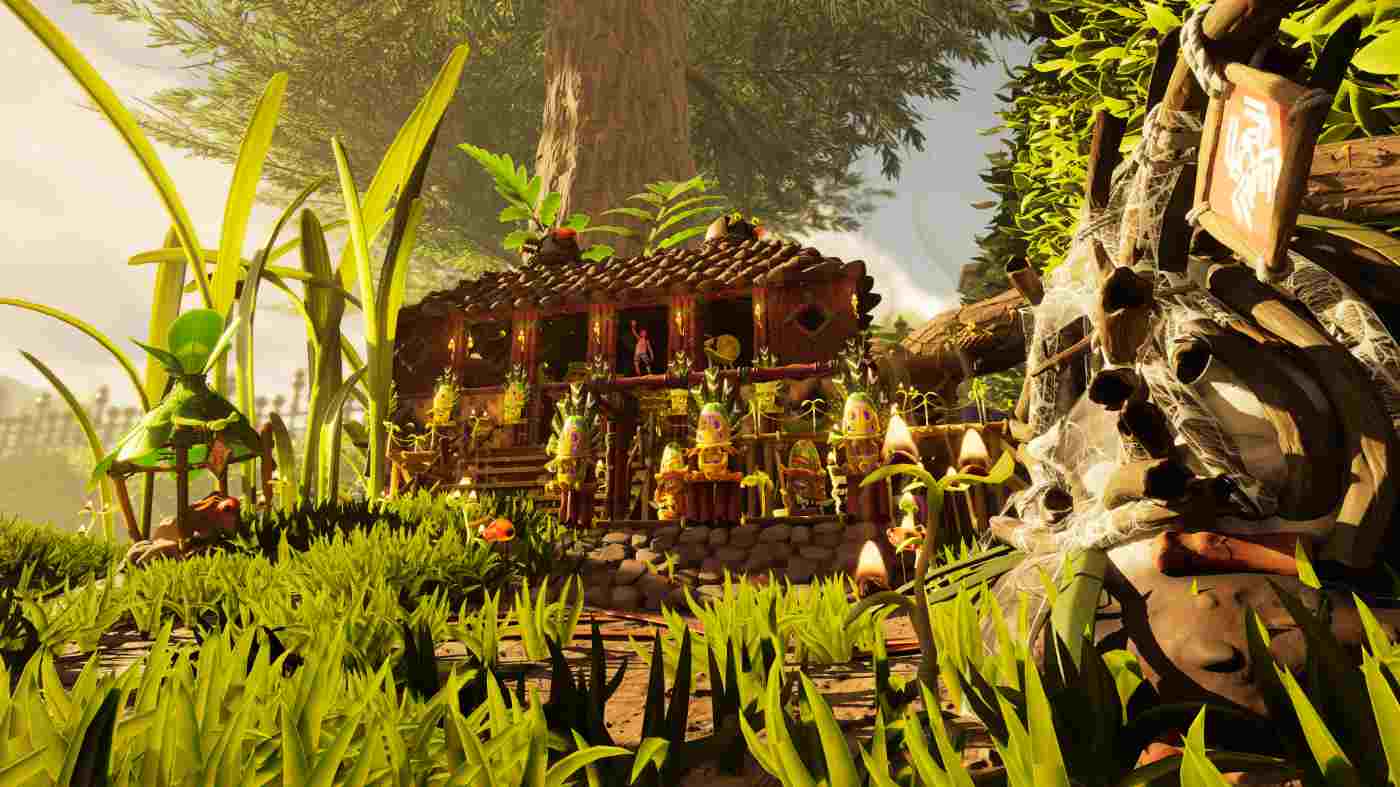
M.M: Speaking to it, working well, if you or anyone else played Grounded when we first launched, versus where the game ended up, the difference is pretty astronomical. A big part of that is early access; the game gets better because we keep expanding and building it. This style of developing alongside the community also works well for us because we’re always paying attention to what people say. Lots of studios do, but I can feel it here all the time.
We are constantly reading what people are saying about our games and then trying to iterate and build on it. I think there’s a natural habit for Obsidian to want to design games in early access. When we looked at Grounded and what value early access added to the quality of the game, it was kind of a no-brainer. It was seeing that arc and thinking about how we can get even better, and being early access this time around. Many factors make early access apt, but for us, the results were there; it just made for a better game. We can make an even better game if we take that approach again.
Press Start: Off the back of that, was there anything you learnt from early access in the first game that has shifted your approach to Grounded 2?
M.M: There are a couple of key things we took away from Grounded being in early access. One of the things people look to us for with the survival space and with Grounded is the story and world-building. To be frank, Grounded’s early access didn’t have a heap of it; we added a lot of that towards the end. There were a lot of players on day one who expected there to be more story. We don’t want to do the whole story right off the gate or do episodic bread crumbing, but we did try to expand on it this time around by having a full first act to explore.

The other thing is that we were really ambitious in the beginning with updates. We thought we’d do one every month, but that just became too overwhelming. We can’t develop that quickly and also sincerely take on community feedback. We also noticed that the community liked it when the updates were bigger. They liked it when they had building components as part of the updates, new bosses, and creatures. This time around, we’re changing the cadence to have bigger updates where we can be transparent about timelines and what they include.
C.P: To go a little deeper on what Marcus was saying there, the cadence of updates and also what we’re putting into them needs to satisfy different groups of players. People love Grounded for different reasons. Story was one of them for sure, but if we went out with an update that didn’t have new stuff for builders, it’s not as interesting or fun for them. Other people want to be challenged by the combat, or they want new armour and equipment, or new progression. When we had those bigger updates that took us longer to do, the community seemed to enjoy them much more because we had something for everyone. That’s how we have things planned for Grounded 2.
Press Start: What was the reason for doing a direct sequel with the same cast instead of following a different set of characters?
M.M: I would say part of that is that it was the kind of story we wanted to tell, but it is also because the community latched onto the four teens. I think everybody sees themselves in one of the characters; they’re almost like your avatar that you express your younger self or current self through, depending on where you’re at in life. People love them, so it was a natural for us to keep the cast for Grounded 2.
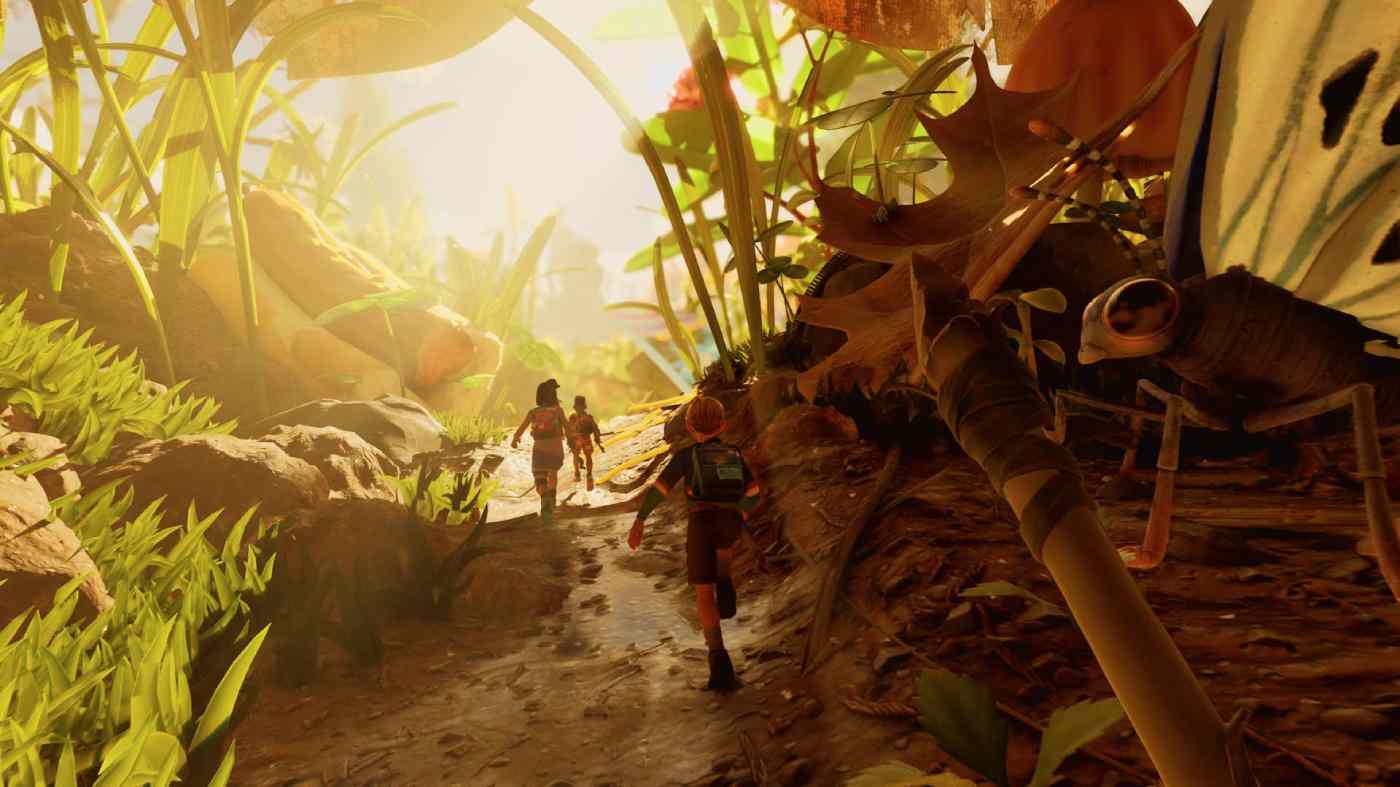
We decided to keep that part familiar, but we really wanted to age them up as well, right? It’s been five years since the original Grounded came out. People change a lot over five years, especially if you’re a younger player. If you played Grounded when you were 12 or 13, you’re now 17 or 18. Seeing those characters you played with progress and get older with the setting and with you has an appeal. It also means we can have a more mature story and world, which helps us grow with our audience as well.
Press Start: Brookhollow Park is much larger in scale in comparison to a backyard. What kind of impact has that had on gameplay and survival elements?
C.P: The park is like a canvas for us to have Buggies and make them feel like an organic and worthwhile part of the gameplay. Once you have something that moves a bit faster, you want to space things out a little bit more. Points of interest and wonders in the world, dungeons and so on may be a bit less tightly packed than they were in Grounded. At the same time, we were looking for a real-world space that people would understand and could have a lot of cool, different biomes and things to see.
A park is one of those things where everyone gets it. There could be a jungle gym, a pond, and a picnic area. Maybe there’s an ice cream cart that’s turned over and created a fantasy frozen wonderland. Everybody can picture those things in a park; it makes sense. We also want it to feel like something that belongs in the middle of Brookhollow, the town where Grounded and Grounded 2 are set. After pushing and pulling on a couple of ideas, the park fits all of the things we wanted to do in this sequel.
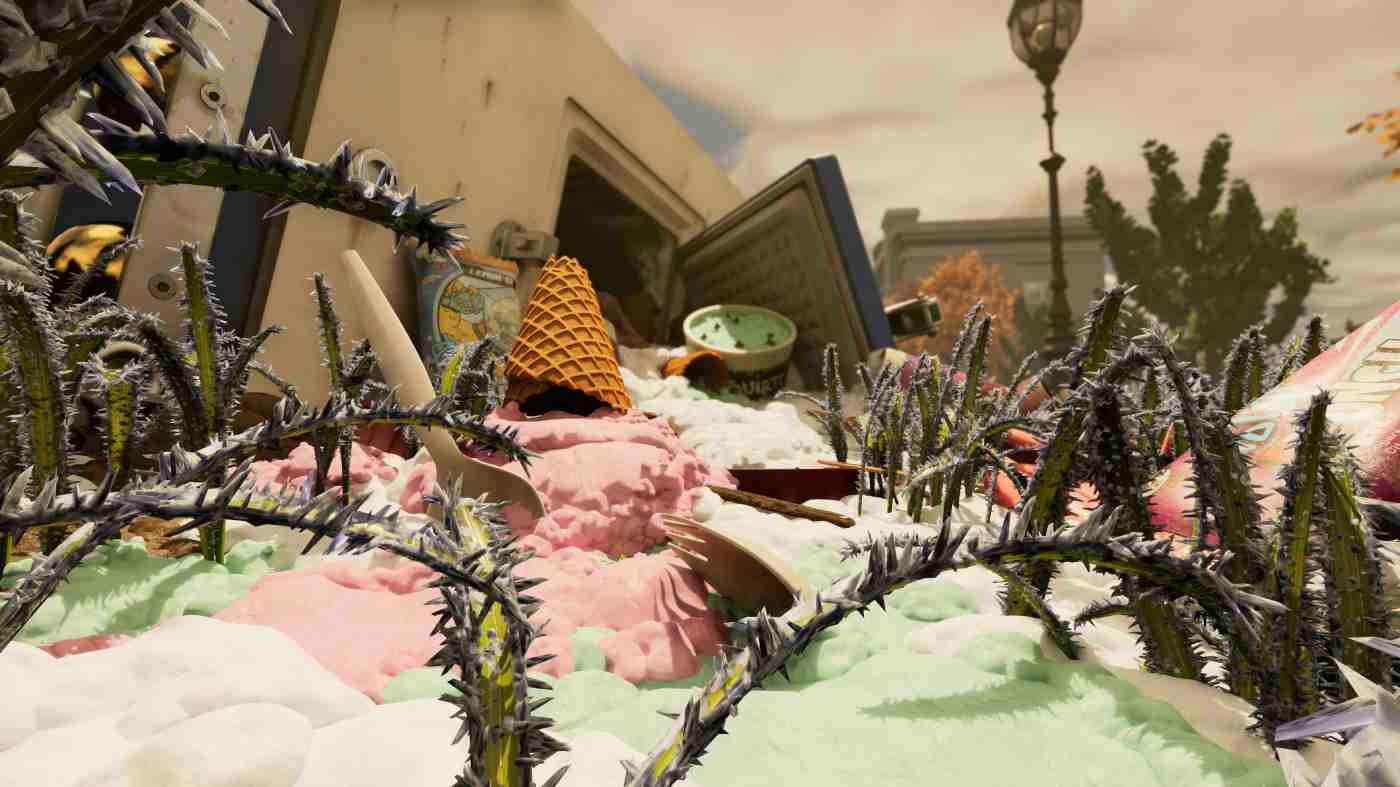
We never really looked back at that point. Then it became figuring out what the things are that fit best in a park. How do we want to lay it out, and what do we want players to experience in what order? How do we want the story woven throughout the park? It all kind of worked together organically. It didn’t happen over two days; it took a few months of pre-production to work everything out, but the result came together really nicely.
M.M: There are some more technical components in that it did change the way that we built the game compared to Grounded. We didn’t have to stream content before, but now we do because the map is so much bigger. There are underlying technical changes that had to be made to make it all work. And like Chris said, you have to be cognizant of how you space things out. We have to make sure the content density feels right.
The other big thing with the park is that it’s the perfect balance of natural and man-made objects. A backyard can kind of limit what you can put in it and be believable. A park can have a snack bar, an ice cream cart, a giant statue in the middle of it, and a playground. All of these things can exist in grasslands and natural environments. We wanted to keep nature in Grounded, but it’s interesting having wonders and secrets hidden throughout a partially artificial world. It allows for more variety and opportunities to create certain fantasies.
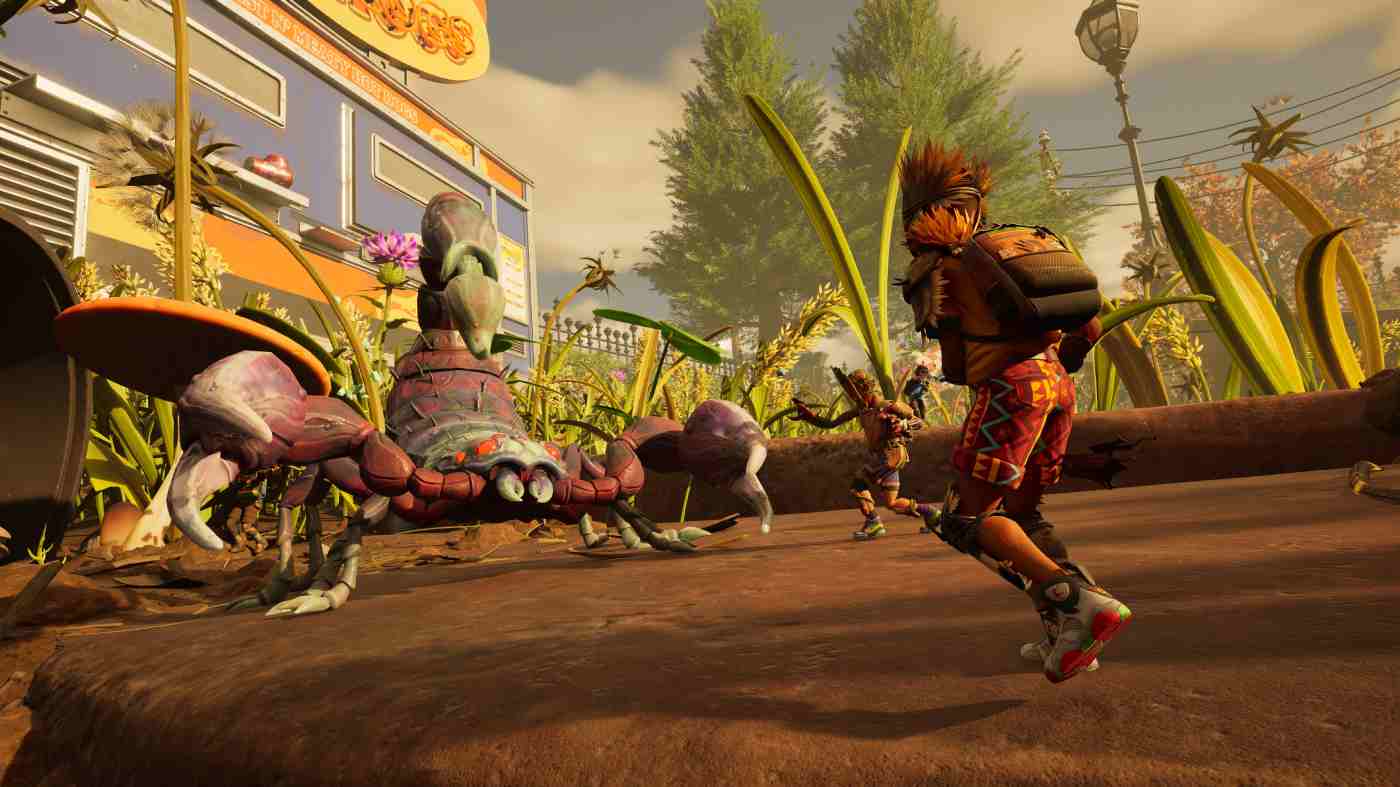
Press Start: Working on the first game may have been out of Obsidian’s comfort zone. Does working on Grounded 2 now feel like familiar territory?
M.M: I would say yes and no. I think there’s a level of confidence now that we have in the survival genre, but things have been shaken up in that we have a development partner with Eidos Montreal. We’re also trying to push ourselves regarding how we keep moving Grounded forward. We’re doing new stuff that makes us uncomfortable, but we have a baseline of familiarity that we established with Grounded that allows us to go to new heights.
C.P: I do think there’s a lot of struggle that comes with developing the IP in the first game that we don’t have now. When we look at something now, we can confidently say whether it does or doesn’t belong in Grounded. That could come down to something as simple as how the humour is portrayed. We do try to balance humour and horror in Grounded quite a bit, and how that fits naturally into the Grounded space. I think there’s a confidence level there that simply didn’t exist before.
The other thing I’ll say is that having worked on a bunch of games at Obsidian, I think something that’s a strength of ours is that we approach every game like we don’t know what the hell we’re doing. We do, of course, but we want to challenge ourselves. I think every game experience and all the games we make here are always trying to think a little bit outside of the formula that you might think of as a typical Obsidian game.

Grounded 2 comes out in early access for Xbox Series X|S and PC on July 30th, and is included with Xbox Game Pass/PC Game Pass subscriptions. Check out our full early access review right here.