



As an enormous fan of Remedy’s interconnected universe, which has really begun to hit its stride after Control and Alan Wake II, I’ve long been anticipating their next chapter because, odds are, it’d play into the strange, Lynchian lore and tone that has long been the bedrock for the studio’s titles. After the reveal of Control Resonant, which promised to be a significant departure from not only the original Control’s formula but from Remedy’s general status quo, I felt a hesitance creeping in and tried to keep my expectations tempered.
Trading one Faden sibling for the other, Resonant casts us as Dylan Faden, who, after suffering through years of confinement at the prodding hands of the Federal Bureau of Control, finds himself thrust into the midst of a new paranatural catastrophe that has spilled into Manhattan, as an Altered World Event rips the city apart.

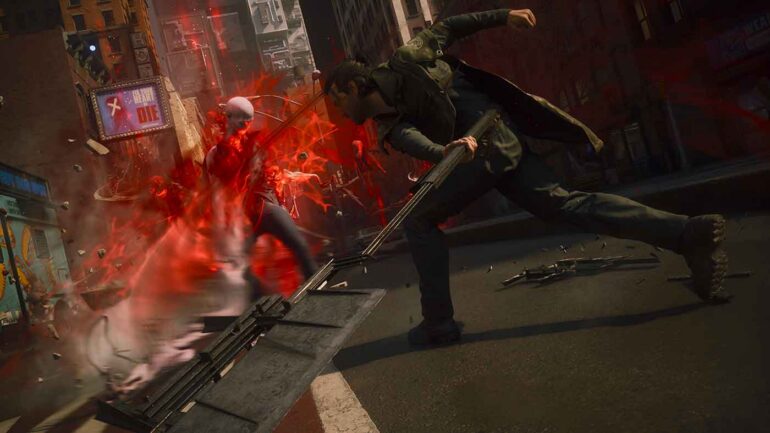
With Control Resonant retaining the studio’s narrative showmanship and distinct flair, the game’s biggest point of difference is in its combat. Jesse had a versatile suite of paranatural abilities, but her Service Weapon, a shapeshifting device of mysterious origin, was her main form of offense. Resonant trades firepower for a melee bludgeoning at the hands of Dylan’s own protean Object of Power, Aberrant, which he awoke to find lodged in his sternum.
After straddling the fence, an hour with the game has sold me on the game’s combat. Though it seems less dependent on stringing combos together, there’s still a frenetic energy to the game’s combat that becomes moreish as you adapt to its systems. I was somewhat limited throughout much of my play, with the chapter being more of an onboarding section.
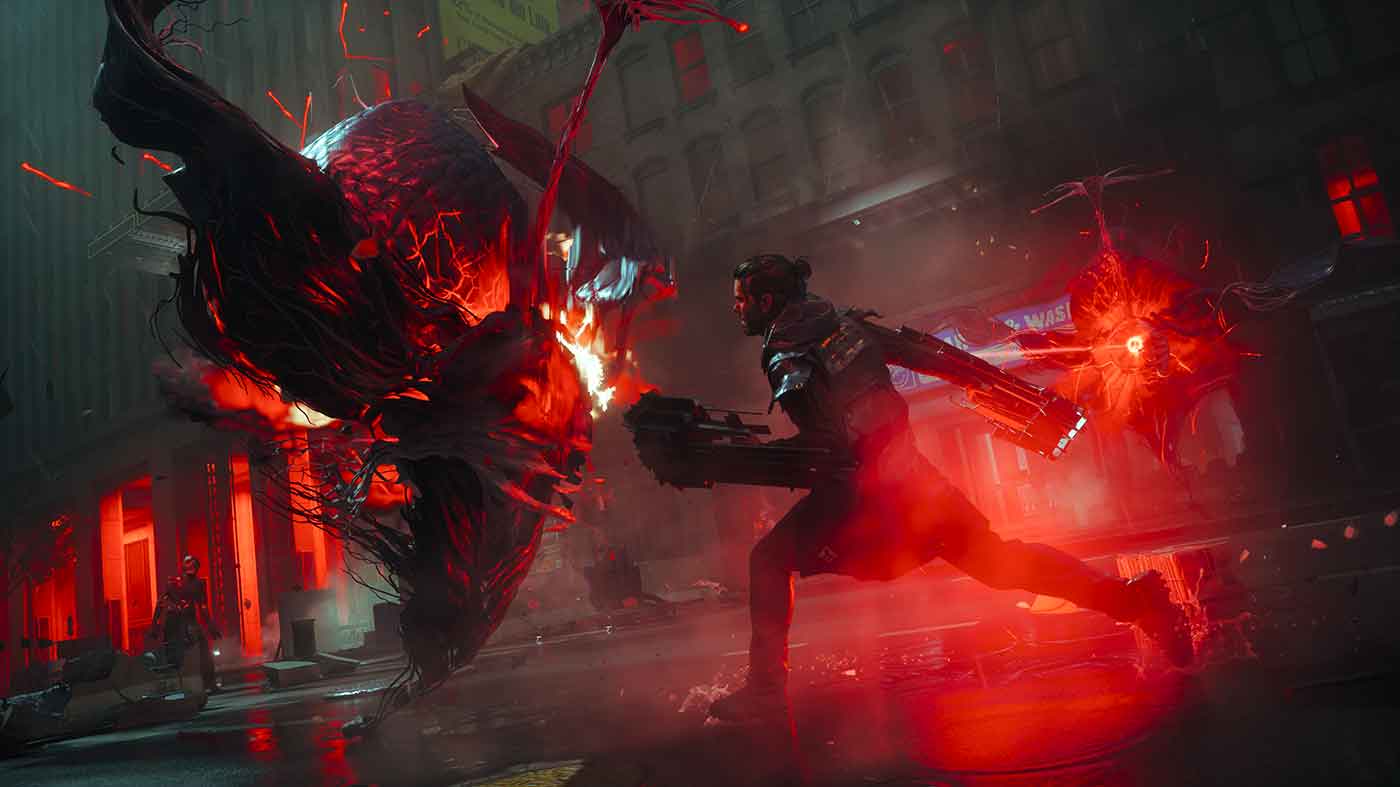
If you’ve played your share of action games, the game’s standard double-slash into a sweeping strike, three-tap combo will feel rather familiar, and perhaps a little safe. Once combined with Dylan’s suite of talents and abilities, which can be mapped in two sets of three that can be hot-swapped just like his Aberrant form of choice, to create a huge variety. There’s also a secondary attack you unlock that can be charged in a crushing blow; I opted for an unfathomably large hammer, though it’s quite fluid in letting you hop back and forth between forms, once unlocked.
To further capitalise on the game’s attempt to corner the action RPG audience, outside of active combat, Dylan can enter The Gap, a metaphysical mind palace where you can craft or tinker with your build. It’s here that you can select a new Aberrant form as well as a suite of paranatural abilities, after unlocking them by defeating Resonant Entities, that is. Talents and artefacts can then be applied to create coaction and serve as the glue to tie the build together. With the limited time I had, I didn’t get right into the weeds, but there’s certainly depth there.

After spending a decent chunk of time in the Evacuation Zone, one of the game’s high-alert areas geared at high-level combat, where I was armed to the teeth and a chunk of the game’s deep progression had been unlocked, I discovered a greater synergy between Dylan’s melee and paranatural abilities, with light attacks feeding resources into the latter. By having fodder Hiss spawn into arenas endlessly, Resonant charges you with targeting heavies first, giving each fight an element of risk management.
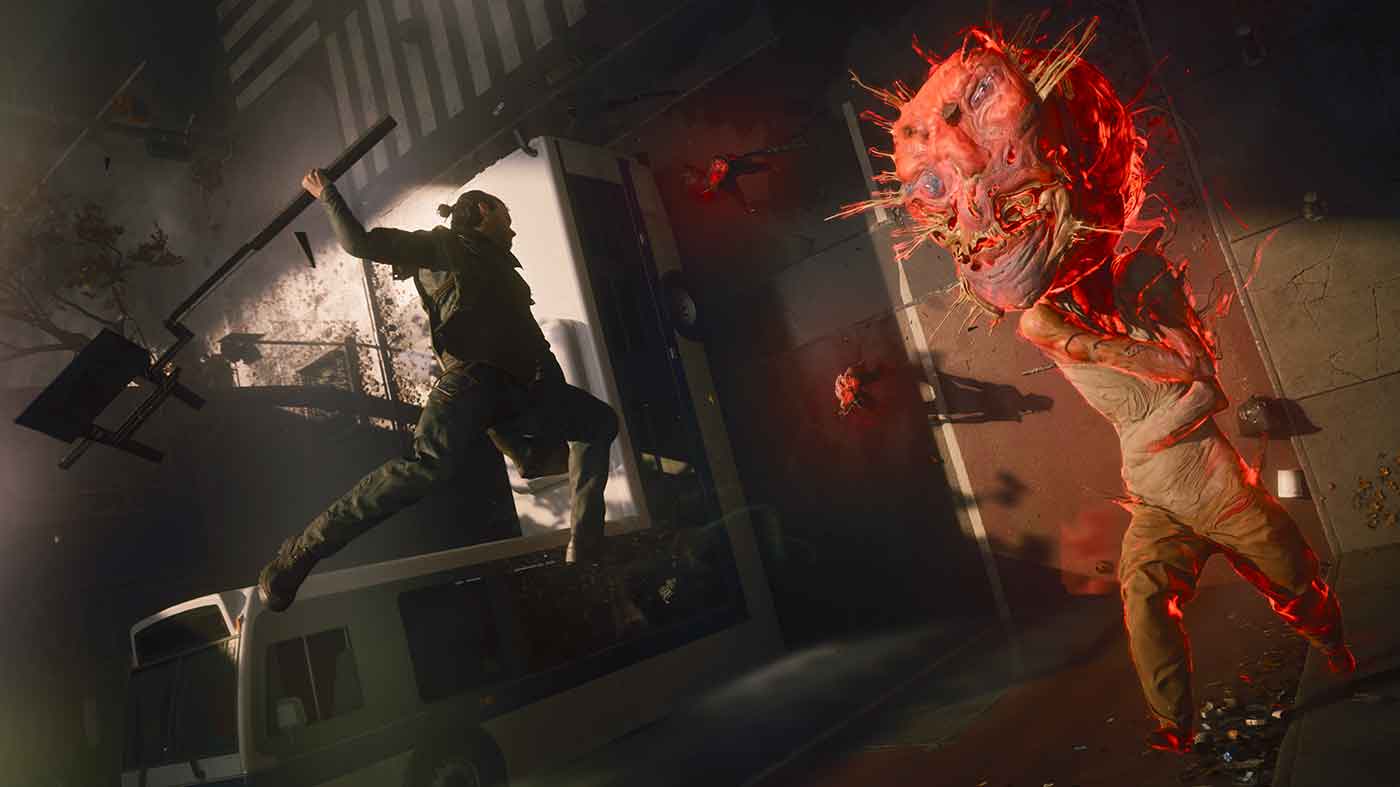
Although players of Control should be no strangers to environmental carnage, Resonant’s impossible, Escher-esque vision of Manhattan can chip and shatter in spectacular ways. As the Hiss hang listlessly in mid-air, guard rails and fire hydrants disintegrate as Dylan fights at ground level. I had enormous concerns that Remedy wouldn’t be able to recapture the sheer atmosphere of The Oldest House, but I came away reassured after spending an hour in its interconnected world. With streets folding at right angles, its puzzling geometry reminded me a lot of the iconic dream-building scene from Inception, where Ariadne rebuilds her surroundings without being constrained by real-world physics.

Set against this warped Manhattan, Resonant has a sense of scale and verticality that its predecessor lacked. With that being the case, it feels as though freedom of movement has been a big focus for the studio in this sequel. Leaping from roof to roof using the many traversal tools, which are thrown at you in quick succession, is an absolute blast; it feels as though the world is built for exploration, and I look forward to poking through every inch of the world-famous borough.
The only part of the hands-on that I didn’t adore was the game’s first boss encounter against the Resonant Entity, which we’ve seen previously in marketing material. I can’t fault the mechanical depth, and it was handy in tutorialising lock-ons during combat, but the arena felt entirely too big for a one-on-one battle. From a design standpoint, I appreciate that the space was spread out to allow for slinging projectiles and the like, but I still felt it was too large.
As one of the better games I got to play at Summer Game Fest, I’ve left my hands-on with Control Resonant glowing and eager for more. Despite the drastic formulaic shift, it’s still got all of the hallmarks of a Remedy project. Mind-bending, supernatural imagery, rich with paradox and satisfying tessellations, come together with stomach-churning audio design, complementing the beginnings of yet another spectacular chapter in the Remedyverse, which continues to balloon in odd and wonderful ways.