


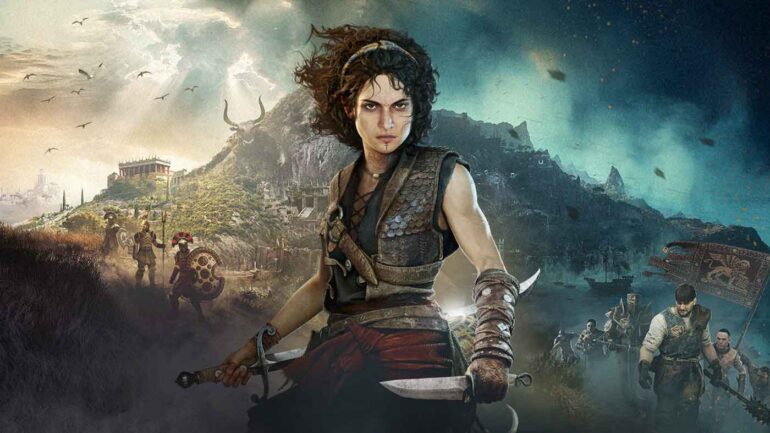

A Plague Tale emerged quietly as one of the unexpected hits of its time, overwhelming audiences with a heartrending journey of perseverance and hope amid one of humanity’s darkest hours, as the Black Plague tore through Europe and decimated the population, altering the course of history forever. At its devastating centre was the de Rune siblings, Hugo and Amicia, whose kinship carried so much of the story’s weight.
With Resonance: A Plague Tale Legacy being set fifteen years before the existing duology, it feels as though the franchise’s heart has somewhat been ripped out with Sophia, a brash, well-travelled plunderer, taking the pair’s place. Although her role in Requiem becomes integral to the siblings’ journey, as she acts as a protective mother bear to the two, I felt that a prequel focusing on her exploits would only rob the franchise of its strengths. I was glad to be proven mostly wrong by this during a two-hour hands-on with Resonance: A Plague Tale Legacy.
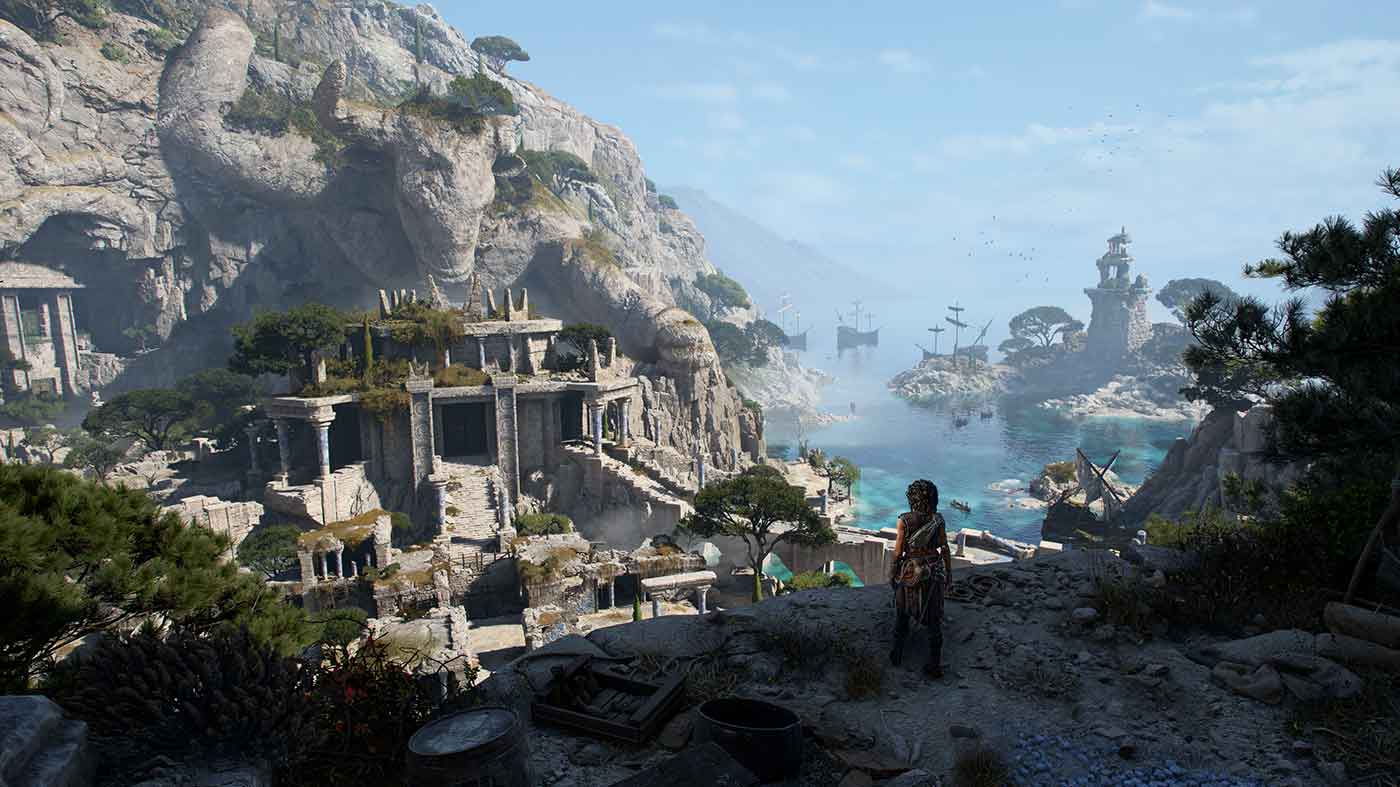
What’s clear right away is that Resonance is a complete departure from the original two games in both tone and gameplay. Whereas A Plague Tale was quite disparate and dark, much of what I experienced of Resonance takes place on the sun-drenched, mythical Minotaur Island near Crete, a far less oppressive setting than the franchise is known for. And although I wasn’t exactly riveted by my induction to Sophia, nor did I feel moved watching her past catch up with her during the hands-on, I’m quite enamoured by what the game is doing with Greek legend, and what it could do in linking back to the original duology via the Macula.
Sophia is armed with several tricks to navigate Minotaur Island, including a Minoan sphere which can manipulate light and, by the end of the preview, Daedalus’s mechanical arm—his access key to the labyrinthian inner-workings of the island. While those links to the mythology are neat, it’s Sophia’s vivid recollections of Theseus’s life that prove to be the most interesting, while helping her unravel problems in her own time.
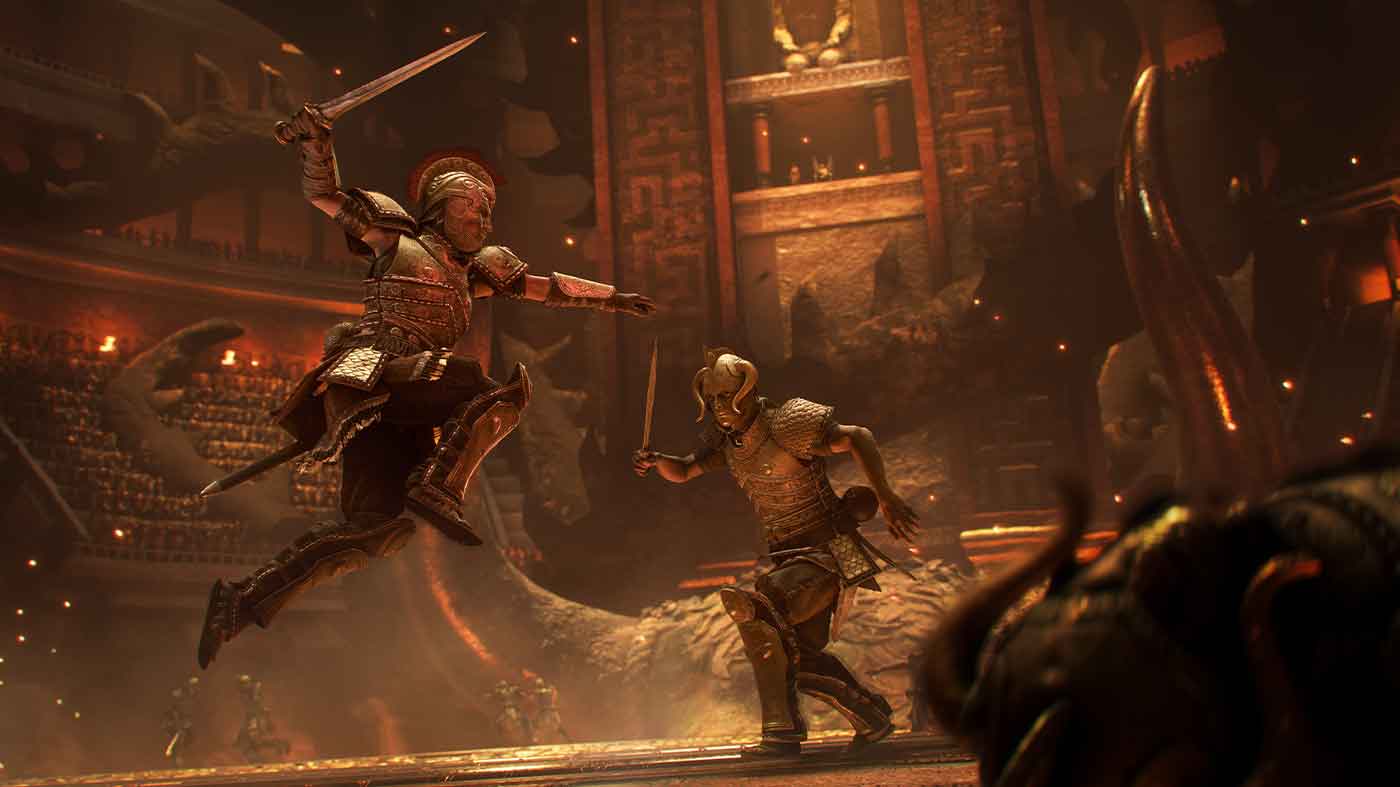
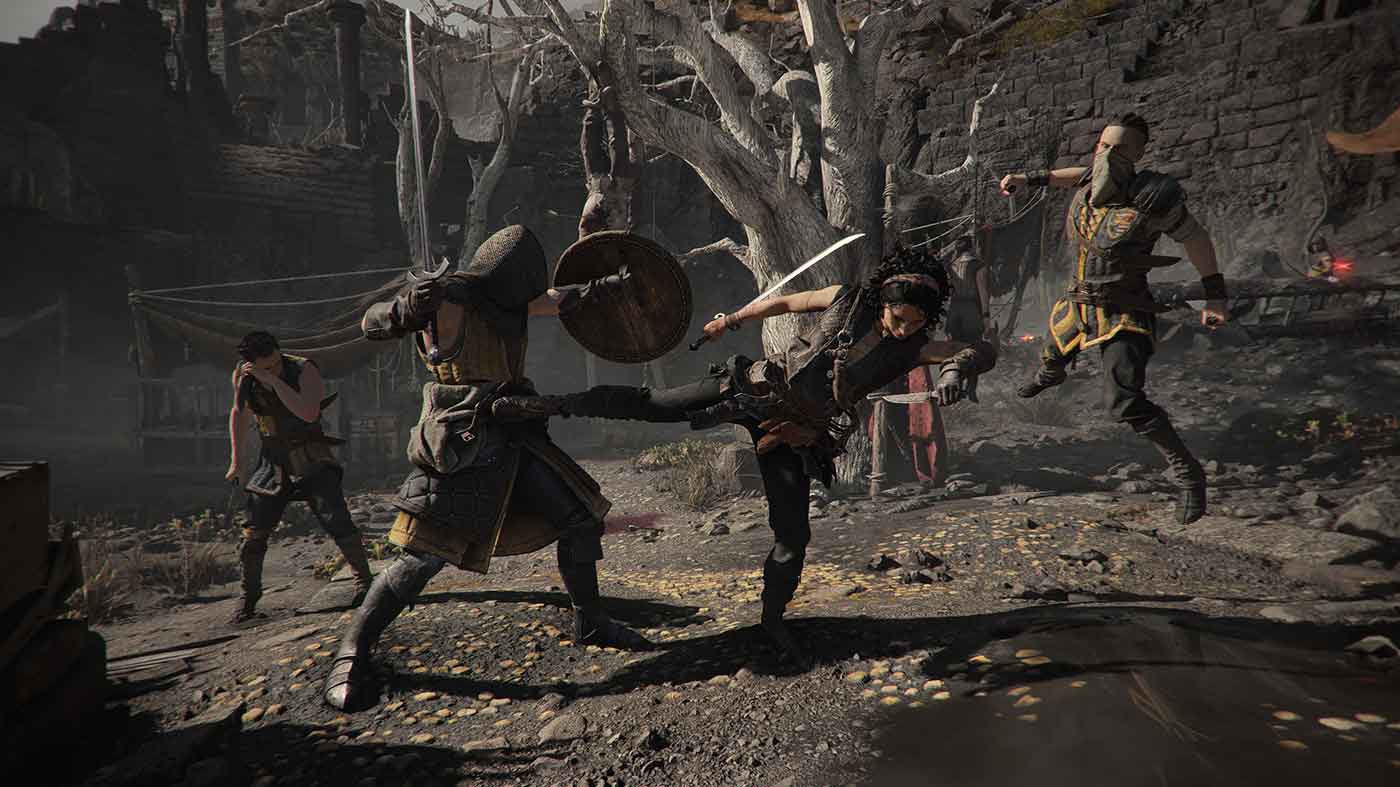
Although Amicia would go on to become a hardened survivor by closing time on A Plague Tale: Requiem, Sophia is all about that pirate life in Resonance and, with moxy to match, displays a cunning and sword craft proficiency that’s rather foreign when compared to the other games. We’re not forced to seek safety in the shadows or harness the might of rats; the combat in Resonance is much more direct than what we’re used to. With more of a focus on dodges, Sparta kicks, demanding parries, and acrobatic hacking and slashing, the game does wander into Assassin’s Creed territory in terms of how it feels moment-to-moment.
She brandishes her sword for the most part with devastating efficiency, cutting down thieves and brigands alongside her companion Leni. Before long, she finds a grapple hook which, outside of its traversal application, can be used to pull ranged enemies, like archers, from their perches. It’s serviceable without upending the genre’s standards. However, it’s a fun mix of skills that form the basis of Sophia’s skill set, and the opportunity to build it out with mythical tools left over from the Athenians is clearly there.
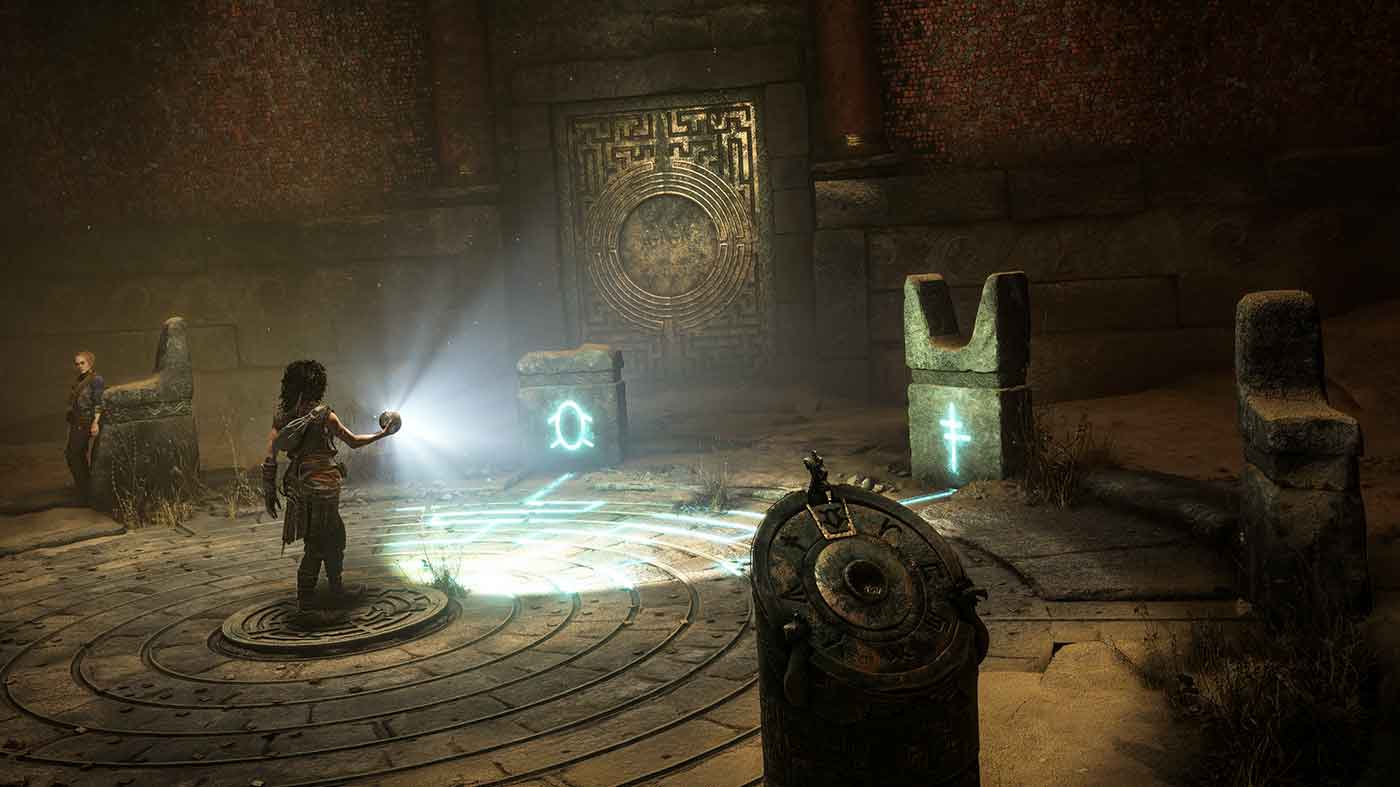
Resonance’s quieter, explorative moments, which see you either soaking in the gorgeous vistas or solving ancient riddles, feel more in line with Uncharted or Tomb Raider. The crux of the sixth chapter’s big puzzle sees Sophia venturing to every corner of the area to retrieve four glyphs to unlock an enormous gate blocking her path, and the feature puzzle focused on bouncing light across a series of mirrors to activate seal locks on a long-dormant pillar. In aligning the mirrors, Sophia utilises the light to dissipate the remains seen throughout the chamber; whether this is a sign that light could be used more offensively in Resonance remains to be seen.
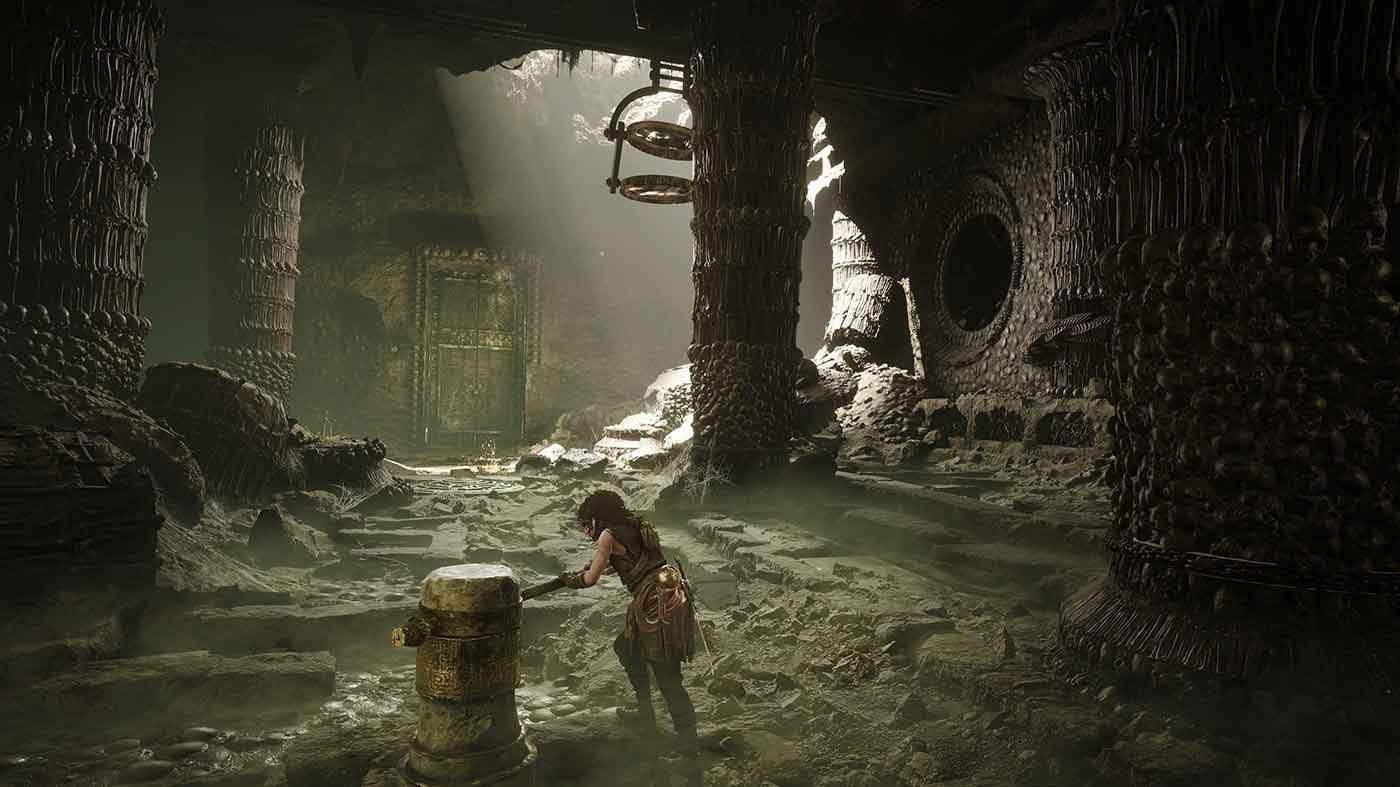
The second chapter is where I locked in, though, and saw Resonance’s real potential after Sophia narrowly evades her old crew and plummets into the subterranean depths of the island. It feels more in keeping tonally with the A Plague Tale we know, as Sophia is pursued in a terrifying cat-and-mouse game throughout the pitch-black underground.
Though I do wonder if the monster is the game’s interpretation of the Minotaur, its nebulous, tendril-cloud form reminds me somewhat of Lost’s Man in Black. After cutting down baddies left and right, the sudden shift to “hunted” mode makes for a thrilling switch-up, and I hope we learn a lot more about the creature’s origins, which I presume starts with the primordial evil that is the Prima Macula, providing the direct link to the game universe’s future events.
While the hands-on was a tale of two tones, with the latter half being a desperate, grimdark pursuit through a scary underground, I do think the setting of Minotaur Island, in general, feels like a nice trade-up from the burning fields of France, as the Mediterranean setting is rich with opal blue water and stunning ruinous architecture. Portrayed once again by Anna Demetriou, Sophia has the makings of a likeable heroine; she’s got quips, a smart mouth that gets her into trouble, and a respectable moral code that makes her empathetic and relatable despite her profession.
Resonance marks a seismic shift for A Plague Tale, so much so that it really feels like another series entirely. That said, there’s something tantalising about the angle they’re taking in filling out Sophia’s story, and the swashbuckling action focus has this prequel feeling a lot more like Pirates of the Caribbean than Hamnet.
As a big believer in Asobo, and a big fan of what they’ve achieved with the series so far, I think it’d be foolish to dismiss this for its differences—the story ramifications alone, and how Sophia’s actions in Crete could set in motion the ultimate fate of the de Runes is a fascinating jumping off point.