


Press Start may receive a commission when you buy from links on our site at no extra cost to you.
One thing I respect about Heart Machine is their willingness to attack different genres with each subsequent project. Hyper Light Drifter, I imagine, enjoyed enough success that they could have settled into a comfortable loop of resting on their laurels. Solar Ash felt like a more personal, story-forward approach to a shared universe, while Hyper Light Breaker, their attempt at an action roguelike, floundered in early access and sadly amounted to little more than layoffs for the studio.
Possessor(s), their first game under the Devolver Digital umbrella after a run of self-publishing and dealing with other publishing houses, on the surface, looks like their most derivative project yet, at a time when the studio most desperately needs a win.
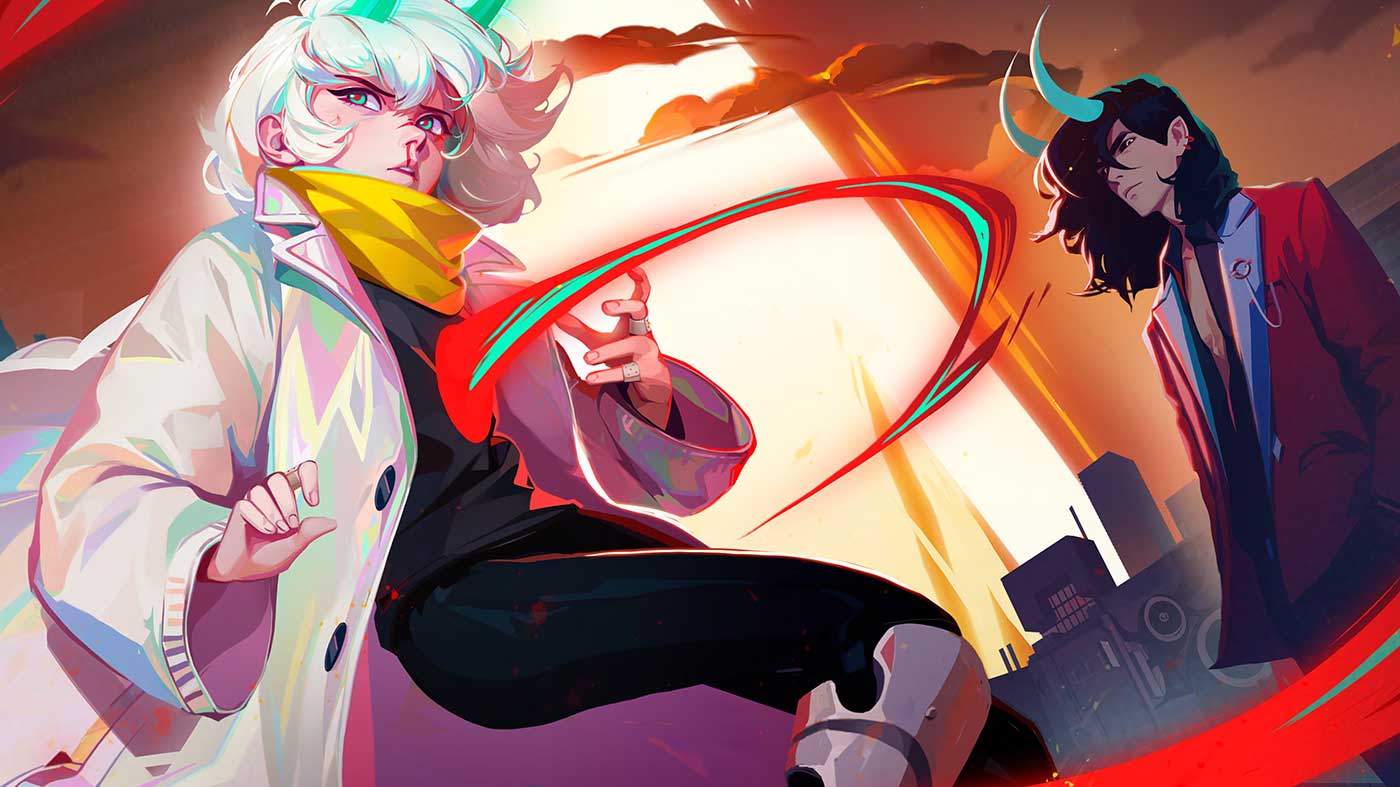
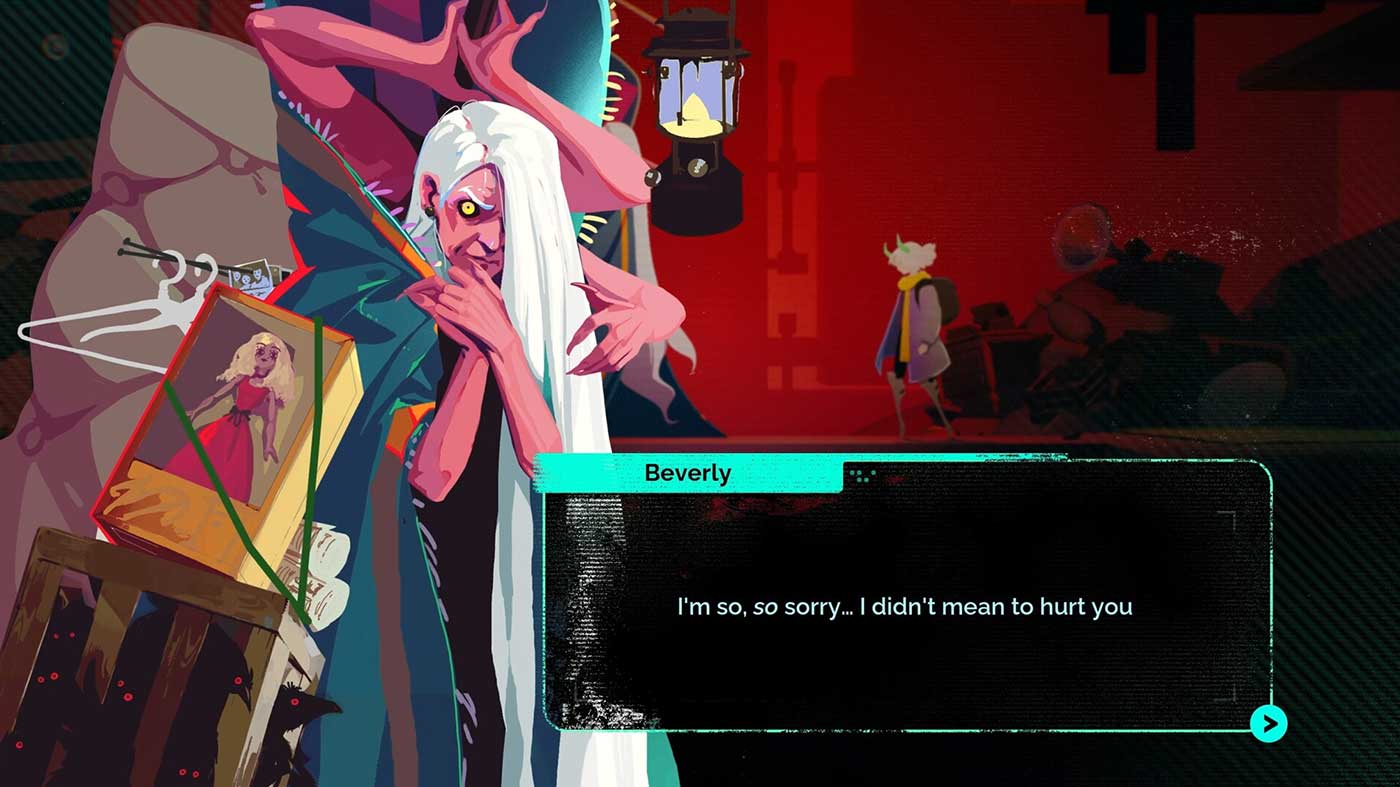
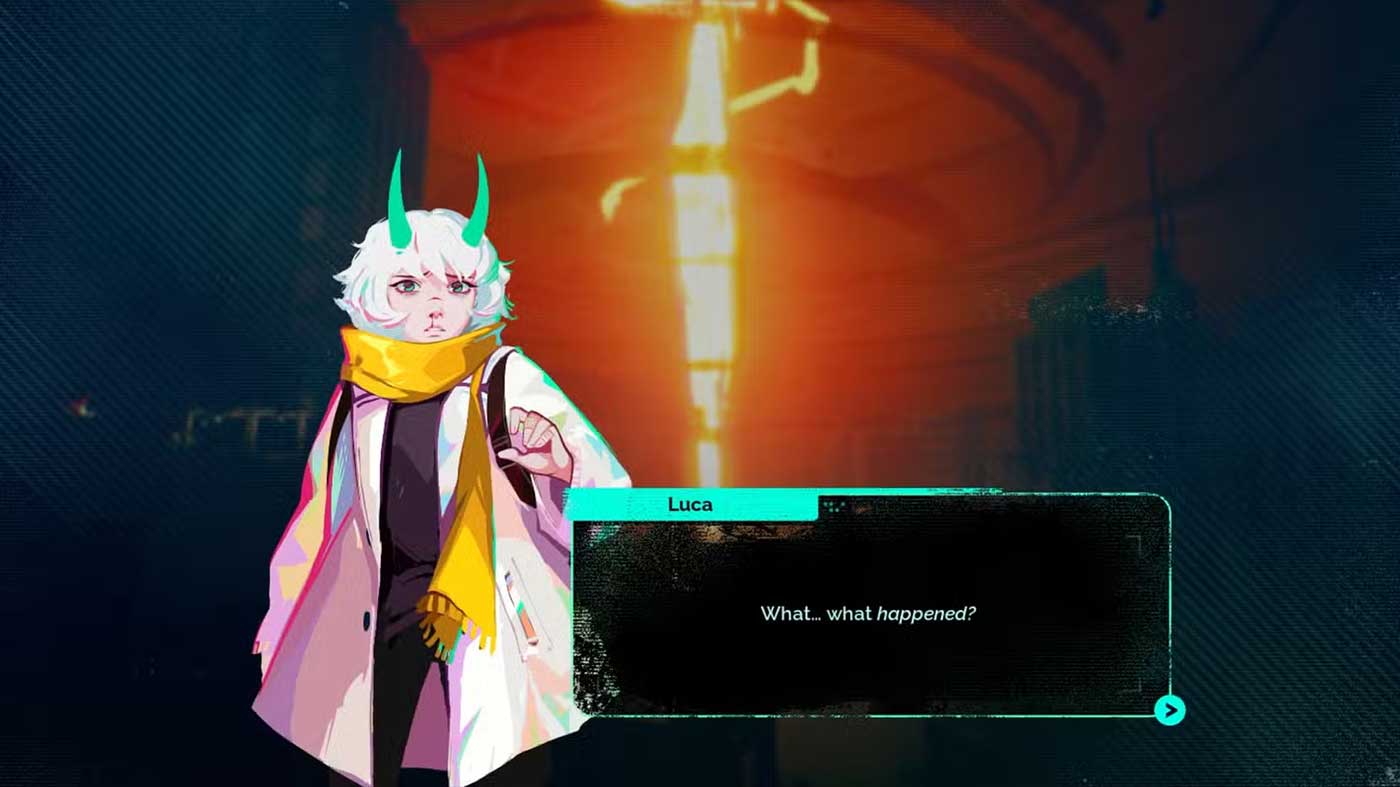
Despite being a much darker game than their previous works, I expect Possessor(s) will appeal to those who’ve appreciated Heart Machine’s approach to world craft and the effort they’ve poured into setting and straight-up vibes. After a demon-led invasion leads to a cataclysm that leaves the city of Sanzu and protagonist Luca alike at death’s door, Luca cuts a deal with Rhem, a desperate demon in need of a host body, as the pair band together against Rhem’s own kind in pursuit of their individual interests. As opposite as east and west, it’s really their dynamic and their entwined stories, which both revolve around storming the lab central to the outbreak, that provide the launching pad for the game’s world to flourish.
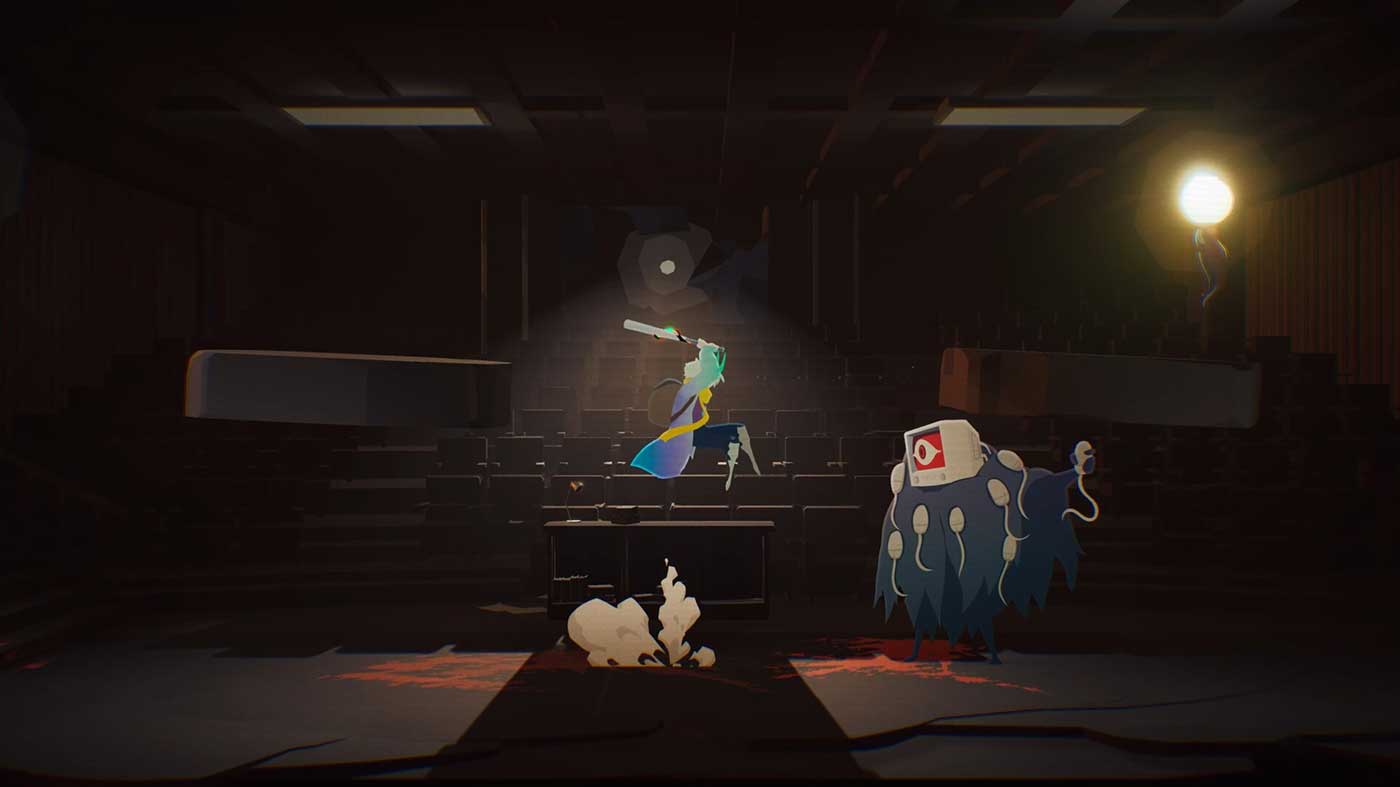
Beyond the co-leads’ need to co-exist, Possessor(s) paints a haunting, catastrophic image of a sprawling mega-city where the fragmented remains of humanity live in the shadows while the darkness takes grip. It’s a tired expression, but the city itself really is its own character, not since Symphony of the Night have I been so engrossed in exploring every granular part of a game’s map, and that speaks volumes of how well it is designed, and how rewarding combing through every inch can be. Although the world isn’t teeming with signs of life, the characters that do crop up are either askew, on their way to being driven mad by the apocalypse, or possessed in their own right by Rhem’s frenemies. With most of the map’s regions having their own self-contained subplots, these small, emotional arcs are oftentimes just as good as the overarching story.
So far as I’ve seen, the game has shied away from referring to itself as a Metroidvania; however, the characteristics are undeniable. Sanzu is a big, interconnected maze of corridors that join up after acquiring Luca’s traversal abilities, creating a series of cleverly crafted paths for the player to navigate. Better yet, these abilities serve a double purpose in combat, especially Luca’s whip, which can bring aerial demons to ground. If it weren’t for the surprisingly helpful map, I would consider getting around to be somewhat obtuse, but I do think the game could do a better job of spelling out what paths are newly available based on your latest pickup. So many of the areas are accessible, although not entirely explorable, meaning you’ll do a lot of backtracking, although this is made less painful thanks to an elegant fast travel network.
With a few issues I’ve had with repeated dialogue and cutscenes, I expect it’s somewhat easy to break the developer’s intended or expected sequence of events, which did feel like somewhat of a betrayal of the game’s openness and sense of freedom. Similarly, because the level design places the ability “gates” well into their respective areas, there was an occasion where I got stuck in an area with no means of escape outside of reverting to a previous save.
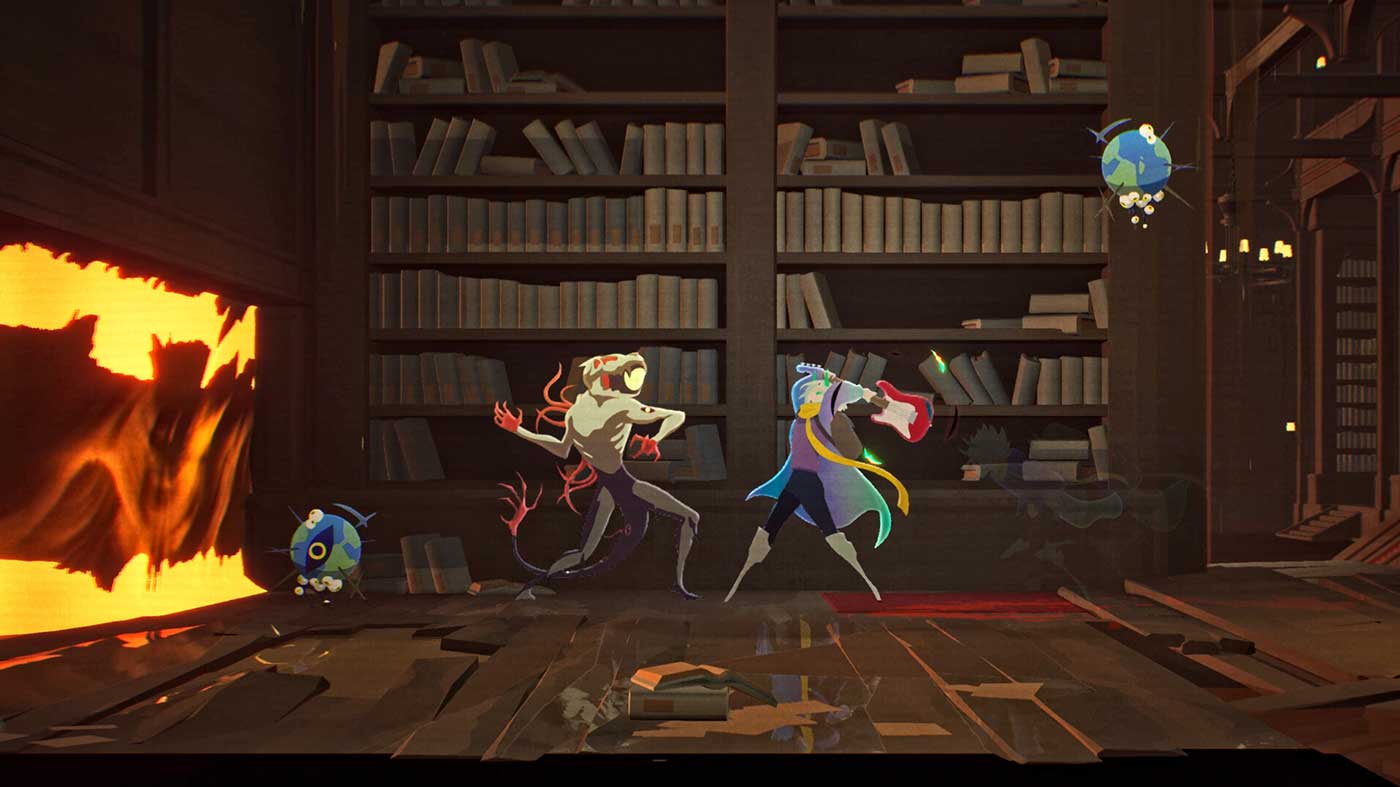
The combat in Possessor(s) is immaculately layered, giving off the feeling of a platform fighting game more than a regular action game. In-world, the demons scramble for any host as their corporeal bodies break down, so everyday items are utilised in creative, often hilarious, ways. You brandish things like kitchen knives and hockey sticks as your main offense; however, it’s your secondaries where you can mix up your approach to combat. Taking the appearance of bog-standard household effects, like a computer mouse, a cell phone, or leather gloves, these items can be useful for creating space, while your whip does the opposite, pounding the ground around you with an electric current, or reducing a demon to cinders with a superlative suplex.
There’s been a fun approach to enemy design, which piggybacks off of this same principle. Of course, there is a share of powerful demons who’ve not yet felt the need to abandon their perfect forms; however, it’s when you’re being chased by a flapping leatherbound book, or lined up by a security camera, that I couldn’t help but laugh at how absurd Possessor(s) can be. While it doesn’t go full tilt in emulating a fighting game, I do think the game encourages you to get a feel for the combos available to you, which often results in a satisfying flurry of air and ground offense.
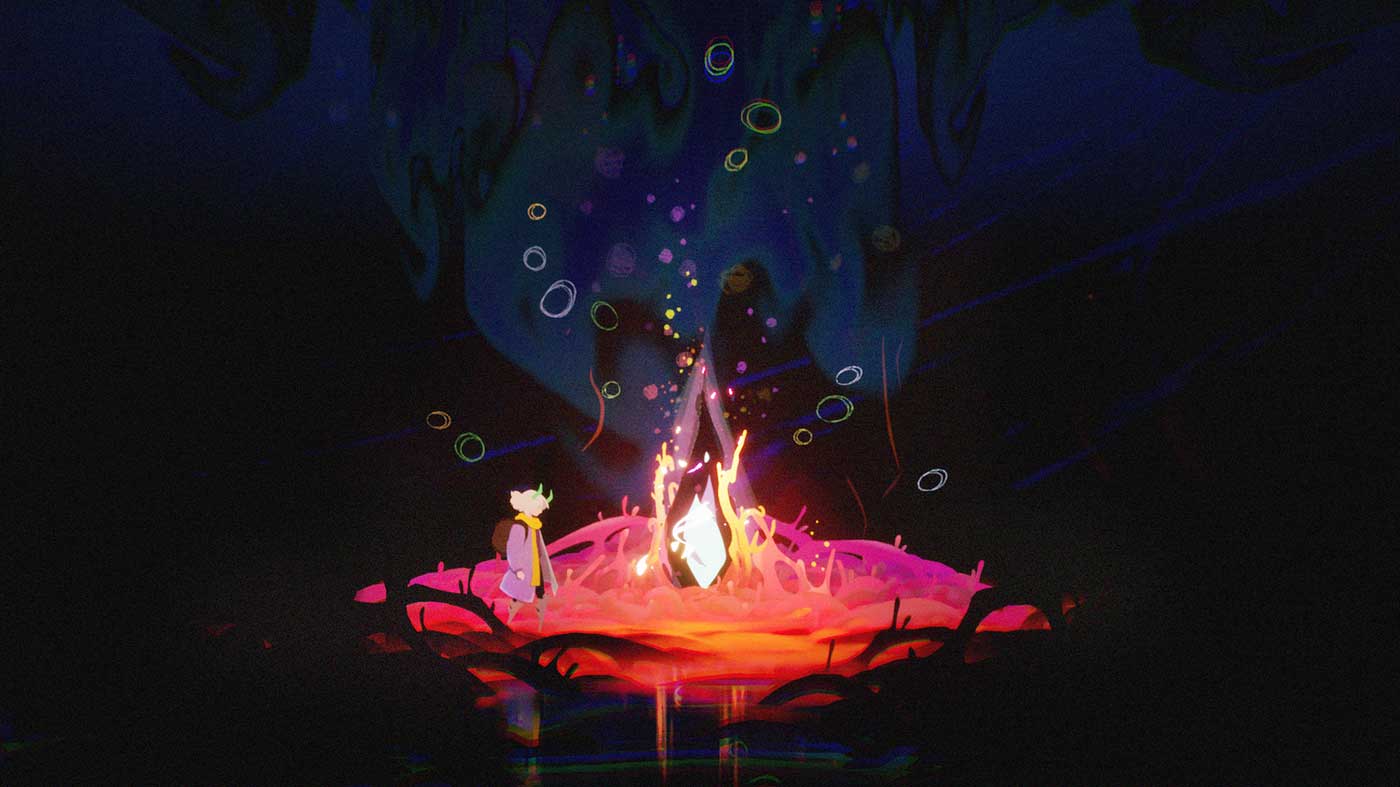
Unlike the Hyper Light and Solar Ash titles, which set their experiences within a dystopic landscape splashed with pastels and neons, Possessor(s) feels like a much darker slice from the Heart Machine universe. It’s a sickly world, torn asunder by the demon threat, and it’s heavily punctuated by darkness and blood-red highlights—it isn’t monotone by any stretch of the imagination; however, it does abandon the alien beauty of the prior titles in favour of a grittier approach.
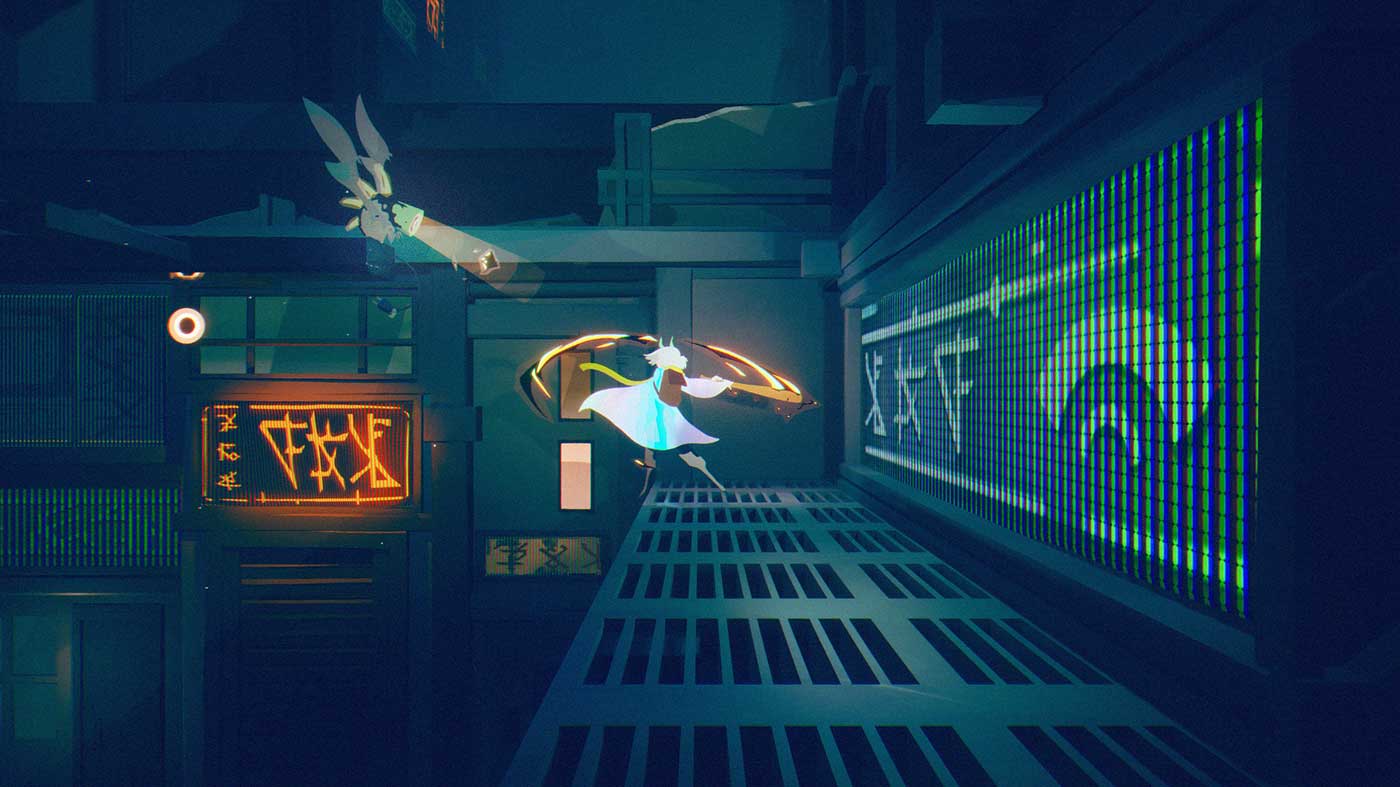
With the game’s action focus, I can’t fault the animation or hit windows, which have been carefully hand-animated on top of the 3D rendered background. There’s a Supergiant touch to how character renders accompany dialogue windows, and I do expect a certain corner of the web to go nuts for Rhem—he could easily be this year’s Astarion. For a game driven by characters, it’s a shame there isn’t a recorded voiceover to sell the heaviness of some of the subject matter; it feels like a missed opportunity, although I do expect it would be a budgetary decision. The sound design and soundtrack, on the other hand, are great; the crunchiness of combat and whipping a corded mouse around to a mix of soft rock is a fine mix.
Possessor(s) feels like a more accessible means of entering this shared universe; it isn’t as brutal as Drifter, and it feels more engaging than Solar Ash, which was more experiential and explorative like a Team Ico game. It prioritises story and characters within a really well-realised Metroidvania, or “search-action”, setting and delivers this year’s Prince of Persia: The Lost Crown.
The PC version of this game was played for the purpose of this review. A digital review code was provided by the publisher.