


Press Start may receive a commission when you buy from links on our site at no extra cost to you.
At one point, Telltale was an industry leader when it came to interactive storytelling. Their adaptation of Robert Kirkman’s The Walking Dead birthed a new era of episodic, almost water-cooler gaming. Unfortunately, it was that same boom that led to the studio being spread thin and their many projects dipping beneath expectations and standards they’d set with their early work. After the studio’s infamous bankruptcy, many of the older heads formed AdHoc Studios alongside ex-Night School veterans. Shortly afterward, Dispatch, a bold return to that form of appointment gaming, was revealed.
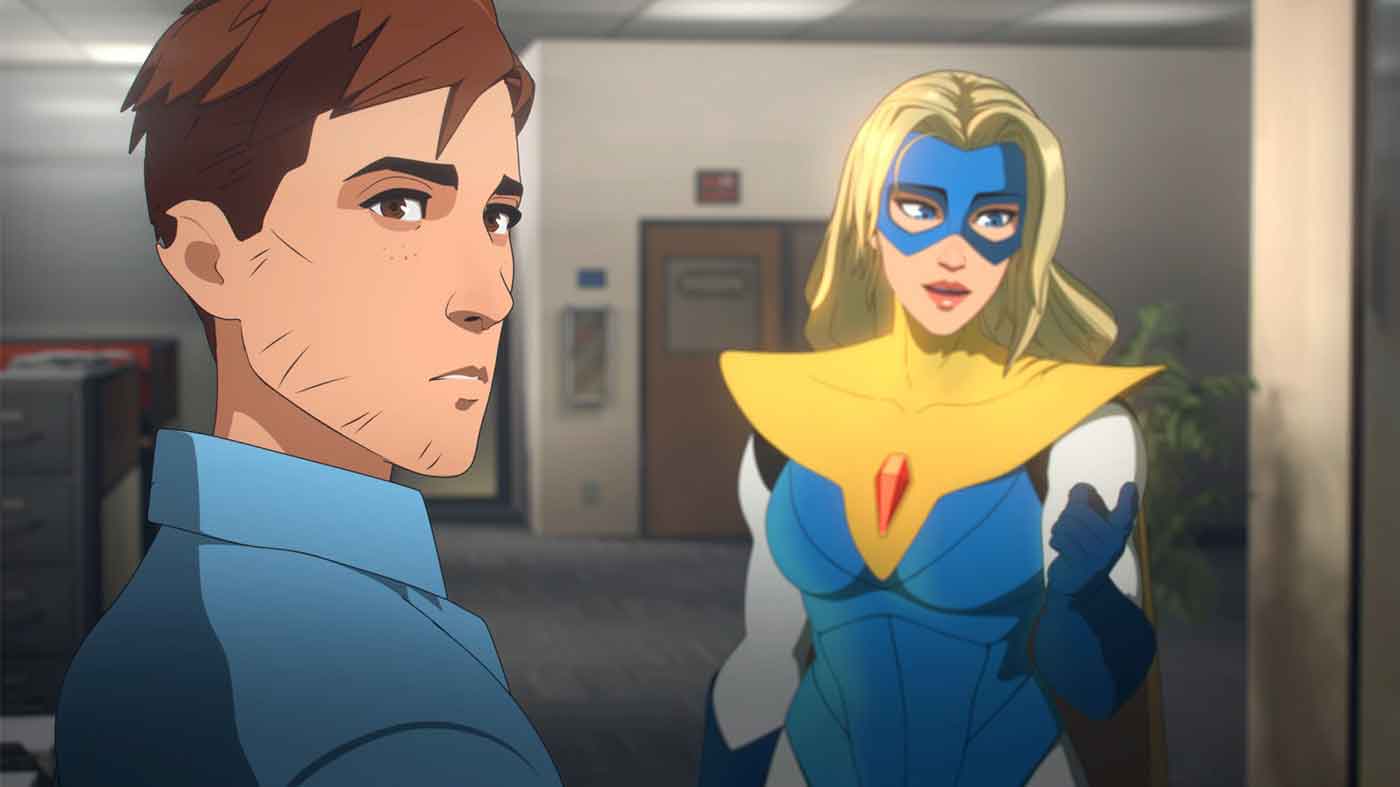
After being popularised in properties like The Boys and Invincible, Dispatch’s world is one where the presence of superheroes and villains is an everyday normality—just a part of the humdrum nature of existing. After his stellar-powered mech suit is destroyed during an altercation with Shroud, the villain who murdered his father and original Mecha Man, Robert Robertson reluctantly takes a desk job as a dispatcher with the Superhero Dispatch Network. He’s tasked with turning around the attention span and poor fortunes of Z-Team, an unreliable, irresponsible group of villains and some kind of suicide squad.
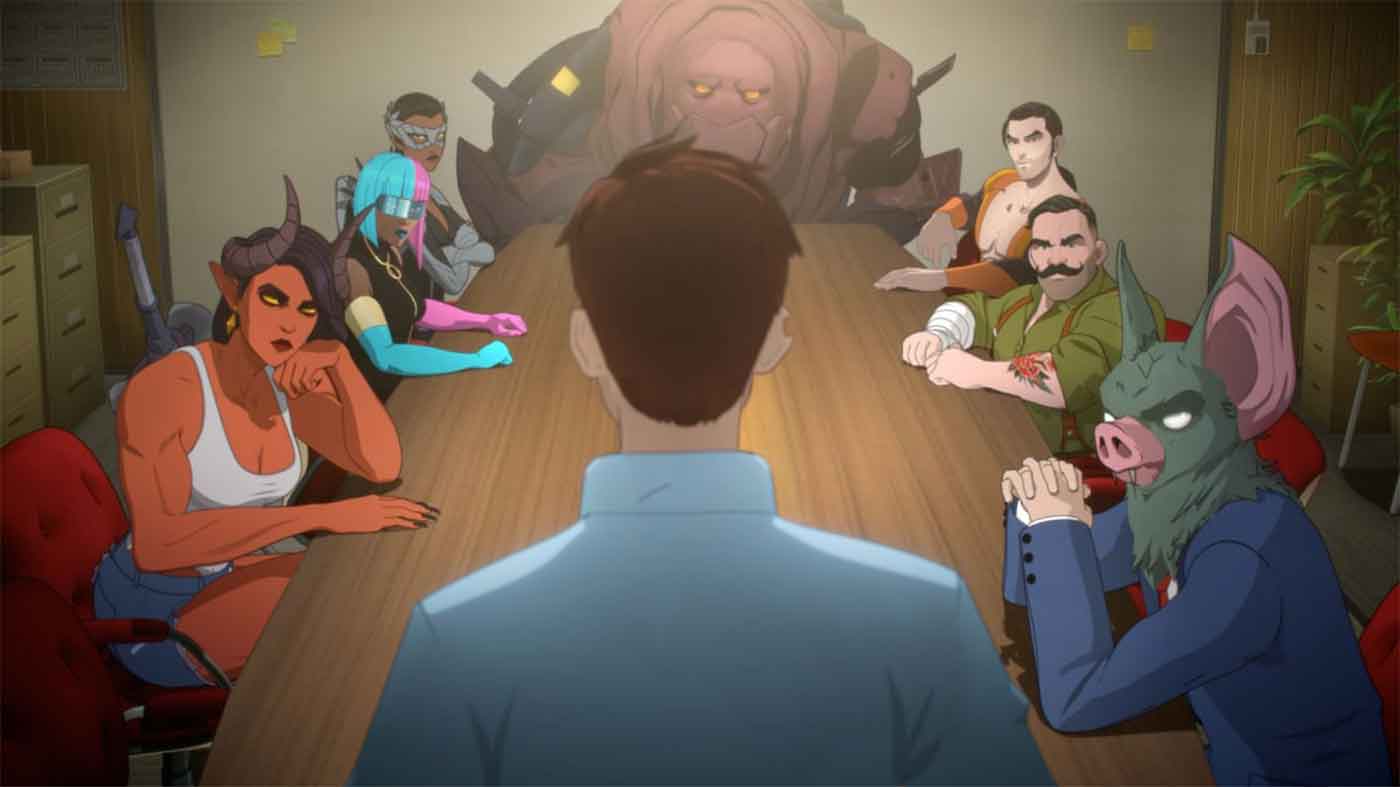
The game’s ensemble cast, from top to bottom, is a lovable, ragtag bunch of misfits that I came to adore over the span of the eight episodes. The game’s casting agent deserves a pat on the back, with talent plucked from both Hollywood’s A-list and the internet’s deep pool of influencers and content creators; there truly isn’t a poor performance among them. Clearly, performances from Aaron Paul and Jeffrey Wright are chief among them, given their resumés; however, the likes of Laura Bailey, Matthew Mercer, and Erin Yvette all reminded me that this is their medium. Even the likes of Jacksepticeye and Alanah Pearce, who are relative upstarts in the acting field compared to the others, were scene-stealers with their more limited roles.
By placing the player behind the curtain within a superhero workplace, and getting to see and manage all of the personalities and relationships that exist within it, they were able to do some interesting things with the contrast between public figures, their private lives, and how heroes can struggle to grasp and hold onto a purpose. Dispatch’s writing, which is among my favourites within the superhero genre, is also tremendously witty and funny, and, although Robert himself is far from “the straight man,” the freedom that was seemingly given to these other more online personalities to be funny is great. I found Flambé to be a hoot, especially his stirring karaoke rendition of Meredith Brooks’ “I’m A Bitch”.
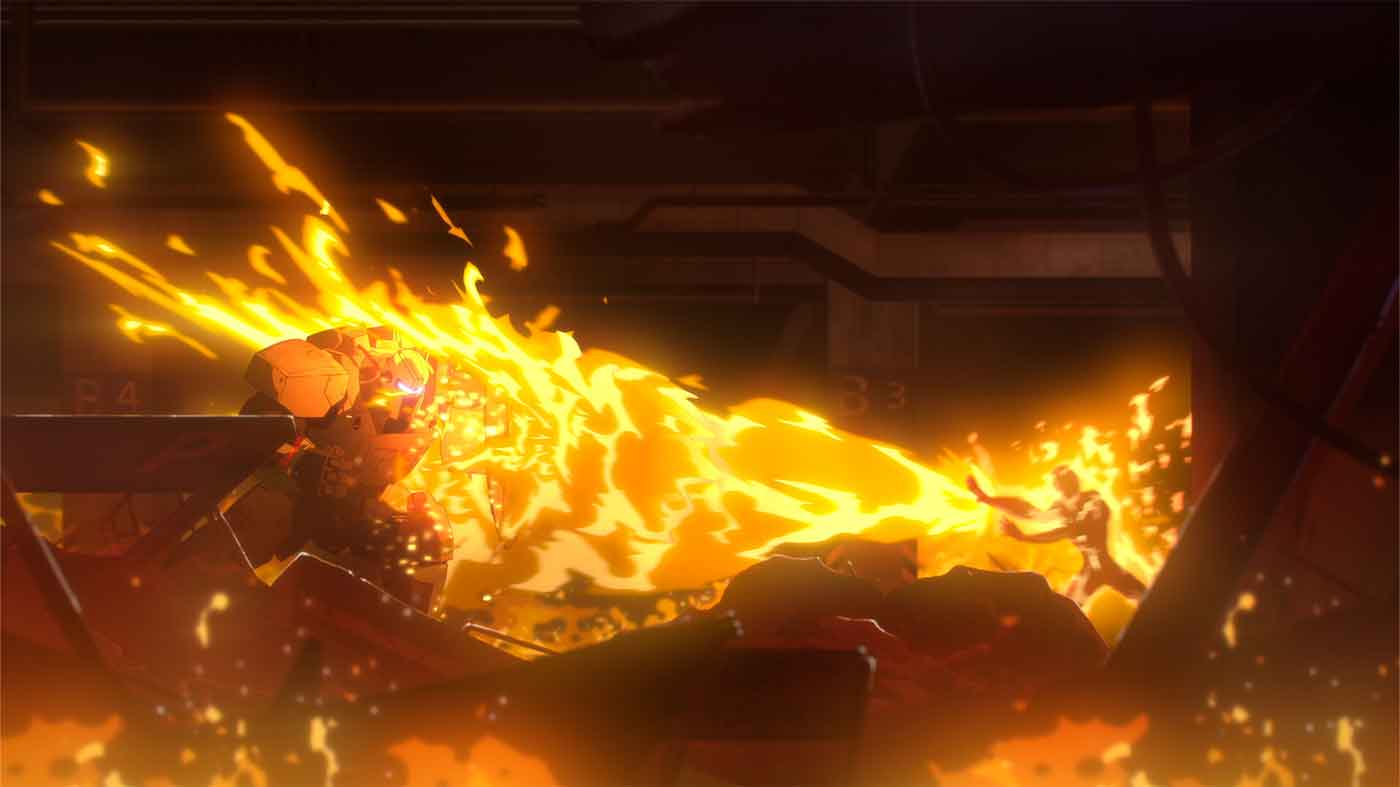
Being as crude and violent as it is, I don’t imagine Dispatch’s comedy will work for everyone, but I appreciate a callback gag about a short strongman named Punch Up uppercutting enemy dicks as much as the next guy.
With how problematic episodic releases became for Telltale near their end, I feel as though the strategy AdHoc settled on for Dispatch, a month-long schedule of two weekly episodes, served the game’s ability to remain in the conversation through tantalising cliff-hangers and immaculate pacing, thanks largely due to the fact the story is delivered across eight TV-length episodes as opposed to five longer ones as was the case with early Telltale.
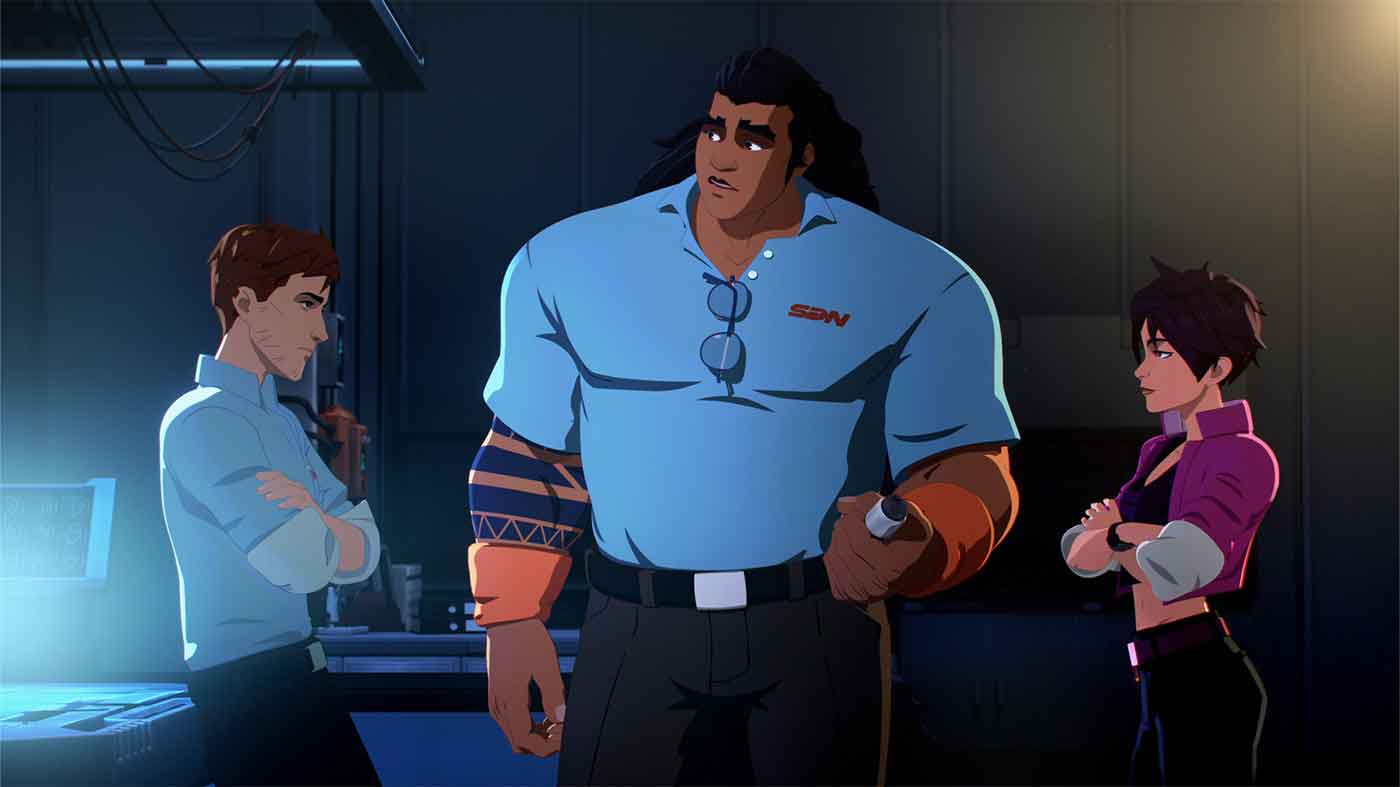
Many people would say Dispatch would have made a damn fine television series, and that removing the gameplay in its entirety would render it a better product. Look, I can’t entirely disagree, but that’s more a credit to how sublime the writing and animation is. The video game that Dispatch is is absolutely fine; in fact, I much prefer its mix of being the man in the chair, system hacking, and quick-time prompts to what Telltale games used to be. I perhaps gave too much credit to games like The Walking Dead on the back of its storytelling alone, but how dispatching loops back to what I feel the point of the narrative is, Robert finding and becoming familiar with this sort of adoptive family, is a far better gameplay hook than playing item fetch.
Dispatching itself scratches the logistics lobe of my brain; it’s a balancing act of emergency response, navigating office politics, and nurturing growth among your team of criminals. As urgent events pop up on the Torrance city map, you’ll need to decide under time pressure who the right person for the job is. Of course, there’s an attributes graph for each member that’ll serve as a window into their key strengths and shortcomings. For example, you wouldn’t likely send Golem, a hulking clay colossus, to be the glittering mouthpiece at a press conference when you’ve got Prism, a literal pop star, on staff.
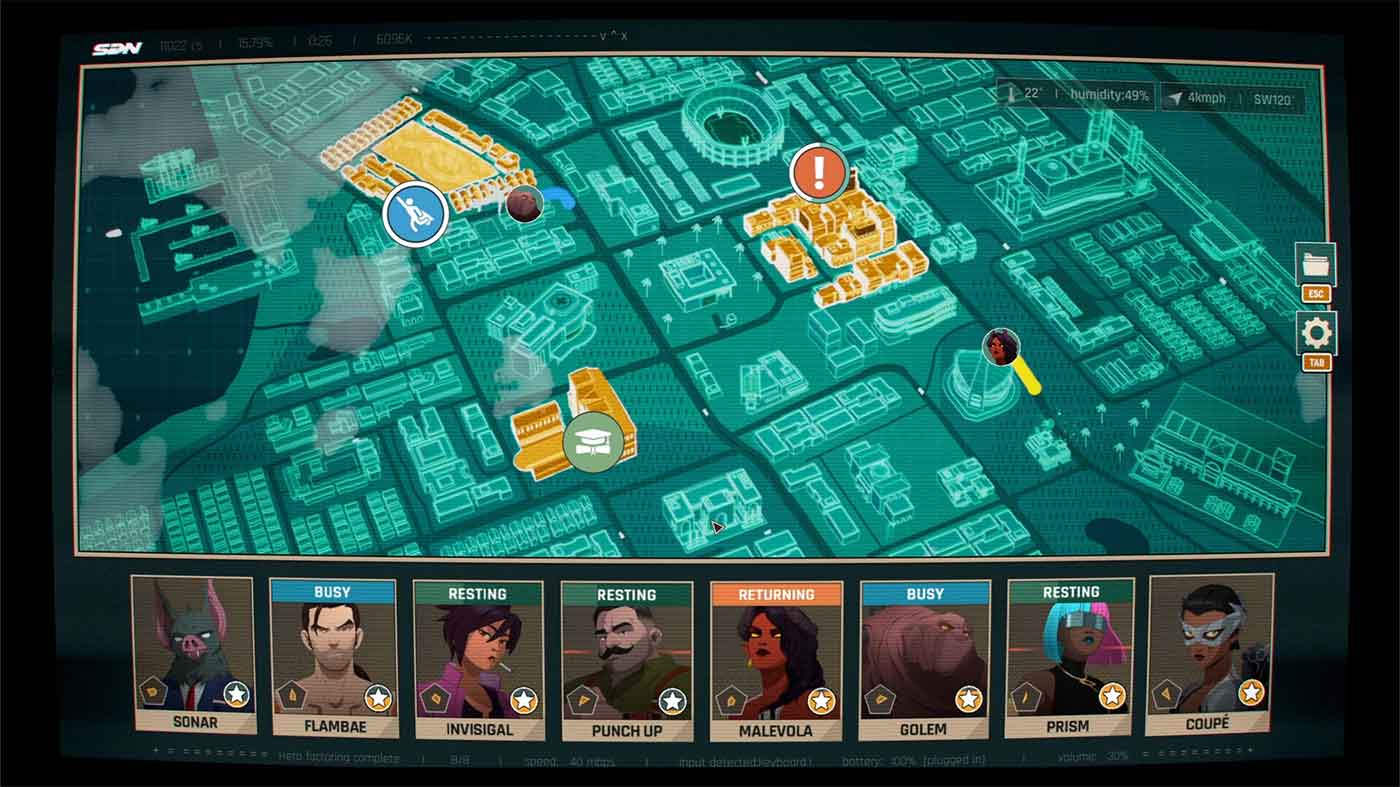
Success in the field will grant skill points to either pour into a hero’s chart, and I enjoyed the freedom to min-max or create a more well-rounded jack of all trades. There’s also enormous satisfaction that comes from being able to quell an issue using a character-specific skill because you sent the right person to begin with.
Not only is the game scripted wonderfully, but it’s also shot and choreographed better than any recent Marvel flick. In terms of animation and presentation, Dispatch can stand proudly shoulder-to-shoulder with the likes of Invincible, a world-renowned, flagship animated superhero series on one of the world’s biggest streaming networks. If that isn’t a complement, considering it likely cost a fraction of Invincible’s budget to create, I’m not sure what is. I feel as though the soundtrack is a little understated, although when it kicked into gear, delivering its prototypical Los Angeles synth-pop vibe, it was generally used to great effect and softened the bittersweet blow of having the credits roll. Similarly, I feel like the few licensed songs, all coming from relative unknowns, were A-grade picks, so kudos are deserved for that curation.
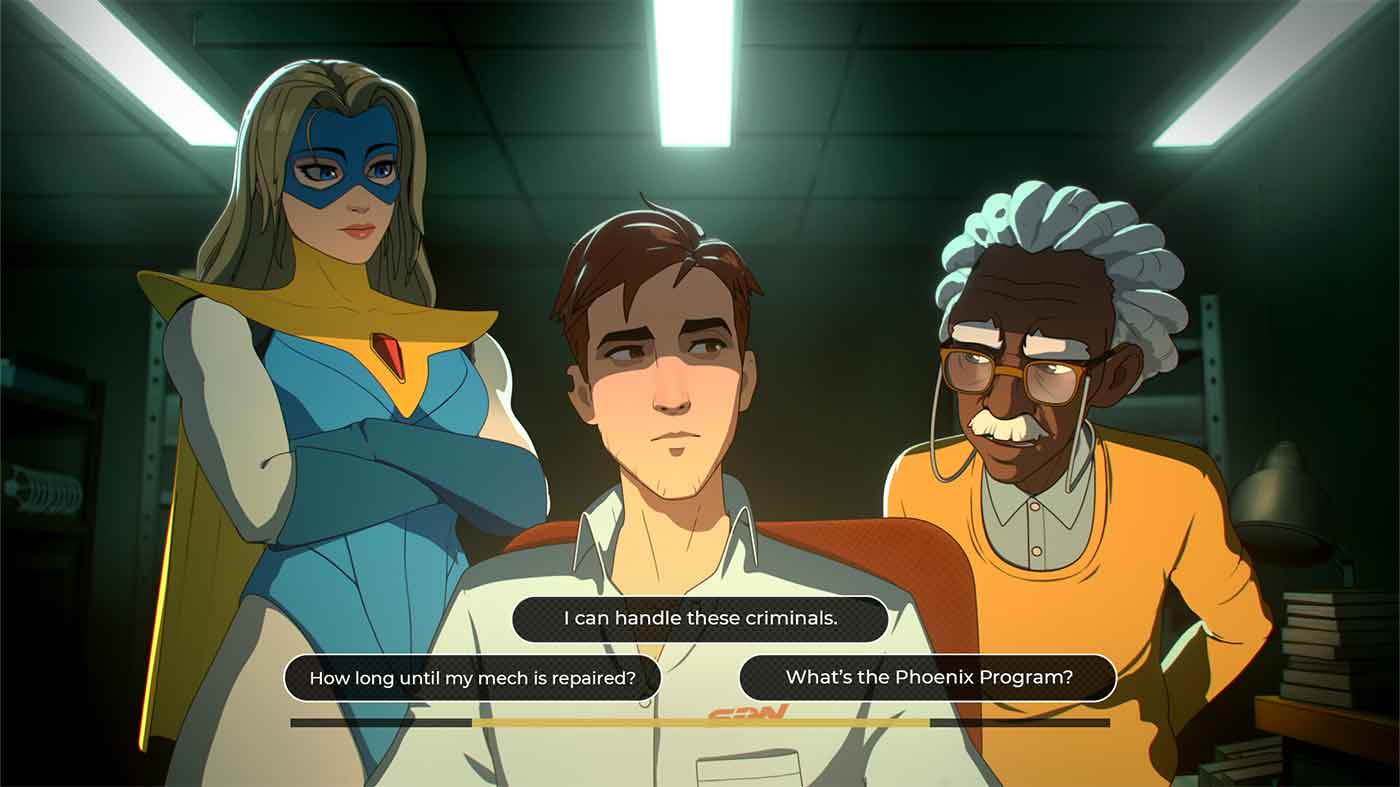
Dispatch’s story, like the Telltale titles of old, is effectively a ‘choose your own adventure’ story, full of twists, turns, and permutations for you to uncover if you want to. Although I do like ownership of my canon story, I aim to run it back and play the game as my mind’s anti-Robert. The game’s endings are so radically opposing, I’d be eager to see how AdHoc would approach a second series in terms of what is and isn’t canon. I’d absolutely welcome a follow-up; however, I do feel Dispatch wrapped up neatly enough to exist as its own perfect little tale.
And as someone who’s played his share, Dispatch is the best “Telltale game” of them all.
The PlayStation 5 version of this game was played for the purpose of this review. A digital review code was provided by the publisher.