



Press Start may receive a commission when you buy from links on our site at no extra cost to you.
Last year’s FC 26 event felt noticeably smaller, so seeing a room this packed before the presentations had even begun had me quietly thinking EA was about to show something bigger than the annual coat of paint the series has often been criticised for. Let’s be honest, FC hasn’t exactly built its reputation on dramatic year-to-year reinvention. Every September we’re promised smarter football, better movement and more authenticity, before collectively spending October arguing about cutbacks on the internet.
This year, though, things genuinely feel different. Over the next few days I’ll have separate deep dives on The Grounds, EA’s ambitious new social football playground, along with an interview featuring the developers behind both The Grounds and Clubs. There’s simply too much to cover without turning this preview into the football equivalent of War and Peace. This piece is about one thing only.
After spending several hours playing EA Sports FC 27, does it finally feel like EA has made the leap we’ve all been asking for?

For the first time in quite a while, my answer isn’t wrapped in caveats. I genuinely think this is the best-playing FC game I’ve had in my hands. That’s not because EA has reinvented football. If anything, the smartest thing the team has done is resist the temptation to throw out systems that already worked. Instead, they’ve focused on improving the conversations happening between players on the pitch. Teammates think faster. Defenders react more intelligently. Passing feels less like solving a maths equation and more like… well… football.
Oddly enough, the loudest reaction during the gameplay presentation had nothing to do with AI, passing or defending. It was a header. More specifically, a player diving forward to bury a laying-down header inside the six-yard box. Half the room laughed. The other half immediately had the same thought.
“Well… online players are absolutely going to find a way to abuse that.”
If you’ve spent any serious time in Ultimate Team or Clubs, you’ll know exactly why that reaction happened. The FC community has an uncanny ability to discover whichever mechanic is two per cent stronger than everything else and proceed to use it approximately eight million times until EA eventually swings the nerf hammer. Near-post corners, trivelas, bicycle kicks, green-timed finesse shots, cutbacks. If there’s cheese on the menu, somebody will build an entire diet around it.

Whether the laying-down header joins that illustrious list remains to be seen, but it perfectly captured something I noticed throughout my hands-on. FC 27 is introducing mechanics with genuinely high skill ceilings, and that’s exciting. It also means the competitive community is inevitably going to poke and prod every single one of them until they either become beloved additions or internet-wide headaches.
Fortunately, the foundation underneath all of it feels rock solid.
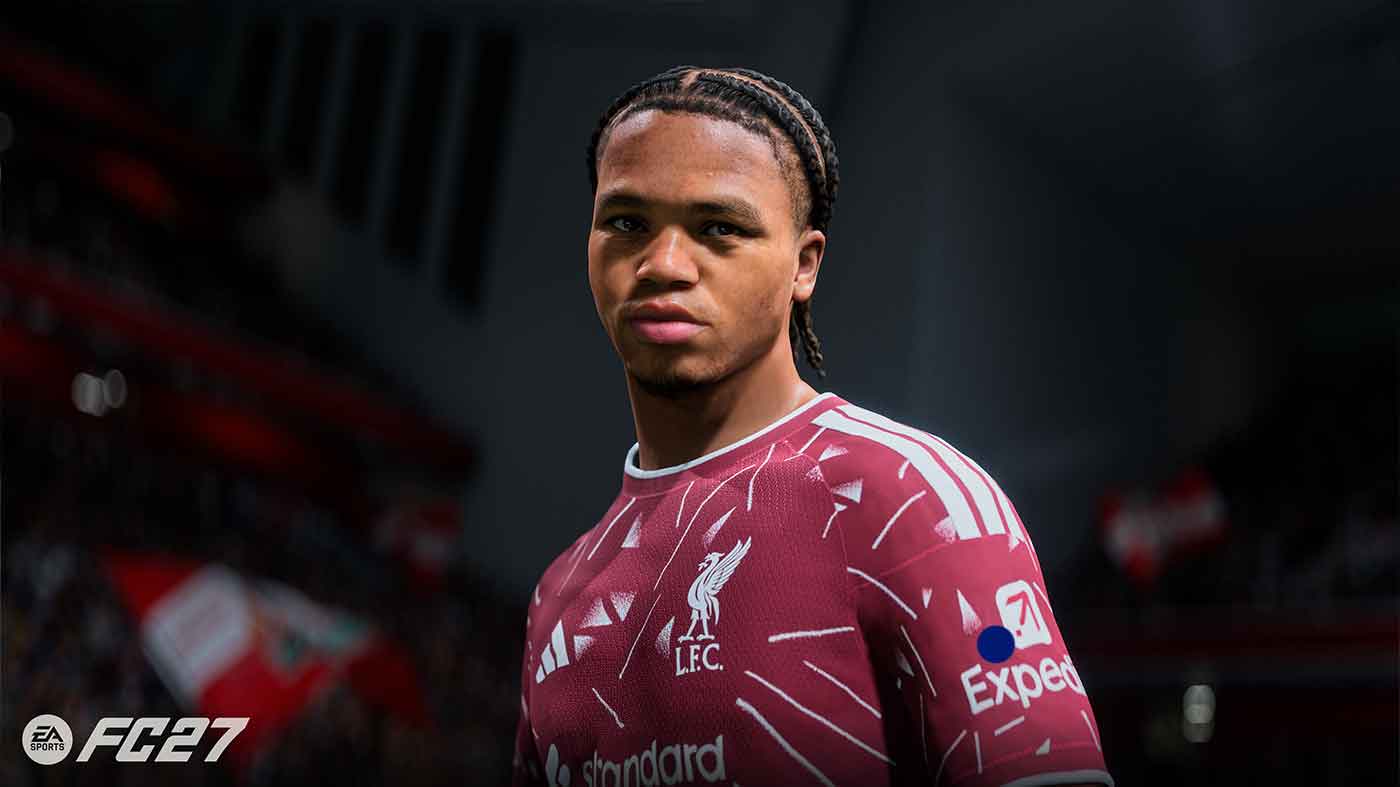
The biggest improvement is unquestionably attacking intelligence. For me, this is the smartest off-the-ball movement I’ve experienced since FIFA 17, which remains one of the high-water marks for intelligent attacking AI in the series. That comparison isn’t nostalgia talking. Throughout my hands-on, teammates consistently found passing lanes before I even thought about creating them manually. Wingers weren’t glued to the touchline waiting for permission to overlap. Strikers curved their runs to stay onside. Midfielders recognised space opening between defenders instead of politely standing behind an opponent like they were queuing for coffee.
It sounds incremental. It doesn’t feel incremental. For years, experienced players have almost treated manual trigger runs as mandatory. Want your striker to move? Trigger him. Want an overlap? Trigger it. Need support? Better start flicking bumpers because otherwise your teammates are apparently admiring the grass. This year I found myself barely using the mechanic. That’s because the AI was already doing what I’d hoped it would.
Ironically, EA has actually toned trigger runs down. Players now make shorter automatic sprints before requiring another command, making them much harder to exploit repeatedly. Under normal circumstances I’d see that as a downgrade. Here, it feels like the developers are quietly telling players, “Trust us. Let the football happen.”
Most of the time, I did. Passing naturally benefits from this improved movement. Better runs create better angles, and better angles create more interesting football. Through balls have also received an important adjustment. Gone are the days of wildly mis-aiming a pass only for the game to generously curve it around a defender anyway. Assistance has been dialled back considerably, meaning your vision actually needs to match your execution.
It’s one of those changes that might frustrate people during their first few matches before eventually becoming something they never want to lose.
That’s a recurring theme throughout FC 27. Skill is replacing automation.
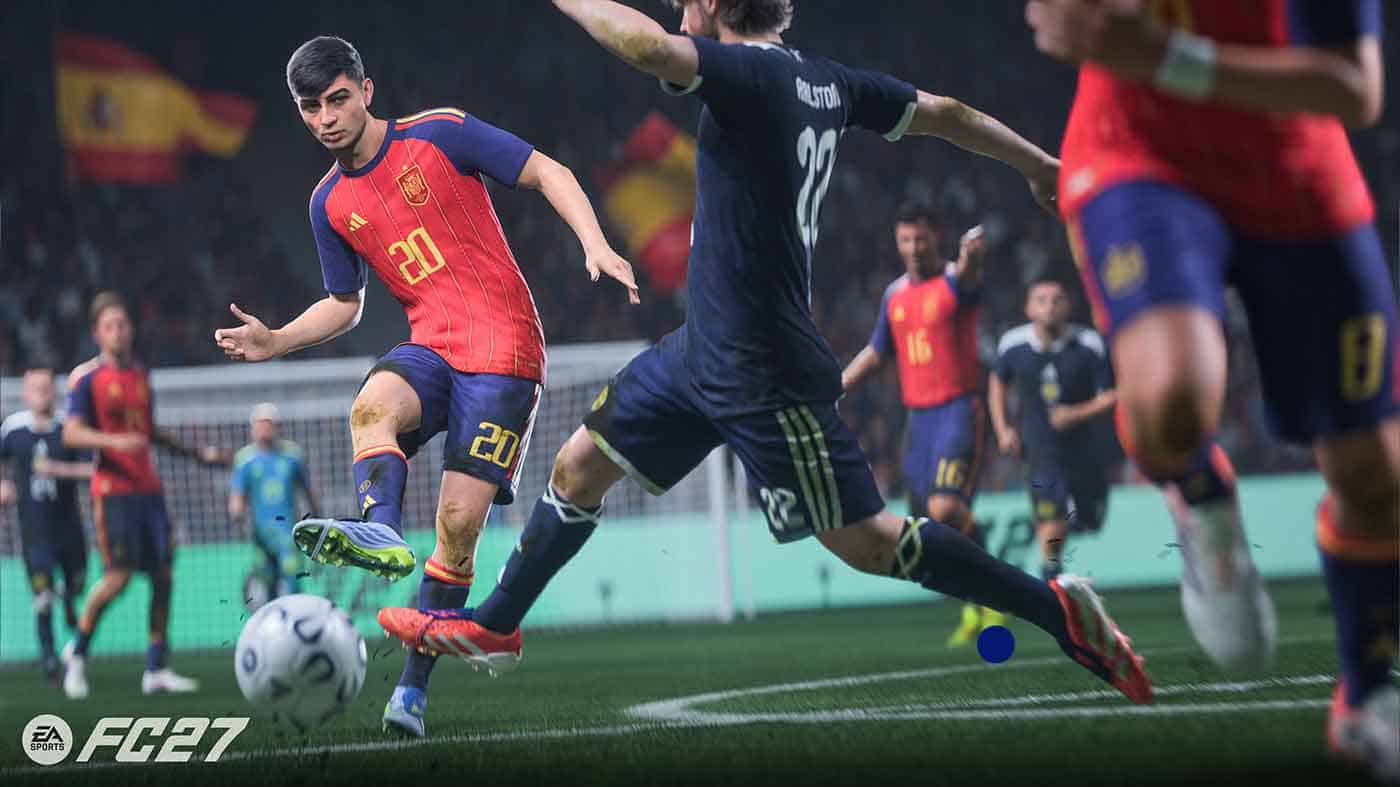
Defending is perhaps the best example of that philosophy. One of the biggest community complaints in recent years has been AI defenders making tackles players never actually earned. EA has aggressively targeted that behaviour by reducing automatic tackles, shrinking AI interception ranges and encouraging manual defending instead.
At the same time, they’ve made user-controlled tackling significantly more effective by expanding tackle reach and improving ball retention after successful challenges. In simple terms, if you defend well, you’ll be rewarded more consistently. If you rely on the AI doing your job for you, life is about to become considerably more stressful.
THE CHEAPEST PRICE: $99 WITH FREE SHIPPING FROM AMAZON
As someone who still occasionally launches into tackles with all the grace of a shopping trolley rolling downhill, I appreciate the confidence. Whether my thumbs repay that faith remains another matter entirely.
Responsiveness has quietly become another star of the show. Some of the improvements sound painfully technical during presentations. Animation exit curves. Turning calculations. Movement trajectories. It’s enough jargon to send half the room reaching for another coffee.
Controller in hand, though, the results are immediately obvious. Players accelerate naturally after passing instead of briefly sticking to the turf. Tight turns no longer feel like your footballer suddenly remembered they left the oven on. Dribbling transitions flow together in a way that makes the entire game feel cleaner without necessarily making it faster.

Interestingly, Sam Rivera mentioned that at one point development actually swung too far in the opposite direction because players had become so responsive. The solution wasn’t to remove responsiveness but to slow football itself back down until it resembled the real sport again.
That’s probably the most encouraging thing my ears received all day. EA doesn’t seem interested in creating a faster game. It seems interested in creating a smarter one. Not every new addition left me completely convinced, however. The biggest question mark hanging over my head is off-balance dribbling.
Inspired by the preternatural way Messi somehow stays upright despite defenders treating him like a pinball, the mechanic allows technically gifted players with elite Balance, Agility and Dribbling to retain control while stumbling through contact. When it works, it looks sensational. It also works… a lot. Perhaps too much.
My concern isn’t that the mechanic exists. Quite the opposite. Football desperately needs more individuality. My concern is whether elite dribblers become too difficult to dispossess once competitive players master the system. We’ve all lived through gameplay cycles dominated by one mechanic that simply became too efficient, and I’d hate to see this become another one of those.
It’s a concern rather than a criticism, particularly because EA repeatedly emphasised the build we played is still very much work in progress.
My second hesitation surrounds the redesigned corner system. Rather than simply delivering the ball and letting attributes decide the outcome, corners now become a genuine two-stage mechanic. You aim and power the delivery before immediately taking control of your attacker inside the box, manually fighting for position and timing your run to meet the cross. On paper, I love it. It introduces genuine player skill into what has traditionally been a largely automated sequence.
My only lingering concern is history. The FC community has an incredible track record of solving systems developers never expected. We’ve seen entire competitive metas revolve around near-post corners, back-post crosses or using unlikely aerial threats because specific animations proved stronger than intended.
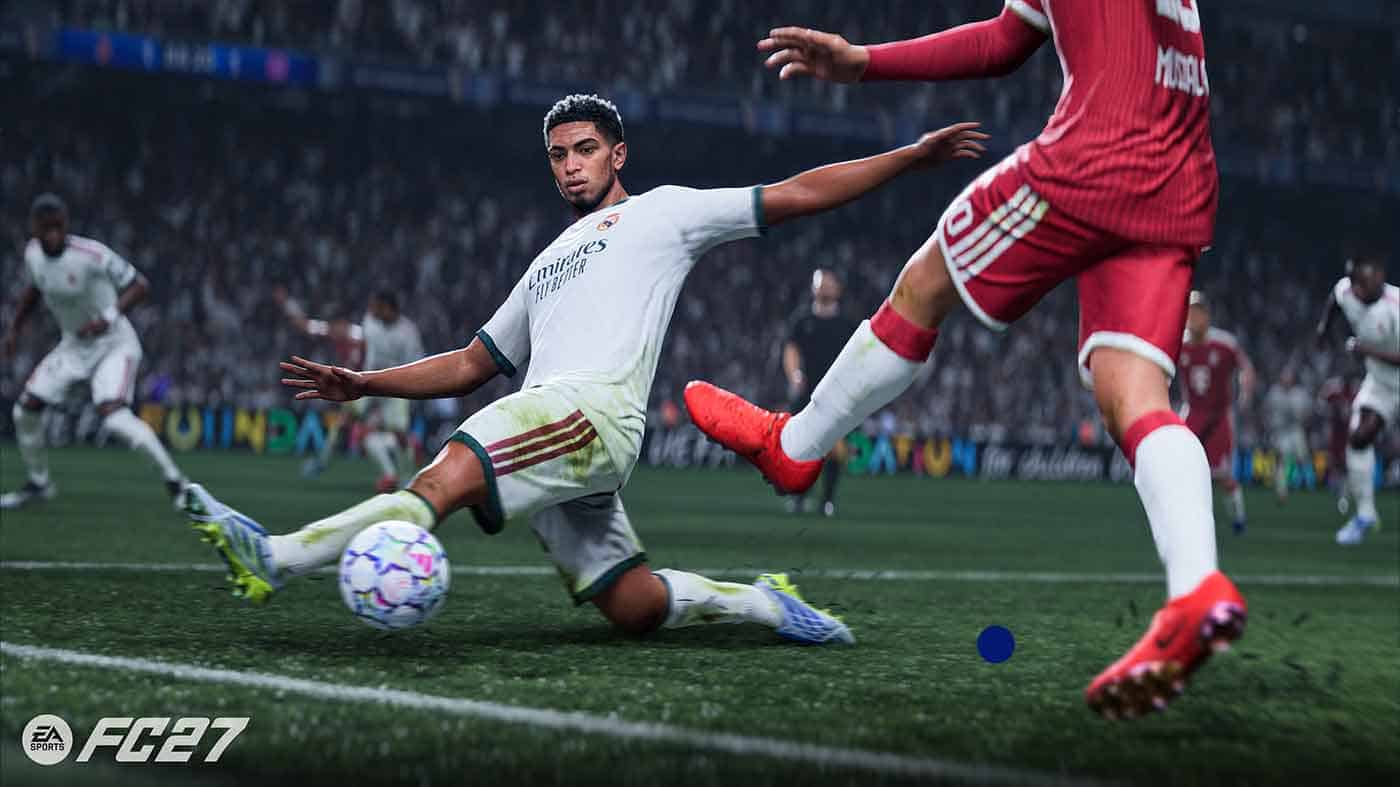
My hope is this new system produces greater variety rather than simply replacing one exploit with another. That said, I’d much rather have an ambitious mechanic that occasionally needs balancing than another year of identical set pieces.
Perhaps the biggest takeaway from my time with FC 27 is that EA appears far more willing to trust its players. Passing demands better vision. Defending rewards better timing. Attacking rewards better movement. The game constantly nudges you toward making smarter football decisions instead of relying on systems quietly correcting mistakes behind the scenes.
That’s a philosophy I’ve wanted this series to embrace for years. Of course, the true test won’t happen inside EA’s beautifully polished Vancouver aerodrome. It’ll happen once millions of players around the world inevitably discover combinations, tactics and exploits the devs best brainiacs never imagined. That’s football games in 2026. Launch is merely kick-off.

After several hours with EA Sports FC 27, though, I’m leaving this glorious land of maple syrup far more optimistic than I arrived.
This isn’t just the best-playing FC game I’ve had in my hands. It’s the first time in years I’ve finished a preview session already looking forward to seeing what players with slightly sweater thumbs than me are capable of doing with it. If my mid-level self can spot this much potential, I can’t wait to see what the bonafide virtual booters think of it after a kick about.
The Author of this article travelled to Vancouver as a guest of EA. FC 27 is out on September 25th. The cheapest price for pre-order is $99 with free shipping from Amazon.