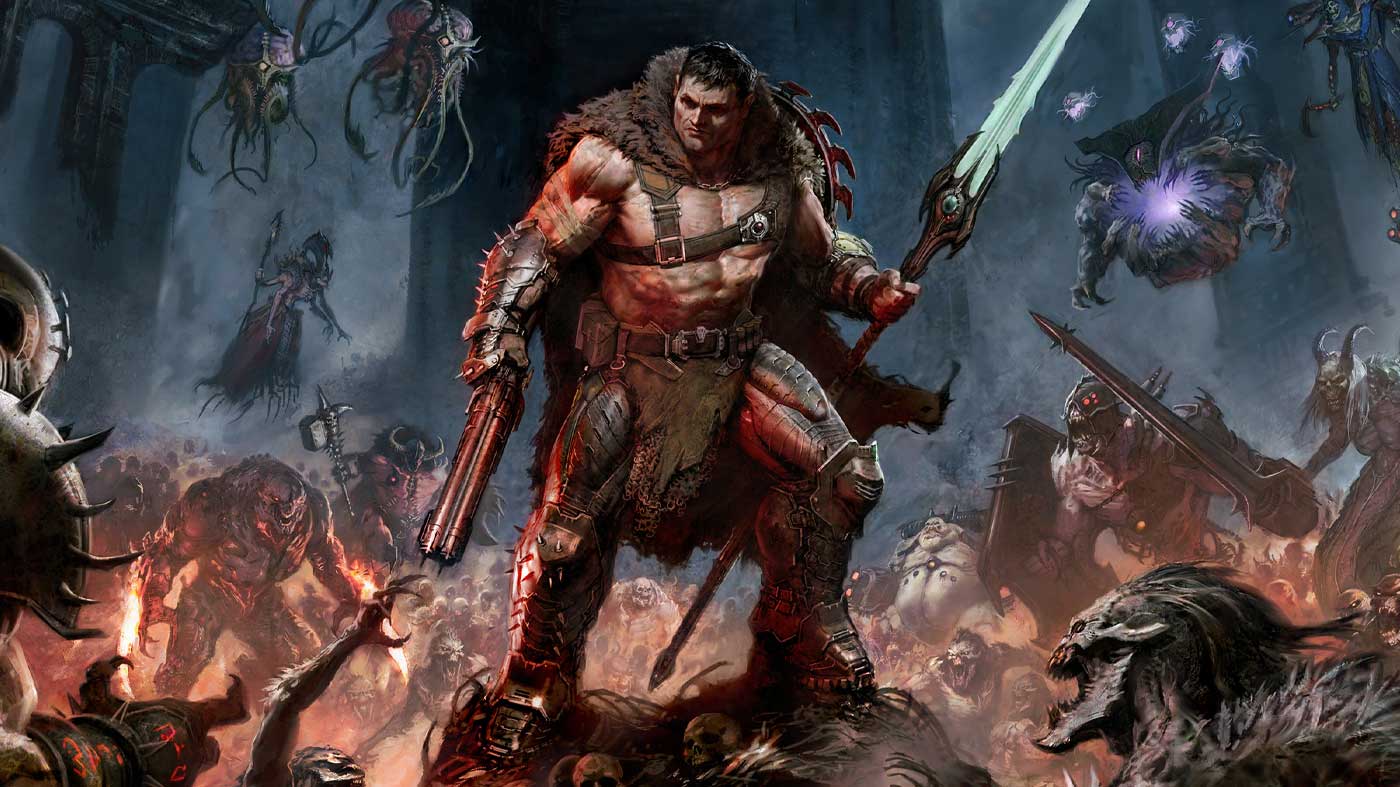



Last year’s DOOM: The Dark Ages was a significant departure from 2020’s DOOM Eternal. Where Eternal is an exercise in lethal precision and efficiency in how you dispatch demons and approach arenas, The Dark Ages feels more flexible and less prescriptive in its sprawling levels and approach to combat and weapon sandbox. It’s an experience I immensely enjoyed, but it never quite reached the heights that Eternal did for me personally.
As DLC to the base game, DOOM: The Dark Ages | Revelations feels like it’s trying to bring The Dark Ages more in line with Eternal’s core pillars. Asking more of the player in moment-to-moment combat, resource management, and exploration, all while continuing to proudly brandish the stand-and-fight motto worn by The Dark Ages. The result is a sublime fusion of two incredible DOOM gameplay loops that breathes new life and replay value into The Dark Ages.
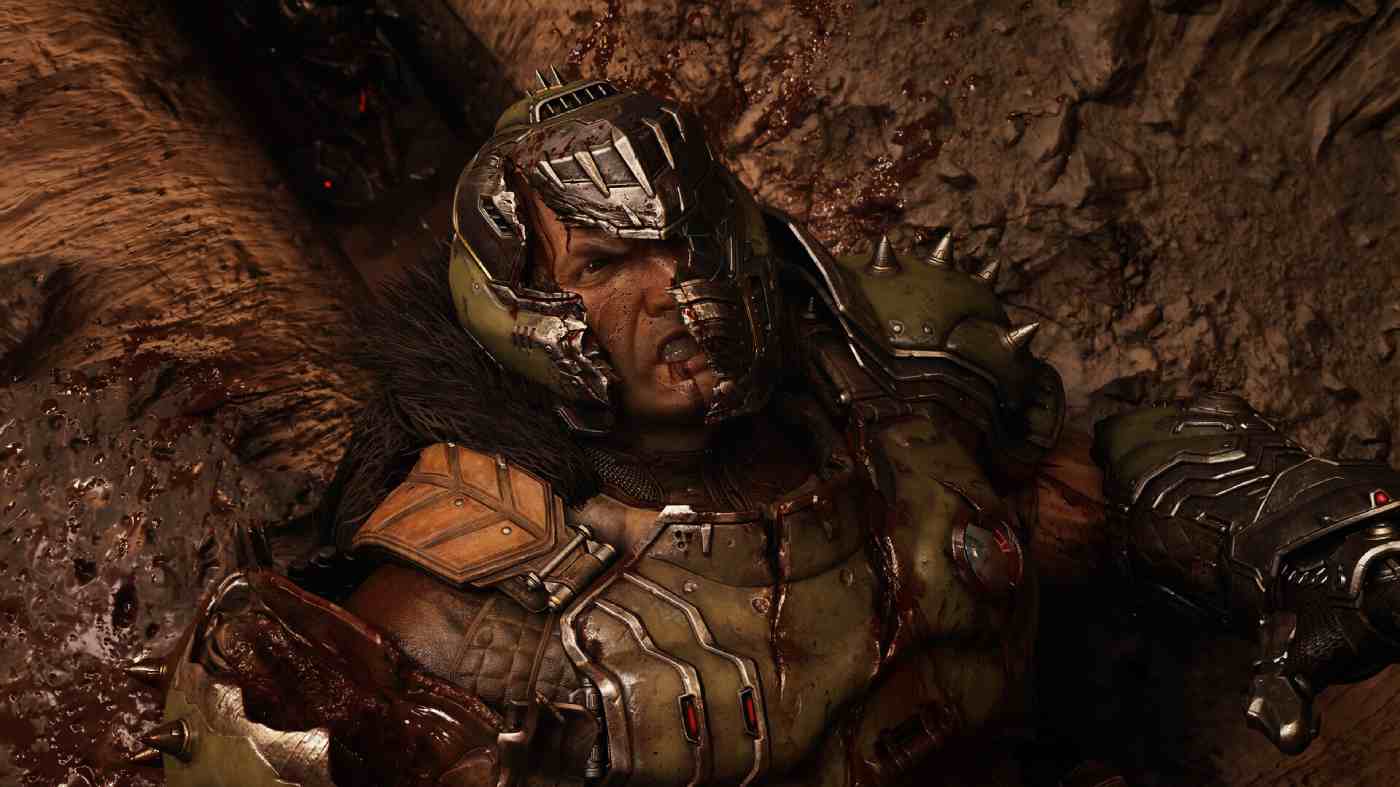
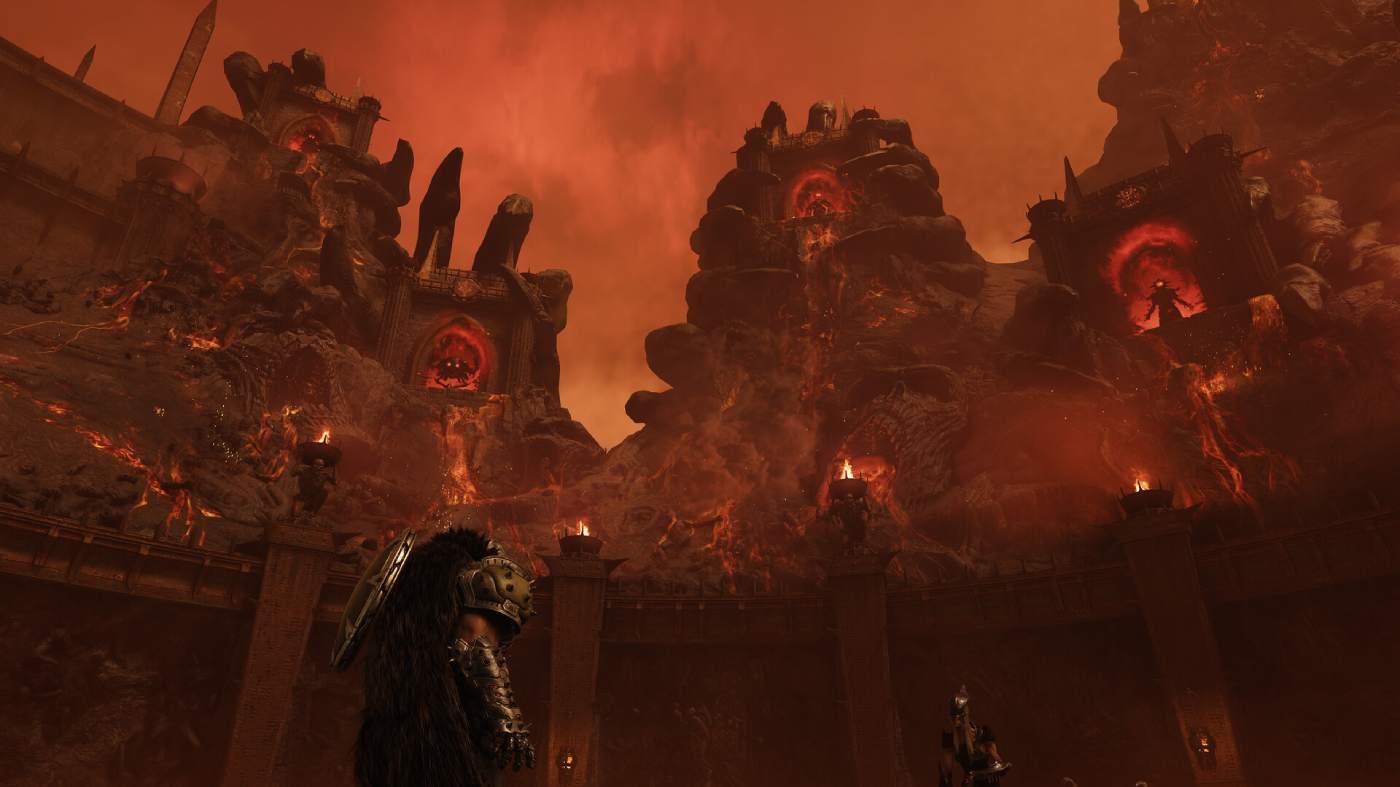
After the events of the base game, Argent D’Nur is undergoing a religious conflict as tension between believers and non-believers of the Maykrs reaches a boiling point. Unhappy with the Slayer’s refusal to ally with the Khan Maykr, she sends him to confront The High Council, a ruling body in charge of hell in the absence of any real authority. As planned by the Khan Maykr, the Slayer is bested by the council due to his past trauma and is cast into Purgatory.
With his armour and Shield Saw broken and his condition worsening, the Slayer is found and nursed back to health by an ancient demon called the Architect. He informs the Slayer that he must collect three Ascension Stones to escape Purgatory, each dredging up events from the Slayer’s past so he can work through his guilt and self-doubt. It’s only once these personal demons are resolved that the Slayer can return to expose the Khan Maykr.
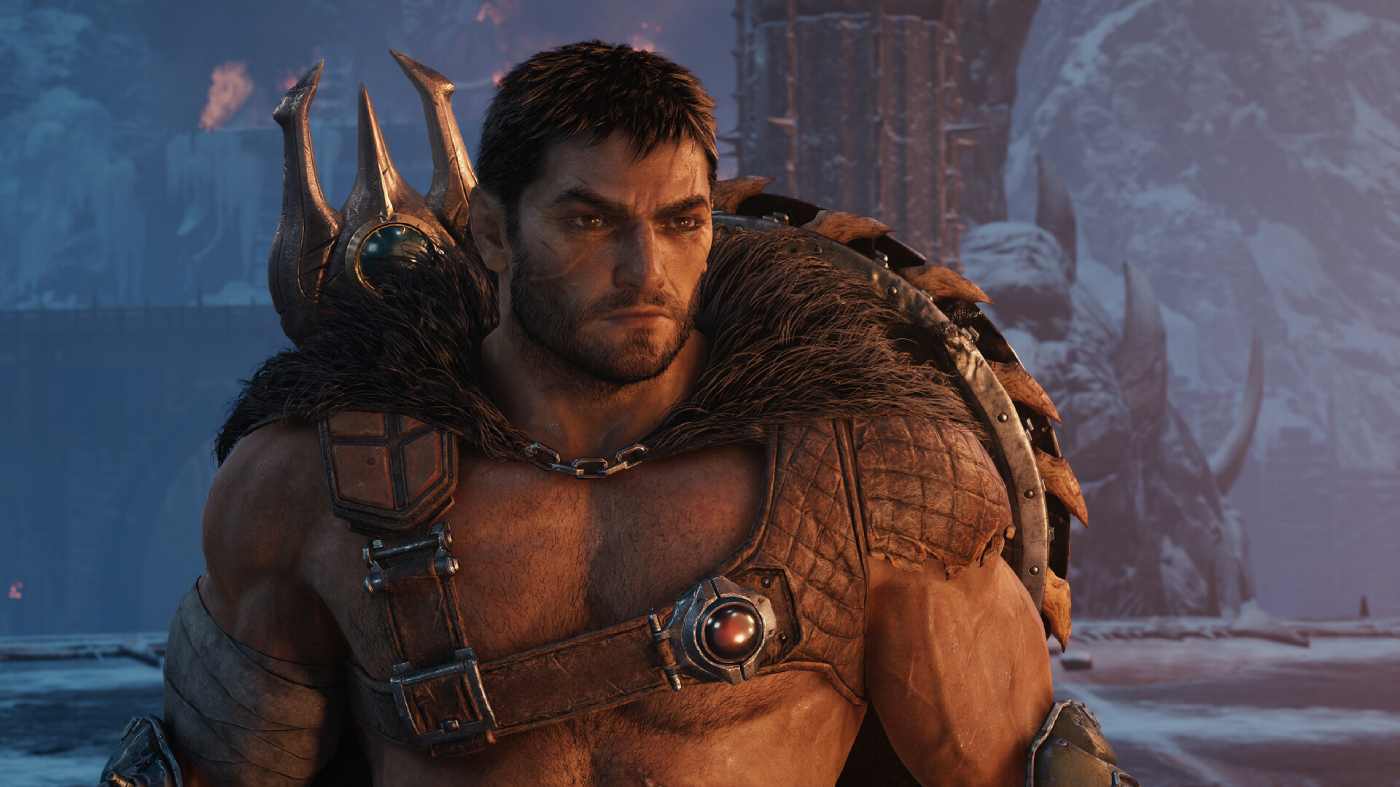
What follows is a narrative less focused on the never-ending conflict between heaven and hell and more on the Slayer himself. I see what the team was going for here, especially with their attempt to explore the origins of the Slayer in more detail, but I feel much of the narrative around his past ends up feeling relatively surface-level. There just isn’t a deep enough dive into the events and how they shaped the Slayer himself. There’s also a fair bit of screen time given to Marok as the Khan Maykr’s new champion, but this also feels similarly undercooked.
In saying that, there were quite a few moments that I got a kick out of. For one, it’s always cool to see the Slayer doing Slayer stuff. Revelations has plenty of great moments in this regard, with the events preceding the final mission standing out as a particular highlight. There’s also a whole heap of interesting lore drops inside of the codex here, about the Slayer, the Architect, Purgatory, and more. If you’re into that stuff, Revelations has a lot to offer.
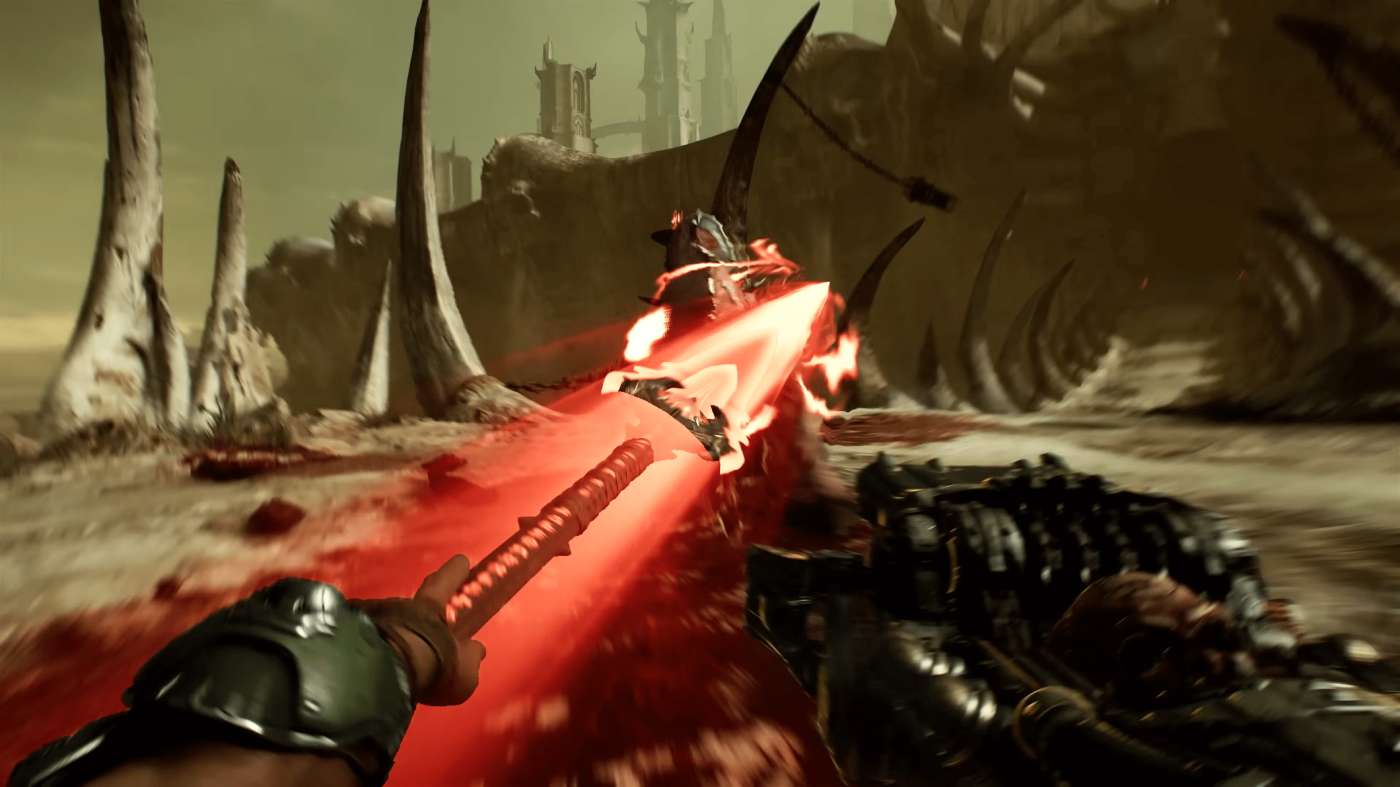
While the Slayer’s trusty Shield Saw is rendered unusable upon reaching Purgatory. This gives way to the Chain Spear, a multi-faceted spear complete with its own meathook, parry capabilities, and suite of ranged and melee options. This is how the Eternal design tendencies come into play. While the Chain Spear can parry projectiles and melee attacks like the shield, you also gain access to a dash for faster movement and last-second dodges in place of blocking.
The Chain Spear also has some other attacks you’ll eventually gain access to. There’s a stab, an aerial ground slam, and even a spear throw. The catch with all these options, though, is that they all cost a new resource called Empowerment. Empowerment is built up in combat by executing perfect dodges with the Chain Spear. While this is fairly straightforward at first, it grows in complexity immensely as you purchase upgrades for the Chain Spear, buffing these attacks further and providing new ways for you to generate Empowerment.
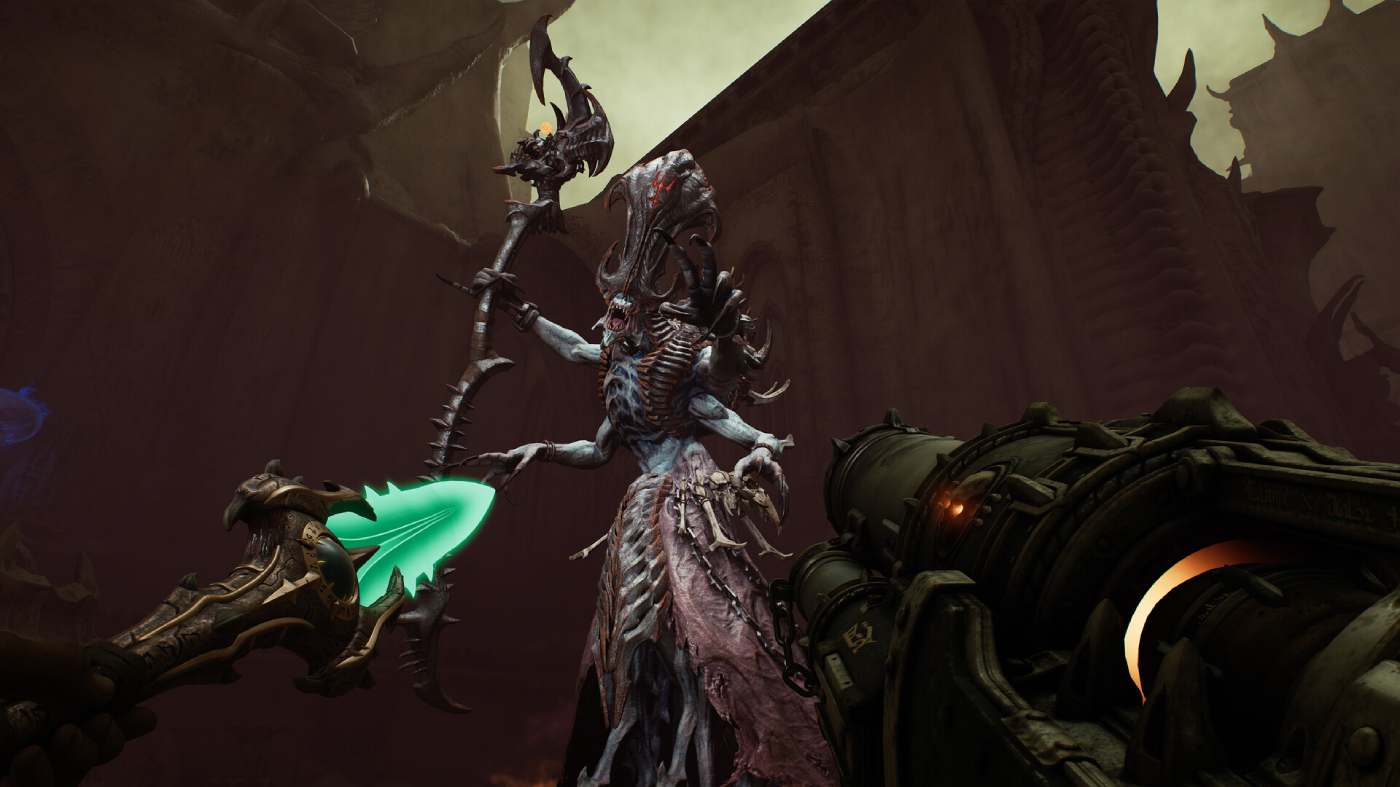
This ramps the speed and pace of the combat quite a bit, especially when you’re making liberal use of the meathook to grapple onto demons and grapple points in arenas. If you ever want to slow it down, you can swap back to the Shield Saw once it’s repaired by the Architect. I genuinely can’t get enough of the Chain Spear. There’s an adjustment to get to grips with it, especially with all the options it brings to combat and how they interact with demons. Once it all clicks, though, the rush from some of these endgame combat arenas brought me right back to the highs of Eternal.
Many have perceived the Shield Saw and Chain Spear to be used separately – pick one or the other and run with it as your main playstyle. Where Revelations truly excels, though, is when you use both in tandem, swapping between them for different demon types and combat situations. When you go toe-to-toe with a Cyberdemon or an Agaddon Hunter, you might want to use the Shield Saw for quick parries, while something more airborne or mobile, like the returning Archvile, is better dealt with by using the Chain Spear.
The capabilities of the Chain Spear also afford more complexity in boss and demon design. The aforementioned return of the Archvile is really felt in the arenas of Revelations, as does the introduction of the Warlock, which covers the battlefield in smog and buffs allied units. They shake up how you prioritise certain targets in combat, and force you to be more considered in how you use your tools, and that sentiment rings even more true in the case of the Chain Spear and its Empowerment charges.
Once you get into a flow state with both of these tools, DOOM: The Dark Ages | Revelations feels unbelievable – especially on Nightmare difficulty. Thinking about how you use your Empowerment charges to counter certain demons, swapping to the Shield Saw to shield bash or toss it into a heavy demon and keep them stunlocked while you pull the Chain Spear back out to finish the job. It feels like a return to the lock-and-key design of Eternal without being too forced, raising the skill ceiling exponentially on a game I’d already mastered.
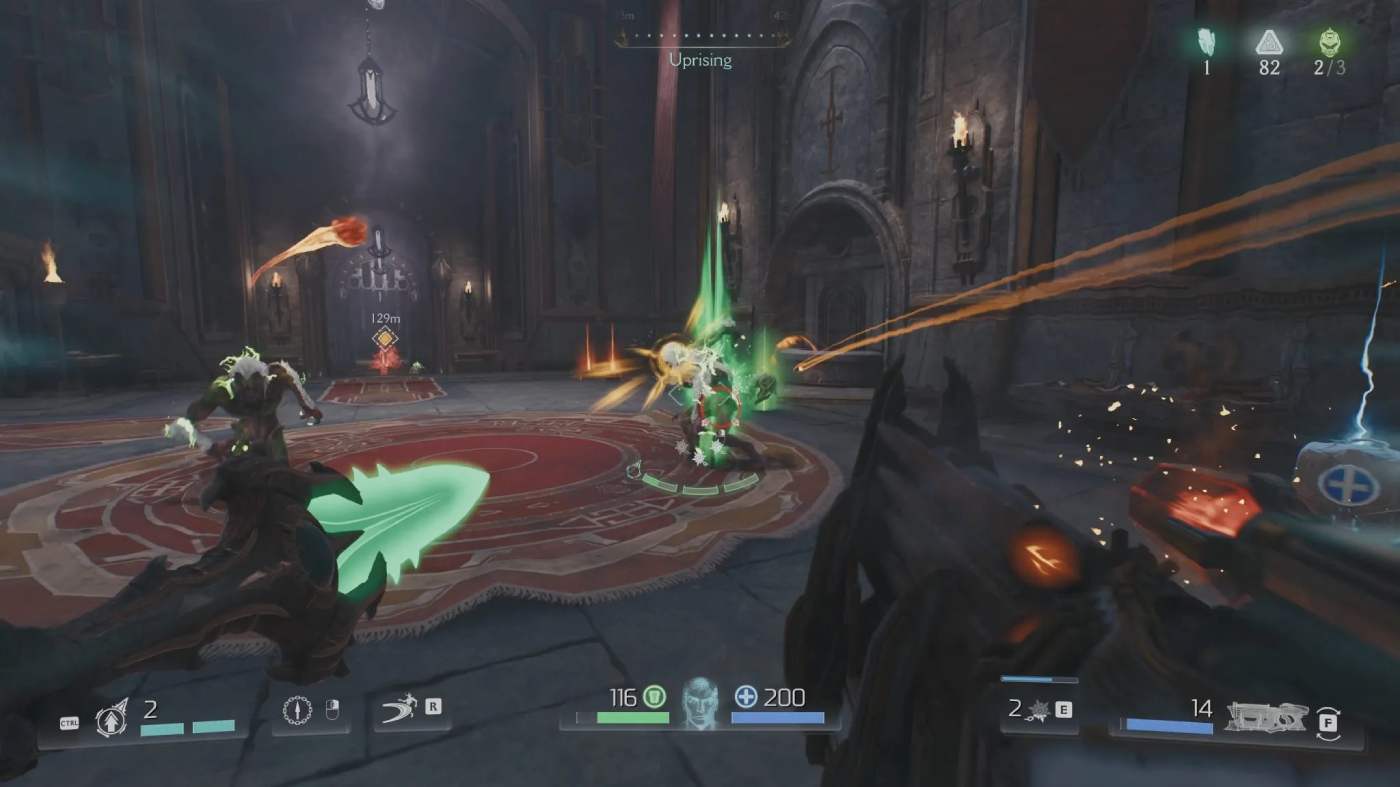
What’s better is that there’s a healthy chunk of new content to put these new tools to the test. Outside of the six main story chapters, there’s a whole endgame to explore here aptly called End Game. You’re effectively replaying the levels of the campaign with a Master Key that unlocks new combat encounters, resources to further upgrade your Chain Spear, as well as classic DOOM levels where completing all of them unlocks a new super weapon to use alongside the BFC.
All of the levels are elegantly designed with verticality in mind to showcase the Chain Spear, but the highlight of the combat arenas has to go to the Master Arenas. These are special arenas that overflow with demons of all types and showcase DOOM: The Dark Ages at its absolute best. In order to even unlock these, you need to beat a super boss encounter that only unlocks if you collect all Astral Boss key fragments found within the main levels. It gives you goals to work towards in End Game as you clean up collectibles and optional extras.
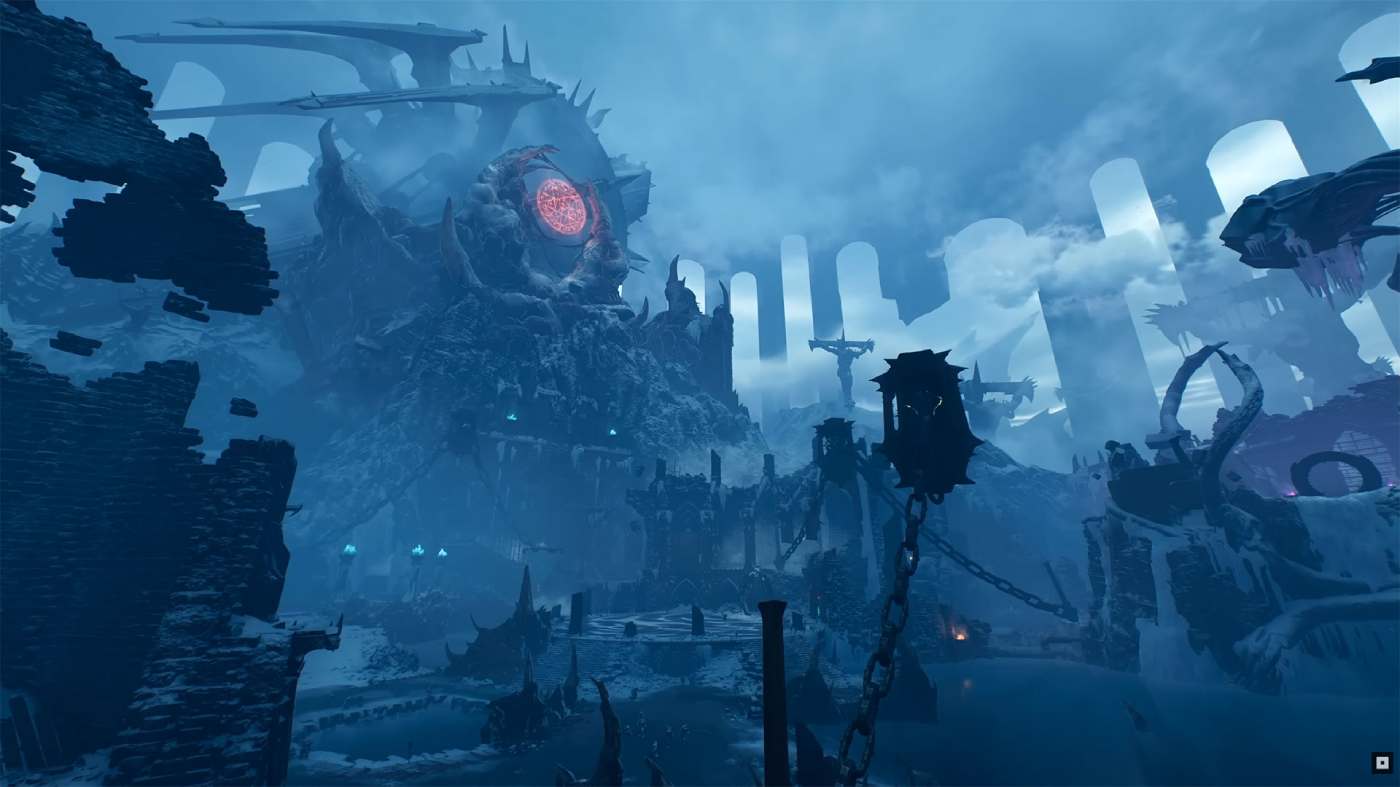
I do wish the DLC had more visual variety, though. Outside of one level, nothing felt truly new or unexplored amongst what’s already on offer in The Dark Ages. It’s neat to go back to the Cosmic Realm and see a frozen version of hell, but they aren’t able to differentiate themselves much from levels in the base game that have similar aesthetics. The penultimate level of Revelations proper, Osseus, feels entirely new, even when you consider what was done in DOOM and DOOM Eternal, offering a hellish desert to explore that feels truly decrepit.
As someone who’s sunk nearly 200 hours into DOOM Eternal and 50 into The Dark Ages, I can’t get enough of this evolved combat loop in Revelations. It feels like the best of both worlds without barring out fans of either style, complete with challenging content to put your skills to the test. This, alongside the hefty Ripatorium 3.0 update, makes The Dark Ages a DOOM game that I’ll regularly revisit. Revelations is more proof that no one makes first-person shooters like id Software does.