


There was once a time when Pokémon spin-offs were a dime a dozen. Ranger, Mystery Dungeon, Conquest, Snap, and more were all genuine, well-thought-out ideas that expanded the world and play space of Pokémon. While we’ve seen these spin-offs make comebacks in a few different ways over recent years, none have truly reached the heights of the originals. There’s always been that key wow factor and originality missing from modern interpretations of these games.
Pokémon Pokopia marks the start of something new in Pokémon. This genius little game is best described as a mix between Animal Crossing, Minecraft, and Pokémon. Those who’ve played the excellent Dragon Quest Builders will feel right at home here, partnering expression and creativity with franchise mainstays that afford Pokopia its own identity. This isn’t just the best modern Pokémon spin-off game; it’s one of the best Pokémon spin-off games ever.
The setup for Pokopia is a simple yet effective one. You play as a Ditto in a ruined and human-less Kanto region. The landscape has fallen into complete disrepair – structures have collapsed, the natural environment has withered, and Pokémon are nowhere to be found. As Ditto tries to make sense of the situation, they’ll meet Professor Tangrowth, who’s also been left to wander the wasteland.
In an attempt to recreate their trainer, Ditto takes a humanoid form (one based on Ditto’s disparate memories) and finds that they have a knack for restoring the natural environment. Ditto is uniquely positioned in their ability to copy the capabilities of other Pokémon, and sets out to heal much of the damage that has been done, bringing Pokémon back into their habitats, and hopefully uncover the truth behind the disappearance of the humans in the process.
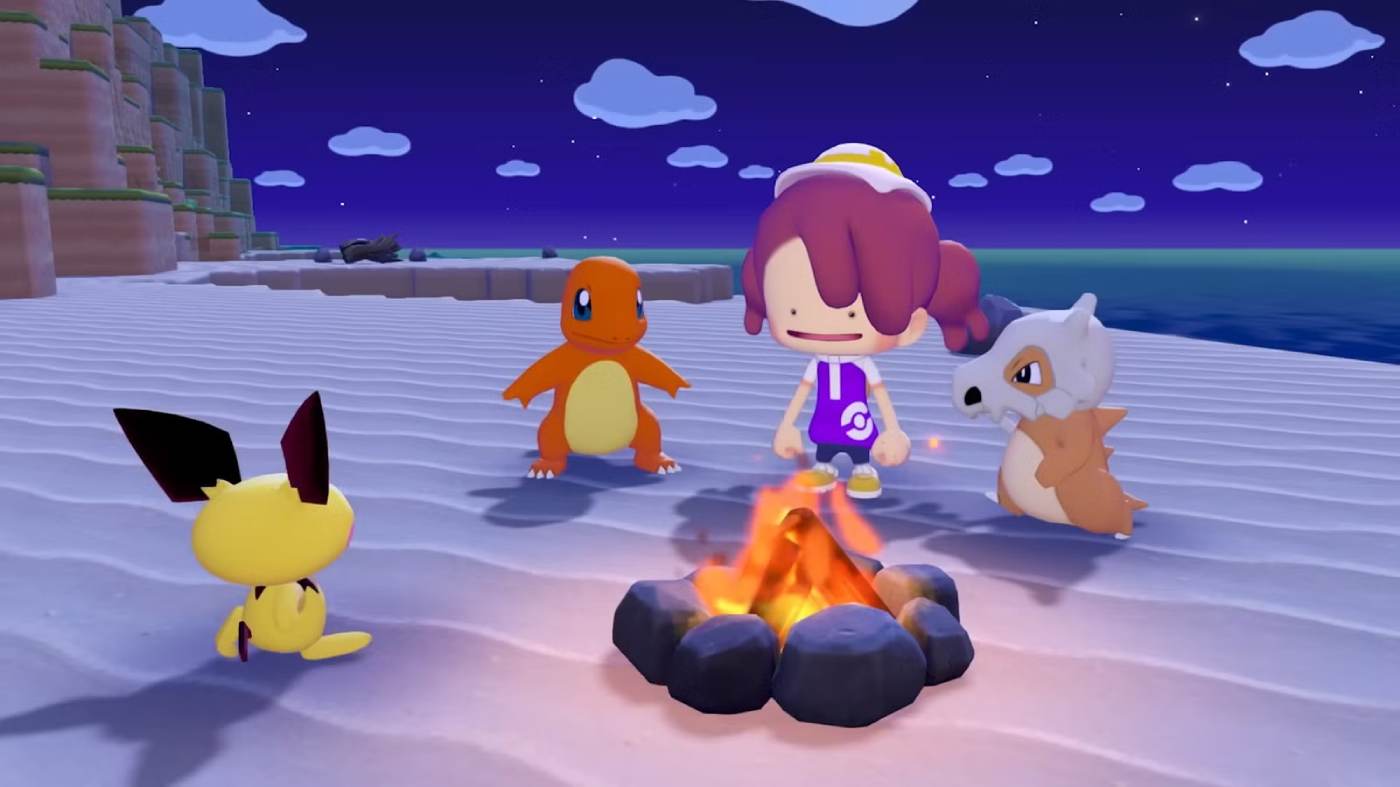
It makes for a nice and relaxing experience overall, while still teasing you with its mysteries and questions around what has happened to Kanto. Without getting too much into how it all plays out, it’s a joy to uncover the truth and work out what things were like in Kanto before it turned into the state it’s in now. Notes are dotted throughout the environment, and you’ll explore ruined versions of iconic cities from the region. It makes each new area exciting to uncover for the first time as you solve its issues and make it hospitable for native Pokémon.
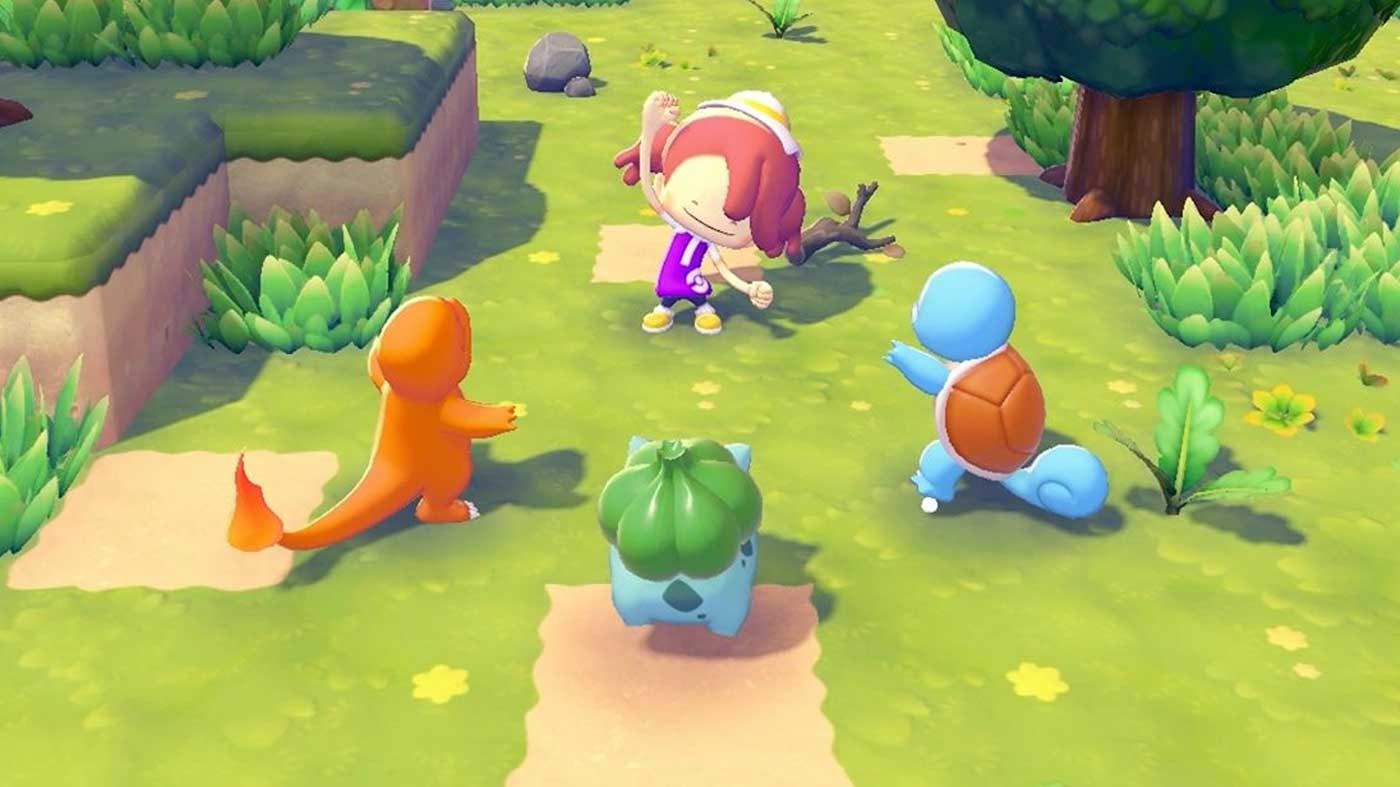
How this materialises in gameplay is similarly well thought out. It maintains the series’ core appeal: finding and catching new Pokémon. While you don’t catch Pokémon in Pokopia in the traditional sense, much of your time is spent rebuilding habitats to get new Pokémon to appear. It starts simply; you’ll use Leafage, taught to you by Bulbasaur, to create a small patch of tall grass that attracts certain Pokémon. It continues to develop further, tall grass formations by water, boulders, trees, and so on.
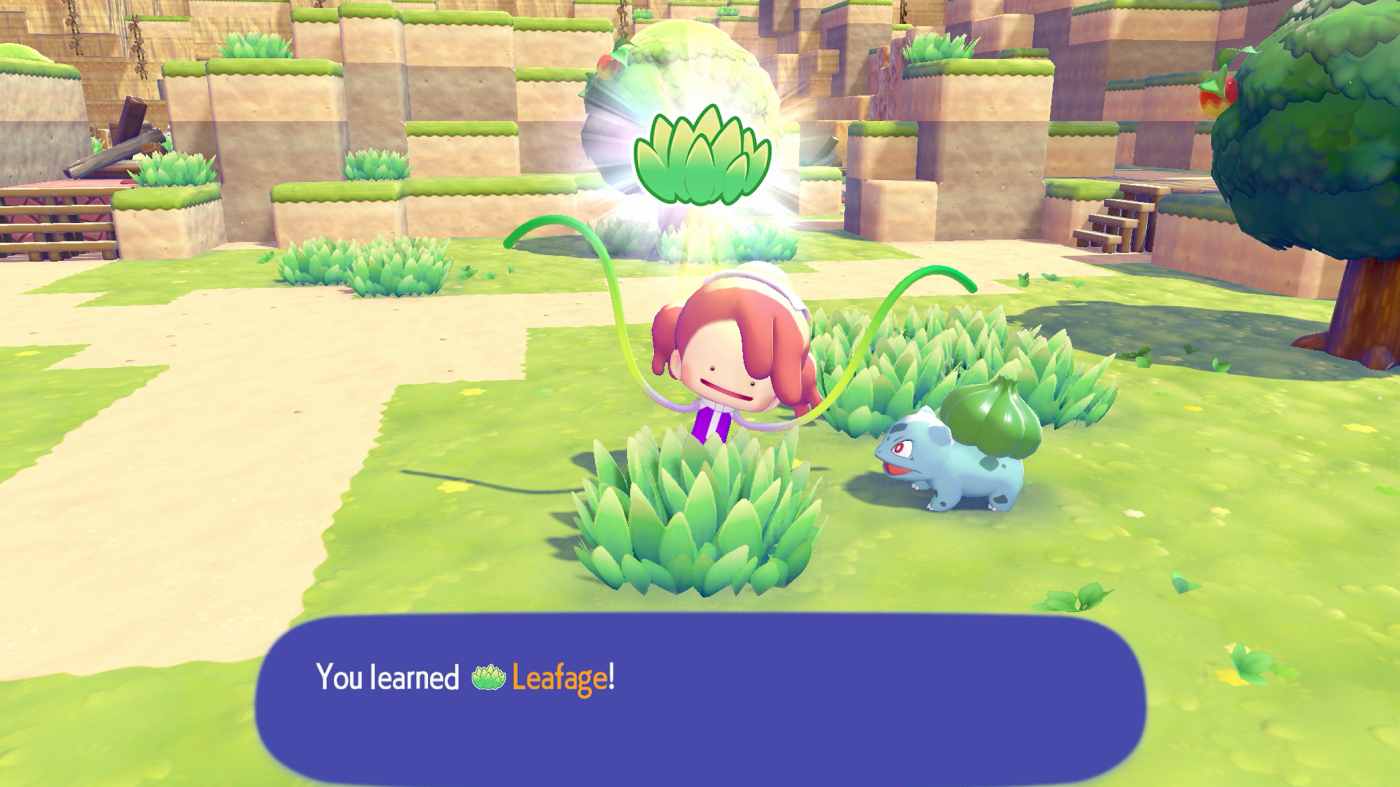
It goes much, much further than this, involving craftable household items, food, and even rubbish. There are so many different habitats to uncover as you play. Many are hinted at to you via Pokémon traces left in the wild, while others can be bought from the Pokémon Centre PC with coins earned from completing missions. There’s nothing quite like the feeling of setting up a new habitat and returning to it later on to discover a brand-new Pokémon to befriend. None are so specific that they’re frustrating, or broad enough to get mixed up with one another.
This further feeds into progression as each Pokémon brings skills to help you rebuild the environment. Where Bulbasaur can speed up the growth of seeds, Charmander can light campfires and candles. Pokémon like Timburr are necessary for building structures like housing or Pokémon Centres. It’s a never-ending cycle, but one that’s always satisfying to engage with. It all comes to a head when you complete major requests, marking key milestones in a particular area, like rebuilding its Pokémon Centre or increasing the Environment Level.
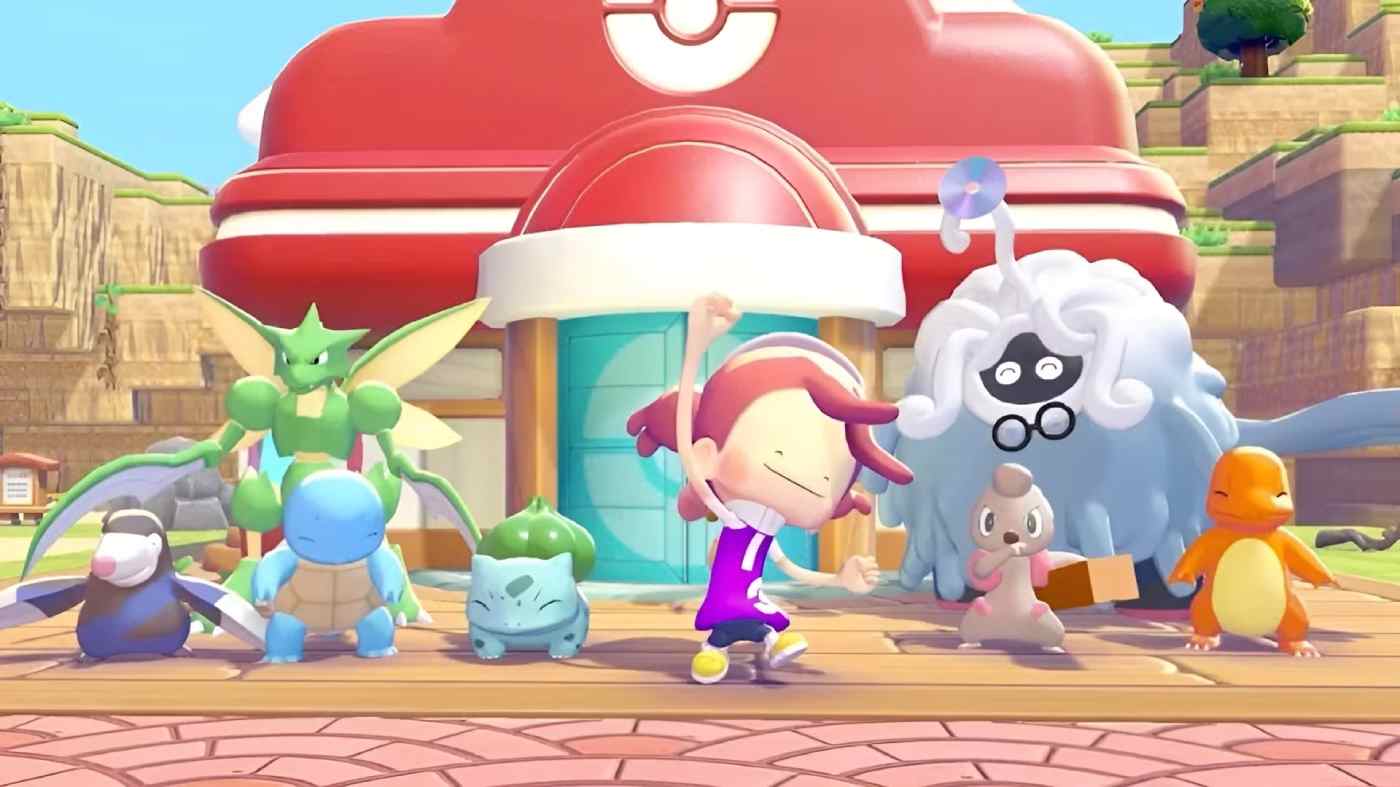
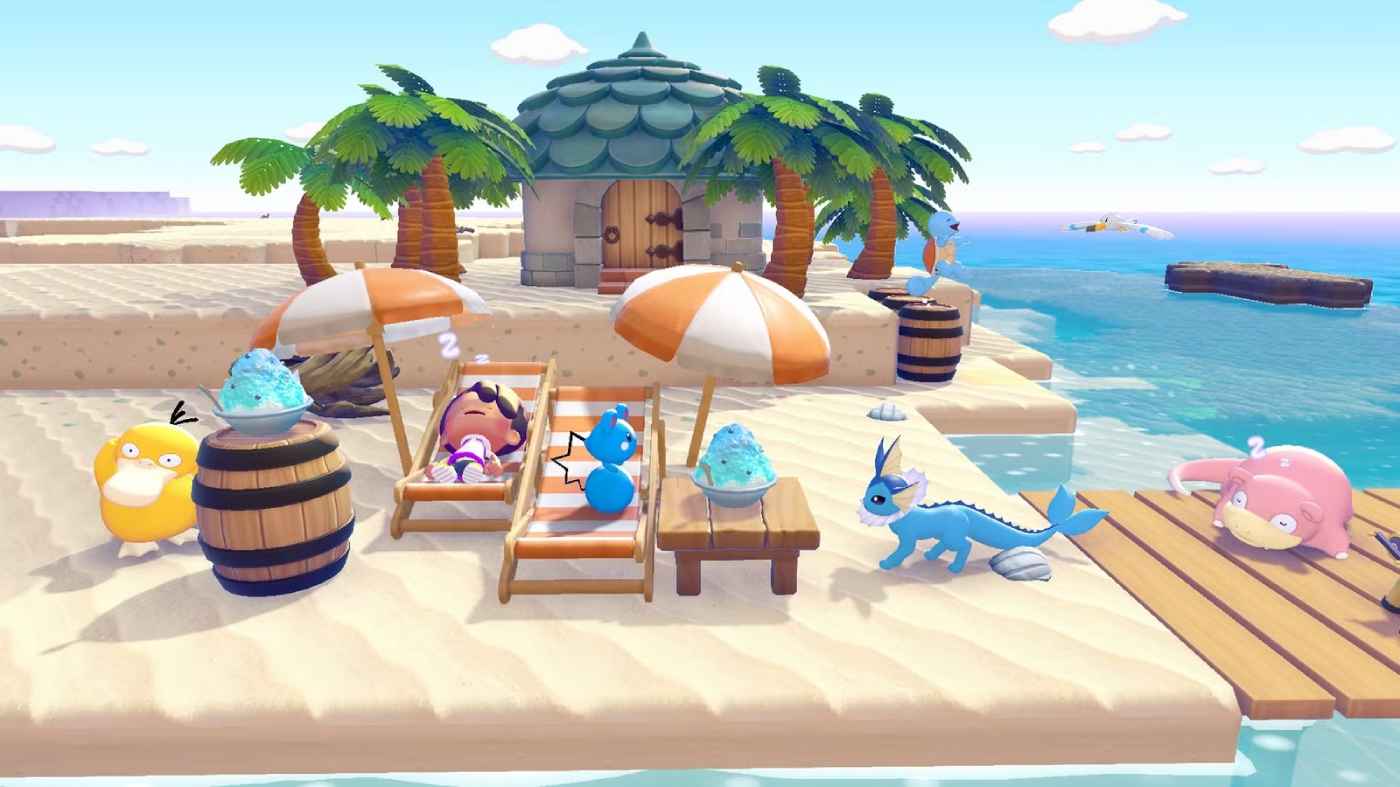
Each Pokémon you have a habitat for also has its own individual needs, wants, and comfort levels. They might request food, decorations, toys, or even to have their habitat moved to an environment more suitable to their ecology. Water and grass Pokémon often want to be in lush, humid, and hydrated environments, where rock and ground Pokémon might want drier surroundings with dead trees and dry grass. It encourages you to think about how you set up each habitat without being so overbearing that you feel you need to rearrange everything constantly.
And all of this is before you get into rebuilding the different areas of Kanto you’ll explore. Destroyed pathways and bridges can be rebuilt, so Pokémon venture further from their habitats. You can construct and decorate your very own house as well. You can terraform a lot of the land to build your own structures and make these areas your own. I do wish for a bit more flexibility in altering the environment, like in Dragon Quest Builders, though. Pokopia is less inclined to support creative freedoms and often limits you with indestructible blocks or hidden barriers that mark the end of a playable area.
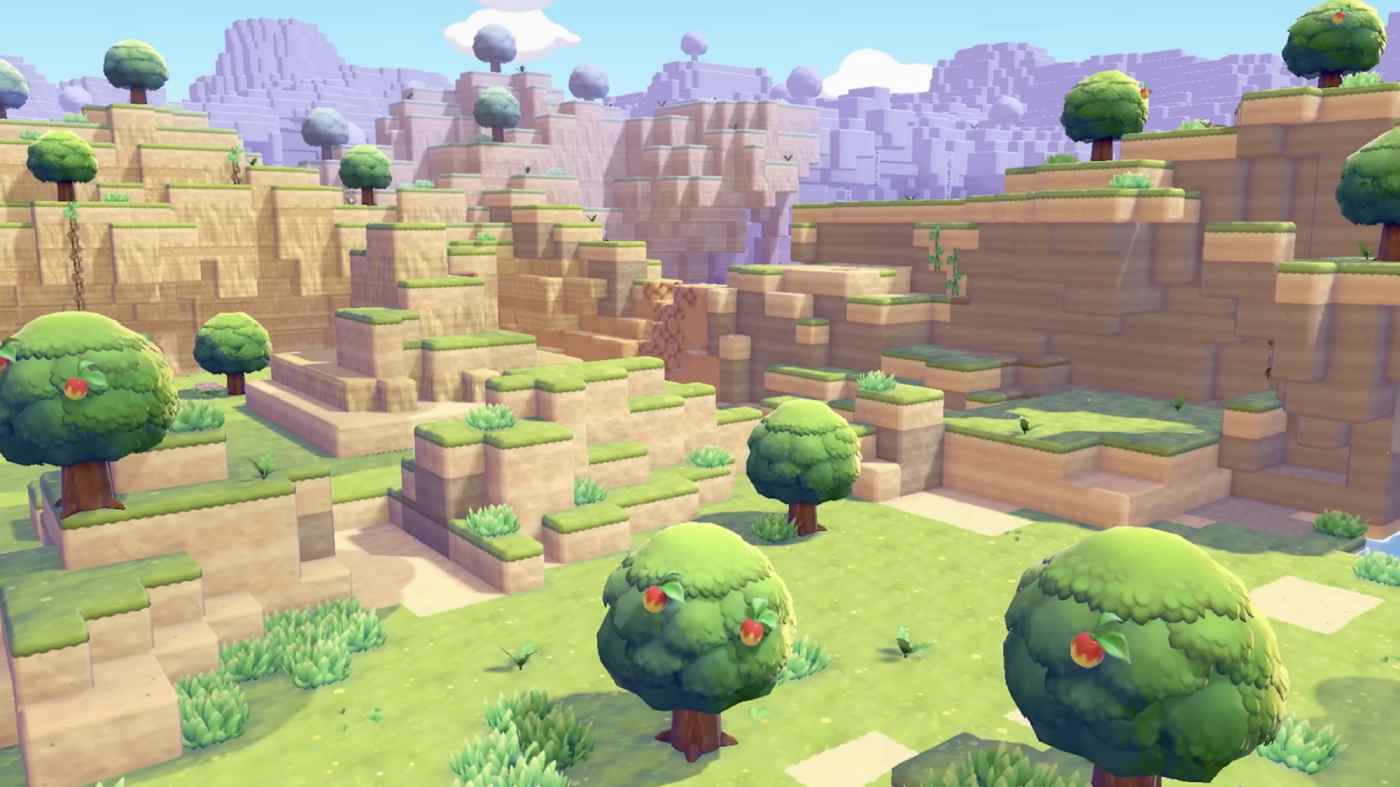
It’s as you do all of these aforementioned things that increase your trainer rank and gain access to new areas. You’ll deal with new issues, like flooding in Vermillion City, encounter new Pokémon, and learn new skills to help you solve these problems. It’s ridiculously moreish, incredibly wholesome, and the kind of nostalgia trip that will have a smile plastered across your face if you’ve spent a meaningful amount of time in Kanto. The decision to include Pokémon from other regions is also a smart one, leading to a varied roster of Pokémon across all generations.
It’s also clear to see why Pokopia is made to be a Switch 2 exclusive. This is, without a doubt, the best-looking 3D Pokémon thus far. It’s not dissimilar from the Let’s Go games in that they’re quite saturated and colourful, but each Pokémon is brought to life with high fidelity and attention to detail. It looks excellent on a big screen and runs like a dream. It paints a picture of what could be with Pokémon Winds and Waves next year, or even remakes of older generations (Unova, please).
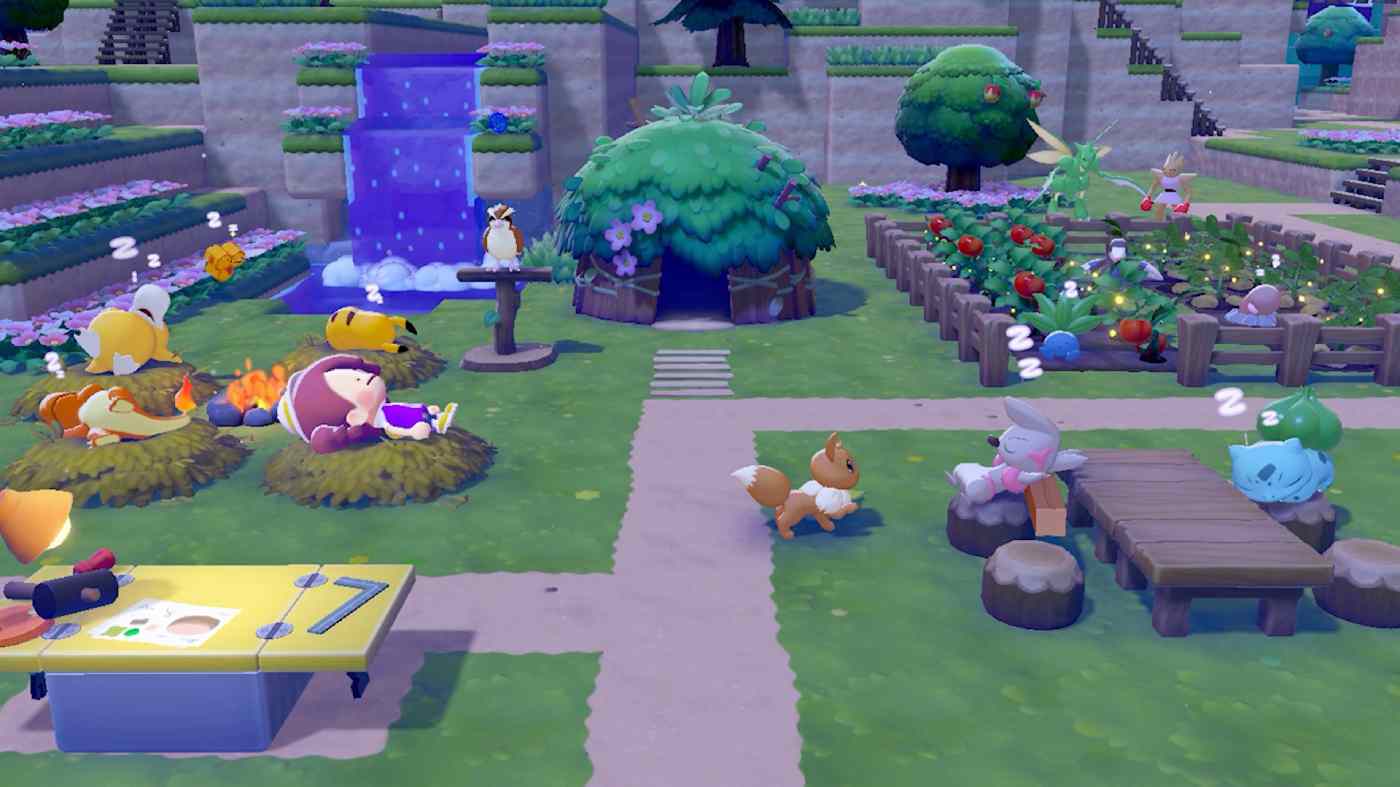
While I’m sure many Pokémon fans like me may have brushed Pokopia off, I can’t emphasise enough how well-crafted this whole experience is. While those who’ve played Dragon Quest Builders before might expect more freedom in creativity and expression through building, Pokopia offers a Pokémon fantasy we haven’t seen in any other Pokémon game. It plays to the strengths of the franchise while introducing ideas that seamlessly slot into those core elements with great success. It’s cute, charming, relaxing, and an absolute joy to play.