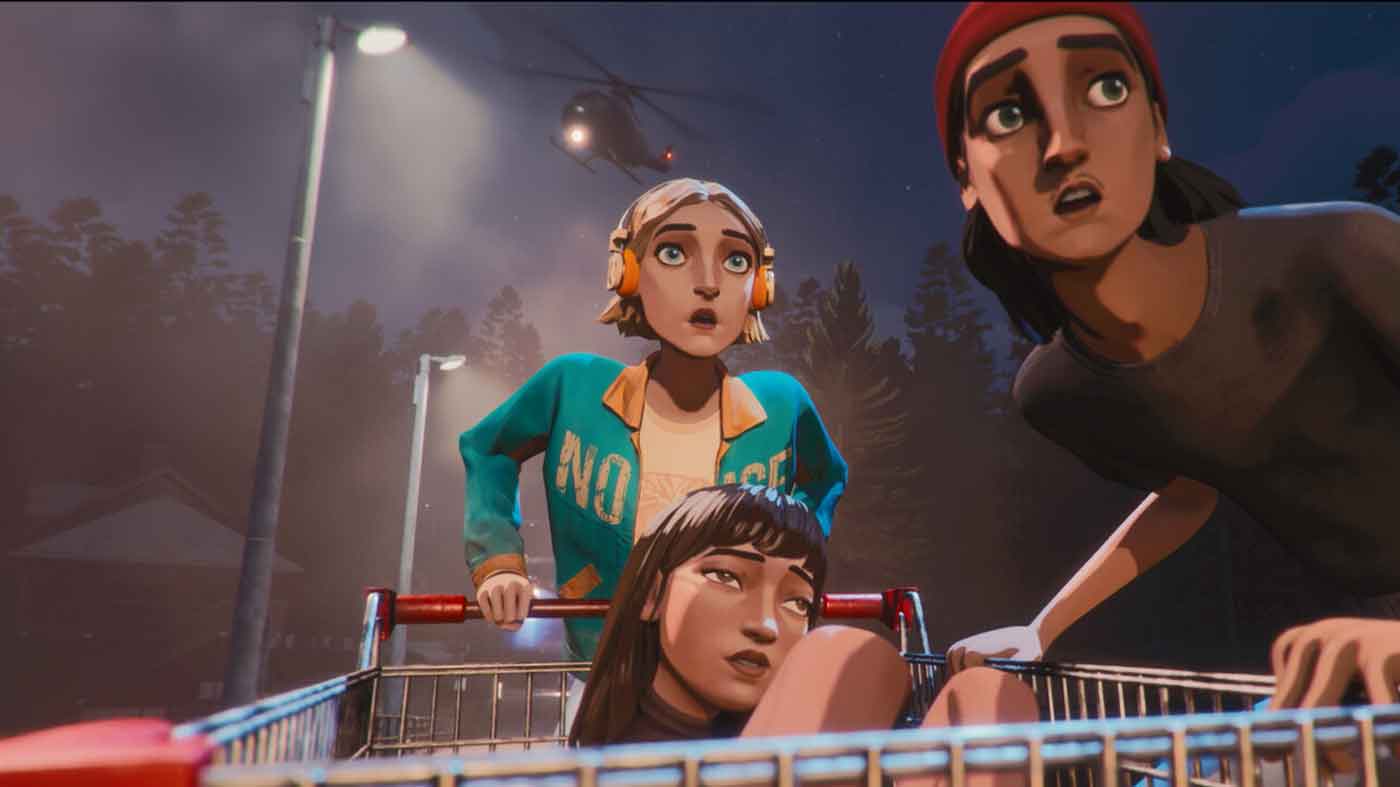



Growing up, or coming of age, is one of life’s great journeys within what is a much grander adventure. Looking back, it’s easy to declare all of my younger self’s problems as frivolous, but in the moment, their enormity was felt. But in the calm moments in between, we’d fritter away the longer, welcome out of school hours—we’d run amok, we’d listen to music, we’d discover who we were daily. Beethoven and Dinosaur’s sophomore title, Mixtape, is all about these raw, familiar growing pains.
Like The Artful Escape, the power of music itself plays a pivotal role in the game, showing how the right song can define a moment, shape memories, and make up part of our own life’s playlist.
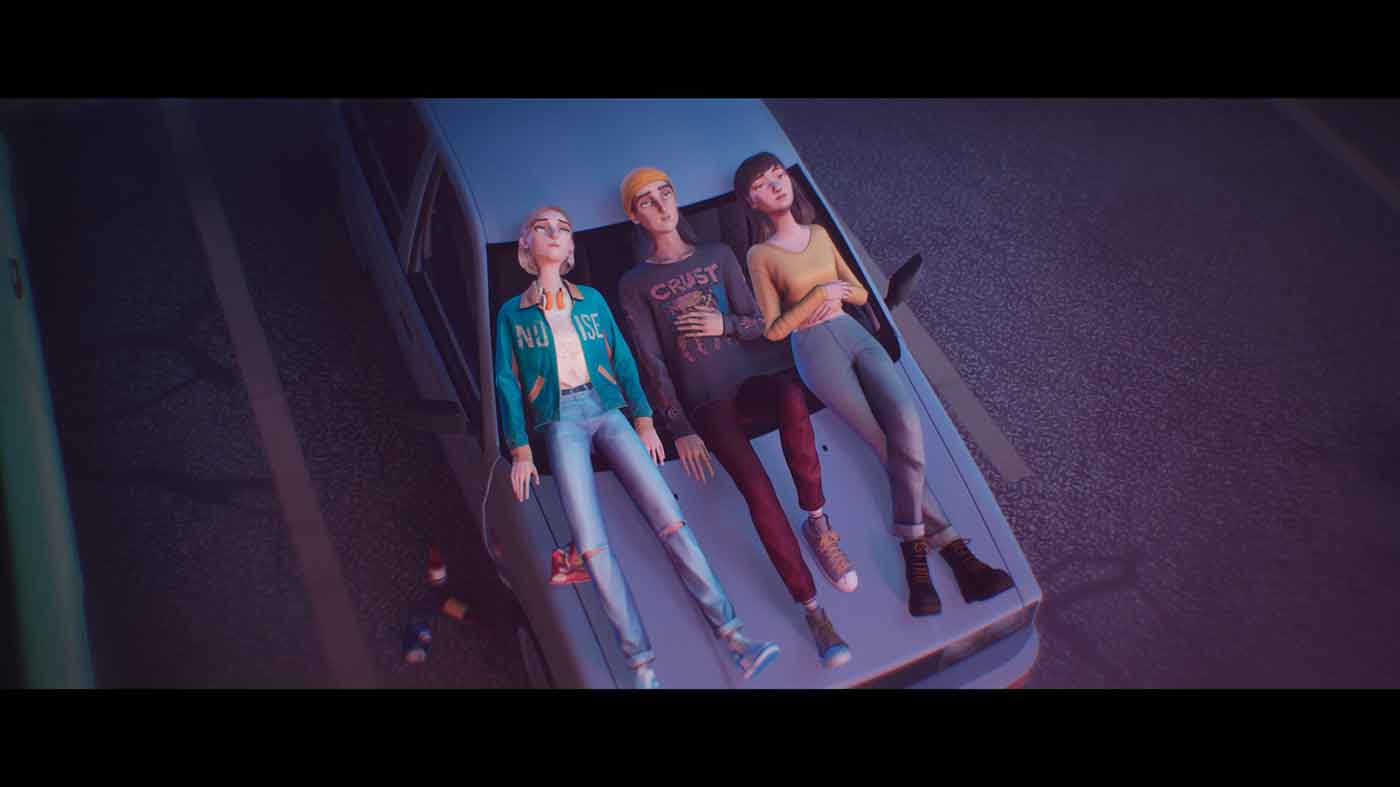
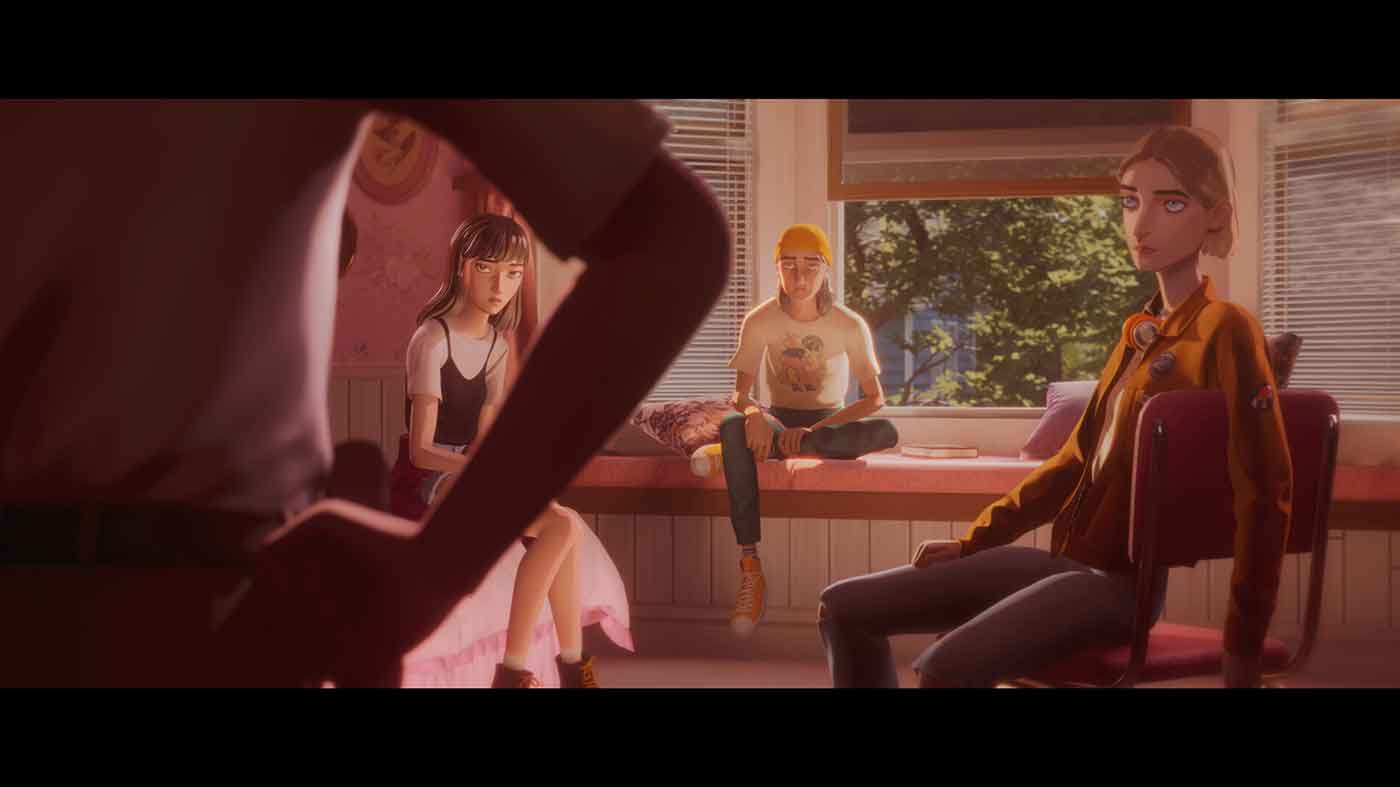
Taking place over the course of the one last perfect day spent together by three friends, Stacey (who goes by her surname, Rockford), Slater, and Cass, Mixtape felt like a time capsule in so many ways. It’s reflective and nostalgic in all of the right ways, and it’s not because I can relate to video shops having one new release and two weeklies special. Seeing this trio revisiting their greatest hits immediately took me back, like a time machine, to all of the stupid shit my friends and I used to get into. Being the group’s music curator and aficionado, Rockford had prepared a mixtape, with each song pairing perfectly with its core memory.
It’s this “gift” of hers that’s seeing her break up the group, flake on their summer plans, and depart for New York in the first place, as she hopes to land a coveted role as a big corporate music advisor. But the big send-off and culmination of their day strolling through memory lane in the pursuit of booze is Camille Cole’s big annual beach party. It’s Superbad through the lens of John Hughes, and it’s so full of heart.
Despite Mixtape not necessarily settling on a time and place, opting instead to occupy a vague, couple-decade span through its song choices, it’s remarkably authentic in its delivery of teenage verbiage. In addition to its big heart, there’s wonderful humour that feels like a take on Hughes and how romanticised high school was, right down to Rockford’s Ferris Buellerian fourth wall breaks where she monologues about her adolescent woes or introduces the soundtrack’s next hit, as though she’s Jabba from Channel V.
As great as the writing is, it amounts to nothing without great performances and this trio, in particular, harmonises with one another perfectly. Rockford’s dogged optimism and bohemian approach to music is the perfect foil for Cass’s scrupulous perfectionism, which is largely driven by her overbearing parents. Slater, on the other hand, is the definition of a carefree leaf in the wind; along for the ride with a loyalty and depth that emerges late.
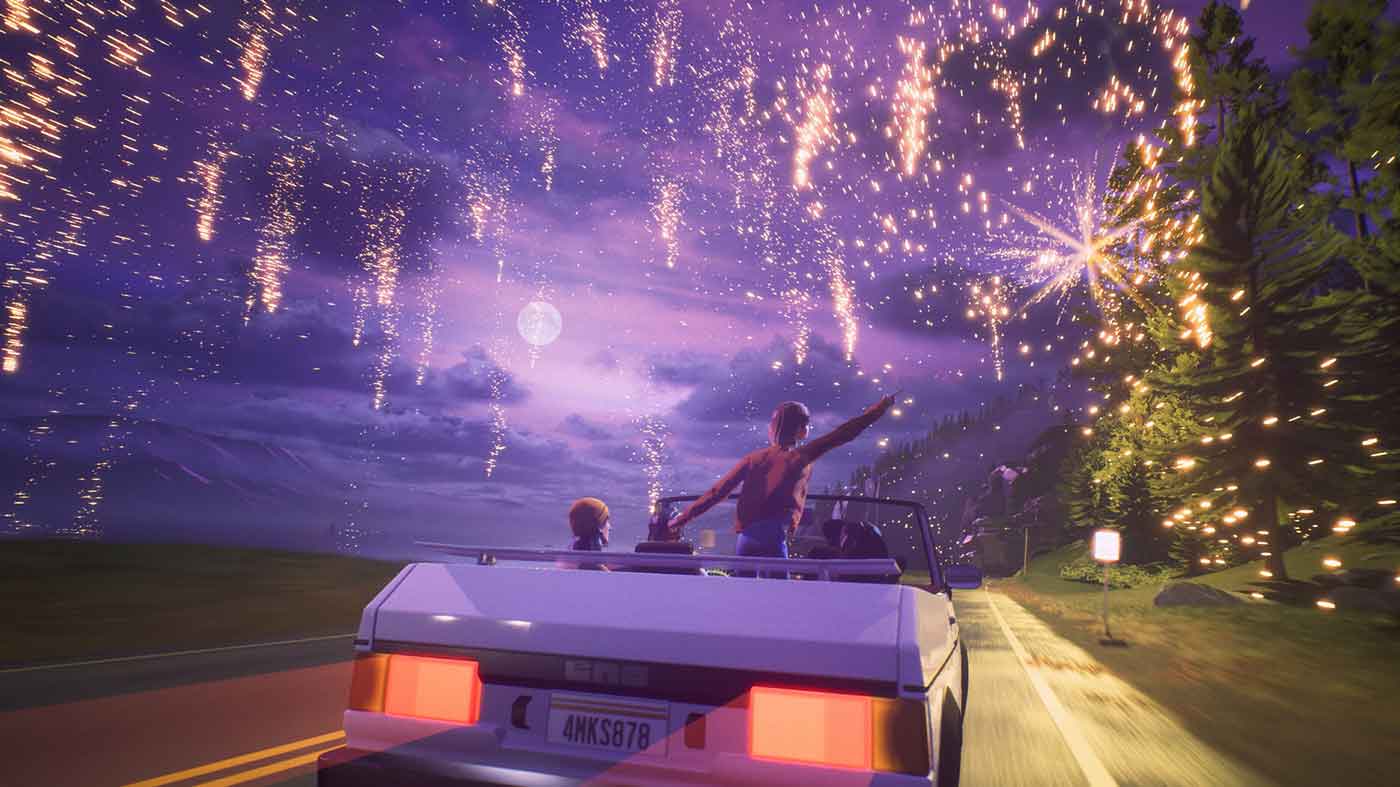
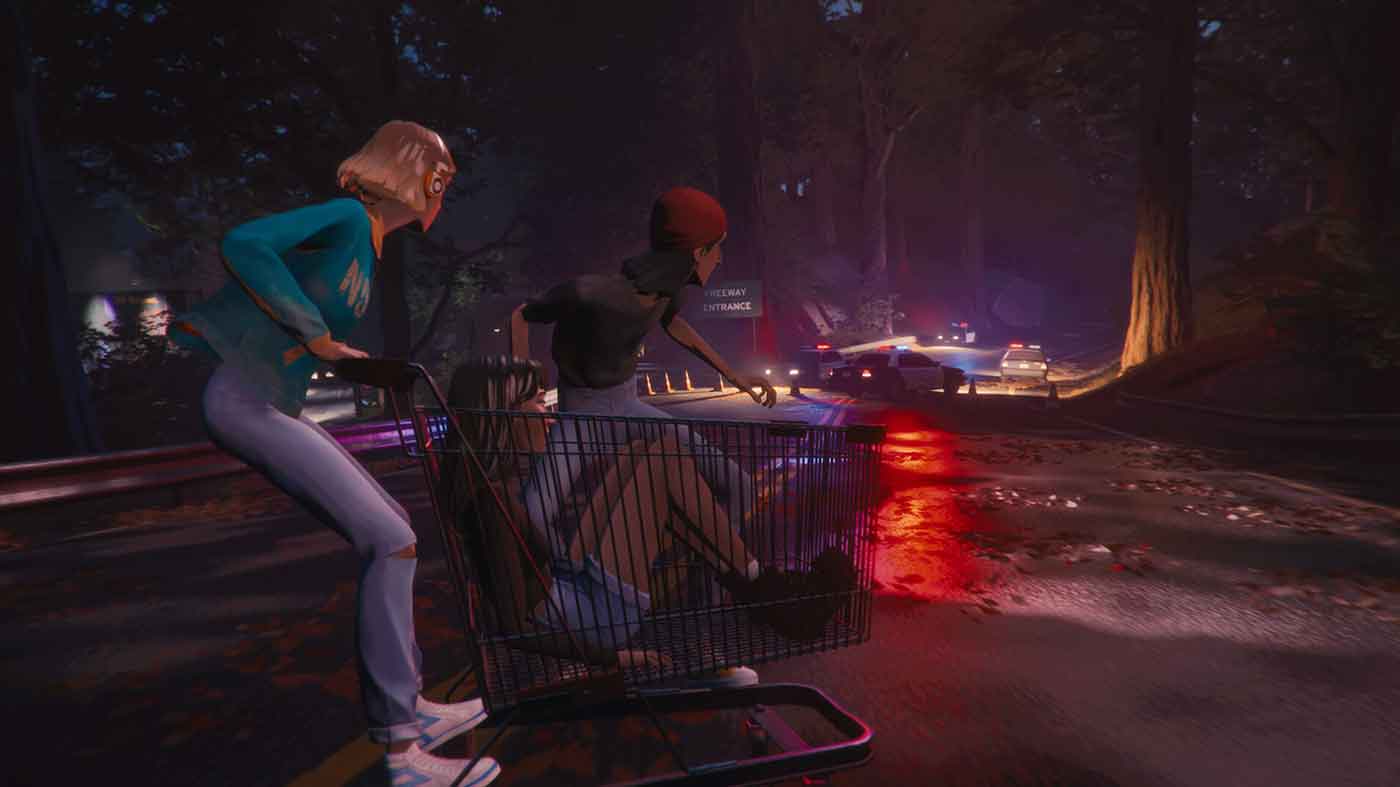
When compared to The Artful Escape, I think Mixtape is perhaps, somehow, even less of a video game. It’s an experiential, playable series of music videos that unfold in sensational, exaggerated ways. Regular, adolescent transgressions, such as fleeing a party full of underage drinking, spiral out of control, in that case, becoming a high-speed, highway chase in a shopping trolley. A shoreline drive to a secret hideout becomes a spectacular, orchestrated fireworks show. Of course, there are real moments in Mixtape that help ground the narrative that underpins these dreamlike reimaginations of life’s “big” moments—a first kiss, sucking at sport, getting caught drinking.
Although it’s been confirmed that the team built the game experience backwards from the story that the soundtrack was shaped to tell, it’s astonishingly clear that great attention and care have been poured into every minor system or mechanic, especially if it only appears once. The aforementioned first kiss is a short mini-game that sees you control both of the exchange’s tongues as they writhe for dominance in this spit-trading rite of passage. It’s so brief, but there’s an inherent brilliance in the design that takes it to another level, and that kind of excellence is prevalent throughout all of Mixtape’s brief mini-games.
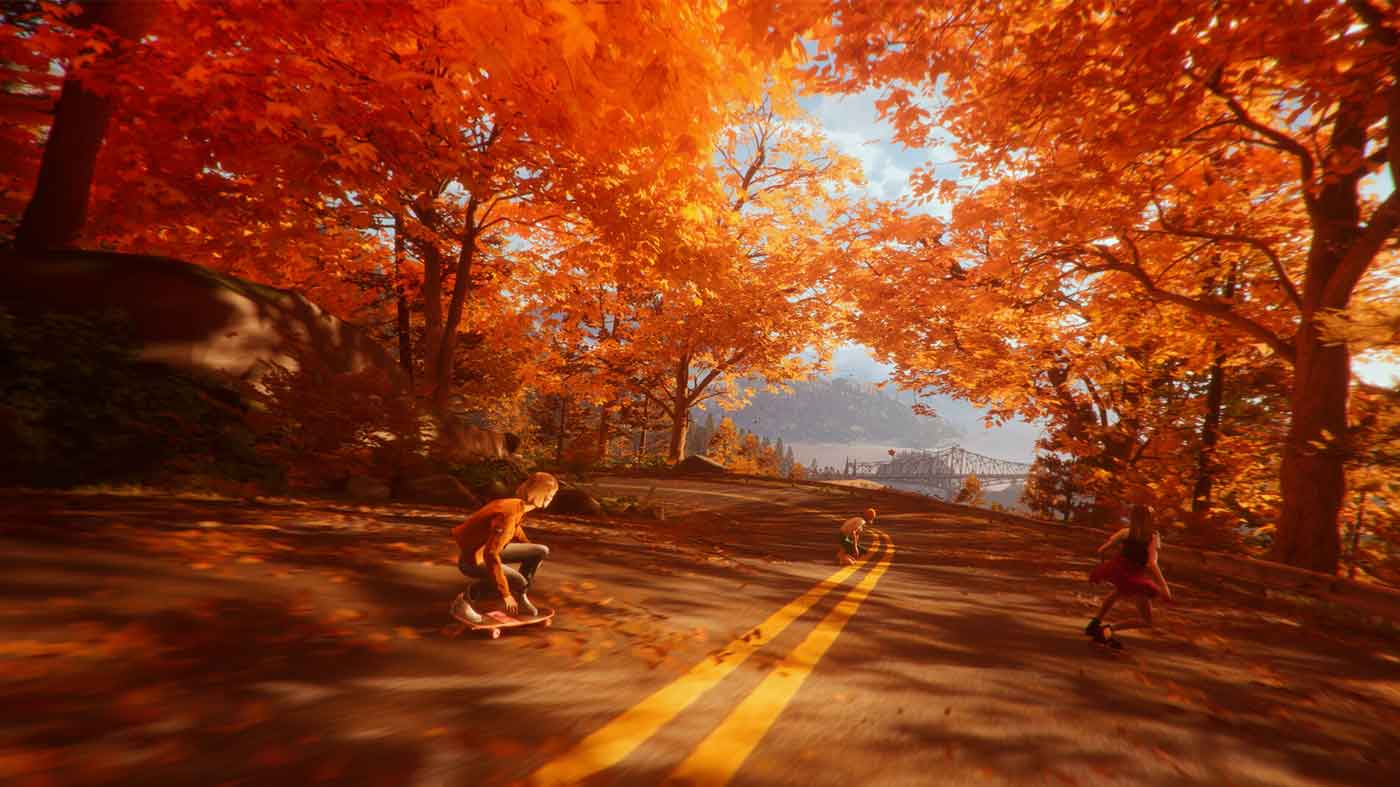
Across their first two releases, Beethoven and Dinosaur have struck me more as a “vibes first” kind of developer; however, it’d be foolish to sleep on the technical magic that’s going on beneath the hood. With ingenious, bespoke moments designed to encapsulate some of the bigger feelings we felt as kids, like the gut-punch of betrayal or the limitless exhilaration of freedom, subtle systems and mechanics heighten the spectacle. Make no mistake, this team can make games, and their use of particle physics borders on wizardry. In a moment illustrating teen angst, Rockford is quite literally exploding things with every grand gesture, the last of which is an enormous bouncy ball machine. It erupts, sending not only glass shards but quite literally thousands of balls chaotically across the screen. I’d prepared myself for the drop in frames, but the optimisation was so on point it wasn’t to be.
Not only are the songs curated and ordered for the purpose of telling a story to you, but there’s also a level of niche appeal to the song selection in Mixtape. For a game about a music advisor, the choices are inspired. It’s got Devo, Roxy Music, The Cure, and The Smashing Pumpkins. There’s even a little bit of Aussie representation with “Freak” by Silverchair, setting the scene for a Wayne’s World-esque car headbang-along. No one artist outshines the others, and the tracks selected are, more often than not, deeper cuts; had Queen or Bowie shown up, it might have lost that perfect balance.
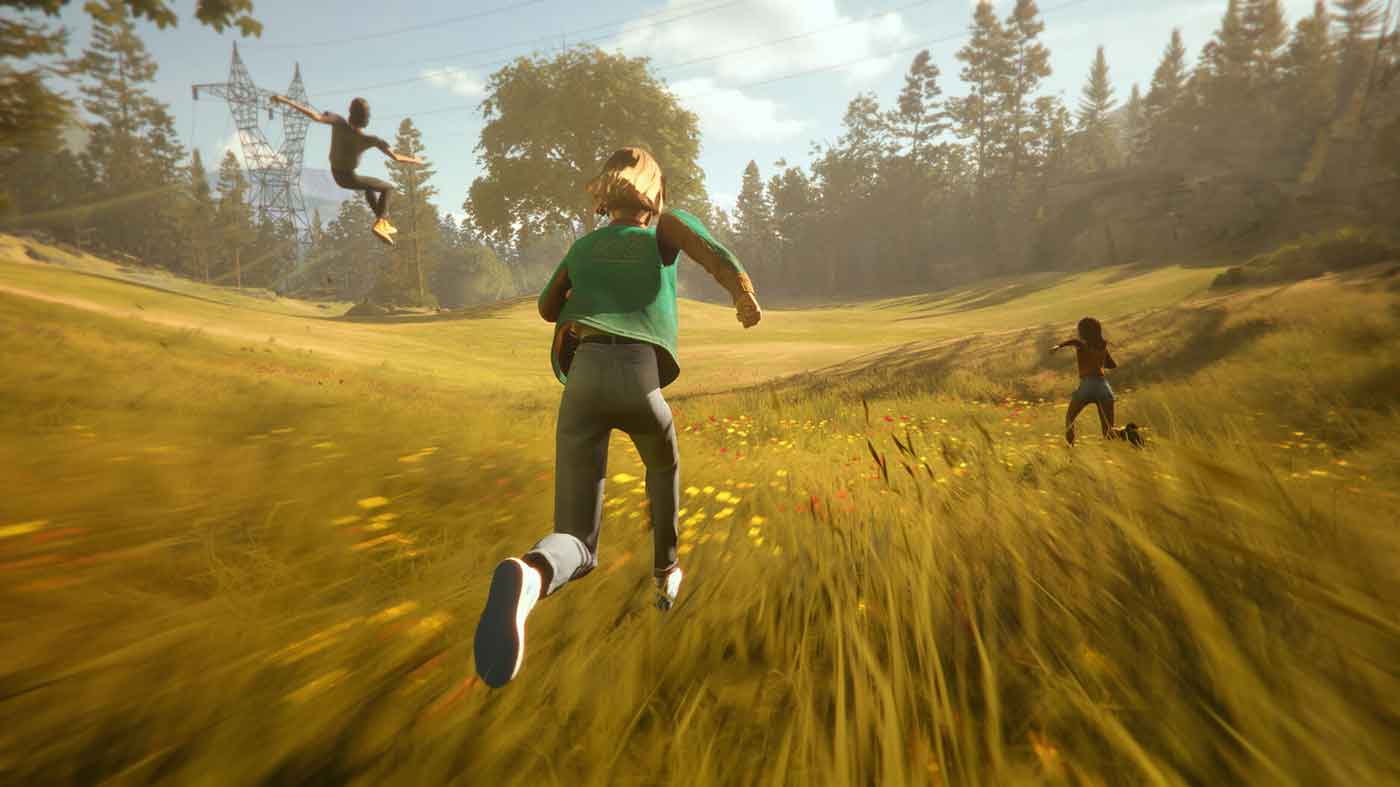
While it’s a coming of age story, Mixtape is also such a wonderful celebration of the power of music and how it moves people; it’s exhibited through small, scripted touches in scenes, whether it’s Rockford clapping along to the snare in Devo’s “That’s Good” while skateboarding down a snaky road, or a heap of drivers clapping atop their buses to “Yesterday’s Hero” by John Paul Young as Rockford runs across town gallantly to her friend’s rescue.
Mixtape’s pretty, stop-motion art design aside, there’s so much I adore about the game’s presentation. Not only does it lean heavily into its peculiar sense of humour, beginning with cutaways to ABC stock footage narrated by the voice of God, the game’s impeccable style is also bolstered by Galvatron’s keen-eyed scenecraft and direction, which helps Mixtape feel like the teen dramedies it effortlessly emulates.
While The Artful Escape was more about the creative process of music and the personas that “sell” it, Mixtape is more passive in its approach to music, tackling it from a listener’s viewpoint. We’ve all had that moment where we’re showing a song to a friend, waiting for them to react to the good part; that’s what Mixtape feels like, it’s Beethoven and Dinosaur welcoming us in to what moves them most, and it’s a sublime experience that’s both nostalgic, hype, and moving.