



Press Start may receive a commission when you buy from links on our site at no extra cost to you.
While Square Enix’s recent HD-2D undertakings have all been largely successful, none of them have looked to break out of the confines of being an RPG. That isn’t a jab at any of those titles, but it’s always felt like something is left on the table by not diving into other genres. Many of the games from the SNES era that this art style is inspired by have been remade or received sequels, but a vast majority of them chase contemporary visual design with varying degrees of success.
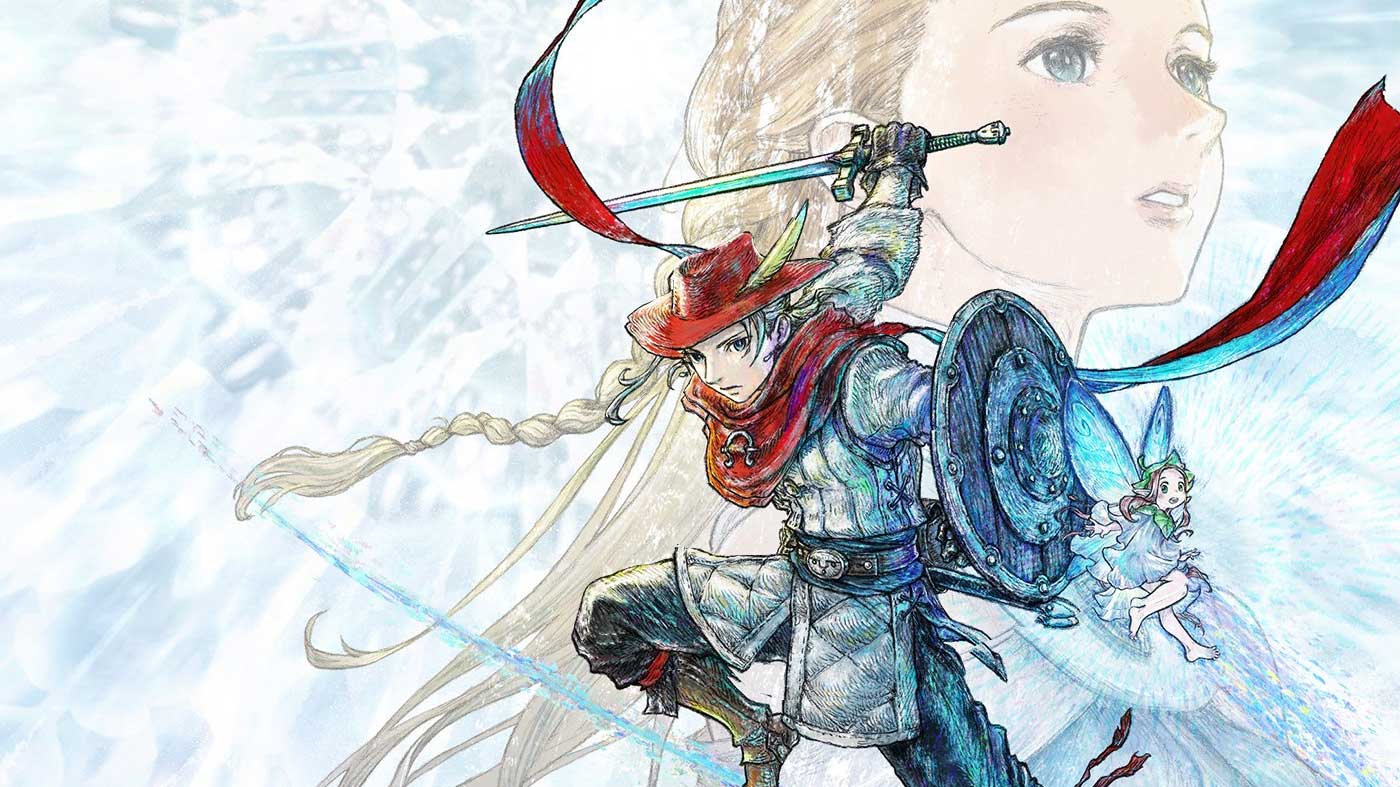
Instead of waiting for another studio to break the mould, Square Enix is taking matters into their own hands with the Adventures of Elliot: The Millennium Tales. This is a real-time action RPG inspired by the likes of 2D Zelda and the early Mana games, complete with a story that spans the ages of its world. It’s an inherently nostalgic and endearing experience that really struggles in its opening hours, but eventually finds its groove and delivers a timelessly charming adventure.
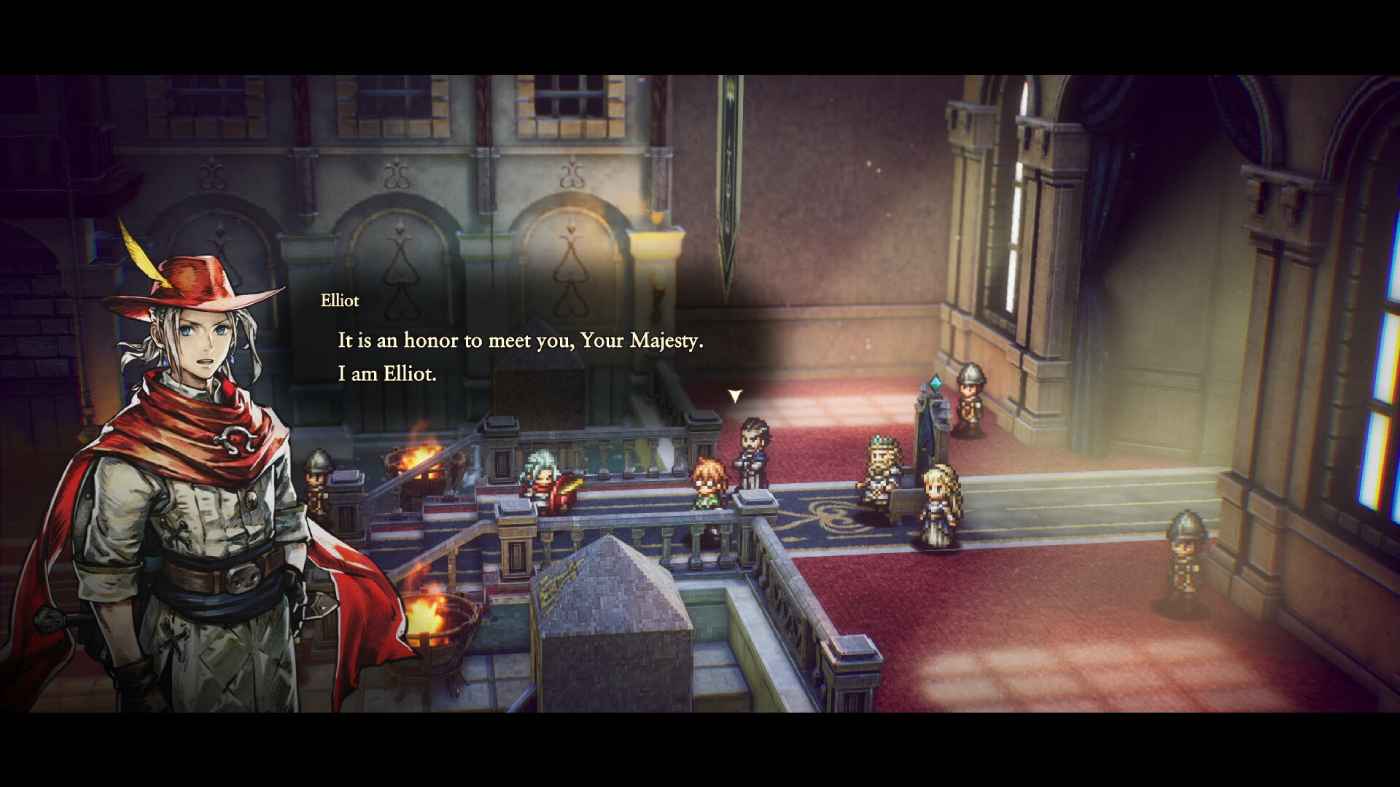
Philabieldia is a continent shared by beast tribes and humans who are in constant conflict with each other due to a complex and storied history. The Kingdom of Huther is where a vast majority of humanity resides – a castle town protected by Princess Heuria’s spell of Safekeeping. As an adventurer, our protagonist Elliot completes odds and ends for the people of Huther for a sole reason: to help them.
Without delving too deep into spoilers, Elliot’s adventuring leads to the discovery of ancient ruins that house an artifact called The Doorway of Time; a portal that connects the past and the present. With the Kingdom of Huther under threat by those who seek to exploit the Doorway of Time for their own nefarious purposes, Elliot sets out to journey through time to protect his people alongside his newfound fairy companion, Faie.
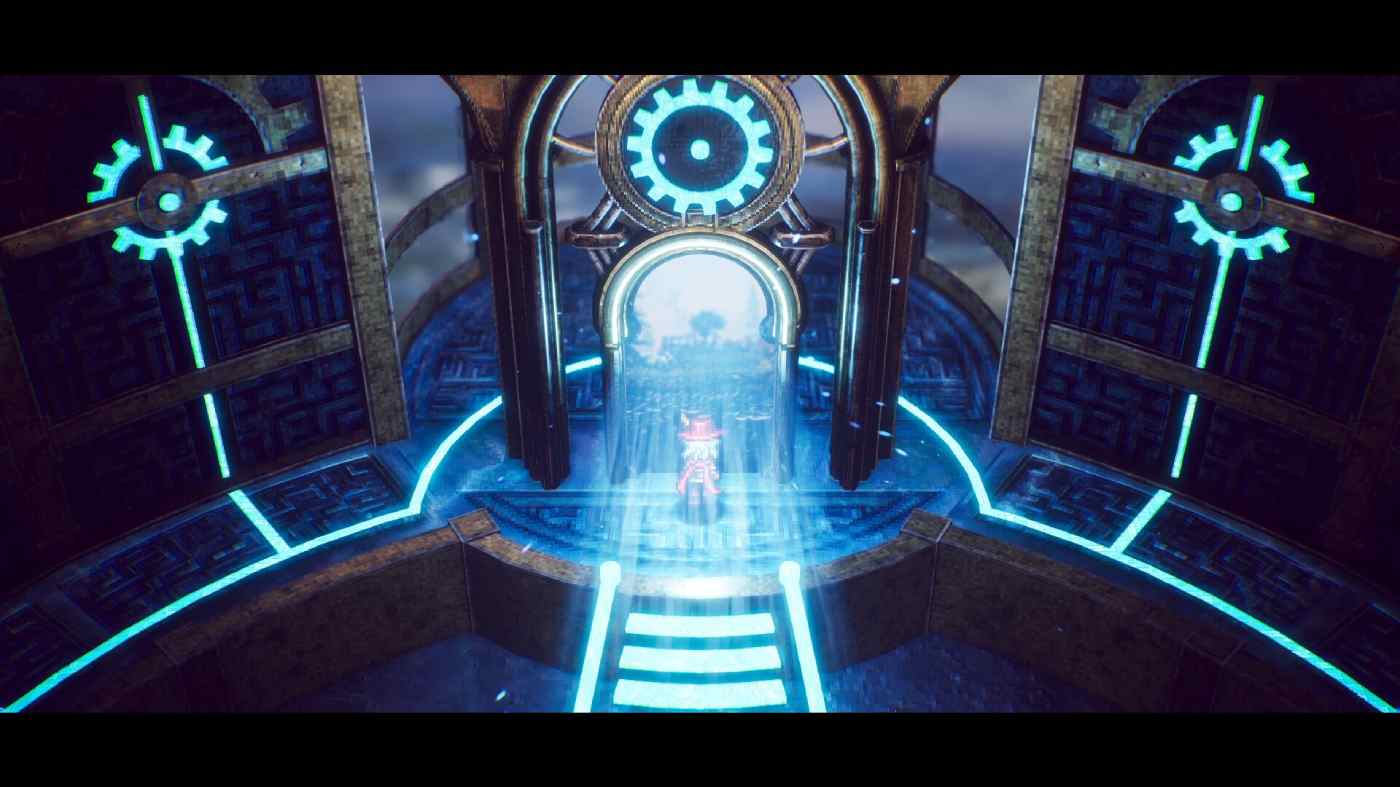
I’ll be frank here by saying that while this is an interesting (though, somewhat tired) premise, it doesn’t do anything to separate itself or captivate you in its first act. Many of its most engaging themes and ideas are relegated to side content and worldbuilding. It’s overly predictable, lacking in depth, and generally struggles to find its footing. It doesn’t seek to do much with time travel or the implications of altering the past – at least initially.
It isn’t until about the five-hour mark that things start to get more involved. Elliot and Faie will travel even further back in time, exploring different ages of Philabieldia and its people to see how it developed. It’s also here that the story starts to explore the origins of the conflict between the humans and the beast tribes, how it festers, and how it’s reinforced through ignorance and pre-conceived notions that those who are different from us are inherently opposed to us.
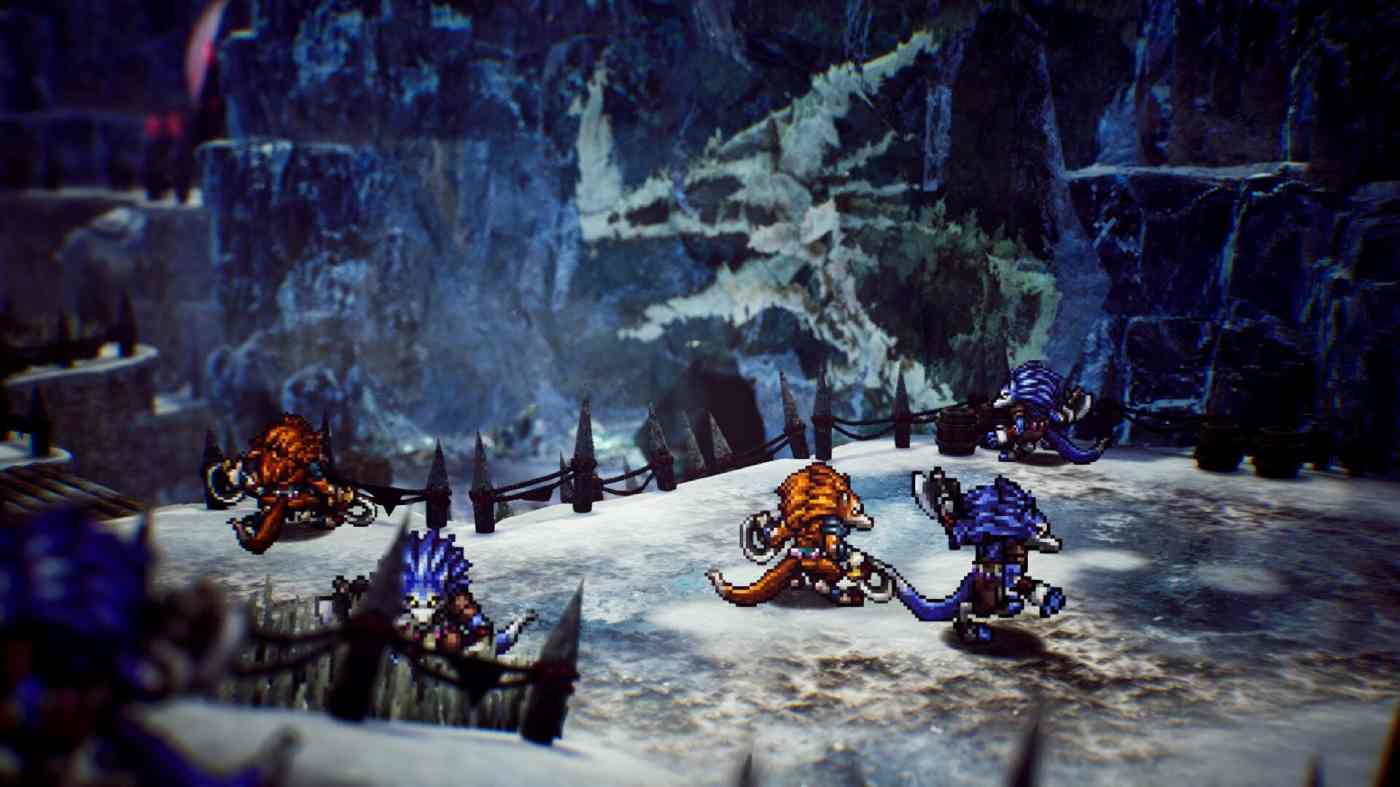
When it all starts coming together, The Adventures of Elliot finally starts to click. I quickly became invested in these characters and the story told here, and by the time credits rolled on the true ending after 15 hours, The Adventures of Elliot had evoked several emotional responses from me that I never would’ve thought possible when I first started playing. The way it handles its multiple endings is deft, satisfying, and provides additional context to the core plot, all while avoiding repetition.
The sluggish act one pacing would be fine if it were offset by an engaging gameplay loop, but The Adventures of Elliot is also pretty rough in that department early on. Combat is a fairly simple affair, which is to be expected in games of this type. You have multiple weapons that serve different functions in combat, each with generic attacks and charge attacks. Like Mana and 2D Zelda, the emphasis here is on positioning and movement.
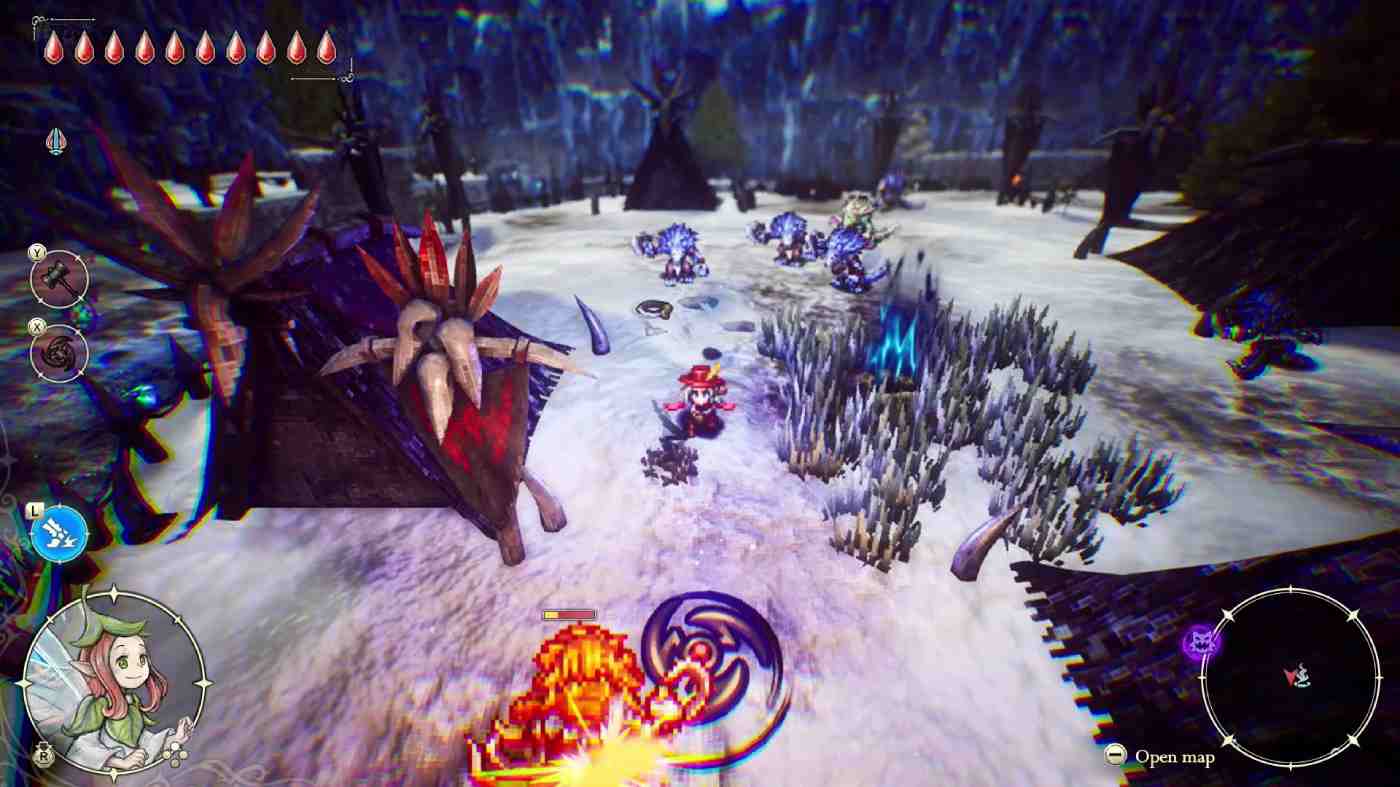
This means that much like those games, the onus falls on enemy design, layered dungeons, and challenging boss fights to form an engaging gameplay loop. Elliot’s early hours have one of those three things: the boss fights – general combat and exploring dungeons fall flat. Things are propped up a bit by overworld exploration, which is straightforward yet moreish in the way it hands out worthwhile rewards in the form of stronger weapon variants and Shards of Life that increase your maximum health ala heart containers.
Amazon will have the best launch price for $94 with free shipping
Another system I quite enjoyed in these early hours comes in the form of magicite. As you explore the world and defeat enemies, you’ll earn magicite fragments, that can then be spent at the Magicite Shop to craft new magicite for your weapons. This works off of a gacha system, though, so you get random magicite for different weapons, each coming with its own rarity. As you spend magicite shards, you’ll level up your form rank, which in turn increases the chance of getting rare magicite.
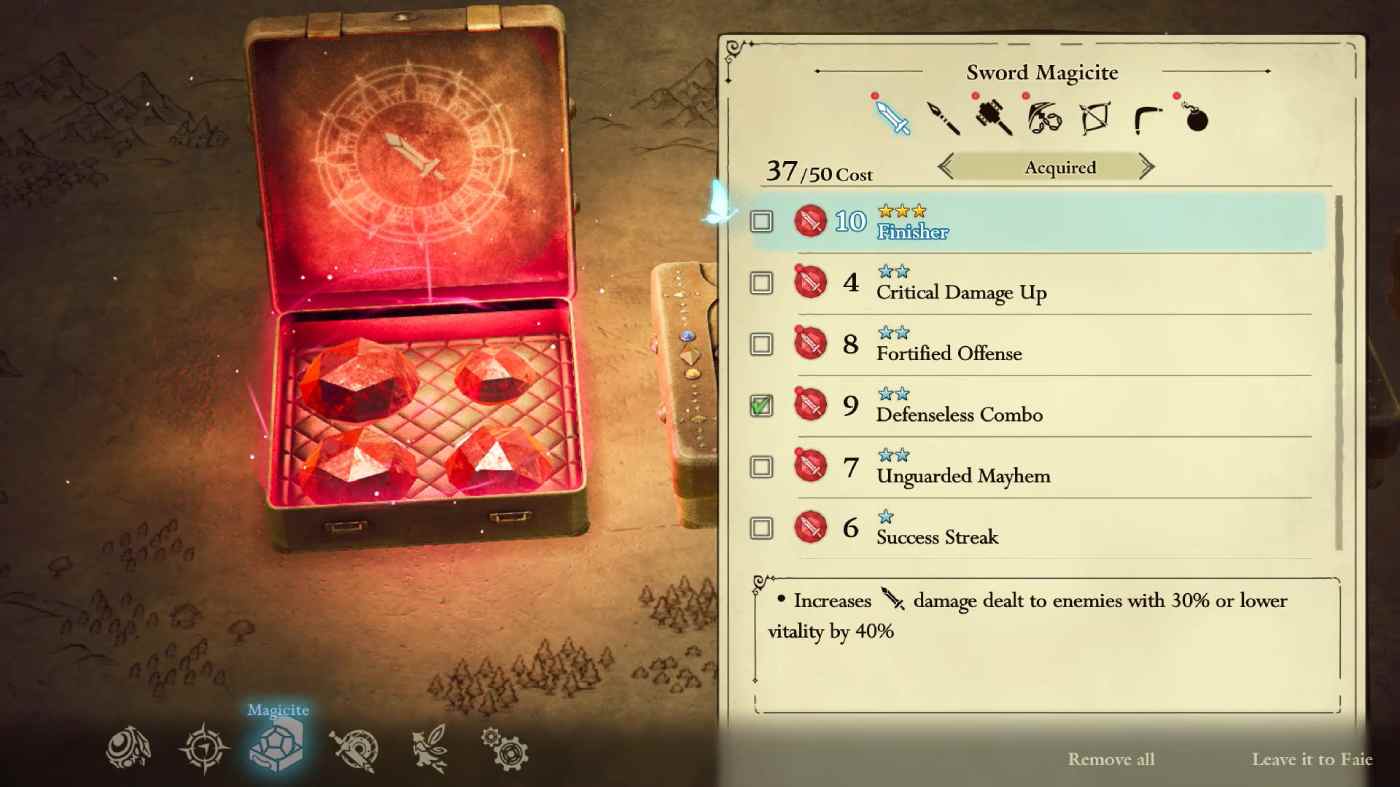
Once crafted, you can slot magicite into magicite boxes for each of your weapons. Every magicite has a cost associated with it that impacts how much magicite you can have active, so you’ll often need to toss up what’s important to you for each weapon. You can gradually increase the size of your magicite box for more flexibility as you find rarer, more costly magicite. It’s a fun little system that leads to some soft buildcrafting, and the rarest magicite changes the way you use weapons in unique and intuitive ways.
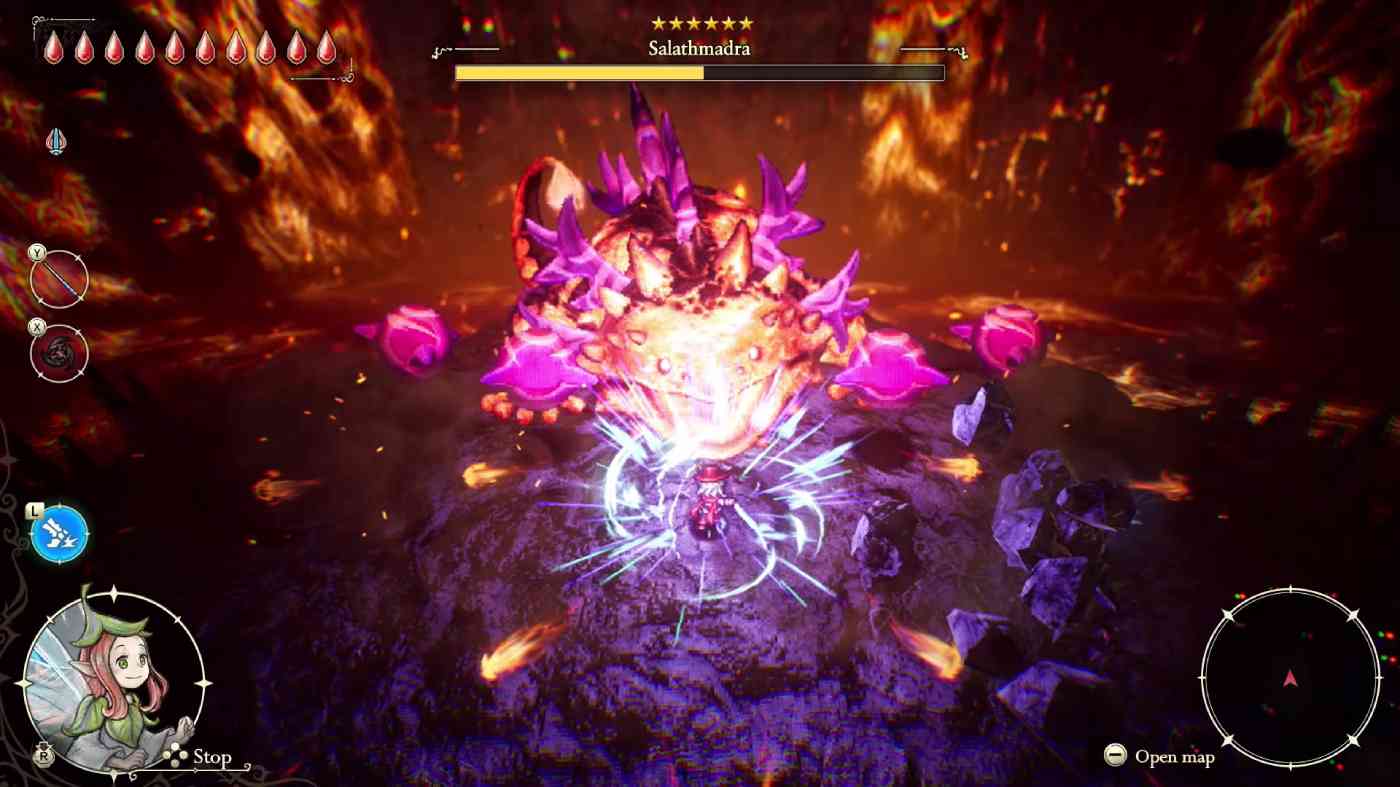
Much like the story, The Adventure of Elliot’s core gameplay loop also grows deeper as it peels back layers. Aside from the general magicite progression, enemy variety increases as you explore the different ages of Philabieldia, and the boss fights only continue to get better. It made for an enjoyable challenge on hard mode that forced me to consider how I built out my magicite and make the most of my limited supply of healing.
The only thing I wished carried that momentum further is the dungeon designs. There are some real highlights from the mid to late game with macro and micro puzzles that are satisfying to solve, but these are few and far between. Many of the dungeons are simple in navigation and in puzzle solving, leaving little to the imagination in the way you complete them. I feel much of this is due to how The Adventures of Elliot structures its core item and power progression.
Where traditional Zelda games give you a puzzle box and throw you a key item to solve it with, The Adventures of Elliot opts to relegate these upgrades to the open world. You can entirely miss weapon types if you don’t go looking for them, and Faie’s powers are similarly only found in overworld shrines. They’re extremely signposted, and the ones that you won’t miss are sometimes used in puzzles, but the most interesting ones are ignored on the main path.
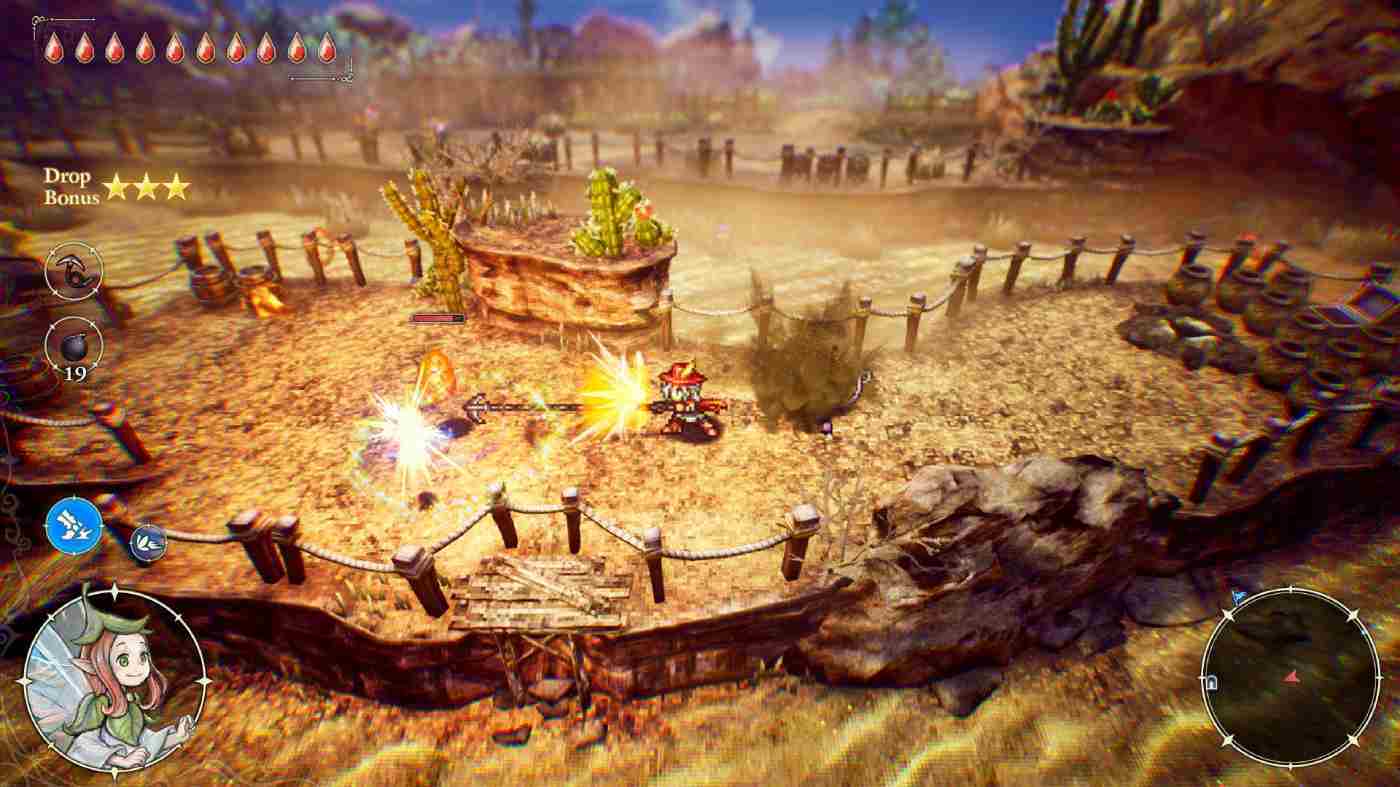
It’s a bummer because they’re genuinely fun to use in exploration and combat. Faie can be controlled with the right stick to do damage to enemies, but also to position her for puzzles and exploration. Her Copy ability turns her into a second Elliot that mimics his actions, which can be used to stand on weights or access areas Elliot usually couldn’t. Warp instantly transports Elliot to her location, and Vacuum conjures a vortex that draws in enemies and objects.
Again, they’re fun to use in combat and provide new ways to express yourself or overcome a tricky encounter, but they’re so rarely required along the golden path that they feel like a bit of an afterthought navigationally. When there were chances to use them for puzzles and exploration, it often felt like it wasn’t the intended solution – which I enjoyed – but it goes to show that the relatively non-linear nature in which they can be acquired hurts the complexity of the game overall.
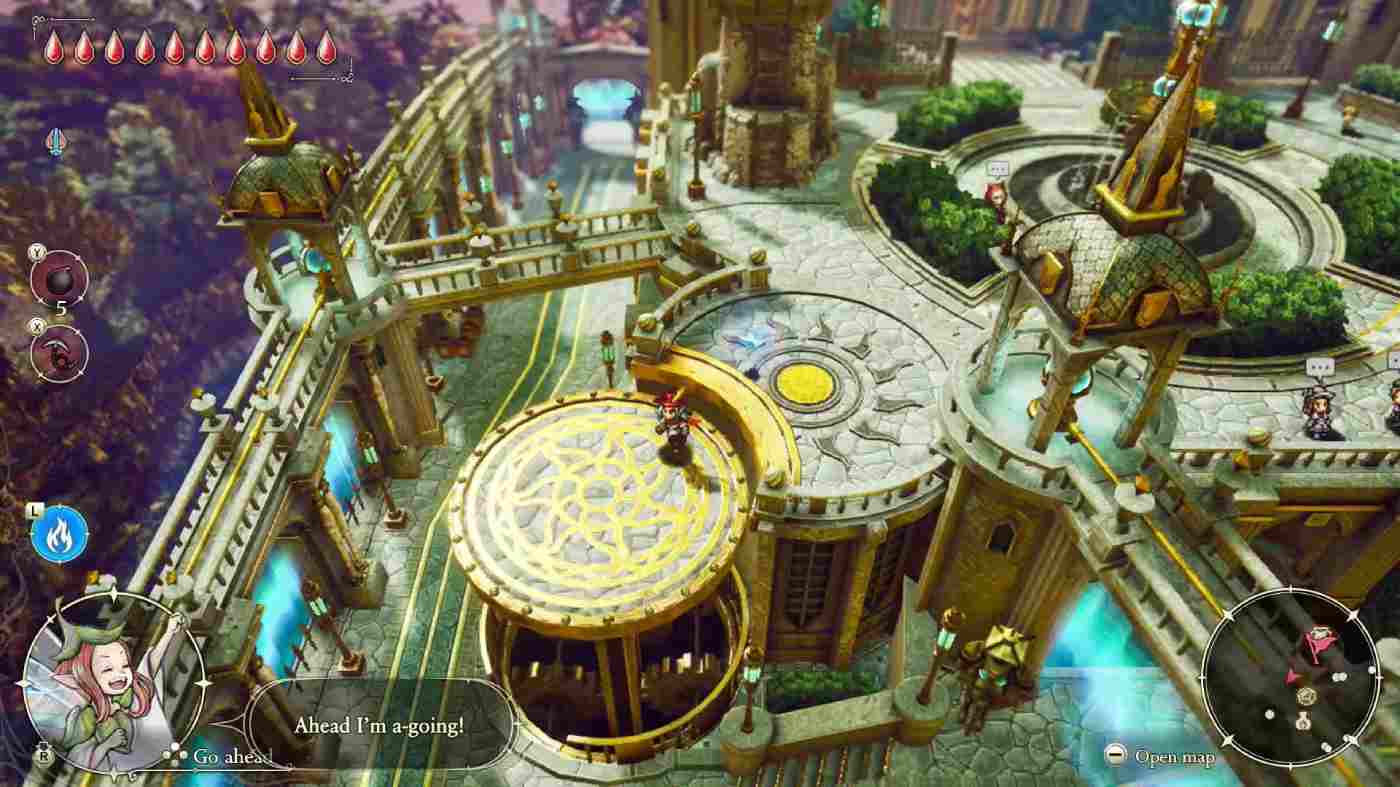
The one place The Adventures of Elliot is consistent from start to finish, is in its presentation. I’m sure it comes as no surprise given Square Enix’s track record with HD-2D games, but The Adventures of Elliot is a real looker. Its pixel art is effortlessly charming, contrasting nicely with the detail of the anime-like character portraits. Voicework really helps bring the narrative to life and the soundtrack is always a joy to listen to.
I was sure of my feelings for The Adventures of Elliot: The Millennium Tales until they were entirely flipped. It’s a slow burn to get there, but one that’s ultimately rewarding, and far offsets many of the shortcomings I had with it in its early hours. It really can’t be understated how well it all comes together by the time you reach the true ending, and I’m sure glad I saw Elliot’s millennia-spanning adventure right through to the end.