


Press Start may receive a commission when you buy from links on our site at no extra cost to you.
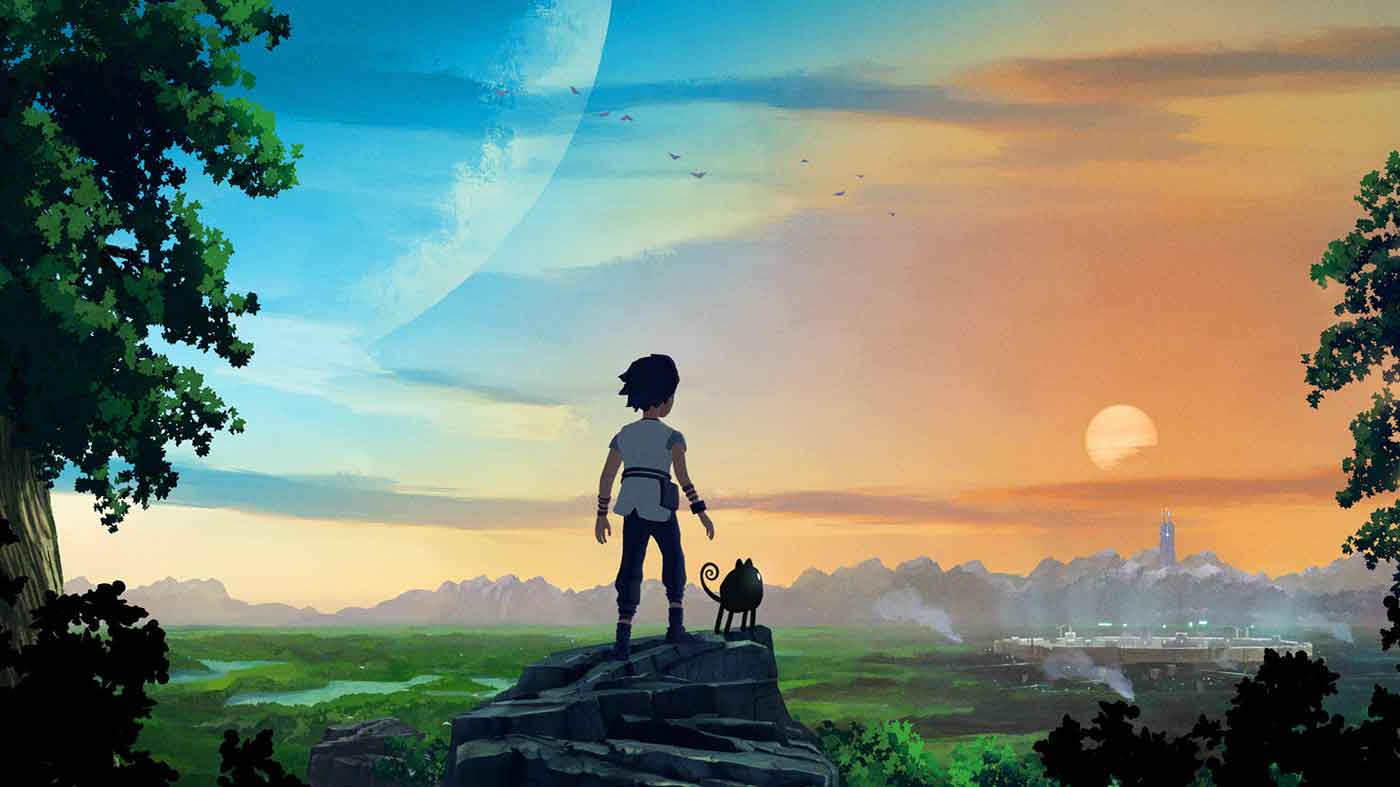
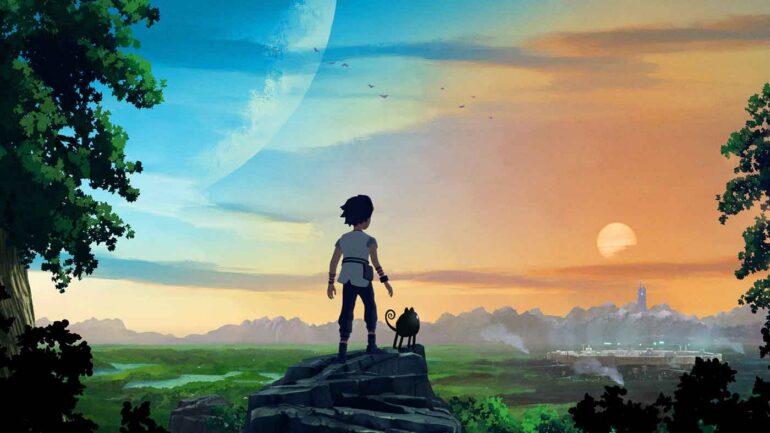
Planet of Lana was a profoundly moving little slice of cinematic platforming that was extremely effective at selling the mateship between Lana, the game’s titular heroine, and her companion Mui. Its story was local and focused on the pair saving Lana’s lush paradisal home from the invading, calculating machines hellbent on ruination and enslavement. While it told that story as well as it could without any dialogue, opting to keep the player estranged from each conversation by having characters talk in their own native tongue, this sequel is all about expansion.
With Lana’s world undergoing drastic change as technological progress and industry force tribes apart, the surface level plot speaks to the damaging effects of tribalism and the healing power of harmony, while its sub plot, which ends up being far more interesting, delves further, and more directly, into the world’s history, telling the story from different perspectives, and setting up a narrative thread that spans centuries. Sadly, it isn’t fully paid off, ending on a cliffhanger immediately after its rather telegraphed final reveal. Predictable as it was, the final emotional crescendo was still very earned, and I felt it wholeheartedly.

While the sequel’s storytelling expands far beyond the original’s scope, I’d find it hard to make the claim that the gameplay has undergone a similar upheaval—although it didn’t need to. While there are a few new additions, Planet of Lana II stays faithful to the original’s tight, companion-driven gameplay, leaning heavily on the relationship of its characters and how dependent they are on each other to survive the planet’s dangers. I felt the moment-to-moment of this sequel was more diverse than the original, and I got the sense that there was less apprehension in Lana’s demeanour; she’s a more mature, experienced lead this time around.
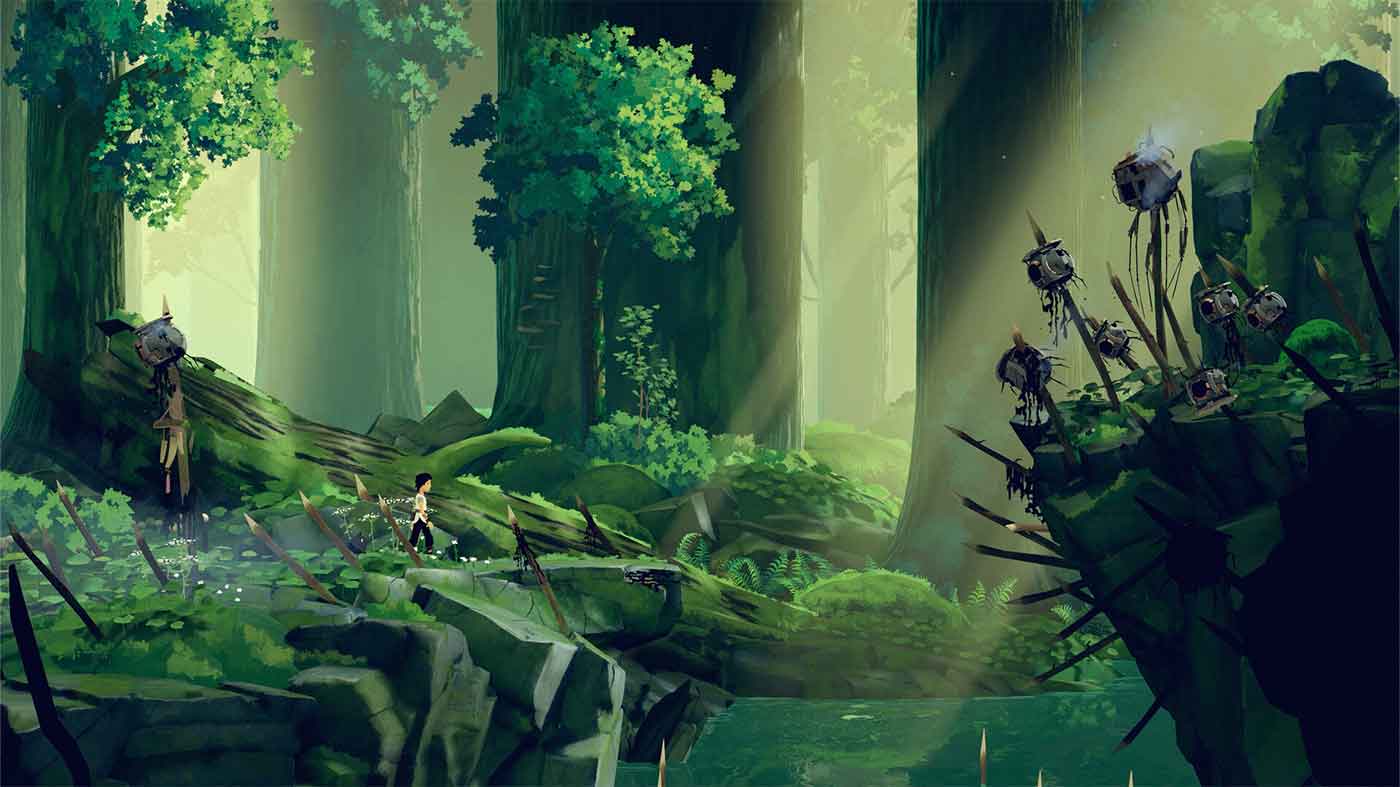
Although there are several opportunities to drink in the planet’s beauty, with locations ranging from lush forests to snowcapped peaks, the game functions as a puzzle-platforming game where the defenseless and very vulnerable Lana and Mui carefully navigate areas guarded by vicious machines. To get through unscathed against the machines and the environment itself, the resourceful pair works together using a stealthy approach and the combination of their abilities, although it’s Mui that does the heavy lifting here.

We get a greater sense of Mui’s taming powers in this sequel, somewhat “waterproofing” the little creature’s ability to help, as it takes control of small, agile fish that can aid Lana by dropping ink clouds that provide cover from cameras and predators alike.
Not that I recall the original being a huge challenge, the puzzles in Planet of Lana II aren’t complicated at all. In fact, I only struggled periodically because I gave them too much credit and dreamt up convoluted solves, especially for the puzzles incorporating Mui’s possession powers. As viable as my silly ideas seemed, and I genuinely believed for a hot minute that some of these answers were Rube Goldberg in complexity, the actual solutions were far simpler. I enjoyed how inventive some of the puzzles got, often combining several mechanics at once, but I got through the game relatively unbothered.

That’s not to say I didn’t die my fair share. Even if the solutions are obvious, execution is another matter entirely. Fortunately, like the original, the game has very generous checkpointing that helps circumvent the mild frustration that comes with repeated failure.
In between puzzles, the team wasn’t afraid to insert long stretches of wilderness for players to drink in. It feels like a genuine mix of some of my favourite sci-fi properties, blending the melancholy of something like Tales from the Loop with the plucky, underdog-fuelled hopefulness of Star Wars. The scenery is diorama-like in Planet of Lana’s sequel, with the foreground’s passing foliage or cave rock creating a real sense of space as Lana treks through a series of distinct biomes.

All of the game’s visual splendour is made even better by Takeshi Furukawa’s enormous, soaring orchestral score that grows even further the heartfelt, diegetic motif that served as the basis for all of the key moments in the original’s beautiful score. It’s beautifully composed, rising to the occasion when emotions are high, or chiming with discordant notes that create a sense of foreboding tension and conflict. I can already sense it’s going to be one of the year’s most underrated soundtracks, which is a damn shame.
The performances, as small and gibberish as they are, from Lana’s anguish and rage to Mui’s kindly mews, do well to punctuate the emotion of each scene; for a game with no discernible dialogue, I am constantly impressed with how, by smart use of body language, feeling is conveyed.
Whether Planet of Lana II fulfils its ambition of being a bigger, bolder, scoped up sequel is debatable. At only six hours, it is perhaps only marginally longer than its predecessor, though I can’t help but marvel at the team’s confidence to expand upon its world and lore and make it feel so much grander.