


Press Start may receive a commission when you buy from links on our site at no extra cost to you.
Although I was enamoured by the game’s immaculate and true to its era presentation when I first went hands-on with Mouse: P.I. for Hire, I did harbour a few concerns that the game might ultimately be a case of style over substance and amount to little more than a standard run-of-the-mill boomer shooter. Thankfully, this hasn’t turned out to be the case as Jack Pepper, the game’s wisecracking, rodent private eye, had more than a trick or two up his sleeve, although none of them fed into the private eye fantasy at the heart of the game.
Of course, it’s the game’s striking art and jazz-infused soundtrack that’ll, at first, catch and hold your attention like a set of jingling car keys; however, this modest Mouse is quite adept in several fields. Mouseburg serves as the seedy launching pad for cases Pepper takes on before tugging at the corrupt threads that, when pulled, bring the whole system of bad seeds to justice. Its stars might be mice, but the sleuth story, rife with cynicism in the face of a city’s rotten core, is grounded by the gritty, hard-boiled noir movies of the era, like The Maltese Falcon or The Big Sleep.
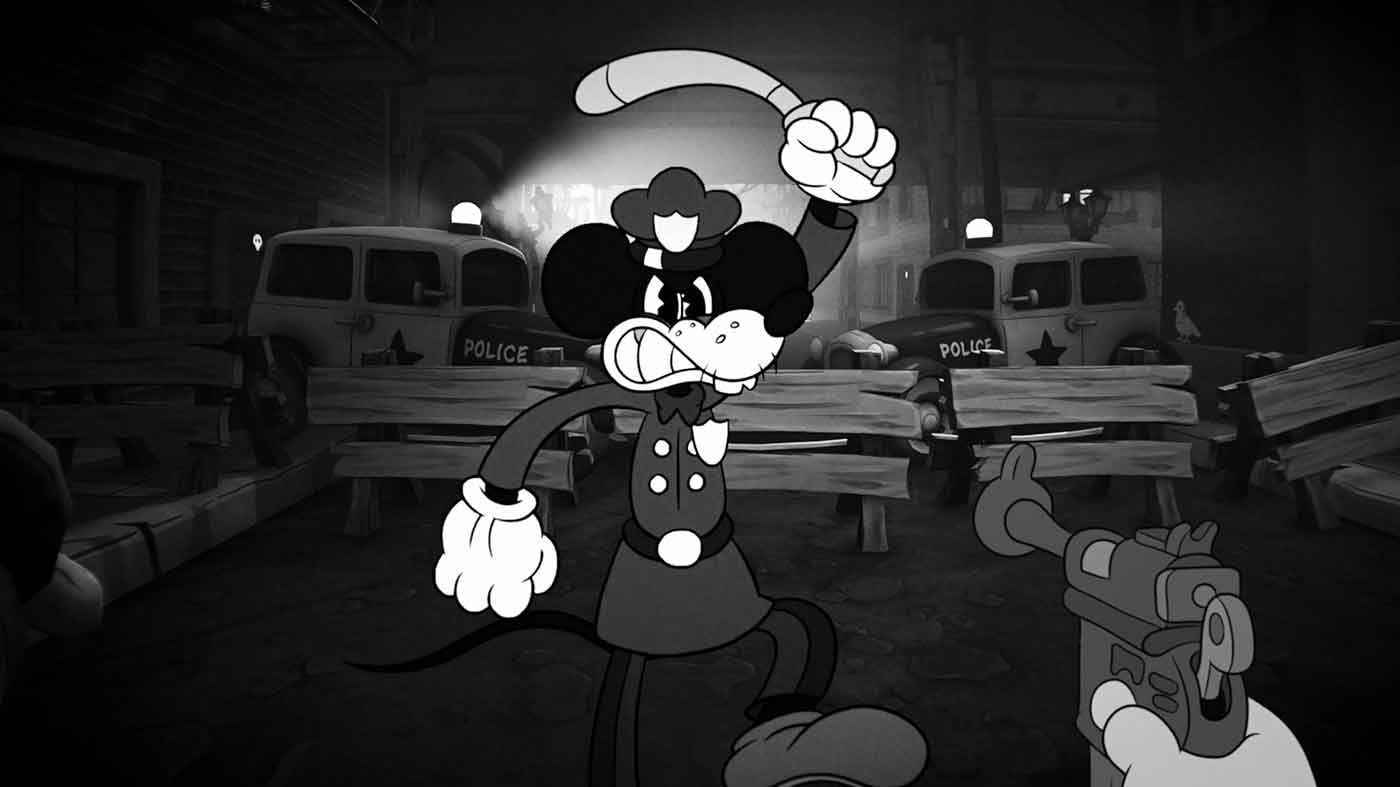
Jack Pepper’s pessimistic and world-weary approach feels one-note at first; however, as cases collide, and those he holds dear are implicated, we do get hints of something deeper in Troy Baker’s portrayal, which is prototypically coarse and slathered in gravel. I did feel that, even as each case climaxed in wild, unexpected set pieces, the send-offs for each gave a lacklustre sense of unfinished business. It was likely deliberate to leave things open for a sequel, though I’d argue it dampened the impact of toppling this particular house of cards.
From a gameplay perspective, Mouse thankfully adds several strings to its boomer-shooter bow over the course of the full game. For the most part, these serve to complement Pepper’s mobility, while highlighting the game’s great level design. At first, Pepper can use his tail to swing across large gaps or whirl it like a helicopter blade to ride updrafts up to an upper level of the stage. He eventually adds trampoline pads, wall running, and ledge mantling to the skillset, which gives the game’s late stages a lot of variety concerning traversal.
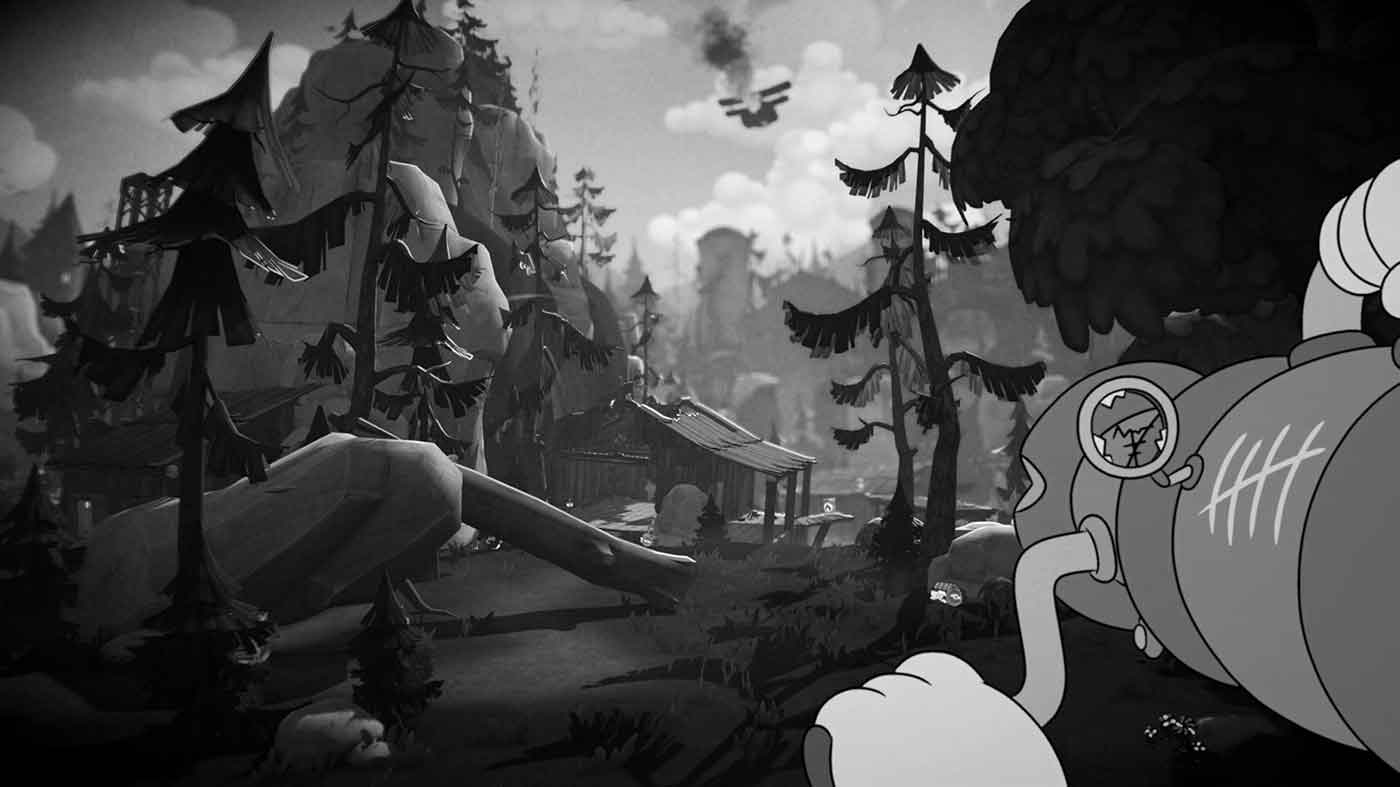
I was also incredibly impressed by the game’s level design, which remained readable throughout despite the lack of a map—although there is a compass that points toward both main and side objectives. It makes use of comically signposted and one-way doors to signal where you’re off to next, but what I loved most is how pathing would converge with earlier routes to open shortcuts and create a sort of open zone within the level. There are plenty of collectibles, like comics, baseball cards, and Jack Pepper bobble heads to hunt, as well as side jobs to tackle; so, being able to double back onto the beaten path is helpful. There are also countless secrets and hidden nooks to find, although some clearly declare their hand with a laugh-out-loud message of “totally normal wall” scrawled next to a big X.
With that said, replayable stages would have been more useful with respect to mopping up.
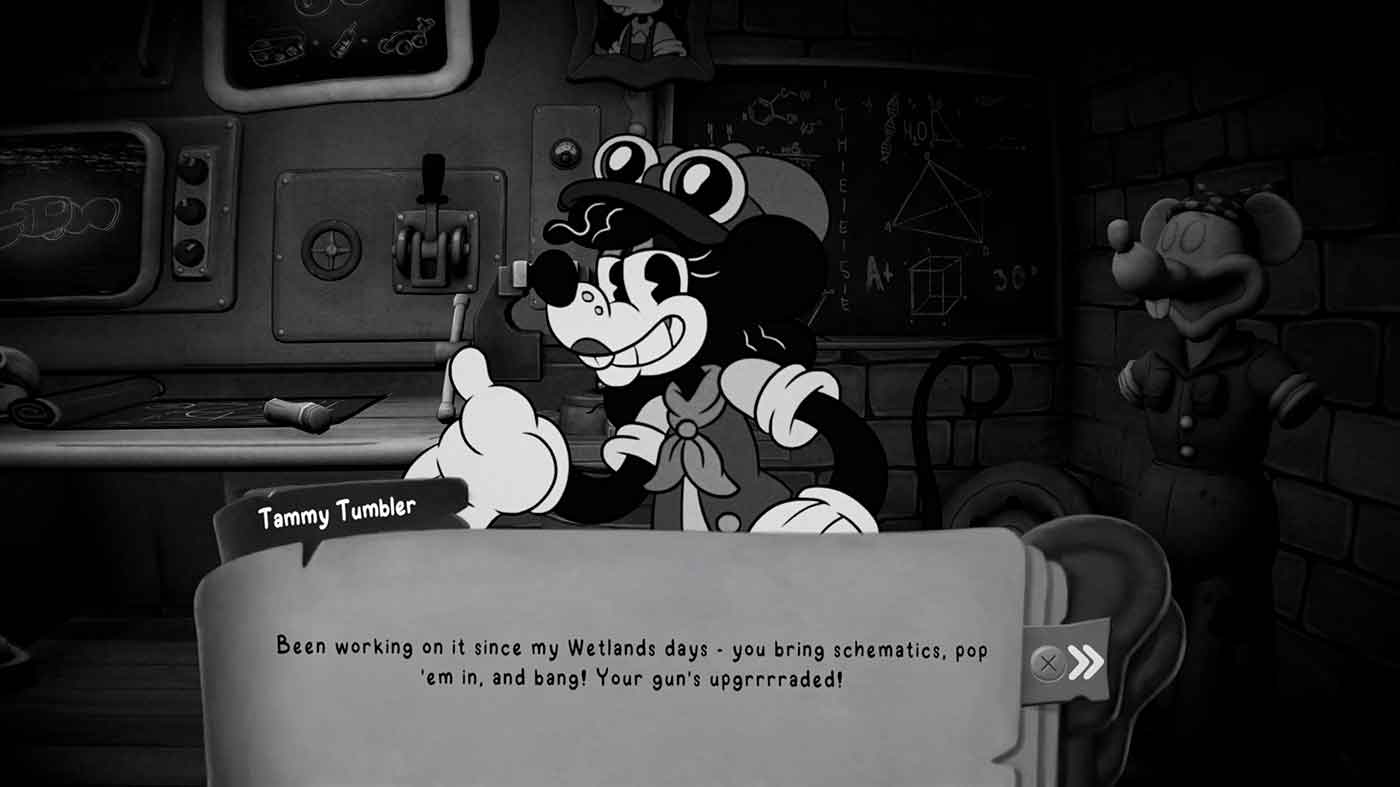
The core loop of Mouse sees Pepper chase leads from one end of town to another, uncovering clues to pin to his office’s evidence board in an effort to piece everything together. Disappointingly, there’s no deduction made by the player at all. For a game about detection and gumshoe antics, I’d have liked a few moments to apply critical thinking to a case, kind of like Condemned or Alan Wake II, which are graphic examples when this game’s violence is more about cartoon anvils falling on people. Instead, it all happens as Jack monologues, keeping things, the player included, very much on one track.
As a war veteran, Pepper is proficient with all manner of guns—from era-appropriate submachine guns to the Old World, mad science concoctions that feel like homages to other genre icons, including Doom. The game trickles new toys out at a reasonable clip, and I never felt bored with the arsenal on offer; in fact, it’s one of the few games where I’d swap between guns a lot. Another credit to the level design is how plentiful things like ammo and health are. If I’d run out of bullets for anything, I had plenty in reserve for something else.
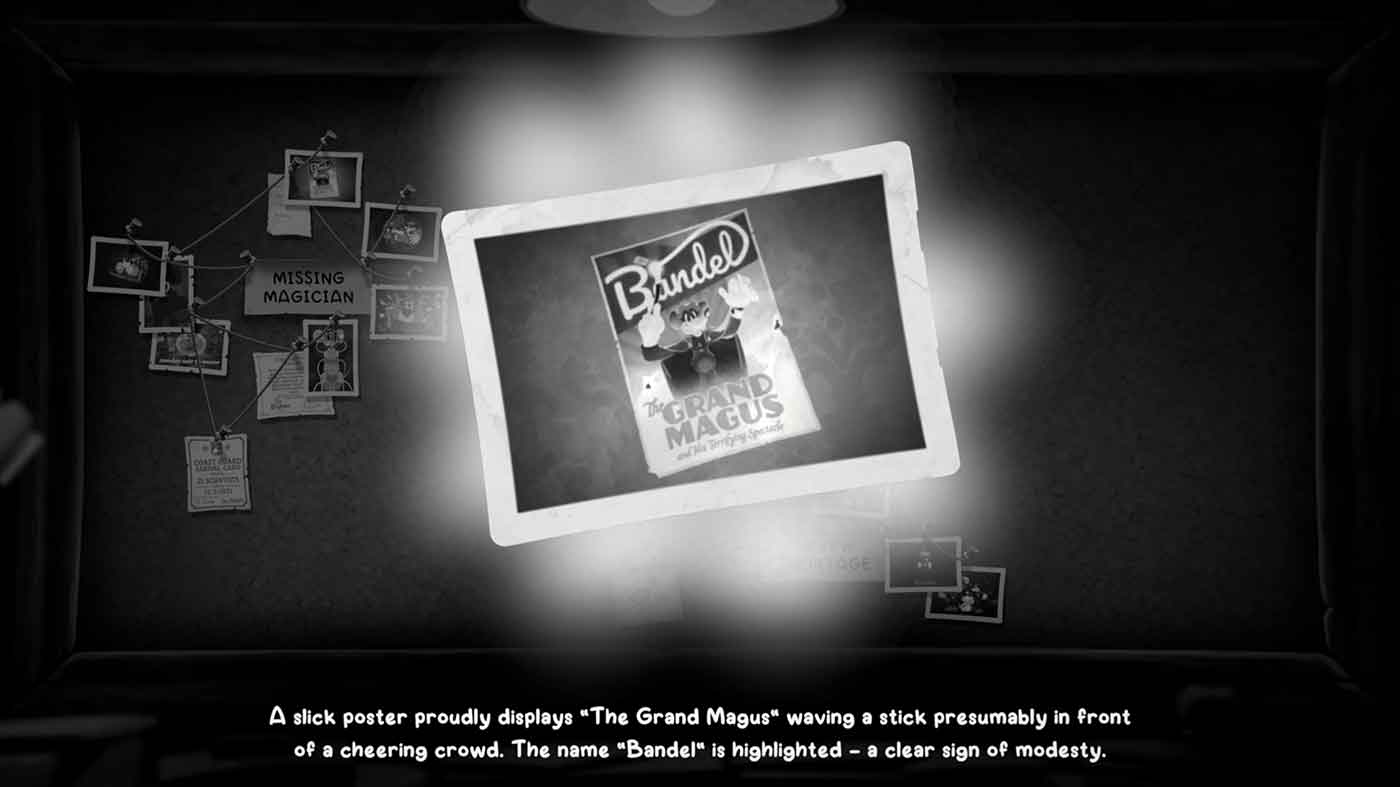
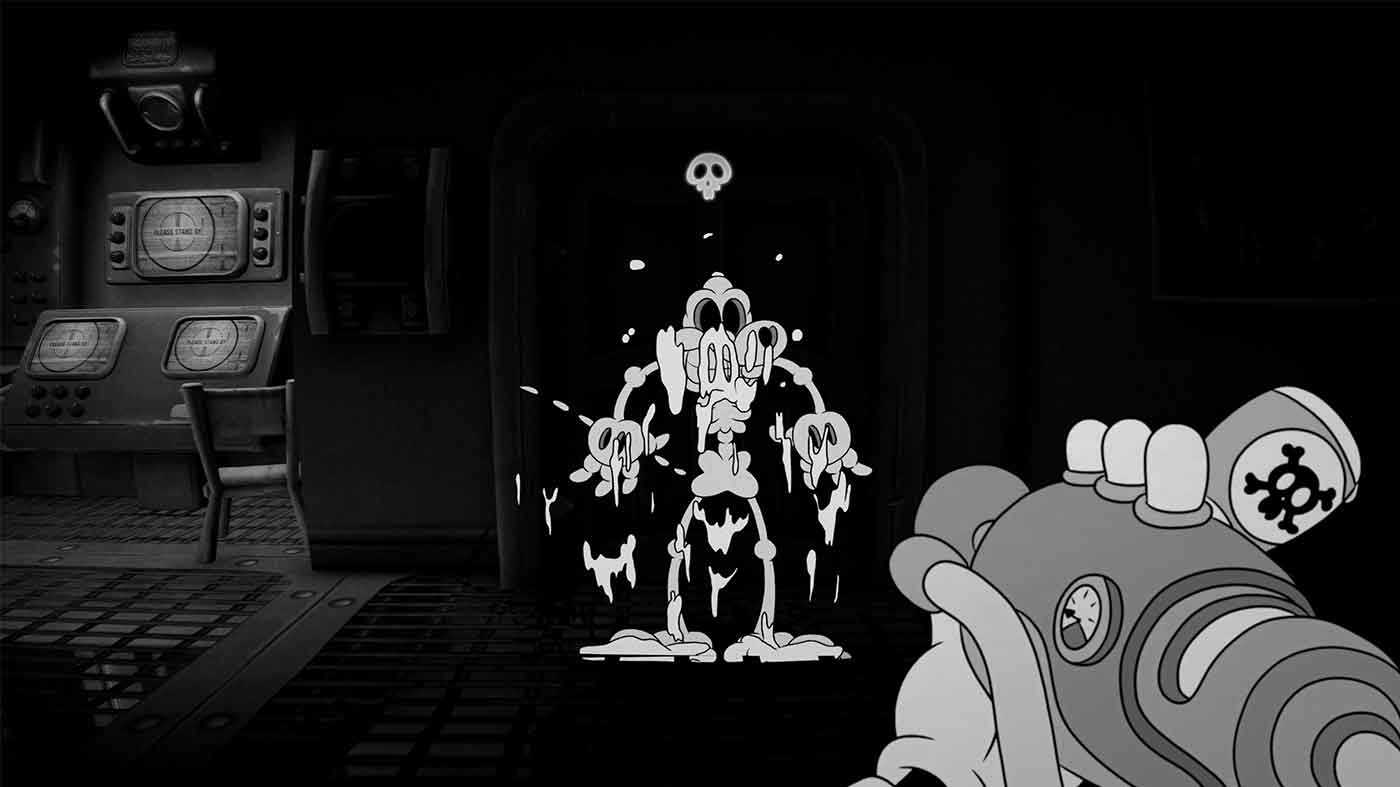
Every gun can be upgraded three times using Tammy’s B.A.N.G. device, which increases damage and clip capacity while adding an alt-fire, which is mapped to the left trigger, an easy choice given the game’s lack of aim-down sights. Some of the alt-fires are more useful than others, though I did love the submachine gun’s erratic spray and pray, as well as the globular, splash damage shot from the Devarnisher, an experimental gun that quite literally unwrites the enemies, stripping their ink from the frame.
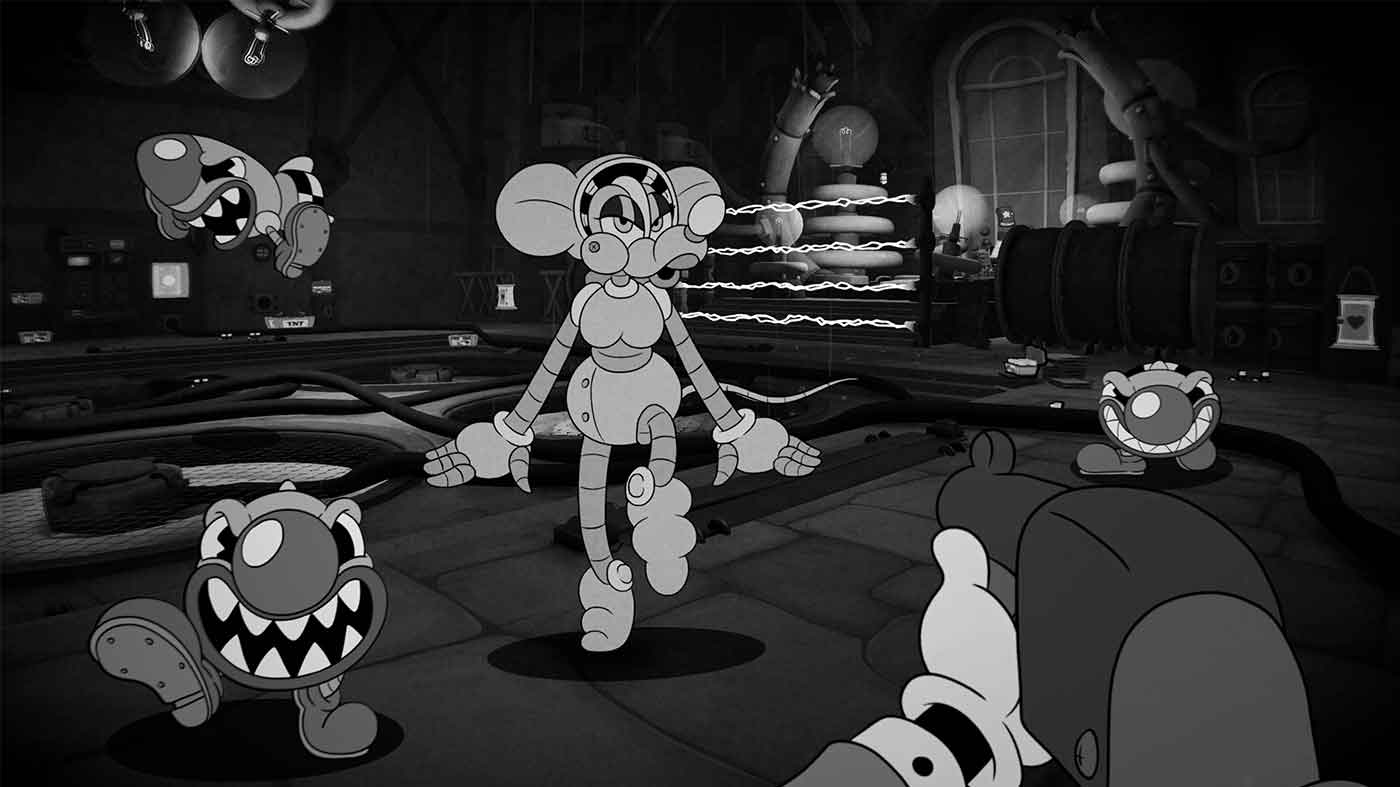
I was constantly in awe of every single frame of animation in Mouse; it captured the rubber hose style of hand animation, as seen nearly one hundred years ago in the earliest Disney productions, so wonderfully. It’s not often that you see a game that’s mostly black and white that looks as striking as it does; though there’s one particular sight gag, right near the end of the game, involving Technicolor that made me howl. There’s a constant, vibrant pulse that the game has; everything feels like it has a cartoonish vigor to it—had I seen a gun’s barrel knot itself and explode, I would have been totally unsurprised. Although it draws the eye, I appreciated the celluloid burns and film grain that gave Mouse a dated, cinematic look.

Mouseburg itself feels like it’ll be the game’s unsung hero, and the environment artists have done a fine job of ensuring every stage has a personality of its own. From Bandel’s lab, to the marshlands at the edge of town, to the Tinseltown back lots where silver screen magic is made, there’s so much fun detail in all of the levels, including some fun tongue-in-cheek jokes about film noir, Mouse’s contemporaries, and even game design itself. I’d often get distracted putting Pepper’s hardtop Thunderbird around the stage select overworld; it always served as a great opportunity to appreciate how big and varied Mouseburg is.
The game’s jazz offerings also helped sell the tone that Mouse was attempting to nail. It’s got notes of bombast, machismo, and enough sleaze to run for office, but it’s a perfect backdrop for the game’s action. At the very least, the theme’s sax riff, reduced to a ba-dum-driven vocal stim by Troy Baker for the game’s boot screen, is an absolute earworm. There are a few fun moments where the soundtrack happily takes the backseat so Scott Joplin’s “The Entertainer” can serve as a grin-inducing soundscape for a bar fight, but these are few and far between. The sound design, like Cuphead’s before it, is rooted in the golden age of animation, with bell chimes signalling the end of a battle; the game is full of small touches like this.
Ultimately, Mouse: P.I. for Hire has all of the bells and whistles one would expect from a hard-boiled noir title. It has a knockout animation and art style, a big, gritty world to explore, and sublime level design that utilises the skills Jack finds throughout. I do wish the game did more with deduction and actually making the solve; it was the one area that left me wanting more, and could have made Mouse a near-perfect detective game.