


Press Start may receive a commission when you buy from links on our site at no extra cost to you.
Developed in Tasmania, Nullstar: Solus has been an unexpected joy as someone prone to getting the most out of precision platformers. Being an indie title, it’s a smaller experience than some of its contemporaries; however, what it offers throughout its three hours before the credits roll is unique. And even then, there’ll be plenty left to do, which makes Nullstar: Solus a wonderful value proposition.
It’s truly a game where you get back whatever you give.
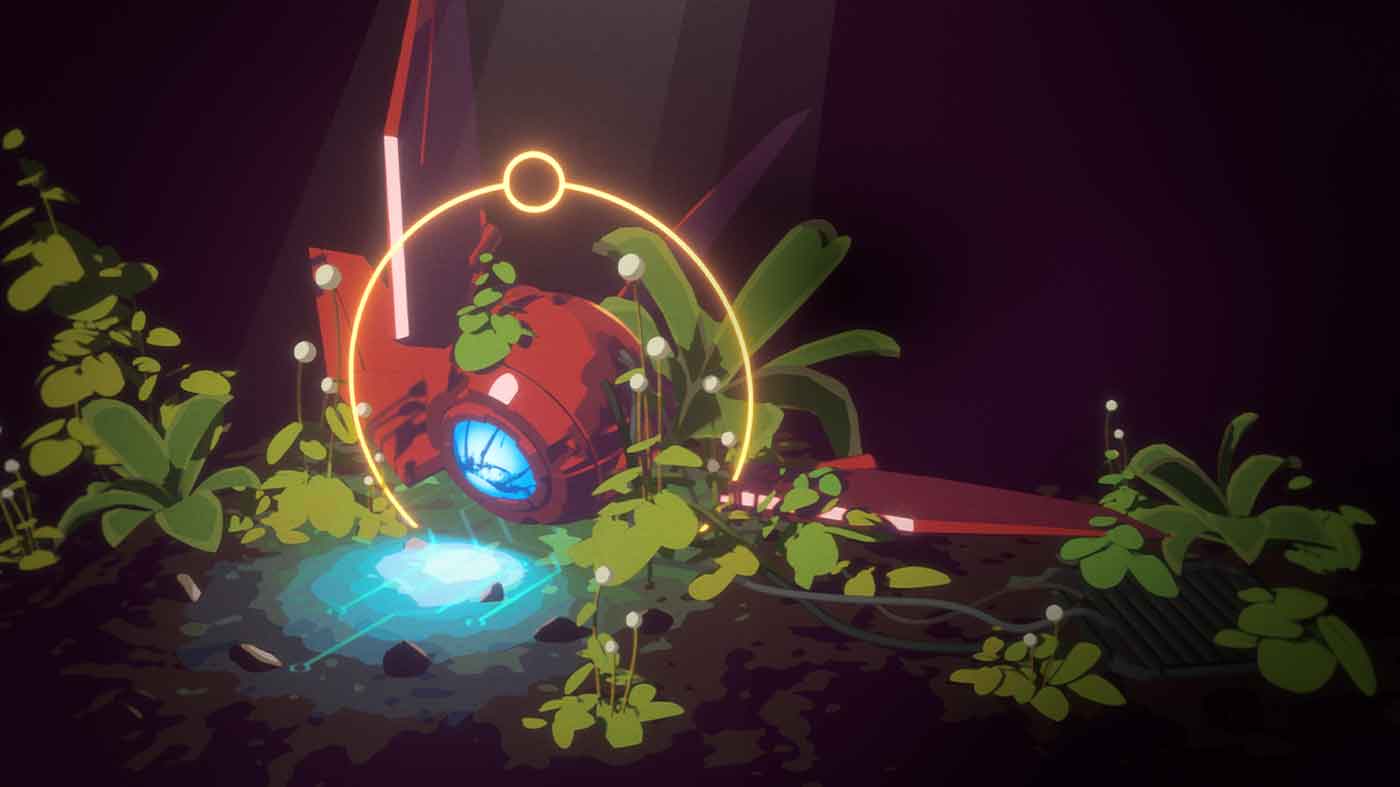
Although you’ll need to put up a fight to see all the game’s lore codex has to offer, you’ll spend your time as a mega corporation’s scavenger drone pilot as you’re sent to sap a derelict megastructure of its resources, including its volatile, incredibly valuable nullstar—a source of near-infinite energy capable of powering entire worlds. On the surface, it’s a simple premise that, at first, lets the gameplay walk its walk. However, as you dig deeper through the archives, the story you uncover fills in so much about the world and the pilots that inhabited it. It really seems a shame for it to take a backseat as it does.
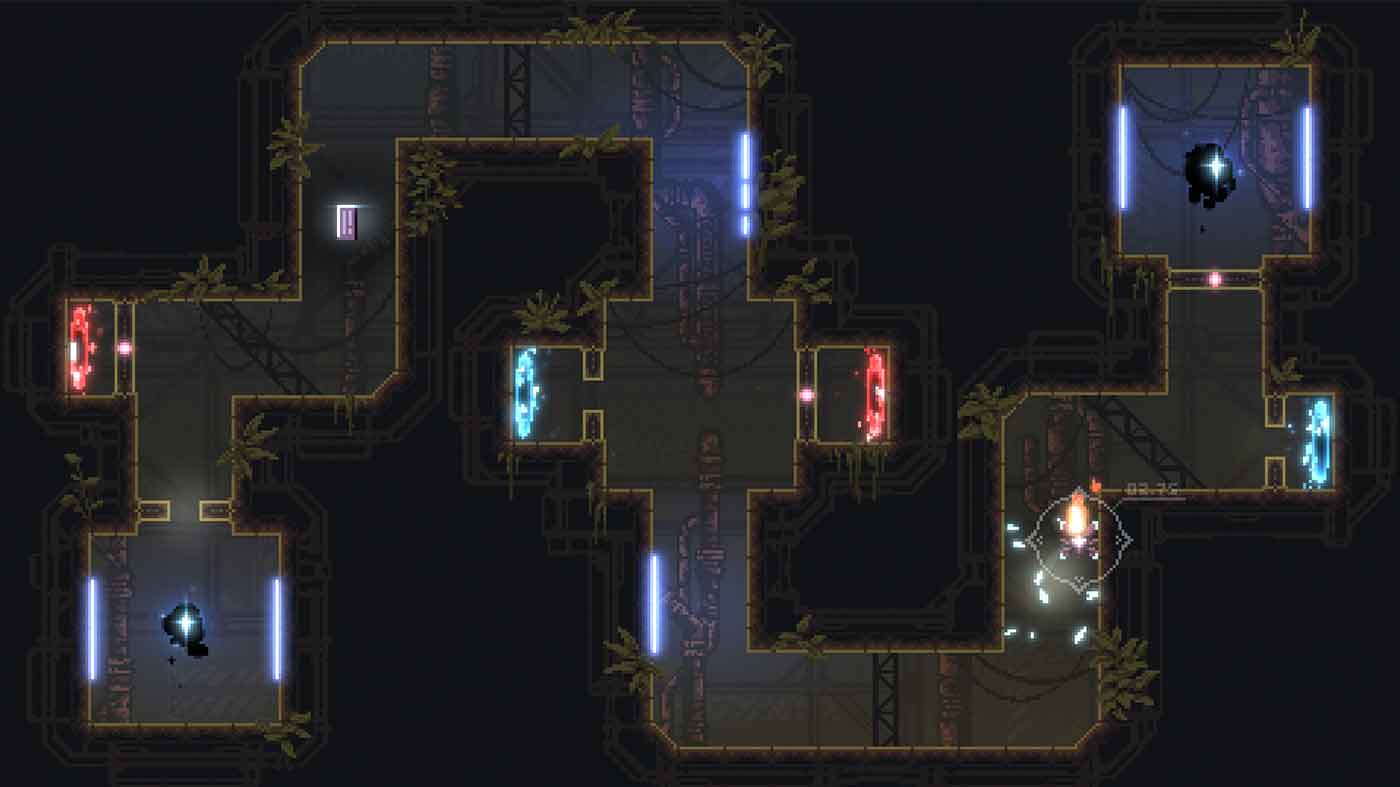
Most people will be familiar with the basic functions of the game as a precision platformer. As is often the case, it’s a test of reflexes, and it’s wholly goal-oriented as you’re tasked with collecting unstable nullstar fragments while avoiding the dangers that protect them.
What’s unique about Nullstar: Solus is how you pilot the drones. Directional movement is kept pretty standard, while the drone’s thrusters—top, bottom, and two flanks— are mapped to the other face buttons. Each button disables its respective thruster and diverts power to those left active. For example, you’re able to move much faster to the left if you’ve killed power to the right-side thrusters. Navigating the game’s levels at breakneck speeds, while toggling jets on and off, becomes a real tricky juggling act, but it’s one that’s required for the highest level of play. Of course, you could slog through Nullstar without paying this mechanic any mind, although you’d be doing the game a disservice by not trying.
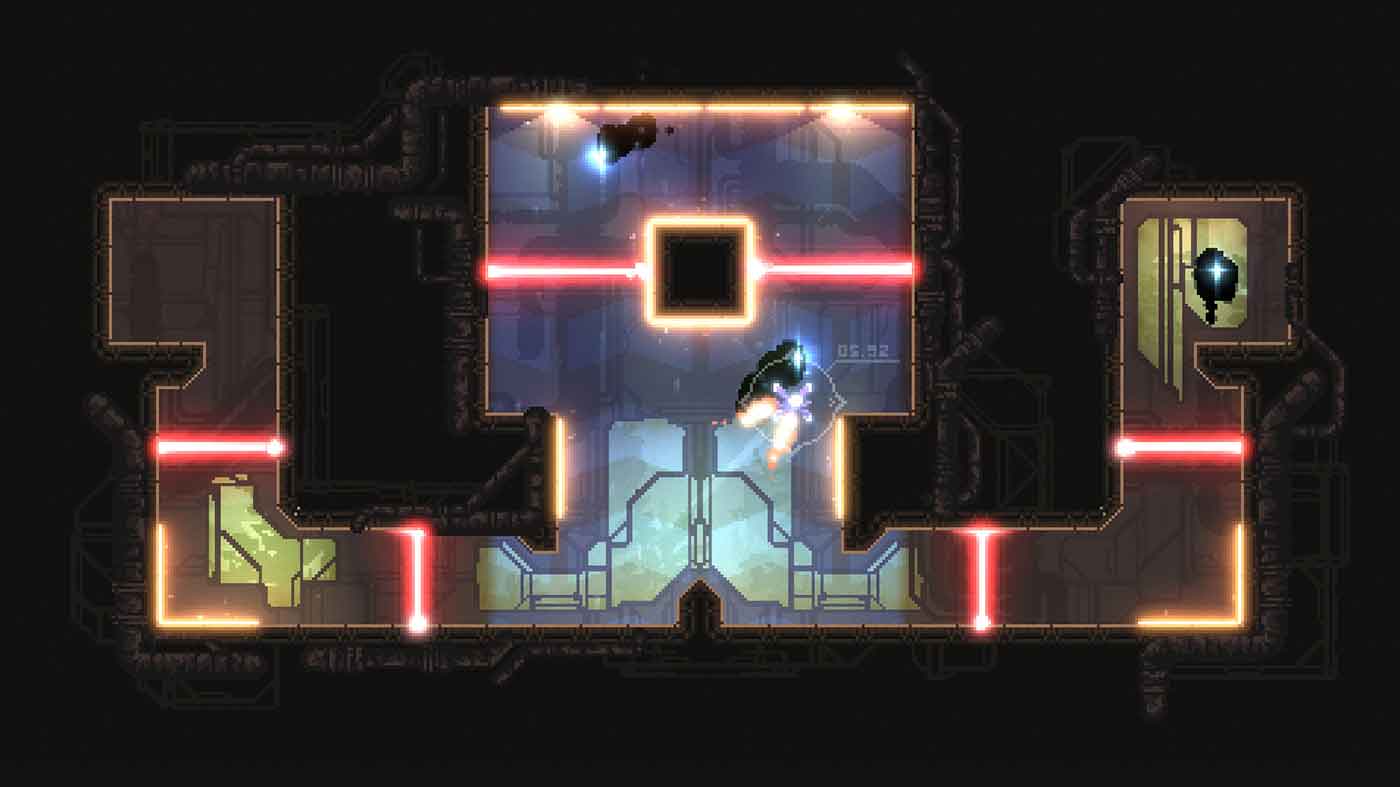
With that said, as clever and different as Nullstar tries to be with its thruster-control systems, it ultimately feels a little too fiddly, and I found the constant toggles, on top of rather precise, high-speed, and evasive movement, felt like sensory overload. Of course, some levels, like those with more linear pathing, are easier to hurtle through. I found those with constant dog-legging to be a bit much. Despite this, the best scores did feel quite achievable more often than not.
I do like how distinct each drone feels when compared to the others, and how their use cases vary depending on the spread of their stats. Some, like the Titan, are beefier and can tank an extra hit or two, meaning you’re able to absorb a bit of punishment to push for the finish line. Whereas others are built for speed, but can tend to be a bit squishy against the world’s laser barrage, so it adds a bit of strategy on how best to tackle a certain level’s high score, which adds to the replay value for players looking to master the game’s one hundred levels.
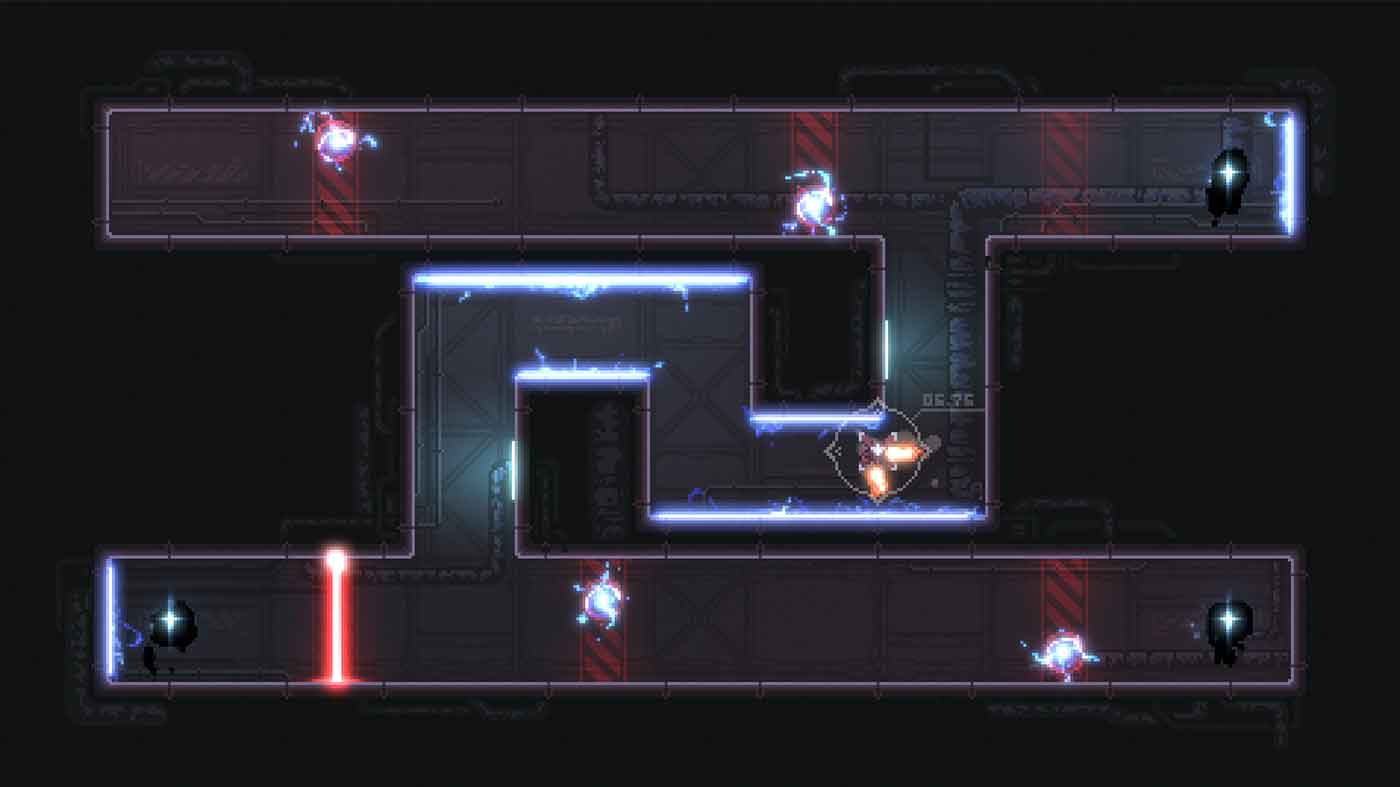
Although I find it odd that the megastructure’s security measures grow stronger the further from the core you are, I do think the world is a well-realised one. It’s ruinous and feels ancient, with overgrowth seeking to reclaim labyrinthian corridors and take the planet back under nature’s rule. Admittedly, despite the pixel art and animation being pretty, the game’s colour palette does lean rustic, using plenty of earth tones to present as green and very brown, which does grow a bit tiresome to the eye. With that said, for a game where speed is paramount to success, it’s exceptionally readable in terms of identifying optimal routes through stages, and even more so concerning hazards, which, more often than not, emit a concerning, ominous glow, whether it’s orange, red, or electric blue.
More often than not, if a game has a menu option dedicated to pushing its soundtrack, it’s bound to be a banger, and, unsurprisingly, Nullstar: Solus has a thumping score full of energetic, albeit dark, electronic music. Its driving bass lines feel like the root network for the game’s punchy, easily digested core loop.
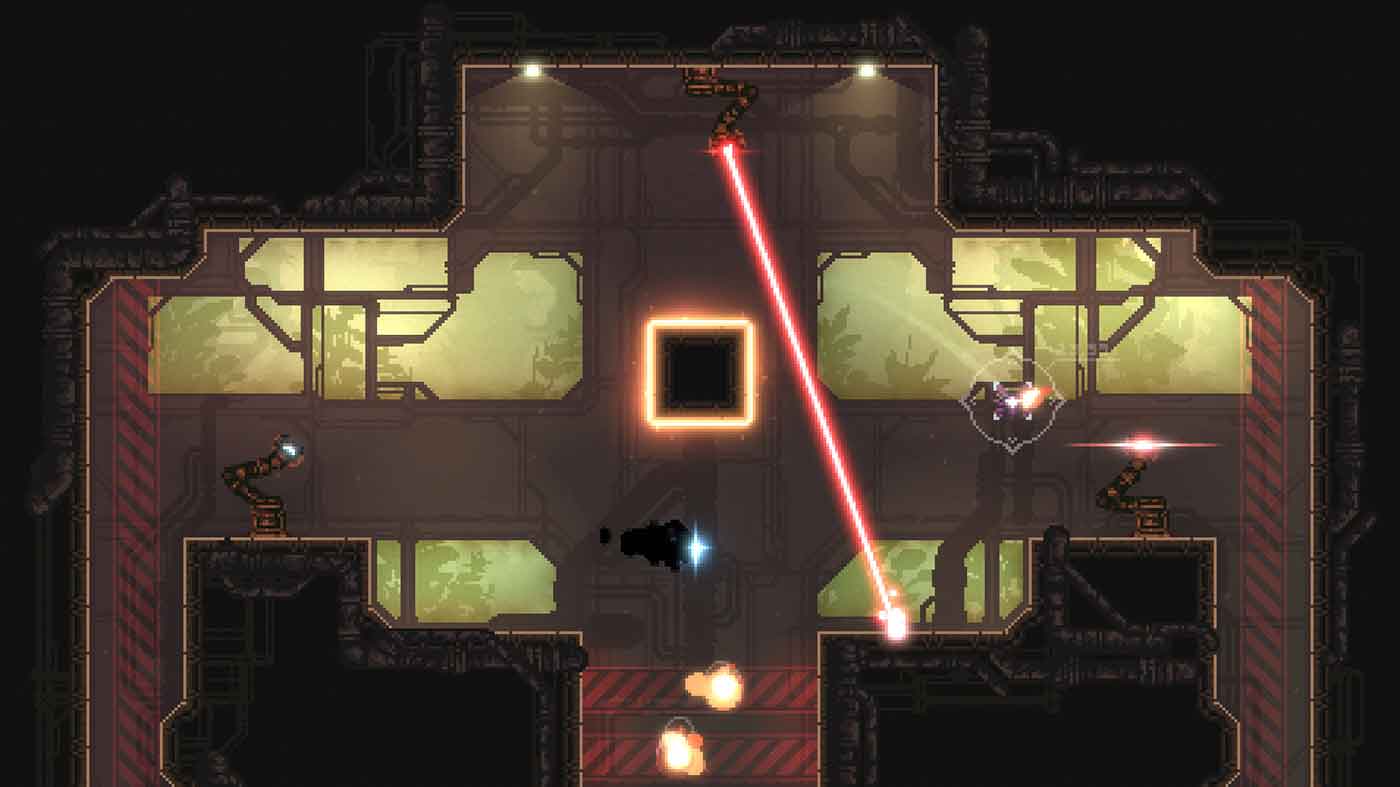
Nullstar: Solus seeks to appeal to a niche kind of crowd. Its platforming is fiercely fast, challenging, and demands a precision that not everyone will be bothered with. For those people, though, there’s great value to be found. With one hundred levels to master over the course of what’ll likely be thousands of cumulative attempts, the world’s lore and smug self-satisfaction are sure to be a welcome yield.