


Press Start may receive a commission when you buy from links on our site at no extra cost to you.
When the dust settles on this particular generation of Xbox Series consoles, I think there’ll be a plaque installed in Obsidian’s honour because that team has, in no uncertain terms, carried the torch for the whole damn brand. The Outer Worlds 2, revealed four years ago, is their third title for this year alone, after Avowed and their sequel to Grounded, so to say they’re productive would be the understatement of the decade.
As the marketing push continues, we’ve been able to go hands-on with a small vertical slice of The Outer Worlds 2, which promises to double down on the original’s approach towards a fun, fatless experience full of great, tongue-firmly-in-cheek humour. The hands-on, which consisted only of the story’s prologue, was deliberately brief to showcase one thing that Obsidian’s truncated role-playing experiences have had in their duffy, and that’s replayability.
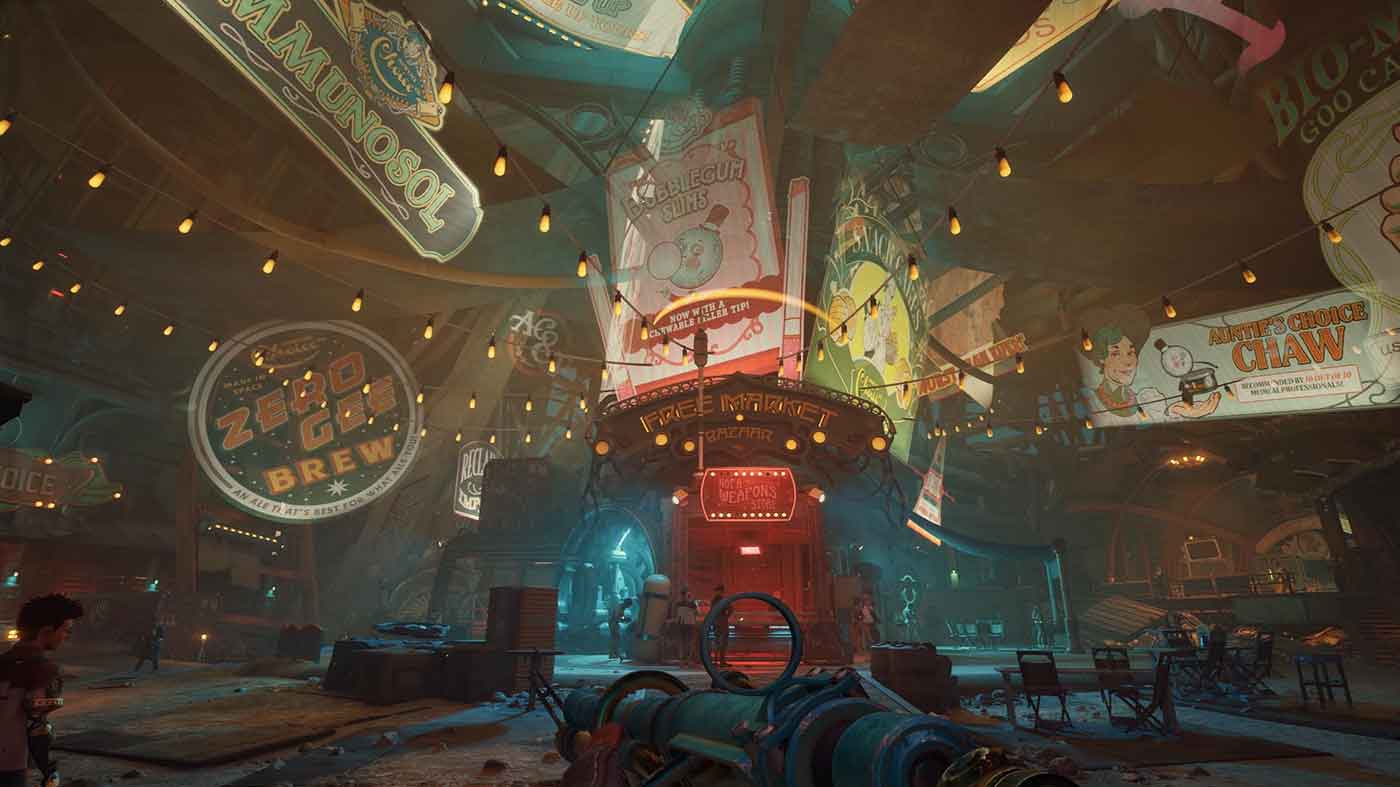
As someone who didn’t quite get through The Outer Worlds – no fault of its own, life simply got in the way – I was relieved to find that the sequel doesn’t really attempt to pick up any existing story threads, it’s just a new grand adventure set within the same universe. As a member of the law-loving Earth Directorate, a governing body that serves as an intermediary between Earth and its neighbouring colonies, you’re sent to Arcadia to investigate skip drive technology for fear that it’s the sole cause of emerging rifts and tears in the spacetime continuum.
The prologue mission, ‘A Cause Worth Killing For’, is framed like a spy mission where the plan is to slip in and out like a demon’s whisper with the intel that ties the rifts to skip drives in hand. Of course, as is typical with espionage, things go belly up, and it becomes a mad scramble to get out in one piece.
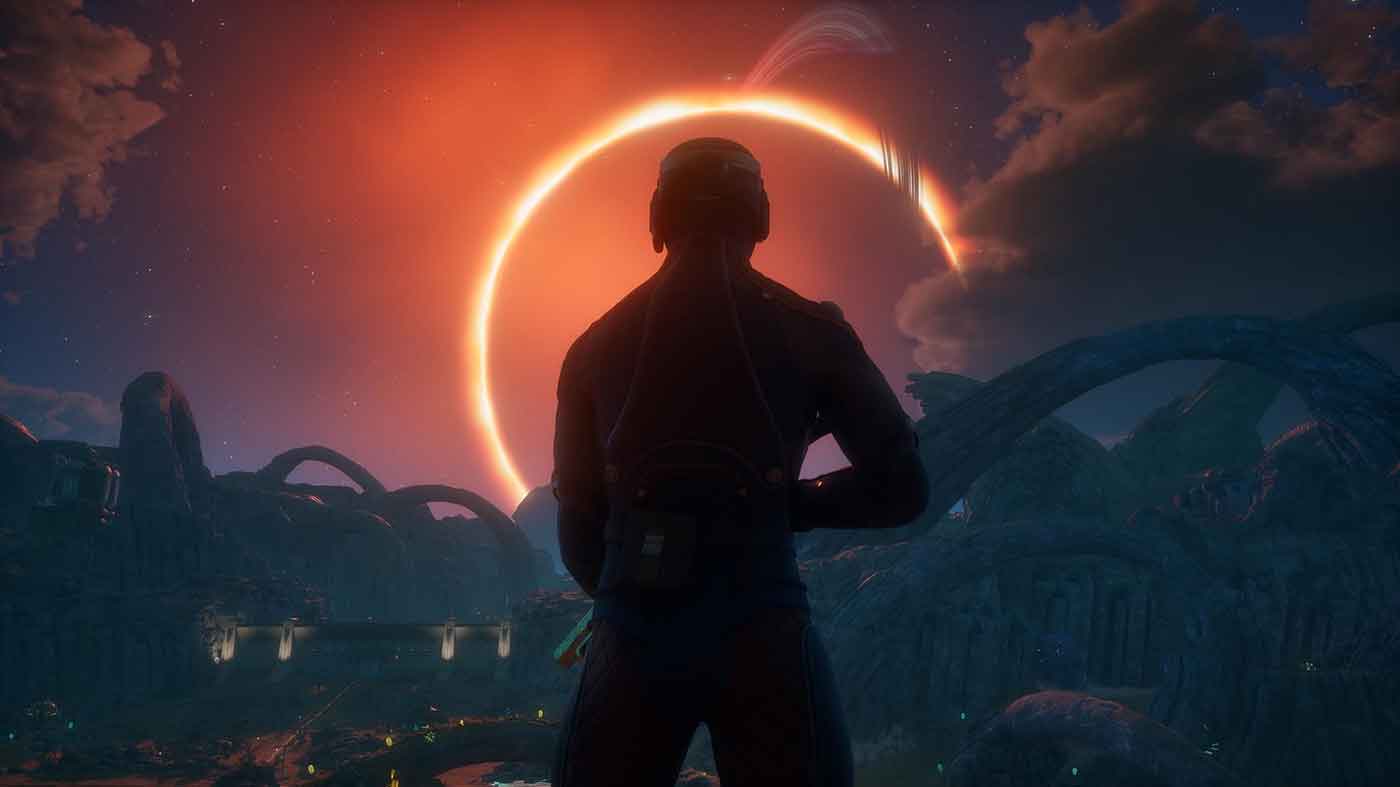
What the mission does well, above all else, is showcase a good handful of the game’s systems, but first, we were guided through the character creation suite, which, compared to the game’s contemporaries, is relatively robust. For each of my four runs of the prologue, I crafted a different character. Of course, the aesthetic flexibility is one thing, and I do think the models in The Outer Worlds 2 are far beyond its predecessor or even Starfield’s kind of dated Bethesda-chic, but it’s the attention you’re able to put into your character’s background and traits that becomes the building blocks of the game’s variety and core appeal.
Pre-Order The Outer Worlds 2 at Amazon $99 (Free Delivery)
Like any other role-playing game, even those developed by Obsidian, your character’s history can determine how they’re perceived by non-player characters within the world. Whether you’re an ex-con, a renowned gambler, a wise professor, or a lawbringer, the choice you make will make available certain conversational branches that only someone of your proficiency or infamy could realistically say. Outside of background, the other way you’re able to make your character you is through traits. I liked how frequently I’d stumble upon trait-specific opportunities in the mission that made me want to go back and see how things might have played out in another life, so to speak.
One of the mission’s subplots involves Corbin, a gullible guards post attendant who, depending on the path you take, can be duped into shutting down the station’s security after you lift credentials from a perished Protectorate guard or, if your hacking is up to scratch, you can coerce him to sic the automatons on you only to have them fight for you. If you scour the game’s quasi-immersive sim world, however, you might happen upon critical intel about Corbin, mostly detailing his concerns over his overseer’s penchant for chemical lobotomies, which’ll allow you to convince him to let you freely wander the station on a promise you’ll erase his demerits record to spare him that kind of mind-scrubbed future. Each of those possibilities is determined by your attention to detail, as well as the traits you take on.
What’s interesting about The Outer Worlds 2’s traits offering is the inclusion of negative traits. You’re able to select up to two positive perks, ranging from engineering to a luck buff that sees your critical chance increase; however, if you do, you’ll be forced to select from a range of negative traits. The ones I experienced either made my character a bit squishy or downright hard to stomach for more than five minutes, which’d make currying favour with factions difficult. I hope that the continual layering of traits creates a sense of spinning plates to keep your build on track.

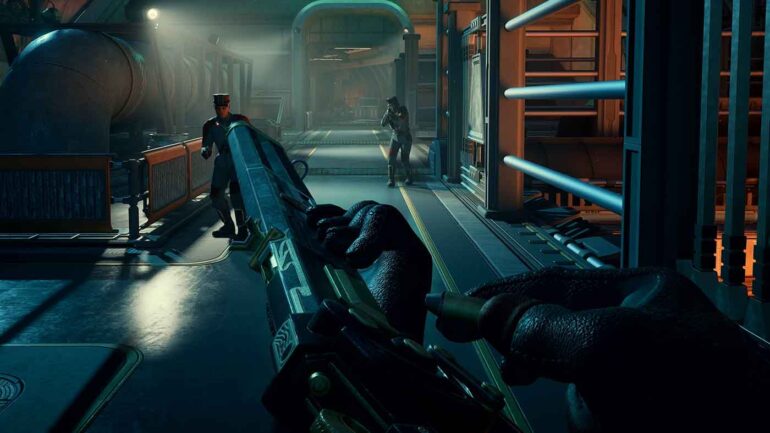
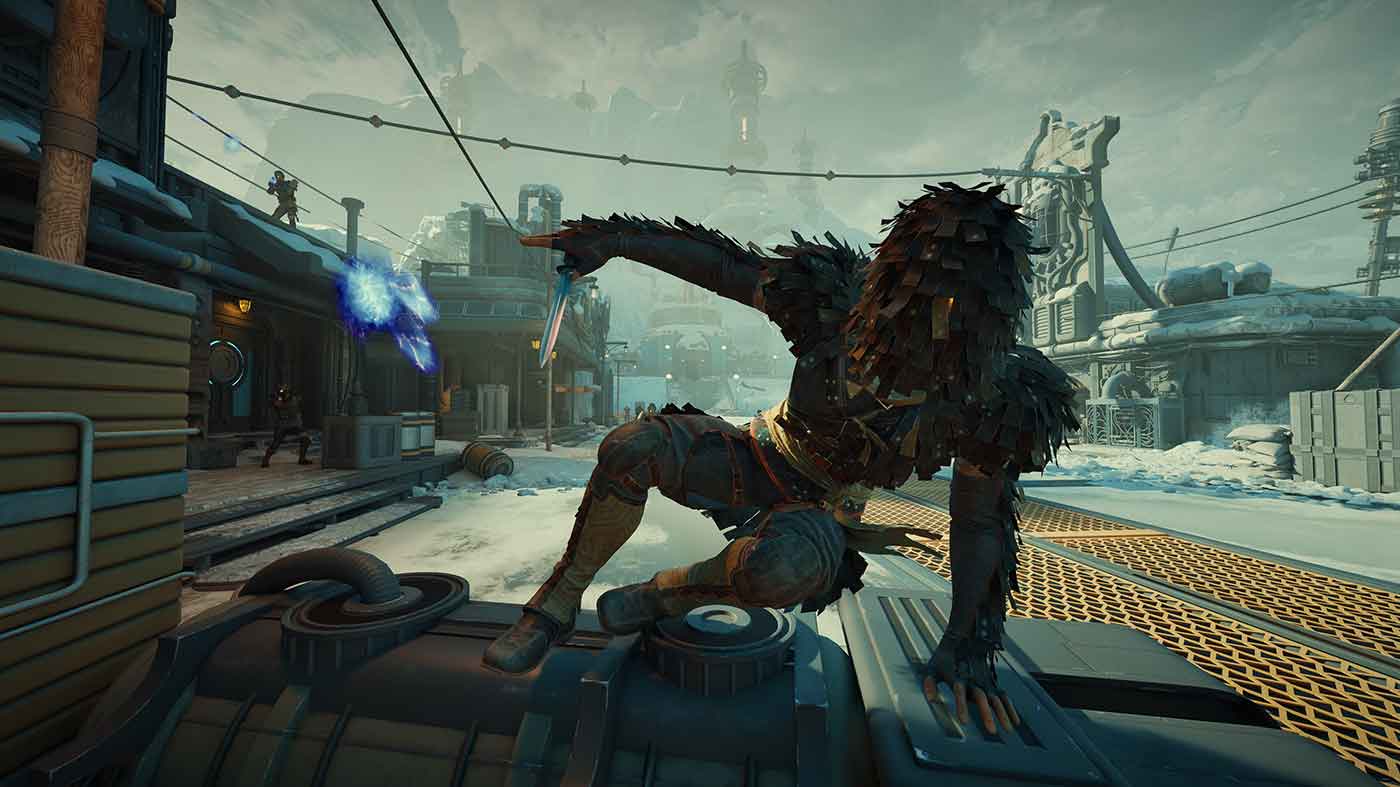
Outside of these role-playing elements, the game operates as a pretty sound first-person shooter with mechanics clearly tighter than its predecessor. Whether it’s the gun feel, or it combining with the art deco, future tech look of everything, but it did remind me a little of BioShock moment-to-moment, which I was completely onboard with. As I’ve already touched on, the game is quite pretty outside of a few odd transitional animations to set up a dialogue exchange, and although we’ve only been introduced to one location and a handful of the key players so far, there’s an unexpected level of fidelity here; I’d go as far as saying that, by willing itself to modern standards, the game outshines even Starfield, which, again, is a credit to Obsidian’s output for a comparatively tiny team.
From the small vertical slice we got to play—and granted, I got it four or more times—The Outer Worlds 2 is doing everything right to not only create an experience that’ll be welcoming for returning and new players alike, but to create a game that’ll be fun to re-roll characters on again and again. If the mission pacing and cadence throughout can be as punchy as its prologue, and the story can deliver a malleable, engrossing experience, The Outer Worlds 2 is going to basically be Starfield without some of the fluff.