


Press Start may receive a commission when you buy from links on our site at no extra cost to you.
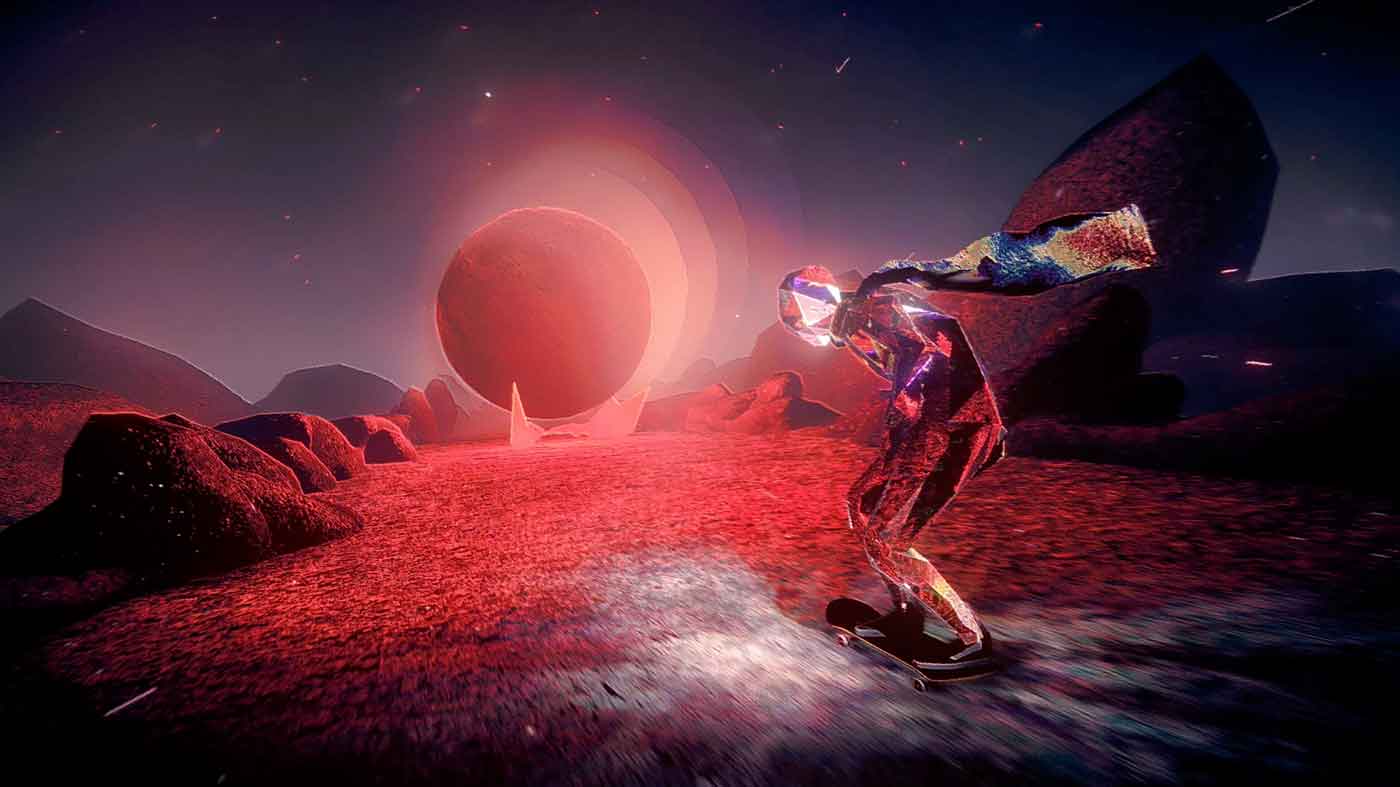
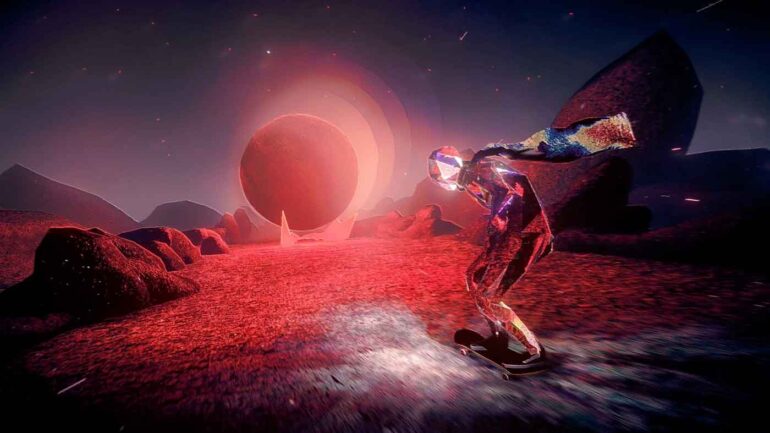
As a tortured soul, a demon made of nothing but glass and pain, you cut a deal with the Devil: hop on your board, skate through the Emptylands to the Moon, and eat it. It’s a seemingly impossible task, but your skater’s appetite is vast. In terms of set-ups, it doesn’t get more intriguing than Skate Story. Sam Eng’s hellish opus presents the punishing side of street-level skating, where a thirty-something-year-old like me would quite literally shatter like glass upon meeting the pavement. It’s gritty, grounded, and, despite its stunning looks, is perhaps the most honest attempt at the world’s first mainstream “extreme” sport.
It might take place within a prismatic playground of kickers, ledges, and rails, but Skate Story manages to ground and spotlight the art of street skateboarding in ways that its contemporaries don’t. In the eyes of hell’s watchful guard, skateboarding is a banned and sinful act, and with no bowls or pipes to be found throughout the layered depths the Devil calls home, vert is nowhere to be found. As such, the game’s primary focus is flips, grinds, and manual work. From a control perspective, Skate Story lands in a mechanic middle ground between Tony Hawk’s Pro Skater and Skate; it exhibits the realistic, dangerous side of skateboarding through tests of timing rather than exercises of finicky stick flicking.
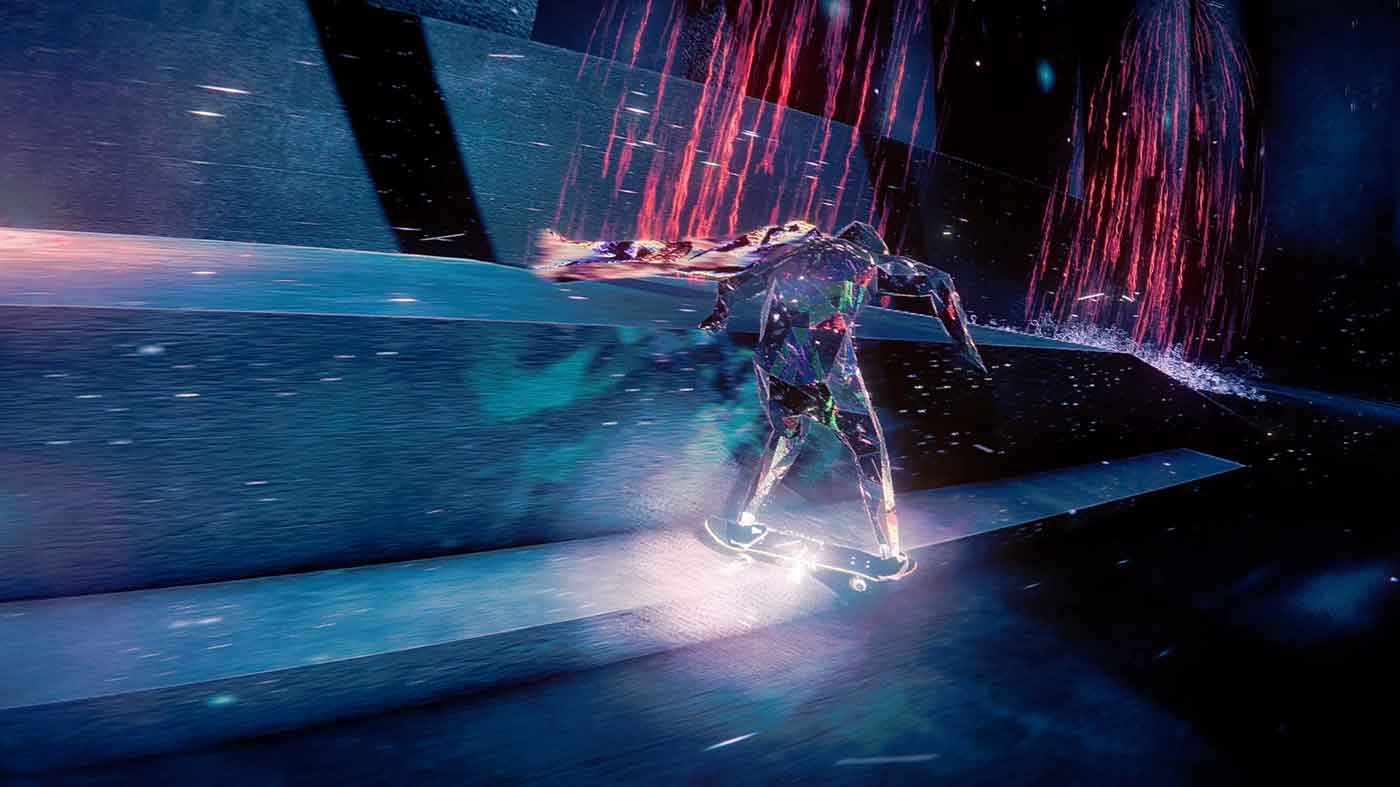
While skating in Skate Story, you queue up tricks through different combinations of the shoulder buttons, or by setting your feet nearer the front of the deck in a nollie stance. Once queued, a dot begins to snake around a small, windy track for you to perfectly time your skater’s pop. The dot’s cycle speed and position differ based on both how fast you’re moving at the time and the trick itself. The better the timing, the higher the pop is, and I appreciate the developer’s decision not to overcomplicate the game’s controls, or even punish poor timing outright, as Skate Story seems to be as much a synesthaesia experience as it is a skateboarding game. It’s a marriage of beautifully confounding scenes of opaque glass, blooming soul light, cloud and ash, and a thumping, ethereal soundscape courtesy of Blood Cultures.
Not since artists, including M.O.O.N. and Scattle, filled the airwaves in Hotline Miami with their pounding electronica has a soundtrack suited a game so well. Blood Cultures brings a lo-fi, psychedelic warmth that perfectly pairs with Skate Story, like a pinot noir to a delicate filet mignon. It’s through their respective indie, experimental approaches that the two complement each other so well. The cut-and-paste, cobbled-together in a wardrobe pop sounds are the perfect backdrop for Skate Story.
It’s a wonderful meeting place of reverb and revert.
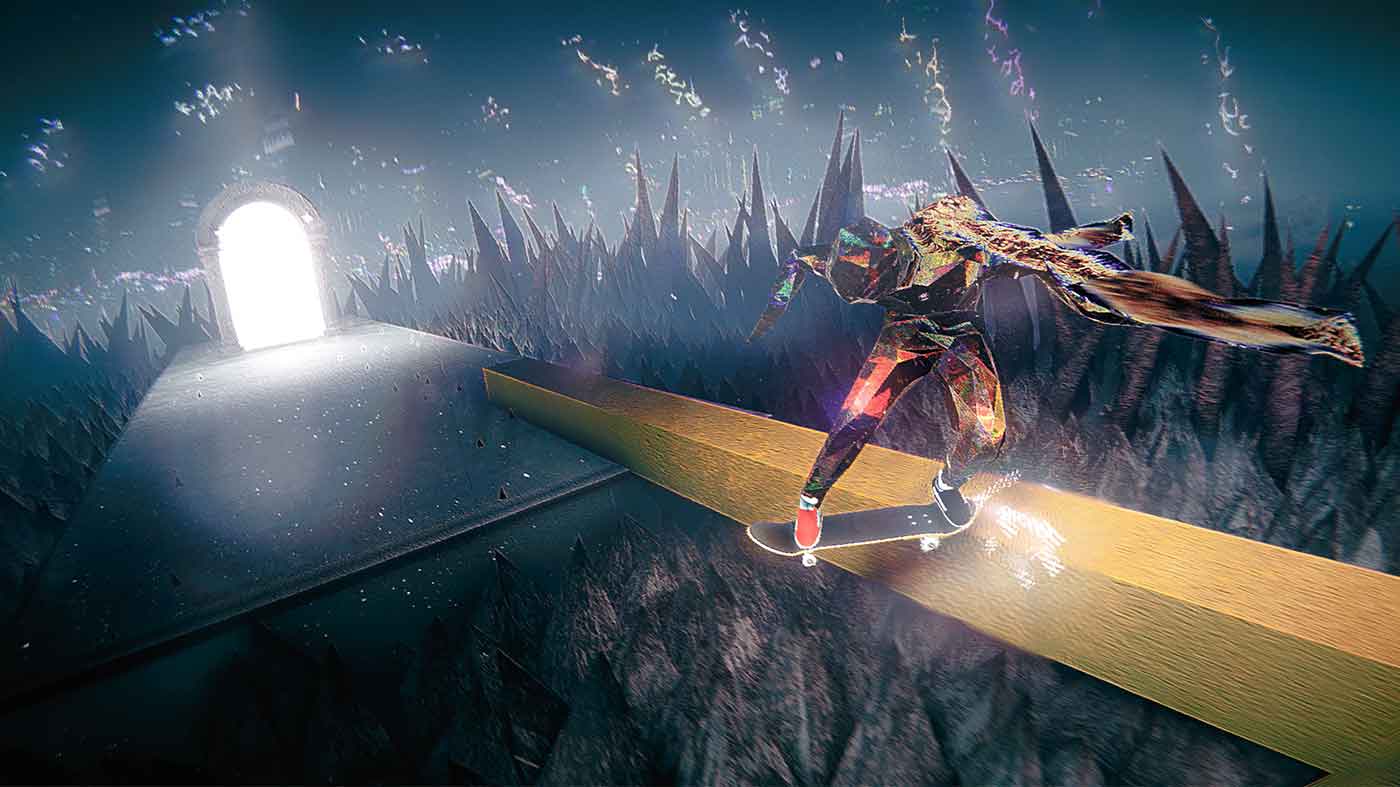
Skate Story is a significantly strange game. It’s abstract, it waxes philosophical as it spouts about heady concepts, and even its level recaps take an almost poetic form. The game’s oddness becomes obvious the second you follow a rabbit through a portal, a clear allusion to Alice’s descent to Wonderland. One second you’re talking with a forgetful frog, you’re then taking lessons from a disembodied statuesque head, all before literally chasing the Devil’s escaped pyjamas.
This offbeat nature permeates the objective and level structure, which can feel a bit stop-start as it leaps between what are effectively open parks and quasi-time trial gauntlets where you’re tasked with speeding through gates. One focuses more on the minutiae of footwork and making the board sing, while the other feels like a Red Bull stunt, paying owed dues to the sport’s dangerous side. It’s because it hops so casually between these, while peppering in boss encounters, that the game’s pacing is a tad off-kilter.
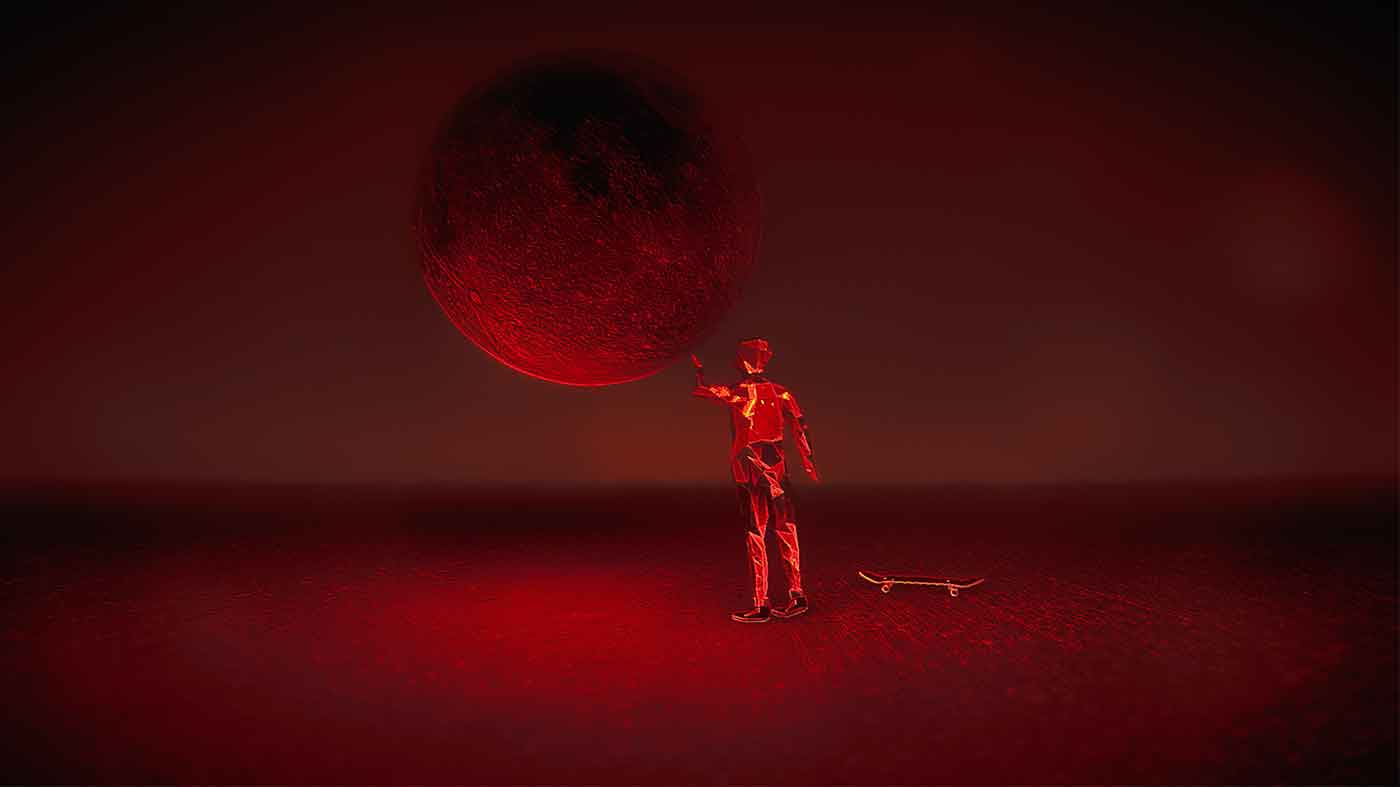
And in an effort to be this experiential, almost cosmic skateboarding video game, Skate Story’s difficulty never quite matches its thematic and narrative urgency. Each stage might greet you with new things for your trick bag, whether it’s reverts, manuals, or more advanced flip tricks, but you’ll be able to get by on the same old crusty combos you perfected near the start. Absent was the same sense of diminishing returns that Tony Hawk’s Pro Skater has, which urges the player to switch up their trick set. It’s because of this that Skate Story feels like a casual rise and grind more than it does a punishing video game about wheeling and dealing with the Devil himself.
Unlike its contemporaries, which present from a more traditional from behind vantage point, Skate Story’s low field of vision, which almost mimics a fish-eye lens, albeit without the barrel distortion. Not only does this serve to emulate the iconic photography style seen in skating magazines like Thrasher, but it also thrusts the player in amongst the action and keeps them firmly there. The game’s aforementioned art direction and how it complements the Blood Cultures soundtrack will be quite clearly the game’s big selling point. Although the game’s cold, concrete playground, caked with ash, is something to behold, I do love the skater’s design most of all. Other than the mock Vans on their feet, their appearance as an otherwise featureless glass avatar cuts a striking image.
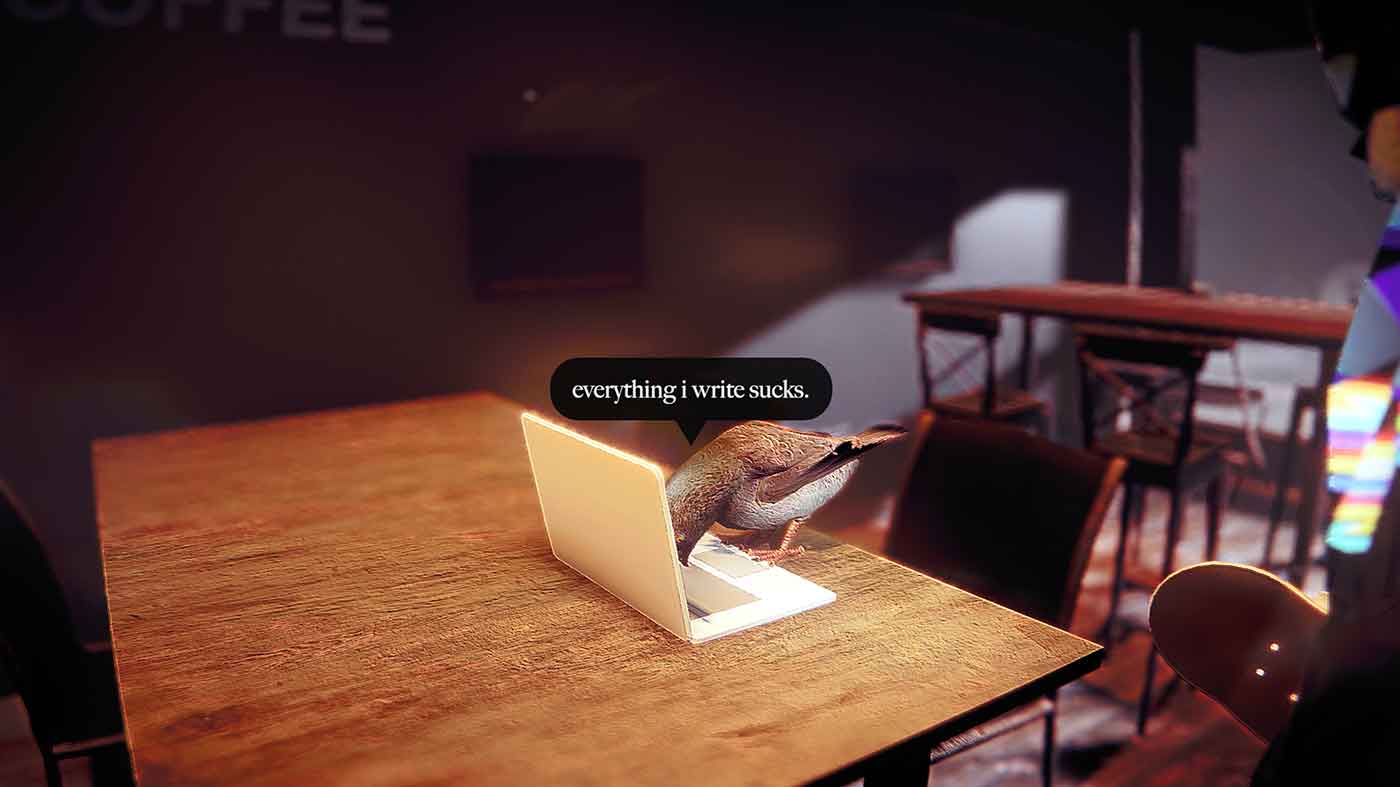
Not only are there a bunch of other decks to collect in-game, including a couple of Devolver-centric ones, which speaks to me as a stan, but there’s also a small customisation suite that comes with your skateboard specifically. You can swap out decks or mix-and-match trucks to combat wear and tear, and cover imperfections with stickers you find throughout the world. It’s minimal, but it’s a nice touch that’s got me eager for a sticker pack merch drop.
Skate Story is beautiful, provocative, and arguably the most realistic skateboarding game I’ve played, despite its glassy exterior. With hazards aplenty in the underworld, even the most basic tricks have the potential to usher the skater into a world of hurt. With simple controls that value flair over challenge, however, Skate Story’s trials aren’t quite as trying as its story might suggest. It’s the skateboarder’s equivalent of going well and truly through the looking glass.
The PC version of this game was played for the purpose of this review. A digital review code was provided by the publisher.