


Press Start may receive a commission when you buy from links on our site at no extra cost to you.
Horror hits different when it’s not happening on a TV across the room but instead unfolding around your own head and behind you. The hair-raising Little Nightmares games have always thrived on scale, placing tiny, vulnerable tykes inside environments that feel aggressively oversized. In theory, that’s a perfect fit for some brown pants VR-ing, one of my fave ways to get helmet hair with a side order of PTSD.
Translating this spooky little formula to PS VR2 and Meta Quest 3 is an obvious idea, yet also a dangerous one. Get the atmosphere wrong and the illusion collapses instantly. And there’s stiff competition in the scary space (my picks being Madison VR and Resi Evil 7). Connoisseur examples aside, being trapped in Little Nightmares VR: Altered Echoes led me to believe that Iconik Studio seems to understand this assignment well.
Television Static and Thin Men
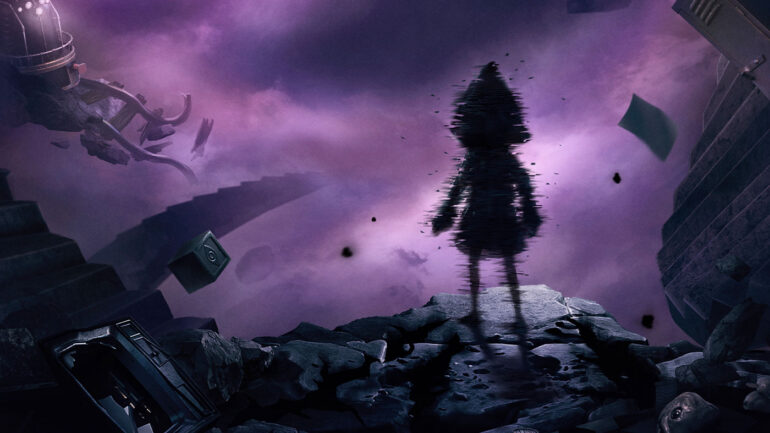
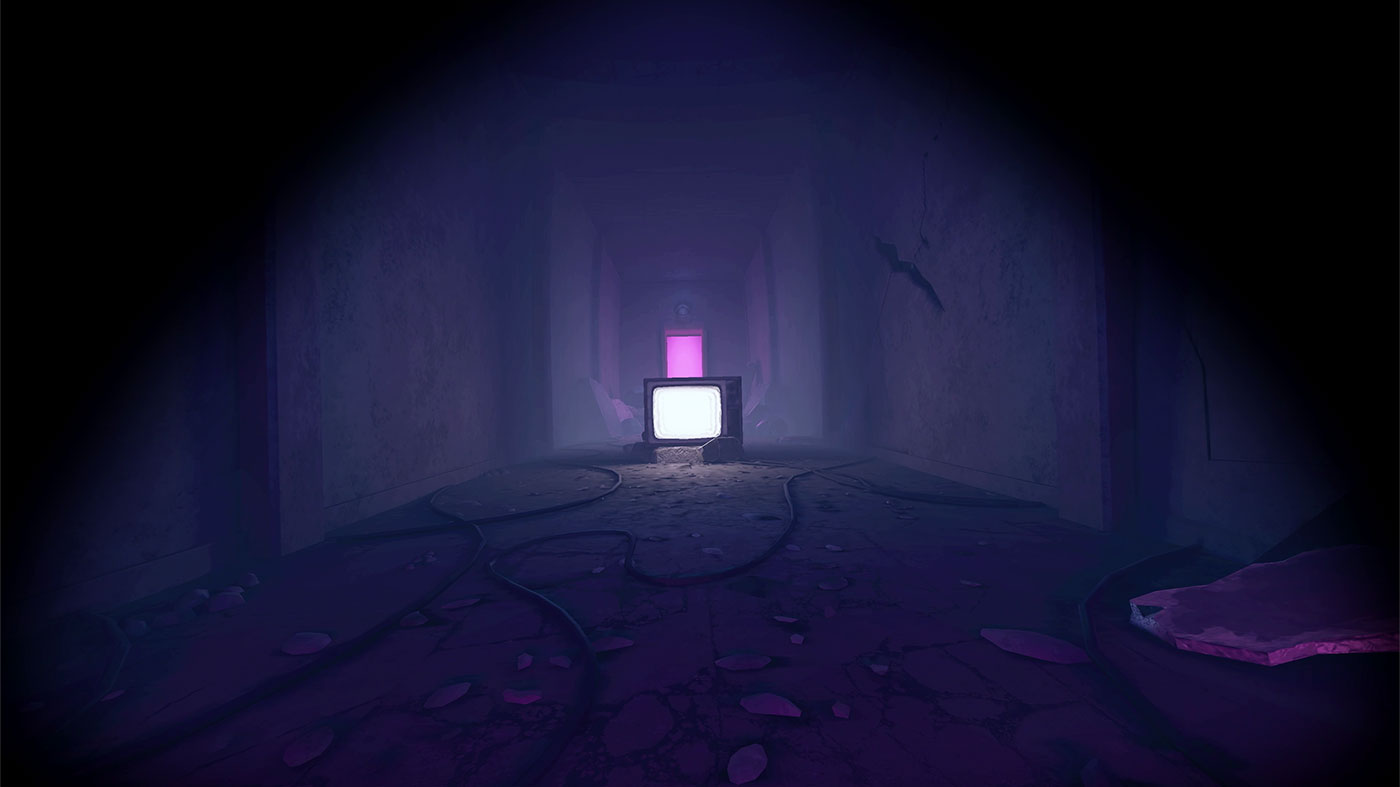
My heads on began with a scene that OG fans will immediately recognise as classic Little Nightmares shenanigans. Mono (paper-bag-head-boy) and Six (creepy-yellow-raincoat-girl) are chilling in front of a television when said television, as televisions in this universe tend to do, begins behaving like an occult portal.
Enter: The Thin Man.
If you’re unfamiliar with this key antagonist, imagine the lanky menace of Slenderman dressed like a 1930s accountant who has been stretched several feet too tall. As this third-person cutscene continues, Mono and Six pissbolt away, but only one of them makes it to safety. Six stumbles, something invisible tugs at her, and what appears to be her very essence gets yanked out of her. Whatever that process actually represents, it sends her into a strange limbo space where I / she reappears as Dark Six.
Fans of Little Nightmares II will recognise that name immediately. Dark Six is the shadowy presence that appears whenever Six feeds on something unfortunate. The figure has always hovered at the edge of the narrative with little explanation, so the idea that Altered Echoes might explore this has me on a meat hook already.
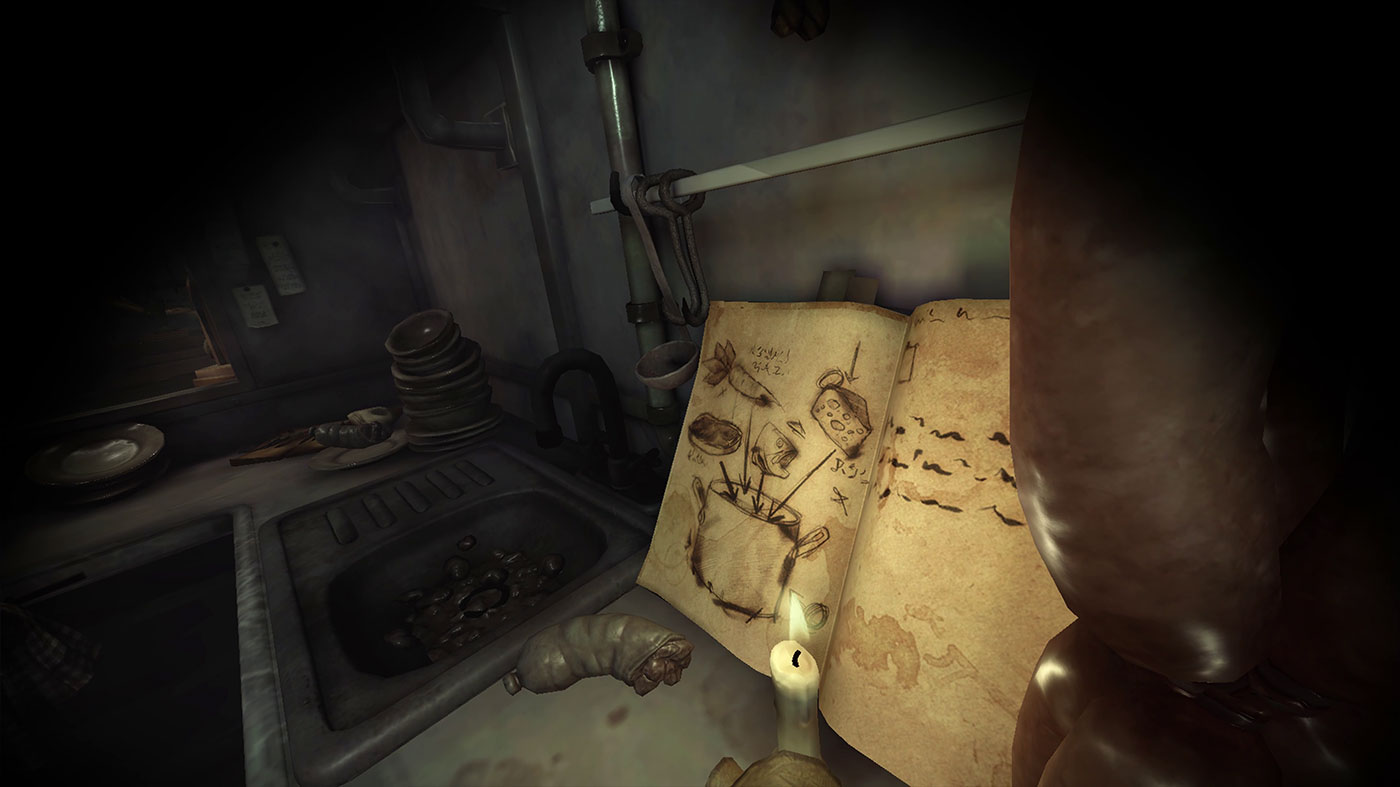
From this point onward the perspective becomes distinctly VR friendly. You do not see a full body. Instead, your field of vision is framed by the edge of a hoodie, with a pair of small hands acting as your primary connection to this purgatory.
Control eventually lands in what appears to be some kind of institutional building. It could be a prison. It could be an asylum. What matters is that this haunted-house-about-to-happen is littered with creepy environmental storytelling. Sometimes that means incidental physical interaction that invariably makes those untold tales grow a shade darker.
For example, I mess with a McChockers mail slot to cause a small cascade of creepy glyph-covered envelopes. At another point I slid open a small food slot on a prison door and instinctively leant up and in to peek inside. Instead of an empty cell, I was greeted by a tiny diorama of something deeply unpleasant happening in the semi-darkness.
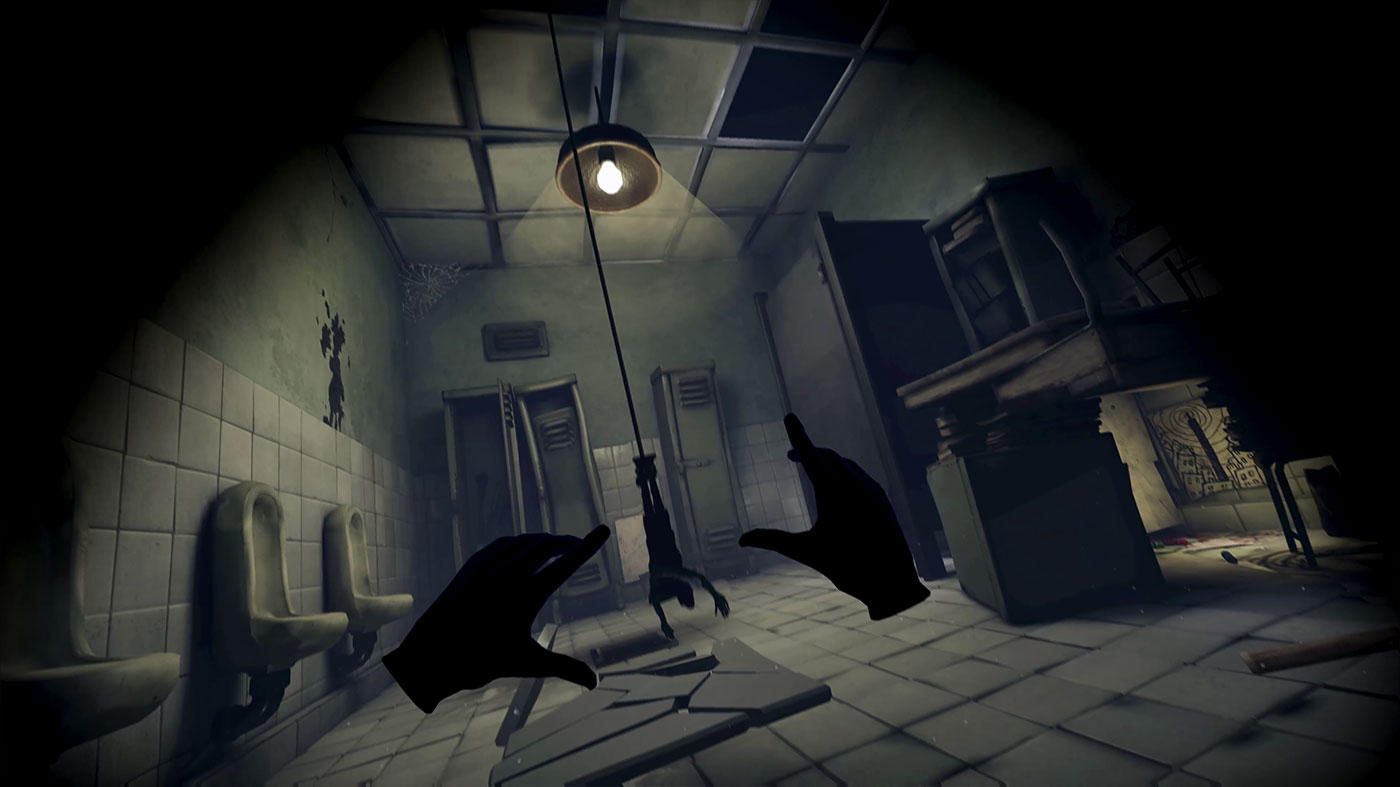
I’m not going to say much more about these. Why spoil any jump scares that may or may not exist? I’ll just wish you and underpants good luck.
Moving deeper into the building gradually increases the sense that something terrible happened here long before Six arrived. Smashed televisions appear everywhere like recurring graffiti. Furniture bends in impossible ways, with towering stacks of drawers curling over themselves like giant petrified caterpillars. The architecture itself begins to feel unreliable.
Eventually I reached what looked like a dead end and did what every puzzle game player does in that moment. I stood there for a while staring at the walls, convinced the solution had to be somewhere obvious.
Then I turned around. The corridor behind me had quietly reconfigured itself while I was not looking. The hallway that once ran straight now bent sharply into an L shape, and where there had previously been nothing stood a glowing purple door.
It’s a neat reminder that Altered Echoes is perfectly happy to mess with your sense of spatial logic. If you hit a dead end, the correct answer may simply be to walk away and check whether the building has decided to rearrange itself.
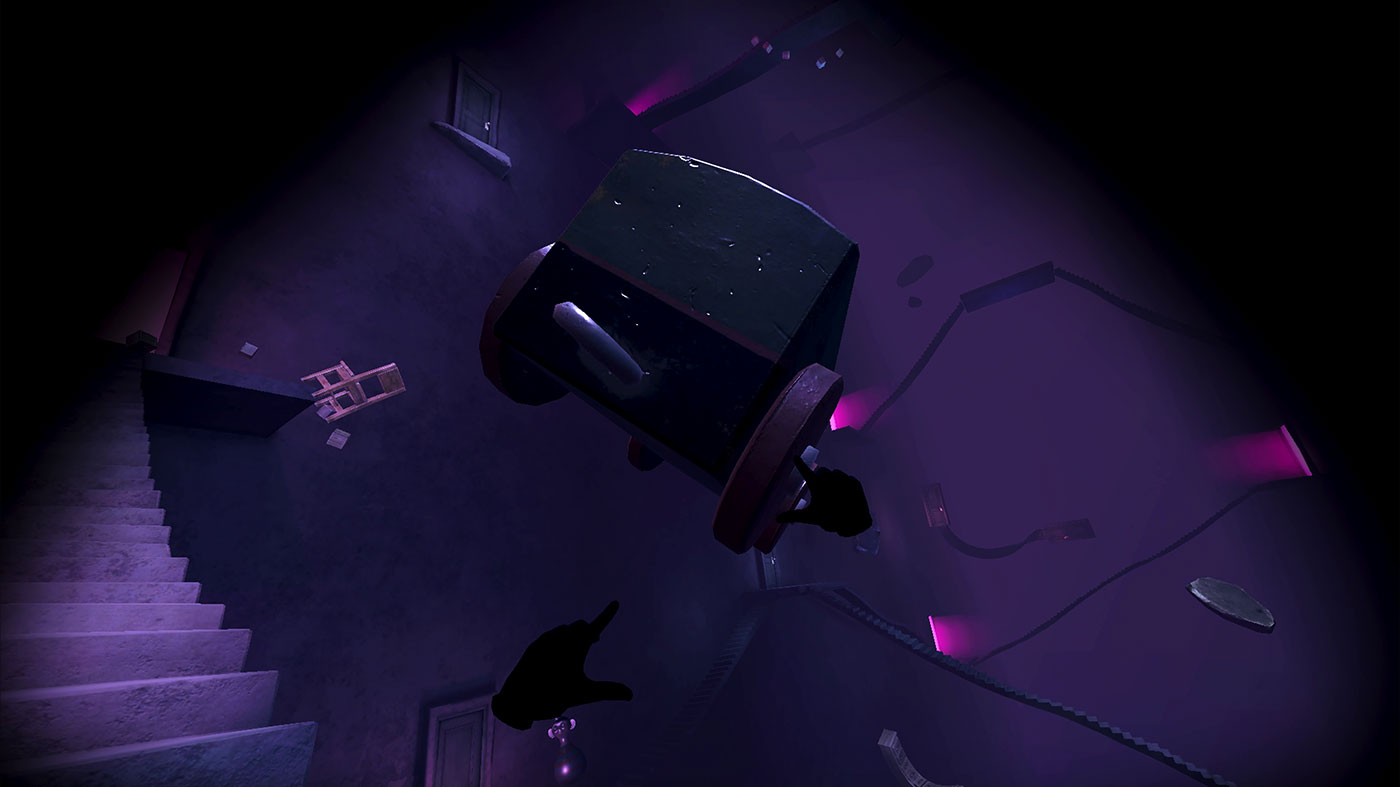
Passing through that door leads to one of the preview’s most striking visual moments. A thin staircase spirals upward through an enormous void, while countless other staircases stretch above and below like strands of a tangled spider web. Floating toys eerily drift through the air. Teddy bears spin lazily in zero gravity.
Anyone with vertigo might want to take a steady breath before climbing.
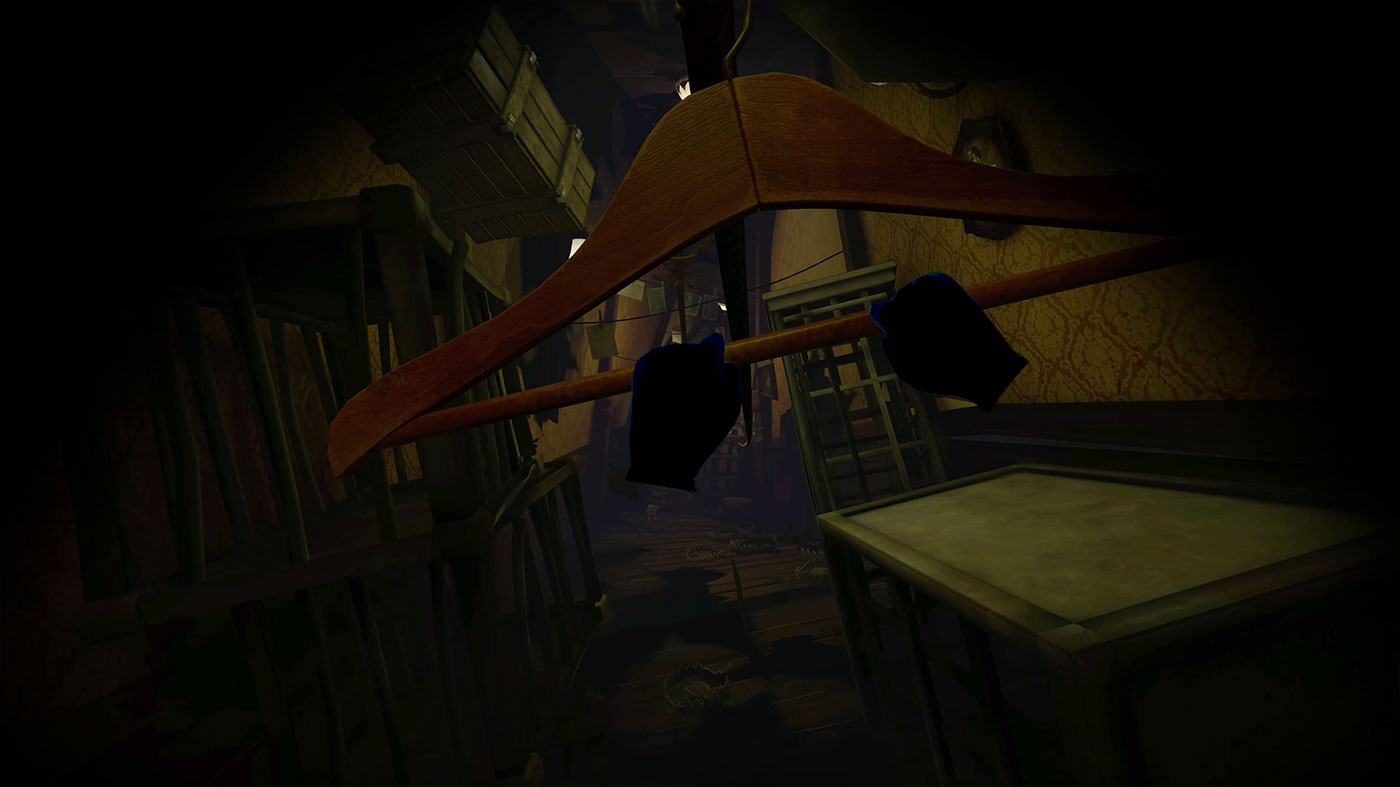
The audio design makes the moment even more unsettling. A distorted lullaby echoes through the space, sounding like it is being played on an ancient music box that has not been tuned in decades. Whoever decided lullabies should sound vaguely cursed deserves a quiet nod of appreciation.
As you ascend through these strange spaces, the game begins introducing mechanical challenges. One of the earliest involves ominous security eyes that project sweeping purple beams across the environment. Touch the beam, and the result is immediate death, so progress requires careful movement between pieces of cover.
The VR implementation adds an interesting wrinkle here. If you are playing in standing mode, there is no dedicated crouch button. Hiding behind objects means physically crouching down in your living room. That can feel immersive when the moment calls for it, although players with questionable knee cartilage may eventually decide that seated mode is the wiser option.
Still, the mechanic does create a convincing sense of vulnerability. Ducking behind furniture while some Pennywise-esque deadlights drift overhead is far more tense when you are physically lowering yourself out of sight rather than simply pressing a “hide to win” button.
Not every puzzle demands stealth or agility. Some simply involve good old-fashioned destruction. At one point I discovered a small claw hammer wedged into a boarded vent. In the hands of a normal adult the tool would feel modest. In the hands of Six, it carries the exaggerated heft of something far more heroic.
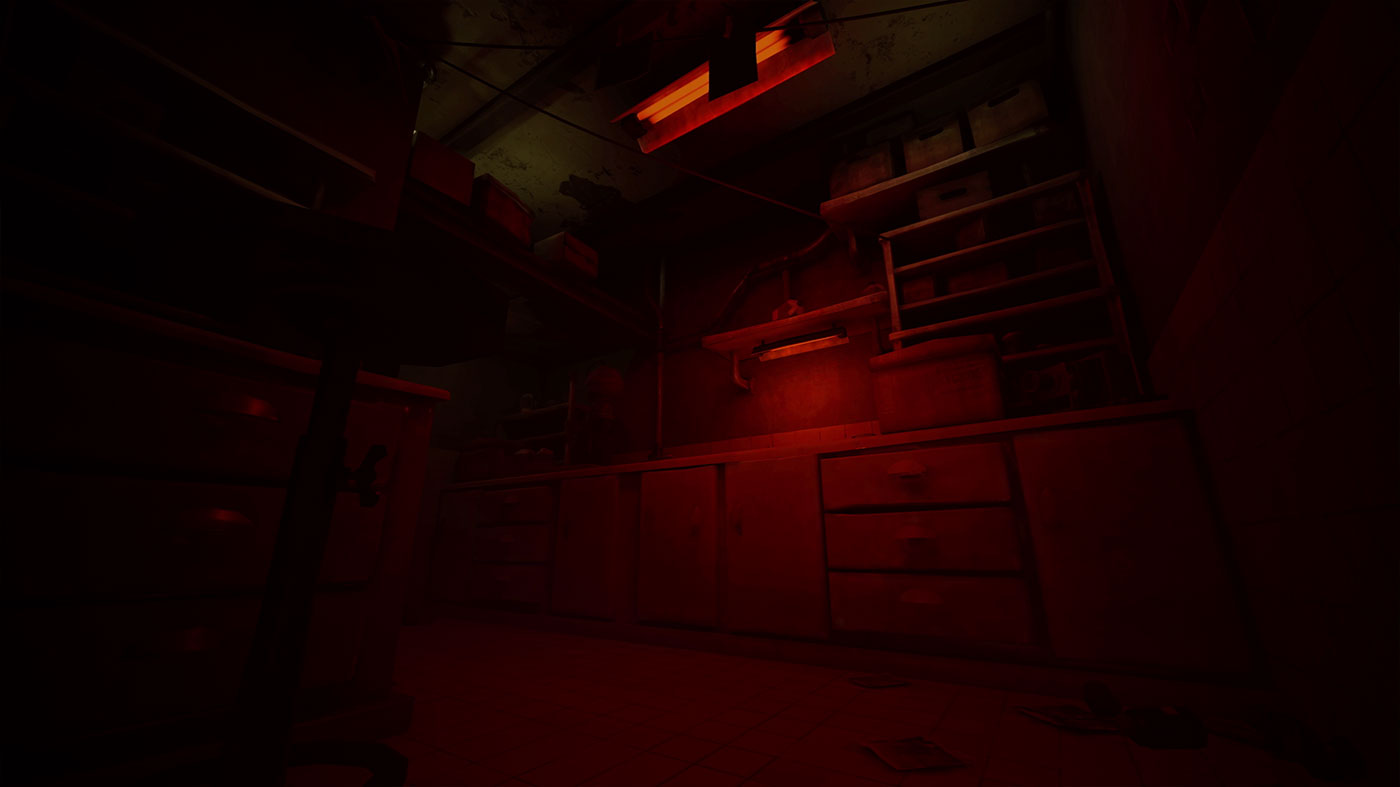
Smashing the boards apart feels satisfyingly physical, which is one of the quiet strengths of VR puzzle design. Objects that would seem mundane on a flat screen suddenly gain a sense of scale when you are holding them in virtual hands.
Later challenges lean into that tactile playfulness. In one puzzle I had to throw heavy debris through an overhead observation window to break the glass. The real trick came afterwards, when a hacksaw needed to be tossed through the same opening to strike a distant door release button.
There is no targeting reticle. No helpful arc showing where the object will land. You simply grab the saw and throw it naturally. Against my expectations, the blade sailed through the gap and struck the switch perfectly. I may have fist-pumped.
The stealth systems return later with a nastier variation. Broken glass now litters certain pathways, and stepping on it creates a crunch loud enough to awaken any horror in earshot.
Thankfully the game handles failure generously. Checkpoints reload quickly, and alternative routes often exist if you take a moment to look around. Climbing over obstacles using the game’s hand-over-hand system is often the safest option.
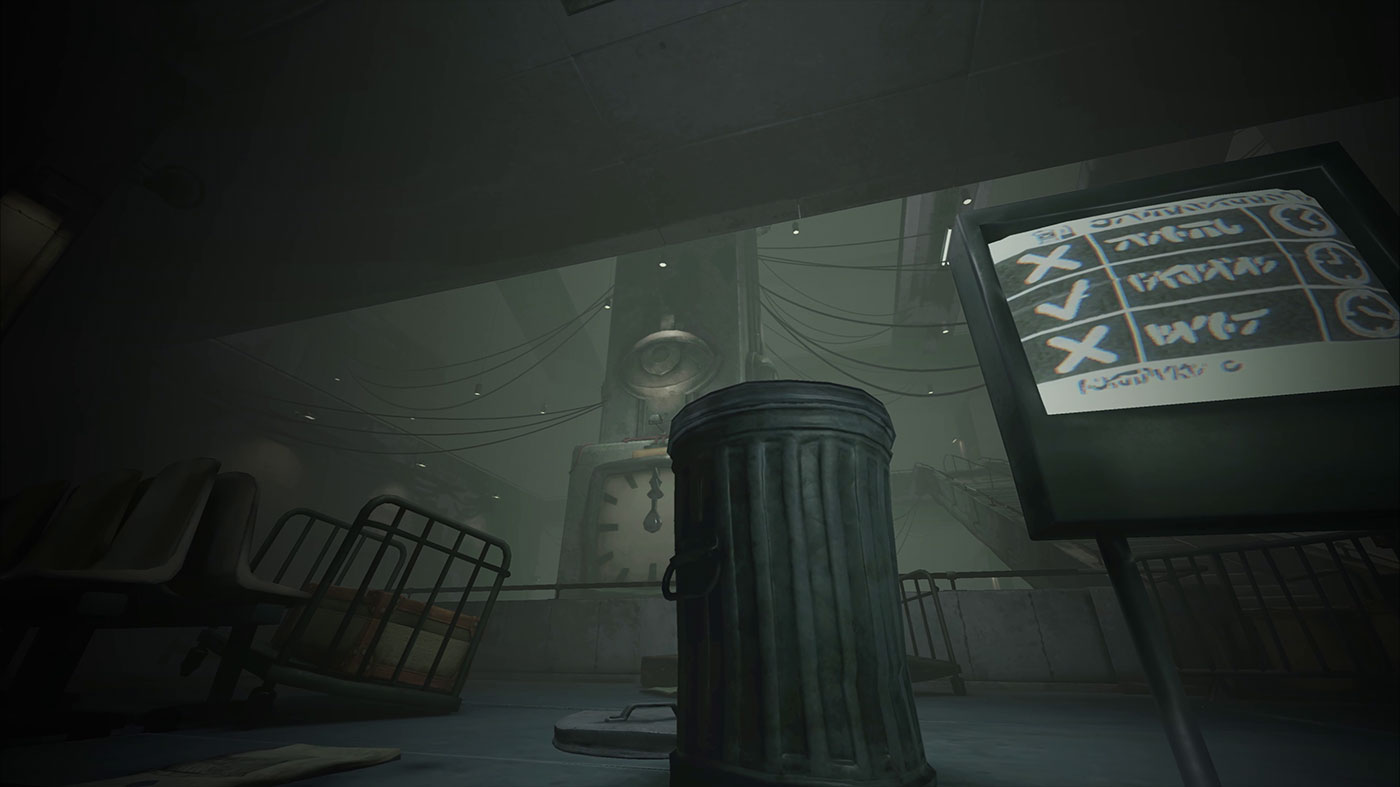
My preview eventually jumped forward to a new chapter and location that was easily the most memorable and/or haunting of the session. Think: a train station that feels less like public infrastructure and more like bureaucratic purgatory. I’m talking about a (seemingly) abandoned City 17 lite. Surveillance cameras track your movements from every angle while faded portraits of some unpleasant authority figure stare down from the walls.
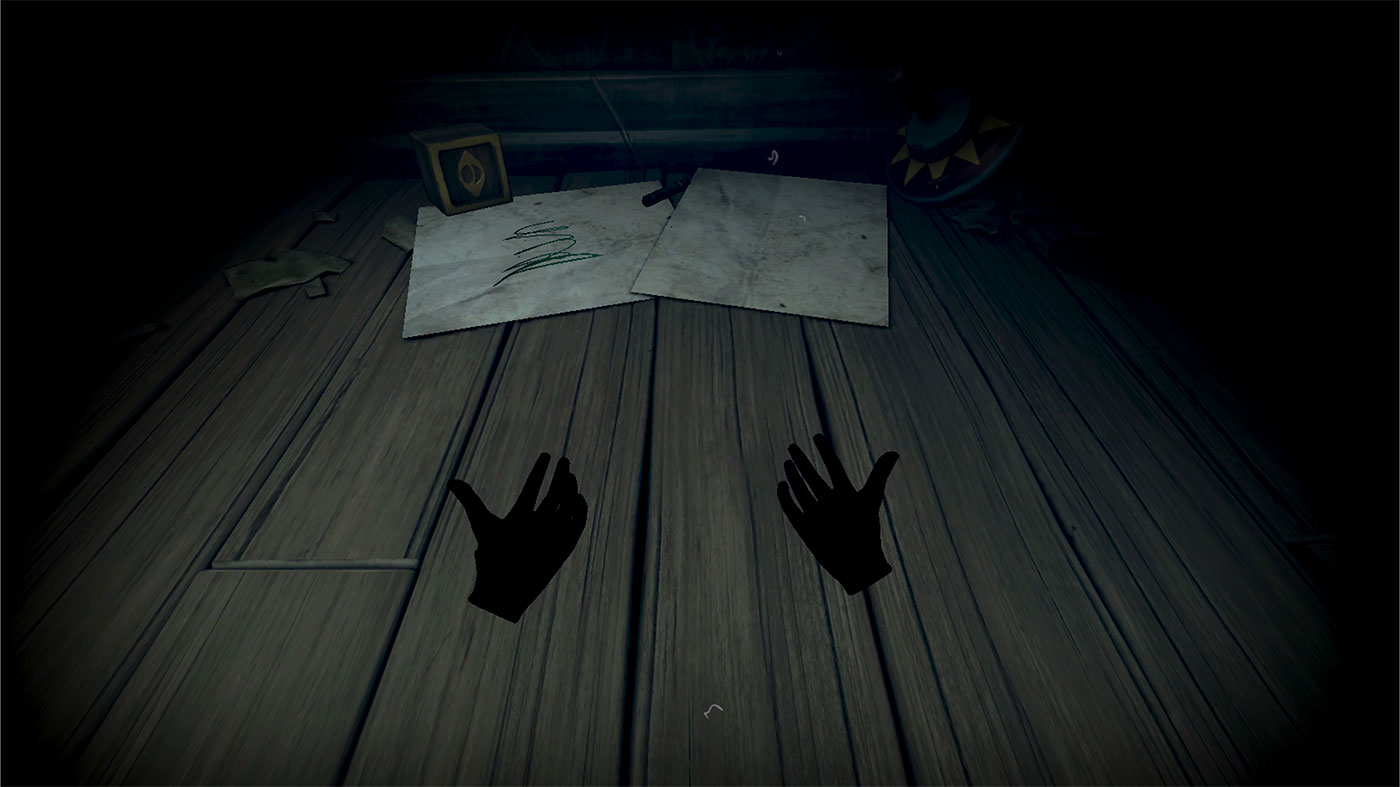
Environmental storytelling does most of the heavy lifting. A single slipper lies abandoned beside a suspicious stain on the platform floor. A full lady’s outfit is splayed on the floor inside an empty elevator as though its owner simply vanished mid-commute, like she was War of the Worlds vaporised.
Then you notice the passengers.
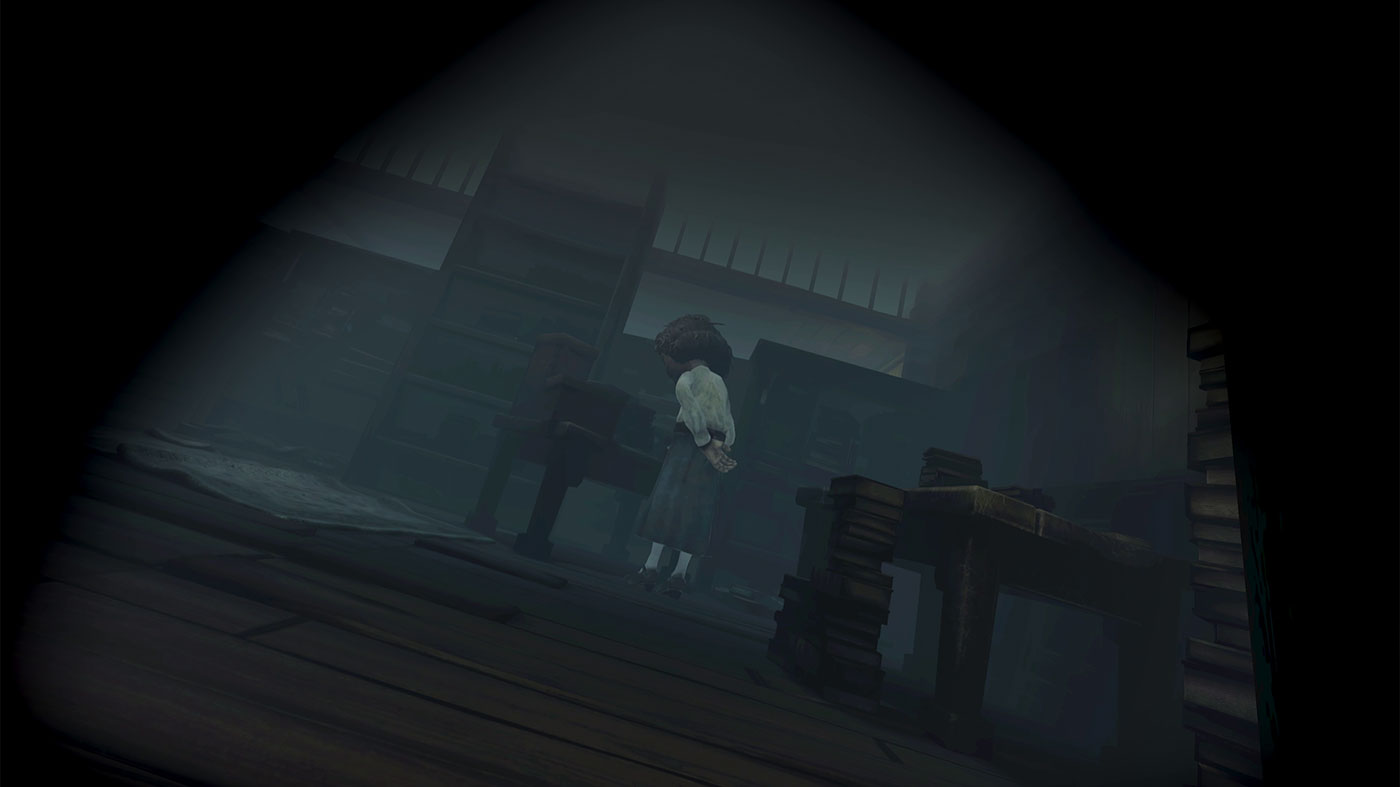
Grotesque, gastropod elderly figures slump in their train seats high above me, their clay-like faces sagging like rancid oatmeal mush. When you move closer, they twitch and stretch towards you like starved creatures that have suddenly noticed dinner.
The safest instinct is scuttling beneath any nearby seat.
From that cramped vantage point you witness the arrival of the level’s main threat. A conductor slithering along the ceiling like some grotesque komodo dragon in a uniform.
This awful bastard is a genuinely unpleasant design. Its body looks rubbery and oversized, its neck bends at a strange right angle, and its face contains nothing but empty holes where eyes should be. Worse, when it drops to the floor, it scurries along with the eager enthusiasm of a very large sausage dog.
The following sequence becomes a tense cat-and-mouse chase through a series of increasingly claustrophobic train carriages. I will leave the specifics unspoilt, but it captures the series’ knack for making grotesque enemies feel both ridiculous and genuinely threatening. Only patience and keeping your head on a swivel (and attuned to 3D-directional sounds) will keep you off the dinner menu.
After spending time with these opening sections, my overall impressions are positive. Little Nightmares VR: Altered Echoes clearly understands the tone that made the original games memorable.
I wouldn’t call this raw terror or panic-inducing at this stage. The world remains deeply unsettling without relying purely on jump scares, and I believe constant quiet dread is a great baseline to build scarier stuff from. Most importantly, the game preserves that irresistible urge to open one more door just to see what horrible thing might be waiting behind it.
Little Nightmares VR: Altered Echoes shows genuine potential. Iconik Studio seems to understand the strange balance that defines the series. Childhood vulnerability, oversized spaces, and horror that leans more towards the grotesque than the outright terrifying.
If the final game continues building on the atmosphere, puzzle design, and creature encounters seen here, PS VR2 owners could be in for another memorable trip into one of gaming’s most unsettling little worlds.