


Press Start may receive a commission when you buy from links on our site at no extra cost to you.
Saros is, in more than one way, a surprise packet. On the heels of Returnal, which was touted as one of the generation’s most exciting new IPs, it would have seemed a no-brainer that Housemarque might return to the well of Atropos to build out that universe further. Instead, they pivoted to the untouched canvas of Carcosa. On this cursed planet, everything—the days, the people, their mania—is dictated by an ominous eclipse that hangs in the sky. This is the world of Saros, and the biggest surprise of all is how much of a bold, daring evolution of Returnal’s every, singular part it is. It’s undoubtedly prime Housemarque, and, although awards aren’t won in April, it’s unquestionably a Game of the Year fancy.
What’s clear from the first minute of Saros is that, despite being a gameplay-first studio, story has been a big focus for the team this time around. Returnal’s story, which combined heady ideas from Greek myth and Lovecraftian elements, almost felt like a passenger to the core loop of the game, which kept the player engaged through note-perfect roguelike action. At face value, Saros feels like a more straightforward sci-fi narrative about a Soltari recovery team, Echelon IV, being called to Carcosa, an alien world where logic and reason are left at the door, to determine the whereabouts of the three prior Soltari expeditions, only to find that things haven’t gone to plan and that Carcosa is rife with secrets of its own.
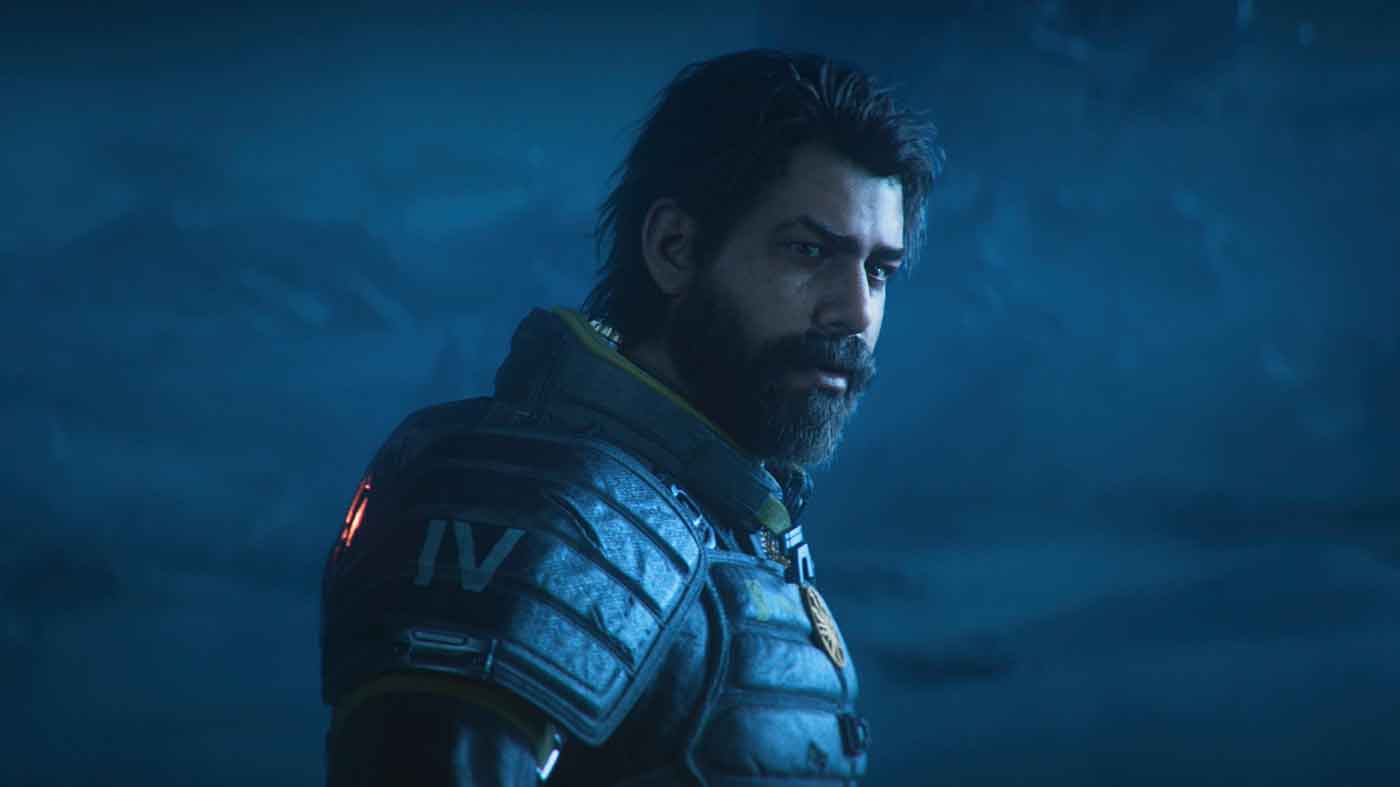
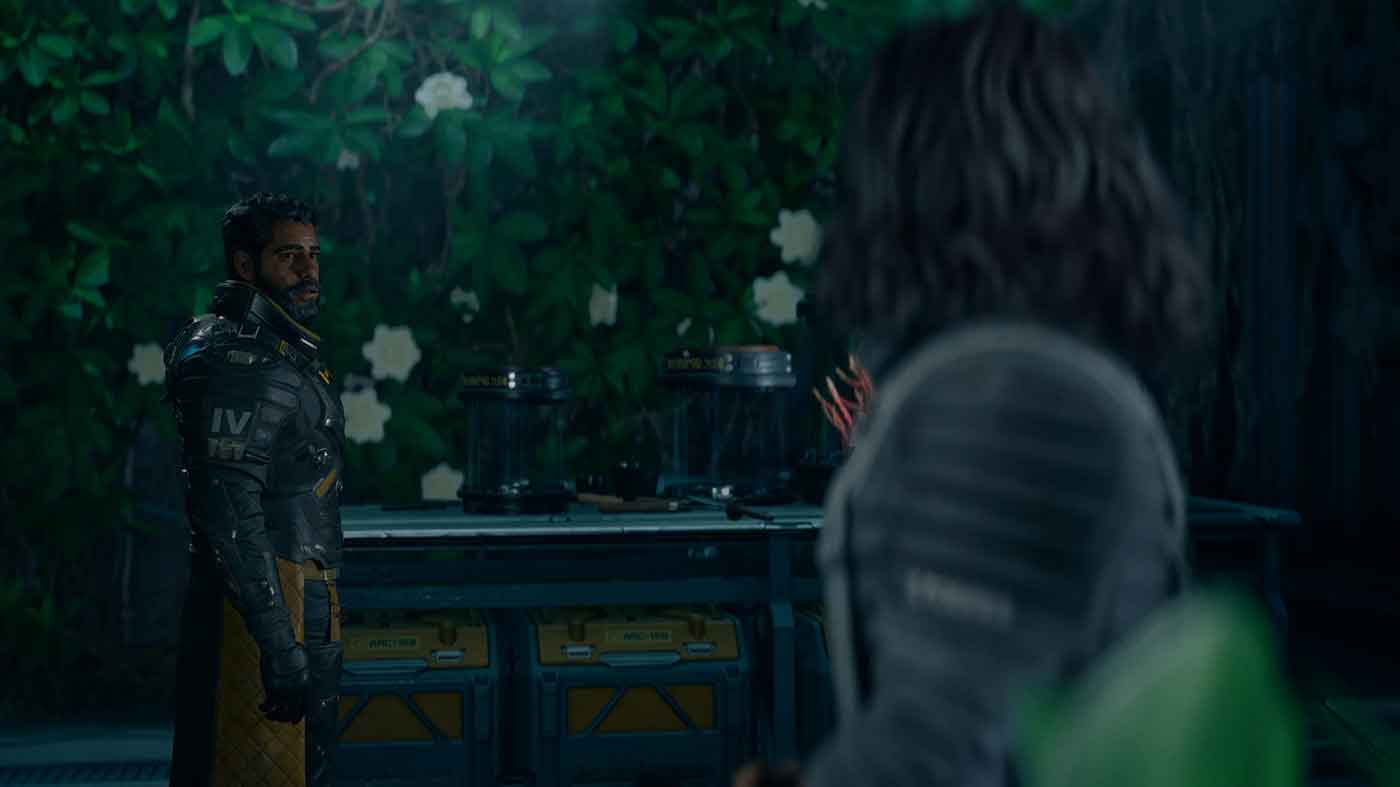
Rahul Kohli stars as Arjun Devraj, an enforcer on the team whose baggage and history quickly become clear, as his personal and selfish motives for coming to Carcosa are laid bare. It’s not exactly a clear-cut tale of light and dark, or goodies and baddies, as Arjun himself is a complicated character and Kohli’s performance is subtle and full of nuance. It feels like something of an audition reel for Kohli, who runs the gamut of emotions ranging from rageful to pitiful self-loathing. Much of the game’s story and deeper lore is presented through audio logs, text logs, and brief heart-to-hearts with your crew between runs.
I had an odd instance where I’d gone on a few back-to-back runs without checking in with my crew, despite checking off a couple of larger story beats. It wasn’t necessarily a case of sequence breaking, but the game banks their respective responses to each big event until you’ve heard them, so having them jump between despair and scientific curiosity, not taking a single second to grieve, definitely undercut that moment in particular.
Devraj’s miserly past, the precursor to his arriving on-world, is peppered delicately throughout his mission in a real fever dream kind of fashion, which creates a brilliant, engrossing juxtaposition of his actual nature and his redemptory acts while playing action hero on Carcosa, which lean into the fantastical, near enough adapting ideas and themes from Robert W. Chambers’ “The King in Yellow”—ideas like existential dread, unhealthy obsession, and societal decay all make the jump from the short story collection that birthed cosmic horror, the house Returnal and Saros’ worlds are built upon.
What’s impressive when comparing both Returnal and Saros is how similar they are, while feeling entirely different. Of course, their high-energy brand of arcade, “bullet ballet” action, remains largely untouched from Returnal, this game’s spiritual predecessor. You’ll still find plenty of guns, unlock persistent traversal abilities, enhance your proficiencies across several metrics—weapon, health, shield, and so on—while exploring a world that’ll shift and remix, within limits, upon death. This is still so much of the Saros experience that, by looking at it, they do look like the same game.
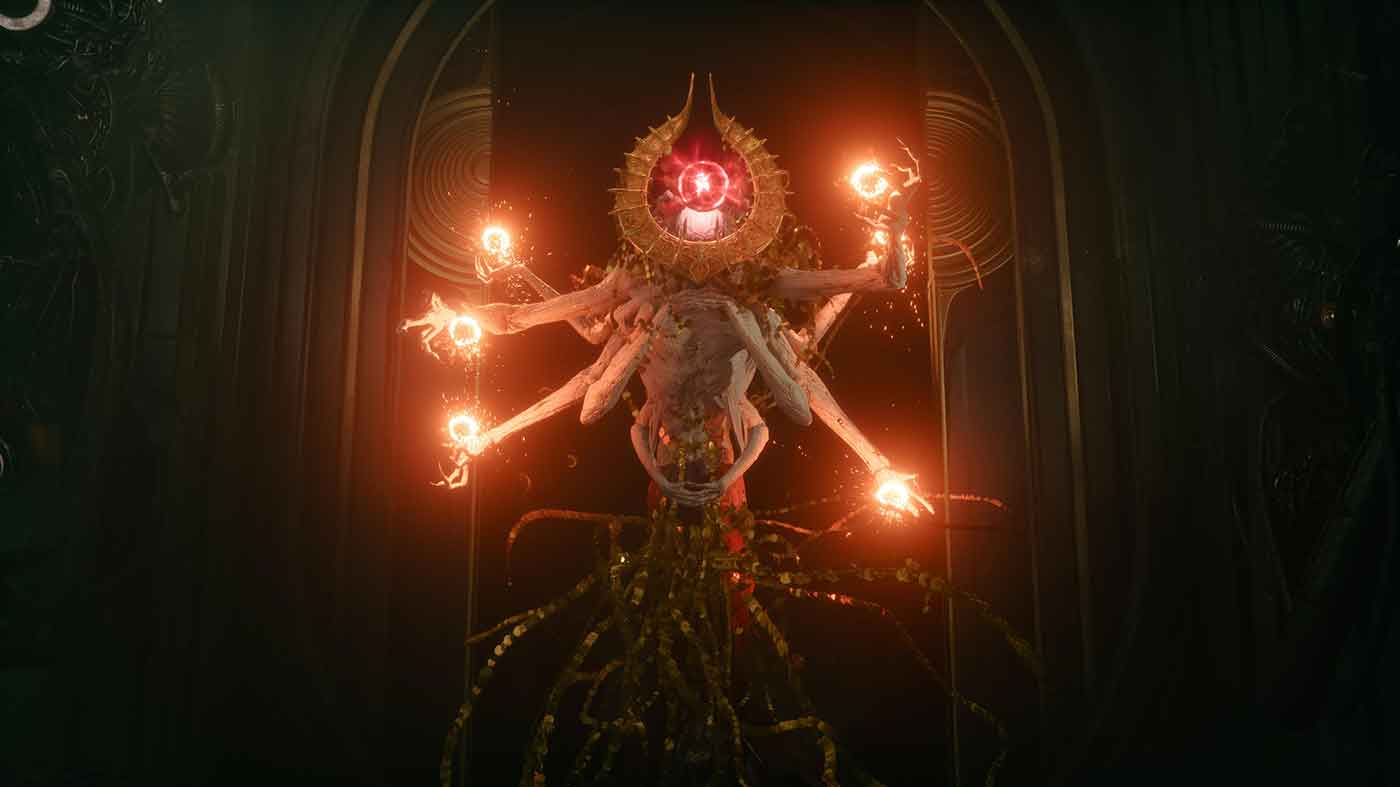
But Saros truly starts with death. Its whole mantra, the concept it hangs its hat on, is coming back to the world stronger than when you left it. People, including me, a lot, justify frivolous spending through the fact that you can’t take your money with you; in Saros, you do. As you’re pieced back together in the hub world’s primordial goop pool, you’ll find that you’ve brought with you Lucenite, the game’s XP source. With it, you’re able to work through a permanent progression path, full of buffs to every stat that matters, that will, simply put, make the game easier. Quite clearly a response to the fact that people struggled with Returnal and likely won’t want to spend hours beating their heads against a wall, I think it’s a perfect compromise to make the game more accessible to more players.
By default, the game is still plenty hard, so players who prefer to revel in the challenge of Saros’ punishing, borderline unfair onslaught can help; they can do that too. If that isn’t hard enough, Saros also includes modifiers that can be applied to either make the game easier or harder; however, it is implemented elegantly so that, by assigning positive and negative point values to respective mods, players must keep the scale balanced. Having tinkered with them, I do think certain combinations trivialise the game’s challenge, but, again, it’s in the name of accessibility.
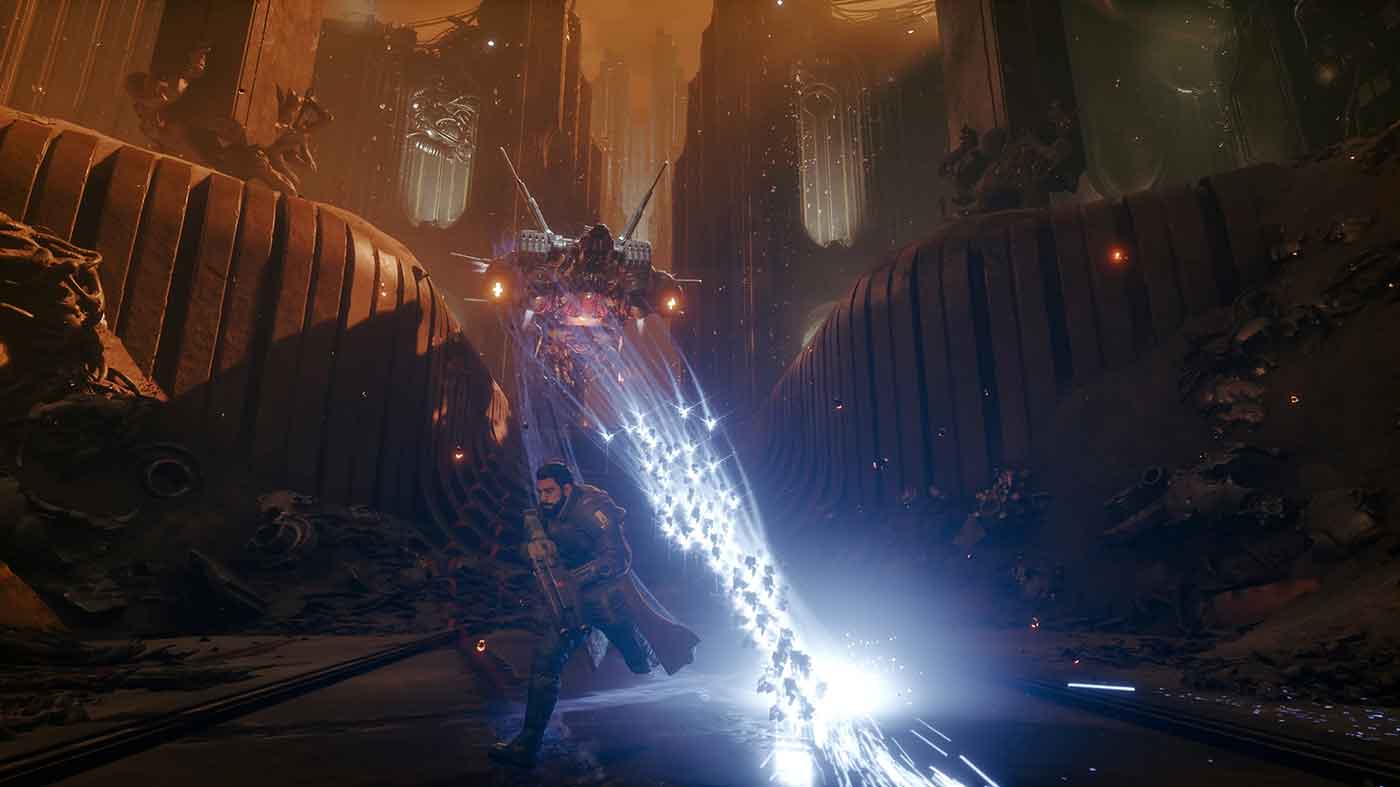
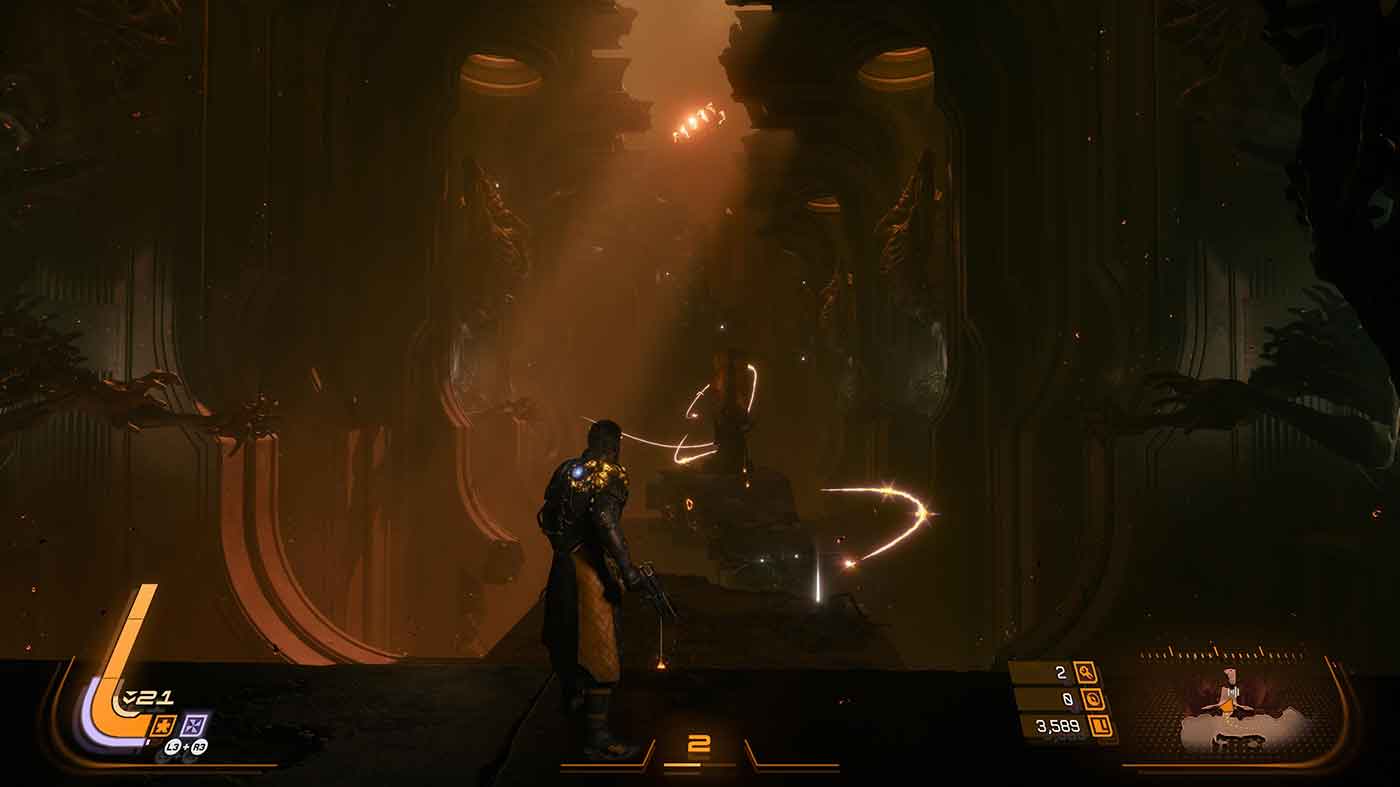
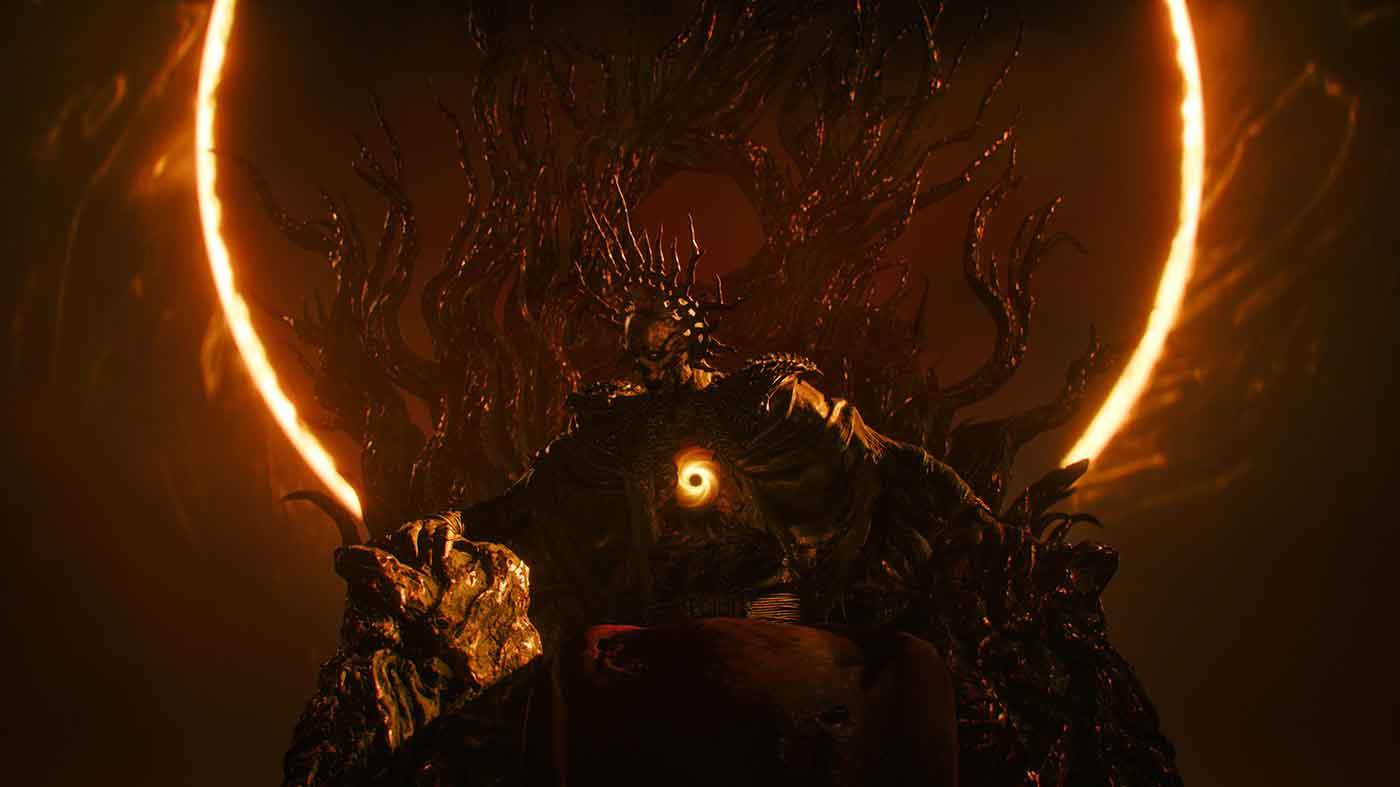
The aforementioned eclipse not only has narrative significance, but it also has a direct impact on the game’s core loop. As set points in each biome, Devraj will bring on the eclipse, blotting out the sun and turning the sky an orange-red, partway between blood and rust. It’s under the eclipse’s influence that the world begins to writhe and hostiles hit harder. On the plus side, your takings of Lucenite are greater, which, despite being non-negotiable, makes the reward worth the risk.
Another point of difference in Saros that feels like a genuine game changer is the Soltari shield, a bubble shield that serves a dual function of protecting Arjun whilst converting incoming blue projectiles into fuel for his power weapon. It’s a mechanic that I admittedly slept on in my hands-on with the game, but it eventually felt like second nature, locking into the rhythm of a battle, entering that flow state, and toggling the shield on and off, whether to absorb projectiles or deflect others with a split-second parry, as required.
Like a lot of Saros’ other features designed to better respect the player’s time, I feel the game’s level design is wonderful. Despite regularly including forking paths, an eclipse, and, of course, a big boss encounter, Saros’ biomes are designed to get the player in and out. I don’t recall having a run in Saros longer than thirty exceptional minutes, which felt far more digestible than long, exhaustive runs that, more often than not, included a lot of unnecessary backtracking. By including the world dial, the fast travel device available in the main hub, players can teleport to any unlocked area pretty much instantly, saving countless hours of undirected wandering.
I’ll avoid specifics for fear of ruining the surprise of some of the boss encounters in Saros, but suffice it to say they were all fantastic from both a mechanical and a spectacle standpoint. Despite starting small, the scale of a couple of fights in particular was humongous, and I found great pleasure in the struggle of toppling those titanic roadblocks. We’re running from pillar to post as untouched caverns lead to poisonous marshes, which culminate in opulent cathedrals that are suspended in unlimited vertical space; learning the fight patterns is quite often as fun as learning the terrain.
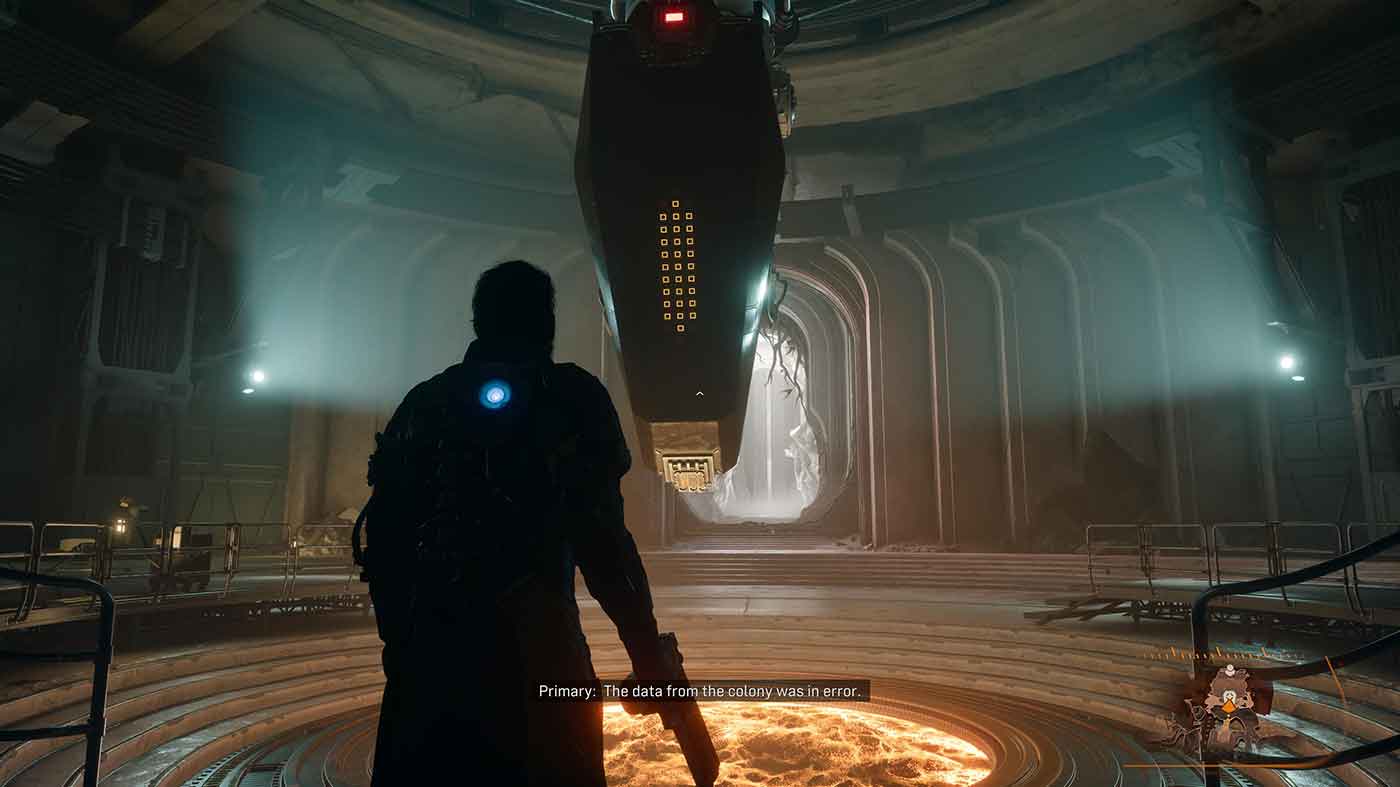
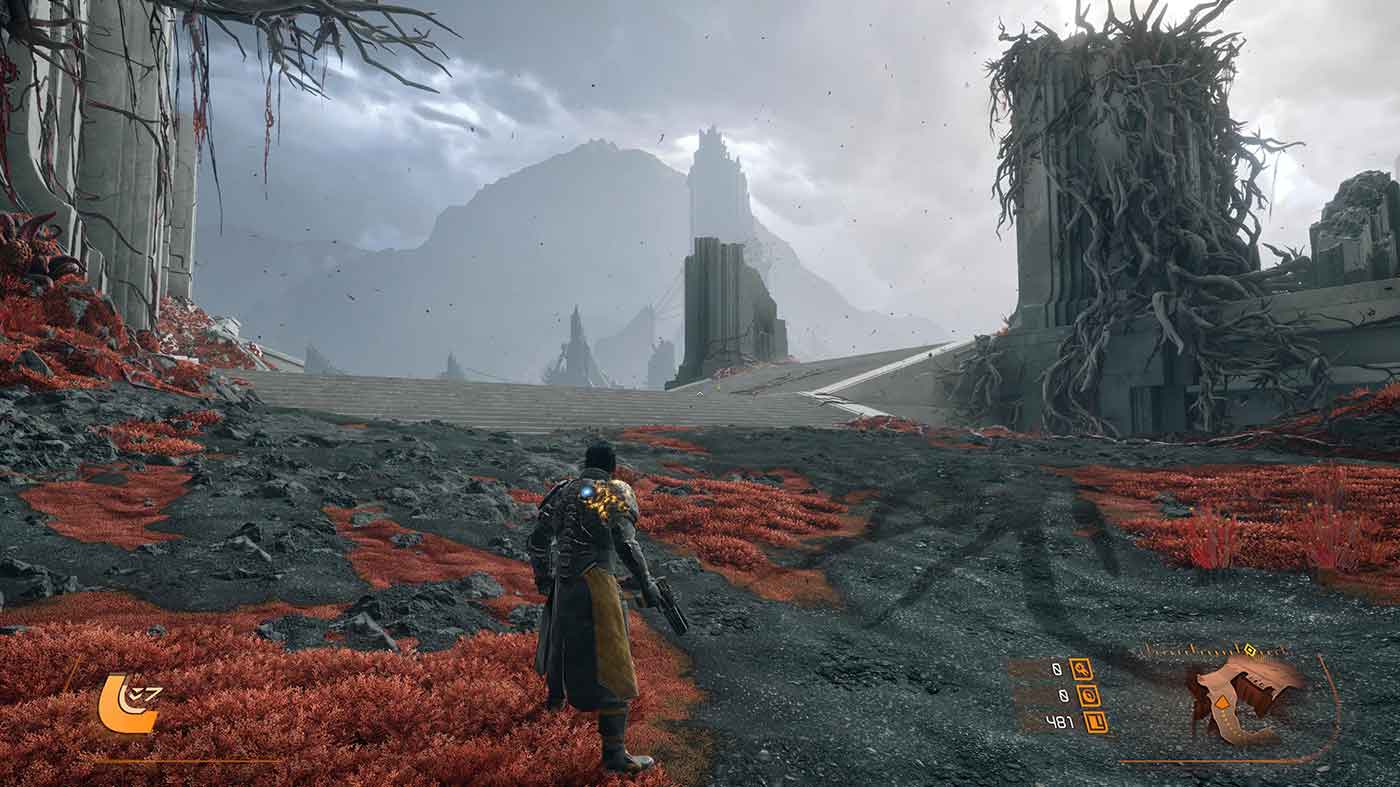
I’ve got to heap praise on the environmental artists in Saros, first and foremost. Although it’s going to be easy to, in the heat of a fight, overlook the finer details of the Carcosa landscape, it’s certainly well-realised. Haunting and eerie by nature, decay and ruin touch the world’s every coast, and it’s the centuries-old signs of life, infrastructure beyond our grasp, that cements that unnerving concern of what came before. There are so many incredible vistas to absorb in those moments in between combat, with their vast, and often logic-defying, dimensions giving an almost immeasurable sense of scale. It’s alien, and it’s alive. Outside of this, Housemarque has outworked themselves in terms of information they’ve packed into the frame during combat scenarios to ensure there’s a readability within the furious spectacle of surviving—projectiles are all colour-coded to make it clear how Arjun can engage with them, and it’s not until they’re upon you that they’ll crackle or break up, making use of the particle physics that Housemarque do so well.
Even on a base PlayStation 5, Saros is an incredibly smooth and well-optimised experience. Locked at a stable 60 frames per second, the game manages to hold firm in even the most hectic, visually busy combat encounters. In addition to this, through the use of the console’s SSD, load times are virtually instantaneous, which still feels like a technical marvel. Saros, like Returnal before it, also makes great use of the DualSense’s more bespoke features, particularly the haptic feedback. The left trigger can be engaged at half-measure to activate a weapon’s alt-fire, while holding it all the way down activates Arjun’s aforementioned power weapon.
If there’s one thing I’d almost insist players do when playing Saros, it’s wear a good set of headphones. The game’s audio design, production, and big, ominous score all warrant it. The game’s utilisation of a spatial soundscape, giving players the ability to track their every threat in 360° space, only further serves Housemarque’s design goals of immersing the player in Saros’ blanketing atmosphere. Sam Slater’s enormous original score, existing in step with the world’s scope, combines aggressively distorted guitars to create an almost sonic instability that has a thudding industrial sound to it. When it wasn’t droning to create a general state of unease, it served as the perfect, chaotic soundscape to match the game’s action.
By changing the Returnal formula ever so slightly, Saros will be finished by so many more people. I don’t care who you are; this is a good thing. It strips away most of the frustration of death, making each failure feel like a new jumping-off point. I felt death’s embrace, right before it tapped me on the butt and encouraged me to get back out there and try again—and Saros managed this without sacrificing the verve, atmosphere, or performance that made Returnal so special. But for as special as it was, Housemarque lived Saros’ mantra by coming back stronger to deliver a spectacular follow-up.