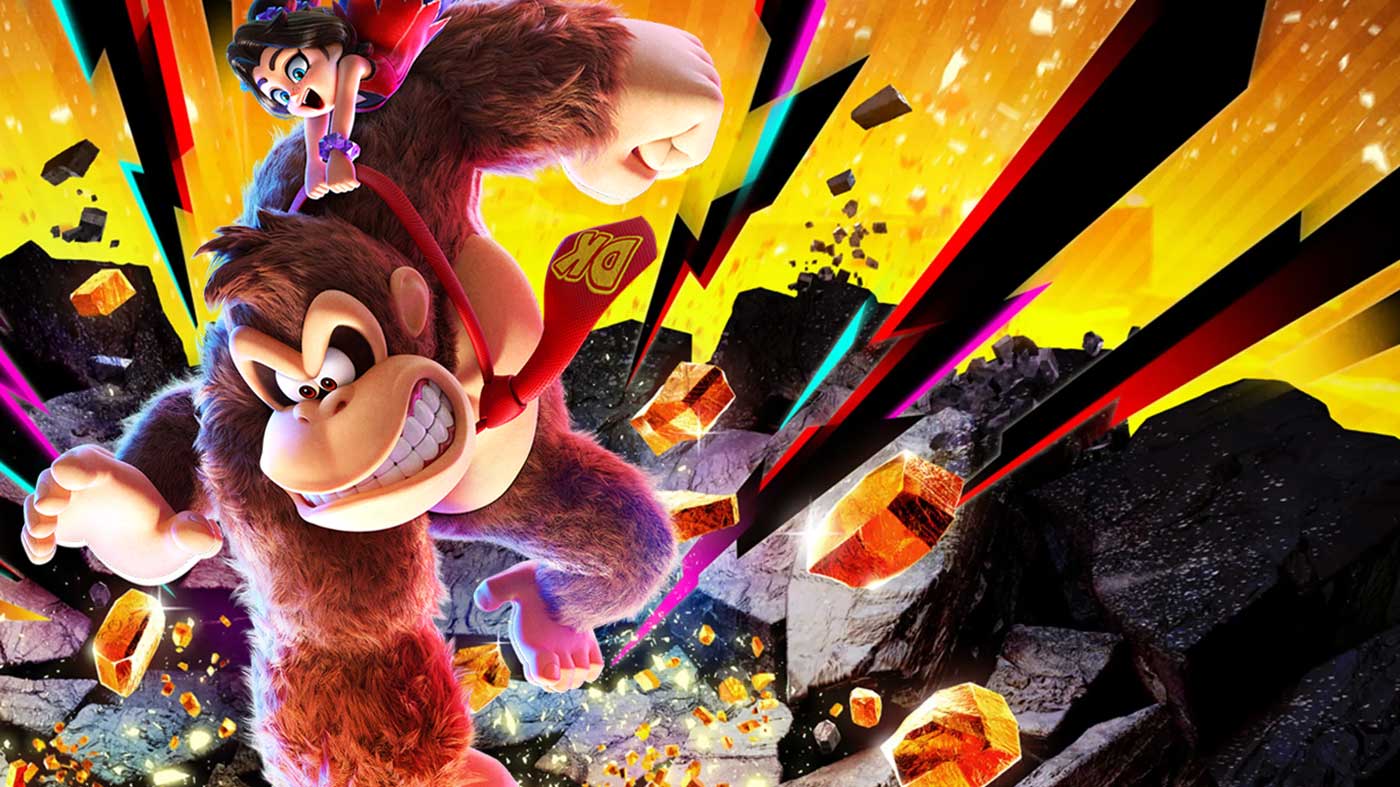



I adored Donkey Kong Bananza. It doesn’t try to take the crown from 3D platformers like Super Mario Odyssey or even try to reinvent the tight platforming of the previous Country games. Instead, Nintendo’s kooky little experiment, which is ostensibly greater than the sum of its parts, works within the confines of its genre to offer up something shiny and brand new. Bananza pays strong tribute to DK’s past, and it’s a game that instilled so much joy within me that I’ve not felt since Odyssey and Astro Bot. It’s far and away one of my favourite games that Nintendo has made so far.
The plot of Bananza remains as simple as the other Donkey Kong games, though it has a few surprises in store for fans of the series. In Bananza, Donkey Kong is doing what he does best – searching for bananas. His search has brought him to Ingot Isle, and in one of his expeditions, his hoard is stolen by a group of apes working for a company named VoidCo. VoidCo takes the hoard and dives deeper into the planet to steal more. After saving the up-and-coming ingénue Pauline, Donkey Kong heads to the centre of the planet to take back the bananas from VoidCo. What ensues is an epic adventure greater than anything Donkey Kong has been on before, and it’s an absolute ride from start to finish.
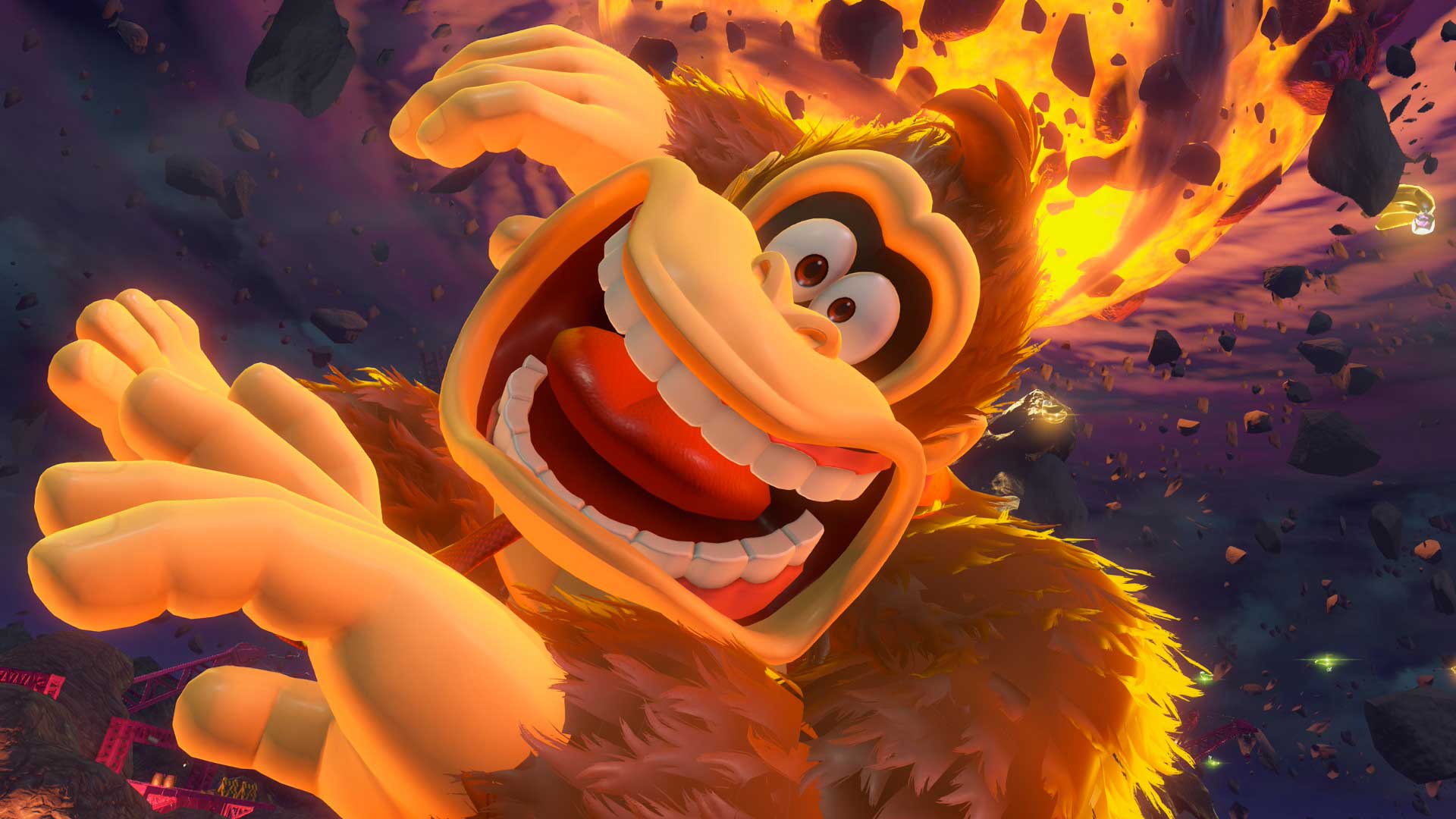
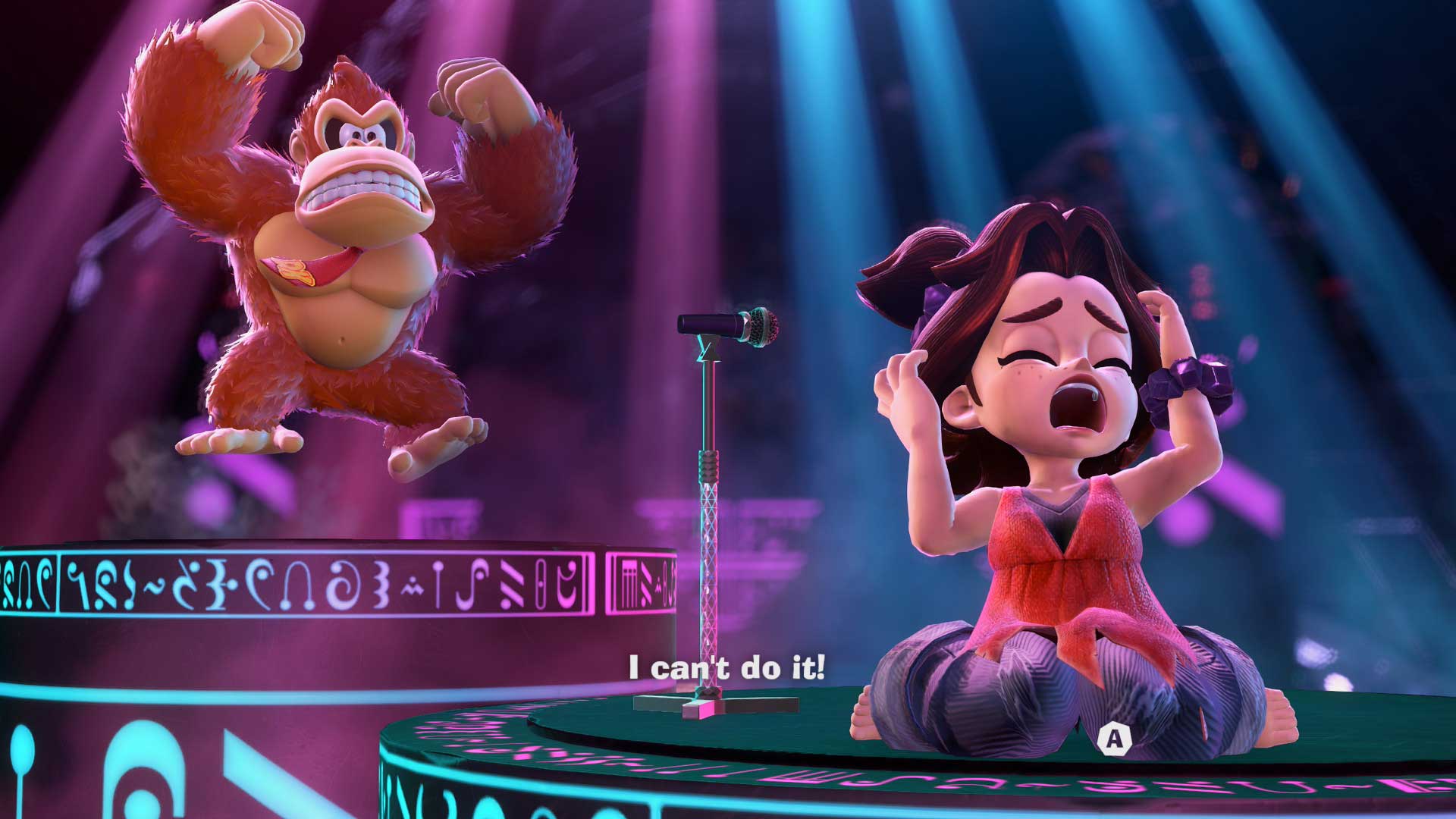
While the plot of Bananza is more interesting than I’d ever anticipated, it does fall short of its potential. For most of the game, I was invested in the mystery surrounding Pauline and who she’d grow into by the end of the game. Unfortunately, while the game’s conclusion is truly epic for many, many reasons, Pauline does feel somewhat underdeveloped here. She’s played mainly as a shallow foil to DK, and her entire plot is around her confidence in singing. Those looking for deep-reaching lore implications will come up disappointed. On a similar note, Void Kong doesn’t quite have the chops to carry the whole game as the villain, though it thankfully doesn’t detract from the experience despite this.
While there are obvious comparisons to make to Super Mario Odyssey, Donkey Kong Bananza is keen to shatter those expectations from the moment you press your first button. It takes great inspiration from Odyssey, mind you, but there is a lot here to differentiate Donkey Kong from Mario. For one, it trades in the tighter, more perfectly paced platforming for an experience that banks on the fact that Donkey Kong is big and strong. And can hit things. And loves bananas. It’s a decidedly un-Nintendo-like game in its execution, but it’s a gamble that, as mentioned prior, ultimately pays off.
The central conceit here is that Donkey Kong’s strength can be used to destroy most of the destructible world in which Bananza takes place. DK can use his strength to level environments – punching down, ahead or above to create paths through most surfaces. He can also climb most surfaces, moving quickly and efficiently through the path you create. There are rules in place to maintain order, as certain materials cannot be broken and slippery surfaces cannot be climbed. The result is a game that borrows the player-driven design philosophy found in modern Zelda games. You’re given a focused and honed set of tools with which you can create solutions for the problem the game poses to you. There’s a “correct” way to do things in Bananza, but almost anything you can think of will work, too.
This leads to many situations where you’ll have to think outside of the box when approaching particular challenges. While the game doesn’t simulate physics perfectly, there is enough common sense in play to make some enjoyable and satisfying puzzles. Bashing down walls to let light upon a flower so it can bloom or punching a path through a precarious environment for an NPC are just some simple examples of how these systems work with your objectives. As the game progresses, things get more complicated as each type of material you encounter has its own set of rules, which keeps things interesting.
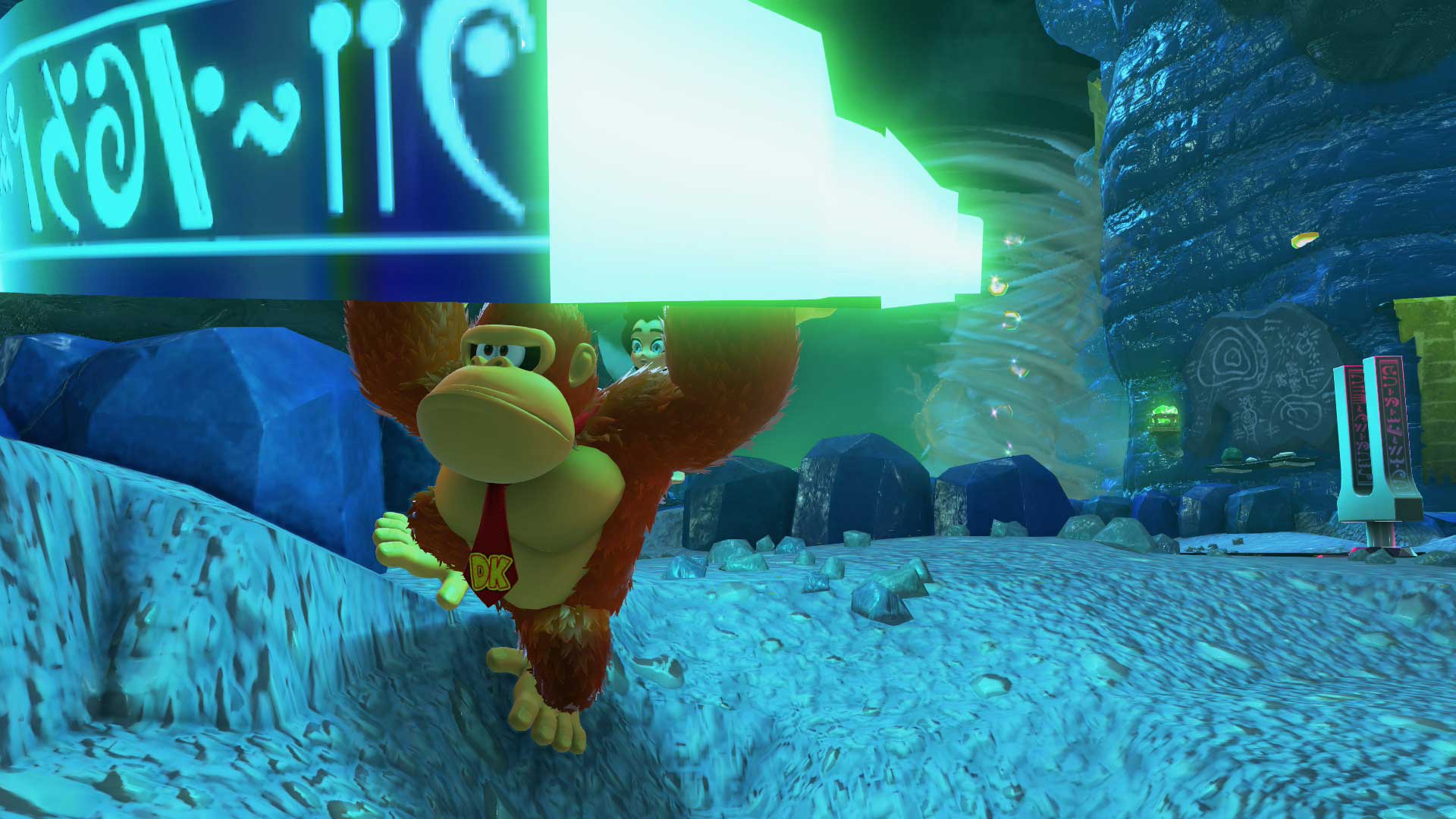
Though speaking of interesting, I’m happy to eat crow when I say that this game is nowhere near as monotonous or repetitive as I thought it would be. For the entirety of Bananza’s runtime, there wasn’t a single moment where I was bored or even wanted to stop playing. While not as vast and expansive as other Nintendo-authored adventures, Bananza is still densely packed with things to do and see. Comparisons to Zelda’s shrines have been made with how these challenges work, but Bananza’s challenge areas feel like clever reinterpretations of bonus levels that have formed such a large part of Donkey Kong’s identity for so long.
THE CHEAPEST PRICE: $98 WITH FREE SHIPPING FROM AMAZON
Another aspect with which Bananza plays around with its structure is in how you progress through each of the game’s layers. It doesn’t feel like a traditional collect-a-thon in that progression is not tied to how many items you have. Instead, each layer will pose a task or objective for you to complete. The collectibles themselves – Bananas and Fossils – are instead just used to purchase upgrades for DK and Pauline. It might sound odd on paper, and perhaps even pointless, especially given there are over a thousand collectibles here. However, I’d argue that this design choice improves the pacing of Bananza.
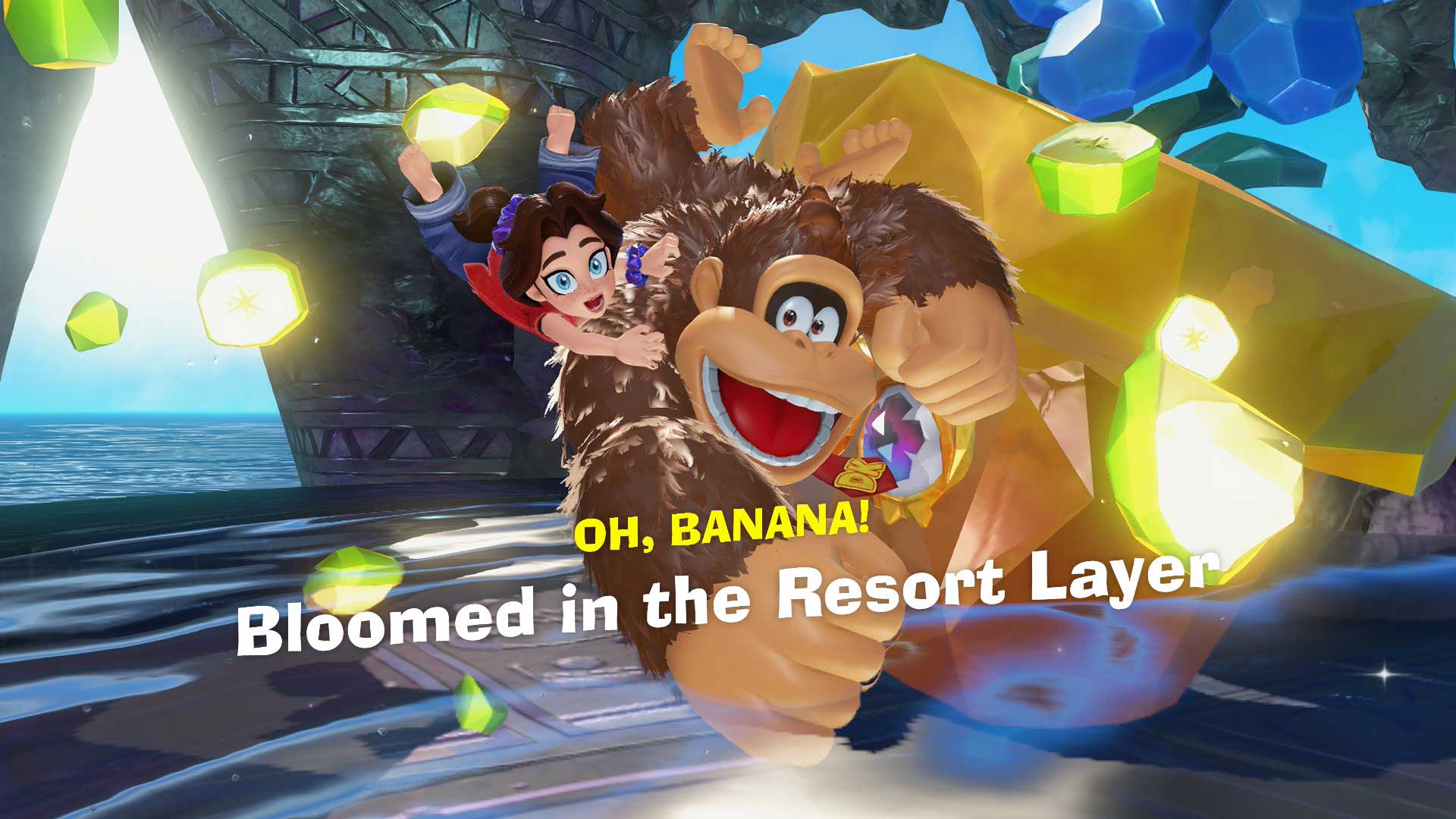
That’s not to say you won’t need to collect things in Bananza. On the contrary, Bananza is distracting in all of the right ways. I can’t begin to tell you how many times I’d be off on my way, eager to complete an objective, but finding myself distracted by something as simple as a wall. I’d punch through it to see where it will take me, and it would be off the beaten track significantly. It’s pretty simply intoxicating to go ham on an environment, until you snap out of it and try to remember what you were doing in the first place. Those who wish to explore each layer can do so, but those who are easily distracted have plenty to do within each layer.
Though collectibles may still be important for some players. While there are no formal difficulties in Bananza, how far you engage with some of the skills you unlock on the skill tree will inform how difficult you find the rest of the game. If you’re struggling, it might be worth taking the time to find some extra bananas to improve your health or increase your item capacity. This is, admittedly, not something new to games, but it’s a flexible approach to difficulty that we haven’t seen before from Nintendo, and one that helped me mould the experience to be as challenging as I want. The tree is endlessly respec-able too, which is nice if you want to experiment with the games’ Bananza transformations.
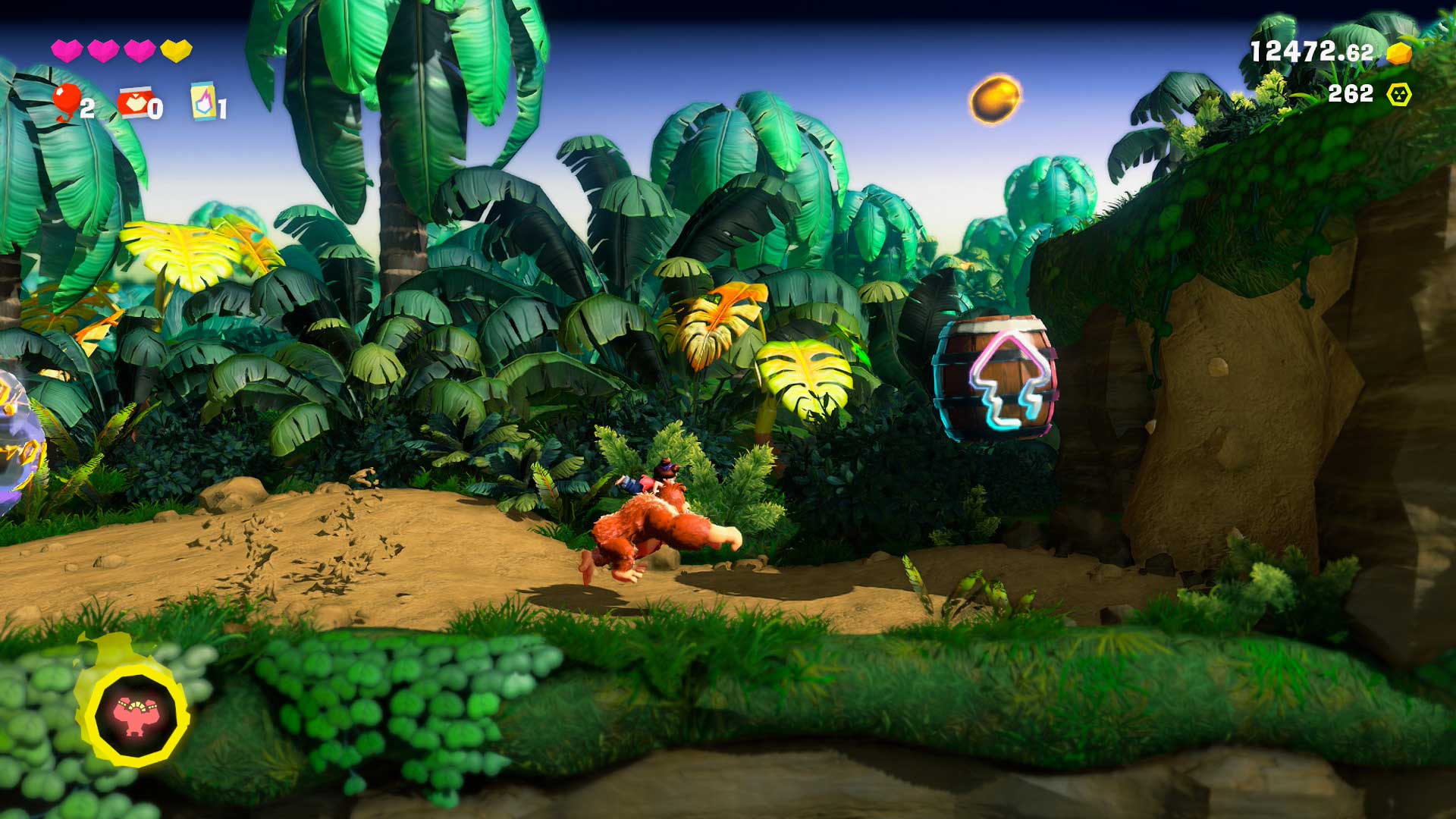
The Bananza transformations, like those in previous Donkey Kong games, offer DK new abilities and traversal options. Each of the transformations serves a specific purpose when exploring each of the game’s many layers, and you can swap between them on the fly to come up with some crafty solutions to your problems. There’s some great variety amongst these Bananzas, and one thing I especially like about them is that they’re helpful for the entirety of the game once you unlock them. They aren’t just used in the layer you find them in and promptly discarded later.
This doesn’t feel truer than when approaching the game’s many boss battles. Each of the encounters you have with these enemies in Bananza feels clever and considered. They utilise the creation and destruction mechanics in interesting ways and, even better, they’re a tad harder than I’d expected too. I’ve oft complained about the difficulty in Nintendo games being too low. While Nintendo hasn’t quite treaded into FromSoftware territory just yet, some of the battles, especially in the game’s final act, are easily some of the toughest and most dextrously demanding that Nintendo has ever created. What results is an incredibly satisfying sense of achievement when you overcome them, juggling multiple Bananzas effectively to come out on top.
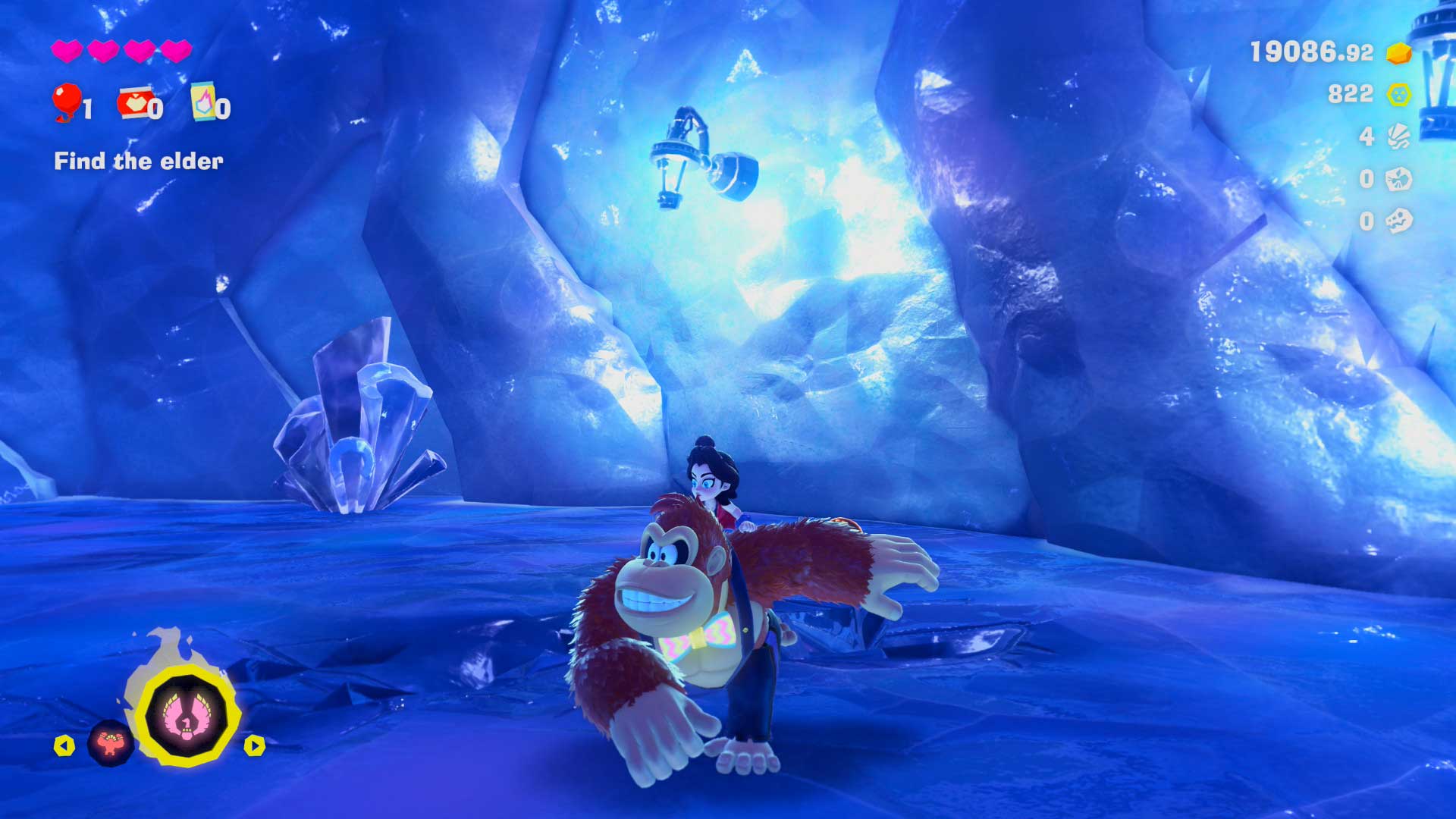
For most players, Bananza will offer them at least fifteen to twenty hours, depending on how you play. I was at the higher end of that bracket, spending over twenty hours to finish the story, having collected just over half of the collectibles. Some may breeze through it more quickly if they do the story solely. When you’re done, there are some cooler post-game challenges to complete too, which focus on each Bananza in unique and interesting ways. Though it’s important to highlight that, regardless of how you play, Bananza is equal parts epic and entertaining. However, more importantly, it has an immense amount of variety that keeps it interesting.
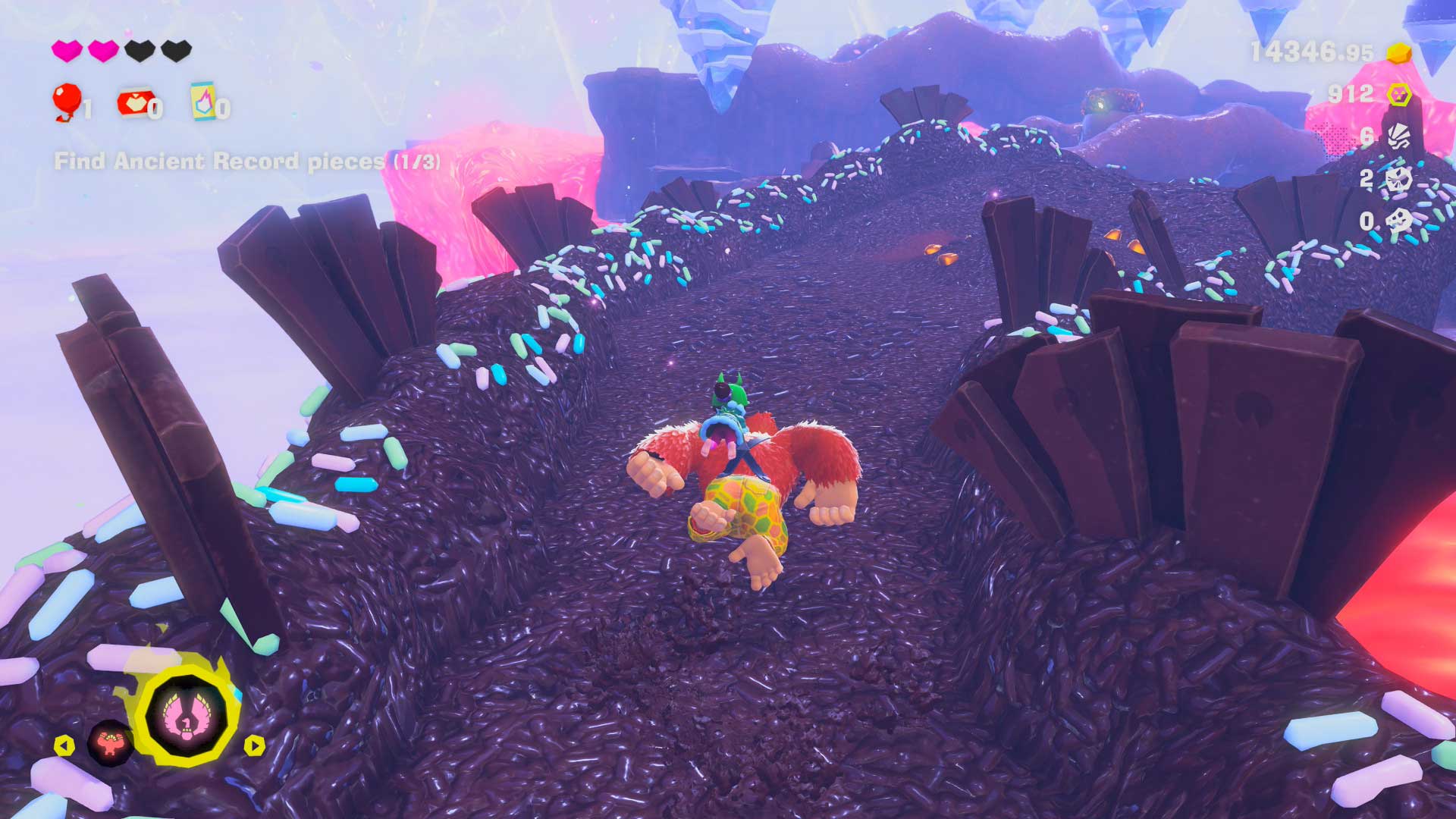
In terms of presentation, Bananza is quite the looker. I can’t go into many of the levels in the second half of the game, but the visual variety that is packed into this game is especially strong. While the game starts subdued with the biomes that you visit, the places that DK and Pauline end up are clever twists on typical genre locales. It’s especially exciting to see such visually rich results this early in the Switch 2 lifecycle. That being said, there is some notable slowdown on the map screen and during two particular boss battles; however, beyond that, the performance in Bananza feels rock-solid. I’m not saying it doesn’t drop, but I am saying it happens so little that it was barely noticeable playing both portable and docked.
The original score is also quite good, though it fares less than the game’s visuals. Perhaps I can’t let go of the past, but the majority of these tracks do not capture the memorable work done by David Wise and Eveline Novakovic on the original Country games. Still, most of these tracks that play while you explore each of the game’s many layers are catchy enough. In terms of voice work, most characters communicate through grunts and groans reminiscent of those found in Banjo-Kazooie, although Pauline herself is fully voiced. Her performance here is just fine – a little bit too saccharine Disney for my taste – but her Jenny Kidd turns in a good enough performance with the direction I presume she was given.
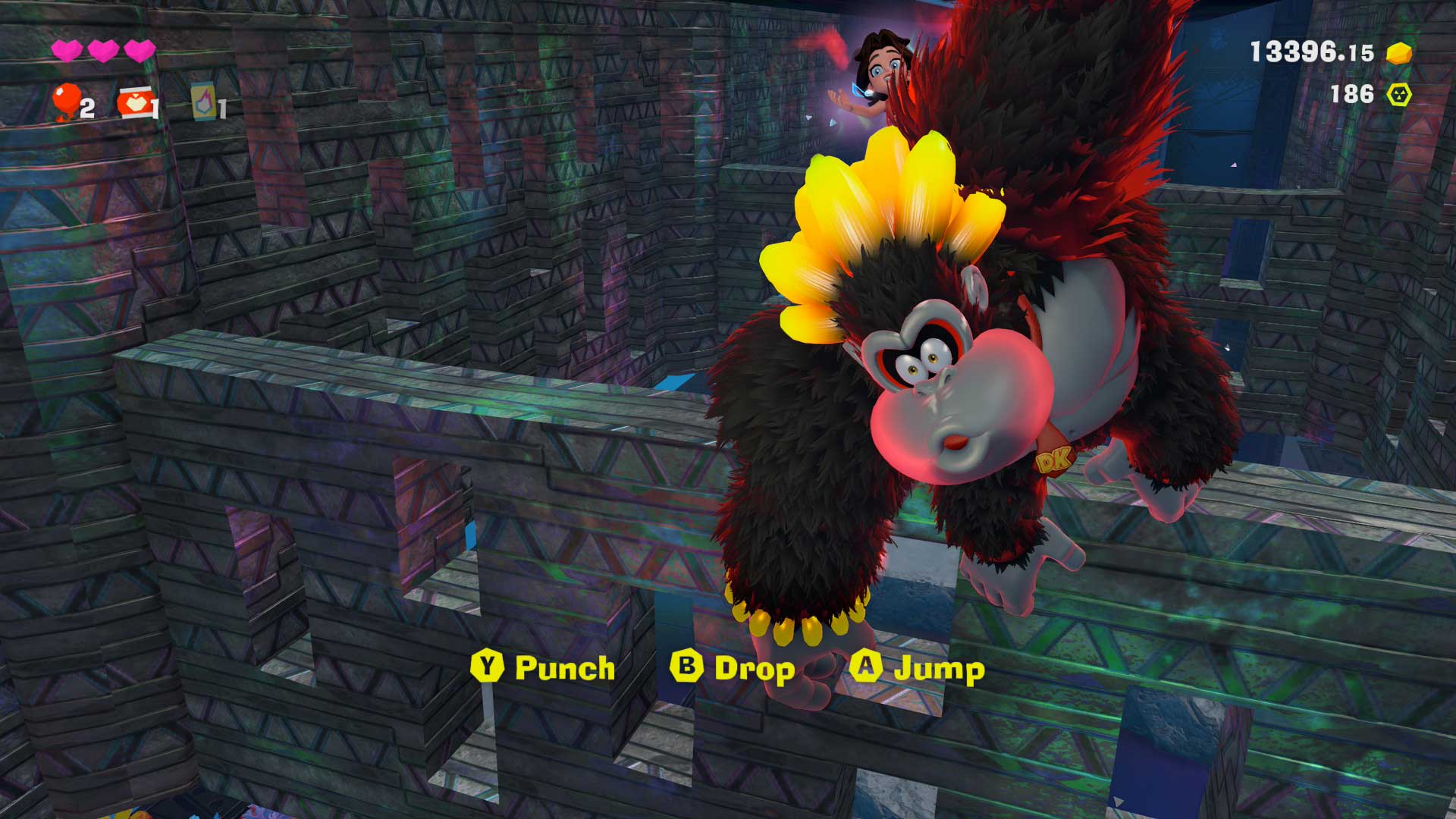
But these are some minor blemishes on an otherwise fantastic new outing for Donkey Kong. While Bananza does things differently from previous games, it gets a lot of these changes just right. It feels like a cleverly and carefully curated mix of the best bits from Donkey Kong’s past – especially Donkey Kong Country and Donkey Kong 64 – but enhanced by the technology that only modern consoles can provide. I mentioned at the beginning of this review that Bananza feels like a quirky Nintendo experiment that could have gone either way. But having rolled credits on Bananza and continued to dabble in its joyfully put-together world, I’m more than ecstatic to proclaim it’s a successful experiment in practically every way.