


Press Start may receive a commission when you buy from links on our site at no extra cost to you.
As every day passed and every trailer released, you’d be forgiven for being concerned about Metroid Prime 4. Firstly, it’s been almost two decades since the last game, and the genre that Metroid has inspired has since become quite saturated. It didn’t help that all the pre-release media for Metroid Prime 4: Beyond shows it in a different light than we’ve come to expect from Metroid. Thankfully, now that Metroid Prime 4: Beyond is here, I’m happy to report that this is the Metroid Prime follow-up that fans have been clamouring for since the original game released. Such a statement, however, is not without its caveats.
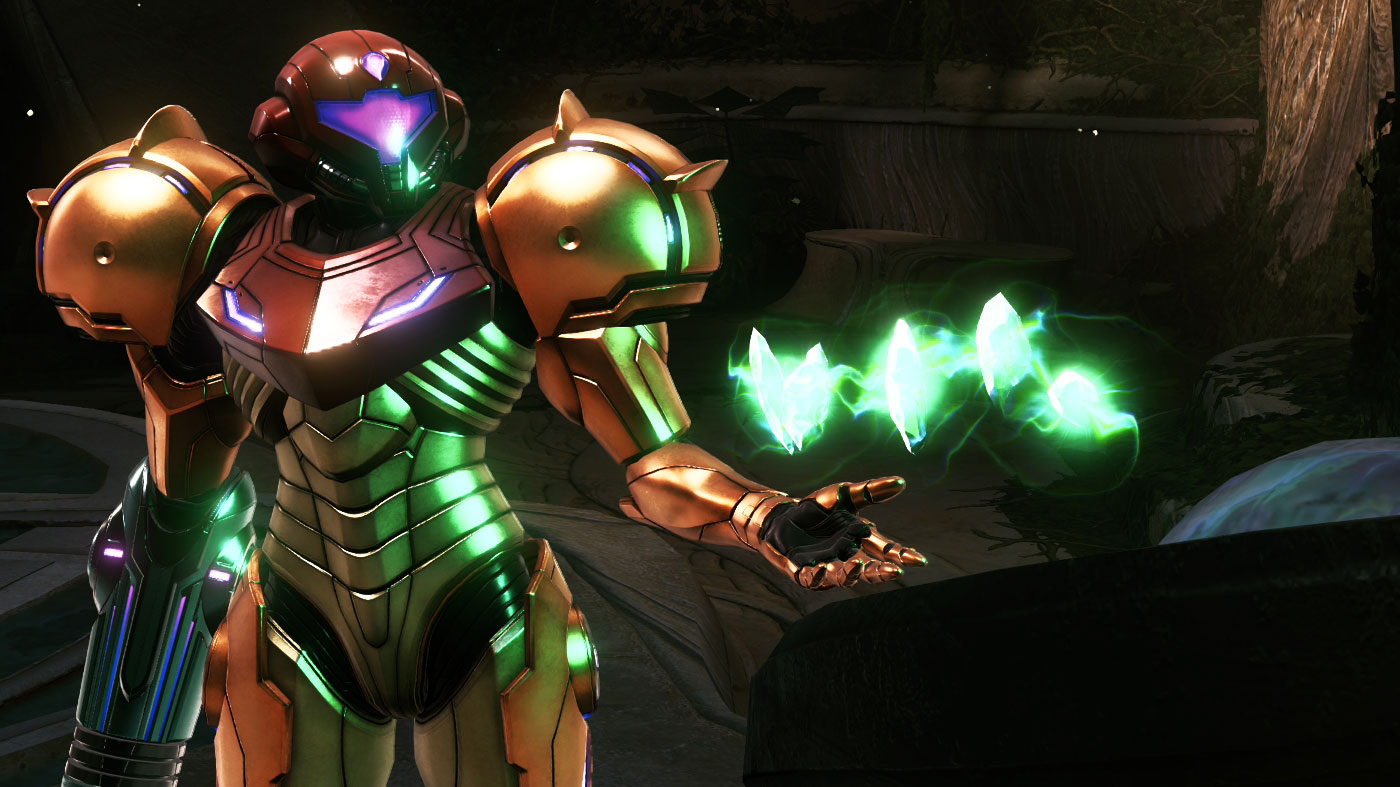
Metroid Prime 4: Beyond opens with a bang, in a similar fashion to Metroid Prime 3. Samus joins the Galactic Federation against the invading forces of Sylux, a bounty hunter from the previous games who has an odd control of the Metroids. During their face-off, an artefact is activated, transporting everything in the base (and parts of the base itself) to Viewros. A previously undiscovered planet, Viewros was once inhabited by an alien race called the Lamorn. Helping Samus, thinking her to be “the chosen one”, the Lamorn send Samus after keys that’ll help her return to her world.
While you don’t need to play previous games in the series to appreciate what’s happening in Beyond, I’ll just come out and say it. The plot in Beyond is largely disappointing. While there are two key storylines here that slowly unravel themselves to the player – one about Sylux, and the other about the Lamorn – almost all of the details are drip-fed to you in a way that remains intriguing. It’s unfortunate, then, that none of these threads come together satisfyingly. While there are more details elaborated upon in the full completion endings, the base experience is too vague to be of value and will leave most players with questions.
Thankfully, the gameplay remains as strong as ever. Metroid Prime 4 does little to evolve the formula established by the original trilogy almost two decades ago. While this is usually construed as a negative, it is not – it’s a testament to the uniqueness of the Prime games that this formula can exist so many years on and still be compelling. While other Metroidvanias exist, none hit on the same level as the Prime games. Beyond follows that tradition. It is a much more honed realisation of all the potential of both Metroid Prime 2 and Metroid Prime 3, exploring (marginal) new ground while keeping things familiar to the core of the franchise.
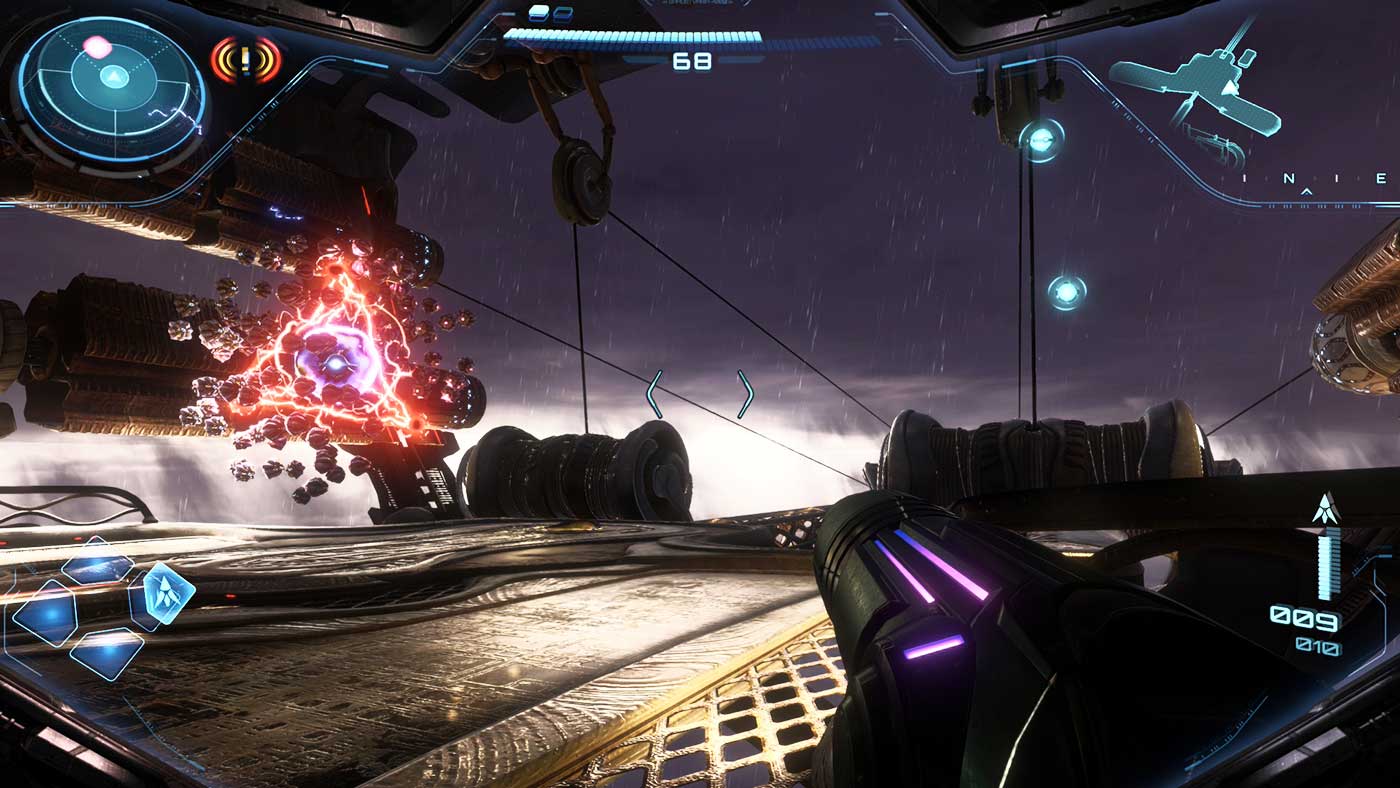
Such a core is the same as in previous Metroid games. Samus is thrown into a weird, alien world to explore, defeating enemies and bosses and collecting power-ups that often let her delve even deeper. It’s an experience typical of this genre, and is both familiar and comforting. Fans will no doubt revel in developer Retro’s willingness to stick to what works. At the same time, series newcomers will find novelty in this semi-open-world experience that has been largely unexplored, both literally and figuratively, for so long.
But not everything in Metroid Prime 4 is entirely familiar. The most dramatic difference is the introduction of Vi-O-La, a cybernetic bike built by the Lamorn that Samus can use for both traversal and combat. You will mostly use Vi-O-La to travel large distances across the Sol Valley, a vast desert that connects the game’s five areas. It can also be utilised in these areas at specific times, but is mostly used in Sol Valley. Overall, the implementation of Vi-O-La is pretty well done, and while the game’s marketing has insisted that its gameplay is grounded in heroically geared action, it’s the opposite.

Sol Valley and its implementation will be among the most contentious aspects of Metroid Prime 4. It’s a barren open world, peppered with only a handful of points of interest, occupying a space similar to that of open worlds like the Great Sea from Zelda’s Wind Waker. There are structures to explore, power-ups to unearth and even shrines with optional power-ups to uncover. It’s nothing too exhaustive nor overbearing, and is an approach I much prefer to Ubisoft’s overwhelming open-world approach. The Sol Valley is built in a way that’s just distracting enough – I almost always spent more time exploring in the valley when travelling instead of just moving from one point to another.
But what will go much unnoticed, especially by those who don’t play it, is the way that the Sol Valley feeds into that sense of isolation that Metroid players absolutely clamour for. It’s a locale that feels huge and expansive, making you feel tiny as you explore this alien planet. The quiet, eerie music that plays while you explore it fits perfectly with this notion. Yes, there is some combat in the desert, but it feels more like a clever, light distraction that takes the edge off the tedium of backtracking.
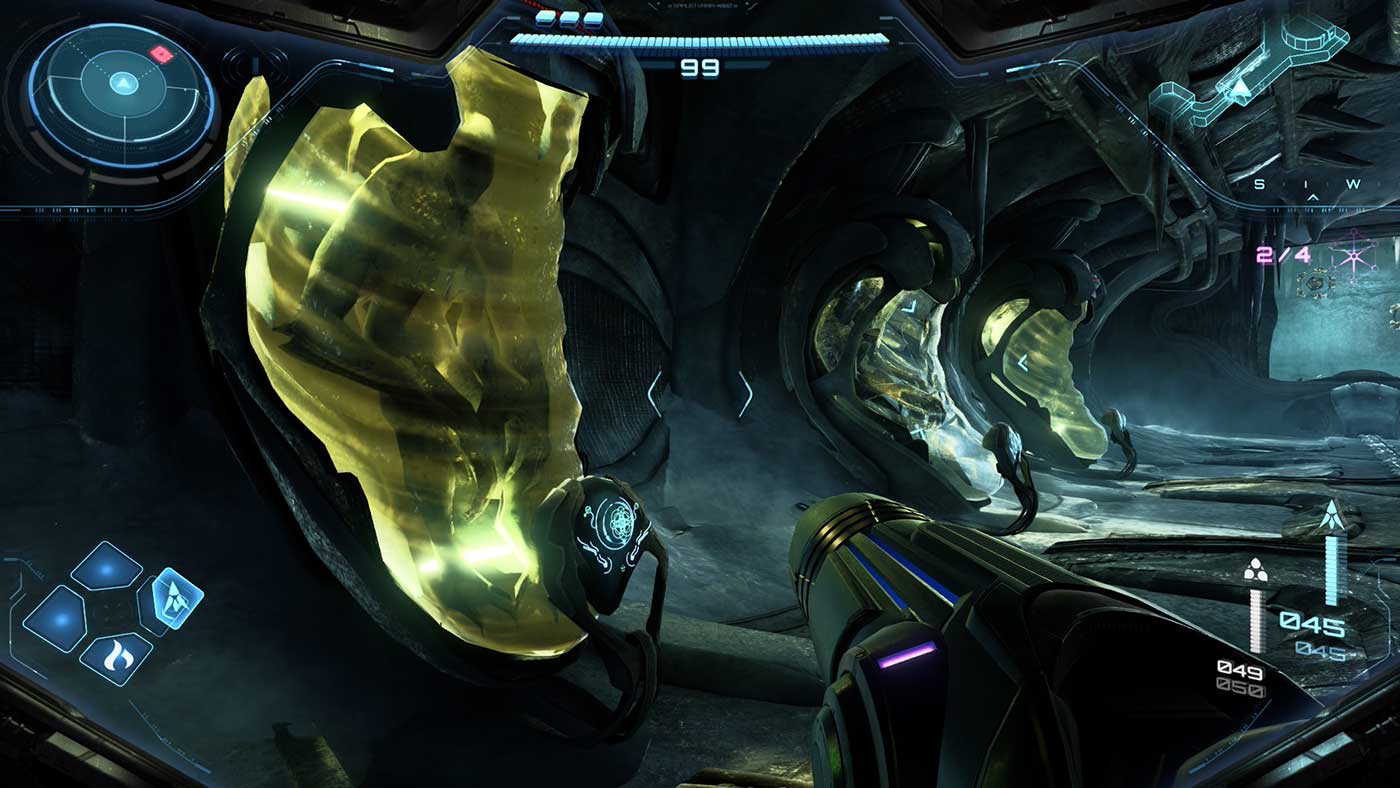
And while backtracking makes up a majority of Metroid Prime 4, it’s nowhere near as egregious as in the previous games and contributes to the world’s great sense of interconnectedness. Every location you visit in Beyond is visited at least twice during the main story, though there are more times in which you can visit as you unlock new abilities. There is a mandatory fetch quest at the end, as is customary with all the Prime games, but this one isn’t as obnoxious as those presented in Prime 2. It doesn’t bring the story or the pacing to a screeching halt, and you can start working on it fairly early on if you’re an astute explorer.
THE CHEAPEST PRICE: $89 WITH FREE SHIPPING FROM AMAZON
Each of the locations you explore will be familiar to series fans – though Beyond does its best to twist them in a way to make them feel unique enough. There is a good mix of the loud and heroic tones of the earlier Metroid games and the quieter and more atmospheric tones you commonly associate with the series. There are definitely some areas that are stronger than others – the Ice Belt is easily a massive highlight for me, but I can never turn down an opportunity to explore an abandoned lab and be subjected to a deep lore dump.
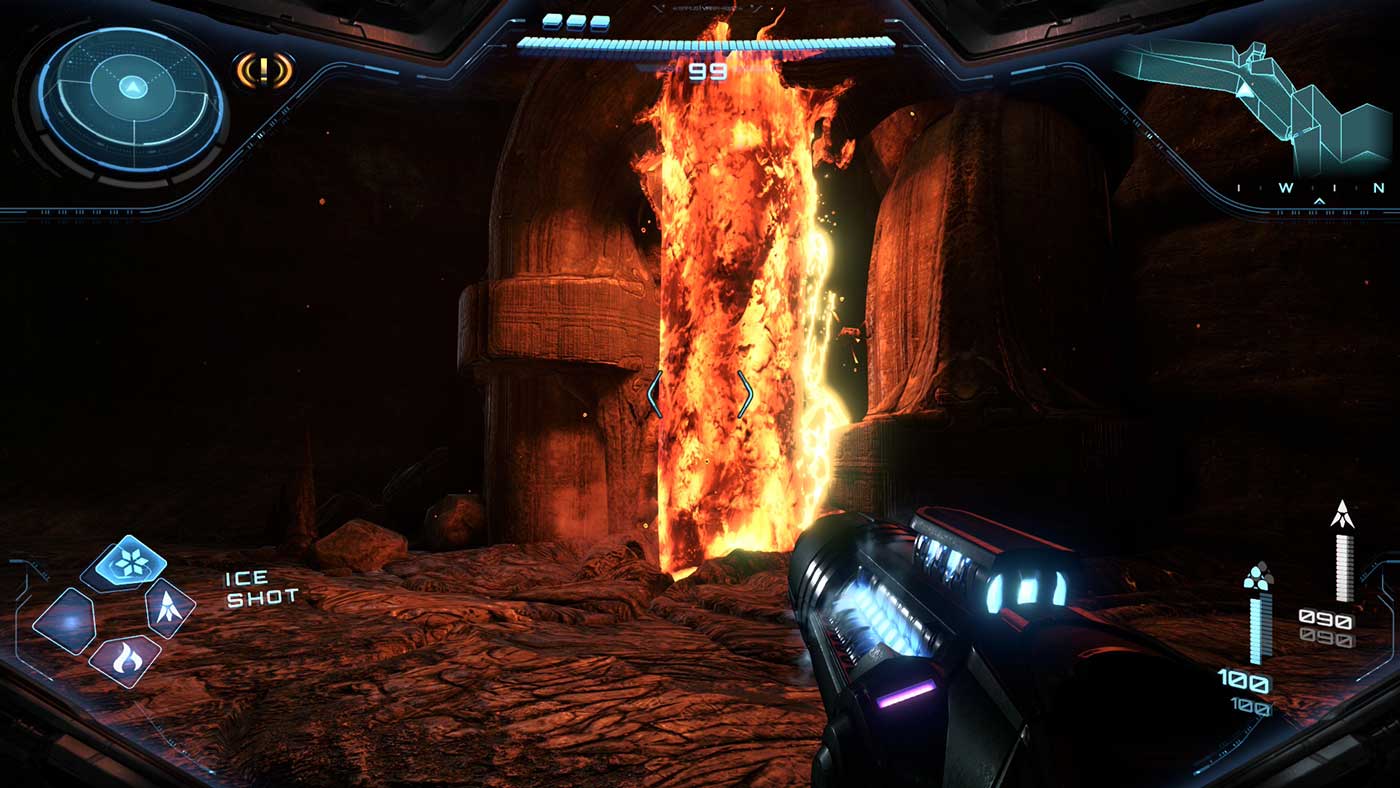
The other, more contentious aspect of Metroid Prime 4 is easily the presence of the soldiers who accompany Samus on her journey. Each of these characters will usually introduce themselves to Samus at the beginning of each area before backing off and letting Samus do her thing. There are some times during the story where they accompany Samus in the more action-heavy setpieces, but they generally do not bother you for more than fifteen minutes. That sense of isolation that people crave from Metroid is still here in Beyond, striking a strong balance between the style of 2 and 3, but not resembling either entirely.
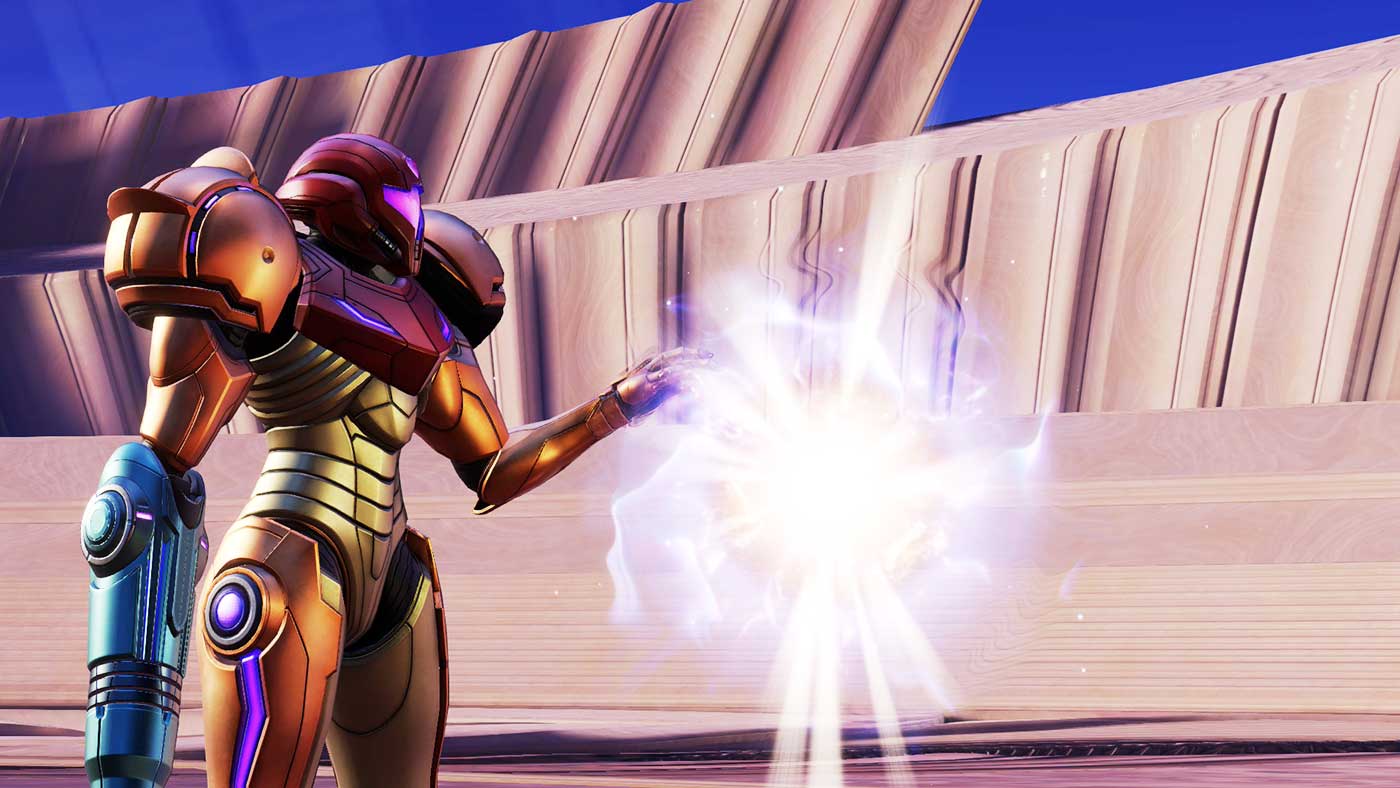
On the topic of collectibles, Samus’ new abilities and powers are unfortunately not all that new. For the most part, the introduction of “Psychic” abilities in Viewros offers new spins on already existing skills for Samus. It’s an interesting approach that, like the rest of Beyond, doesn’t quite reinvent the wheel, but instead reinterprets it. The result is something marginally fresh – and while the Psychic abilities are mainly used for exploration, you can mix them with combat abilities to gain the upper hand if you so wish (though admittedly I never felt the need to do so).
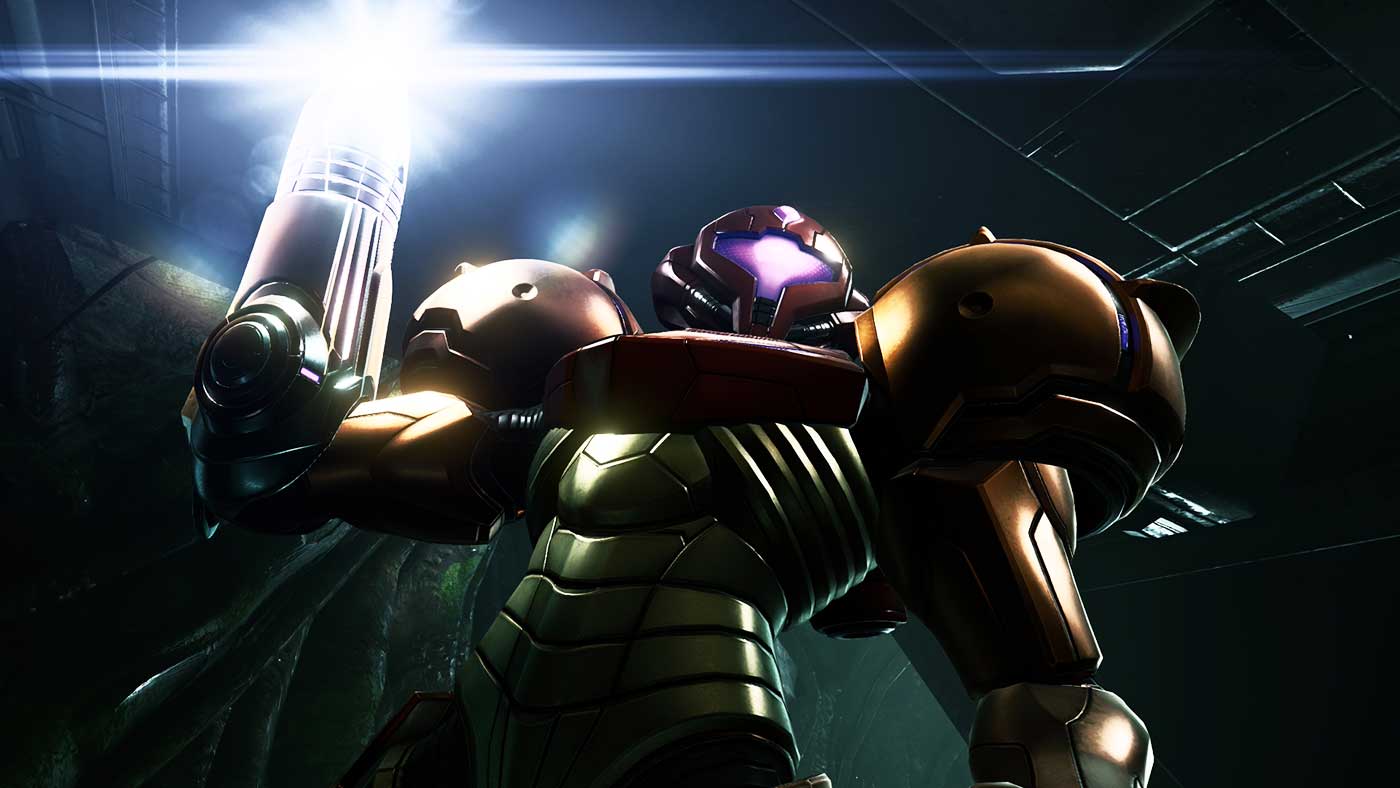
Though the bosses you encounter in Beyond are some of the strongest in the series. Like the rest of the game, each of them could’ve been lifted from the previous games, offering slight new twists that require you to use Samus’ powers effectively. Many of these battles form the most difficult and memorable moments of the game, but the count does feel a little low, and I’d have loved to fight more of them. Still, this is definitely a quality-over-quantity situation, especially compared to Prime 2 and 3, but it’s worth mentioning.
That’s not to say that Beyond will short-change you. Anything but. The whole adventure will take most players between twelve and fifteen hours to complete, though you can easily stretch that out to more if you want to explore and find everything. There is a hard mode unlocked after finishing the game once, as well as unlockable artwork tied to certain items and scan percentages. But while these are nice additions, the more interesting backstory for the game is locked behind completing the game 100% (or an amiibo), which is relatively disappointing. There is also no way to go back and explore the world once you finish, which was normal for the old games but feels like a misstep today.
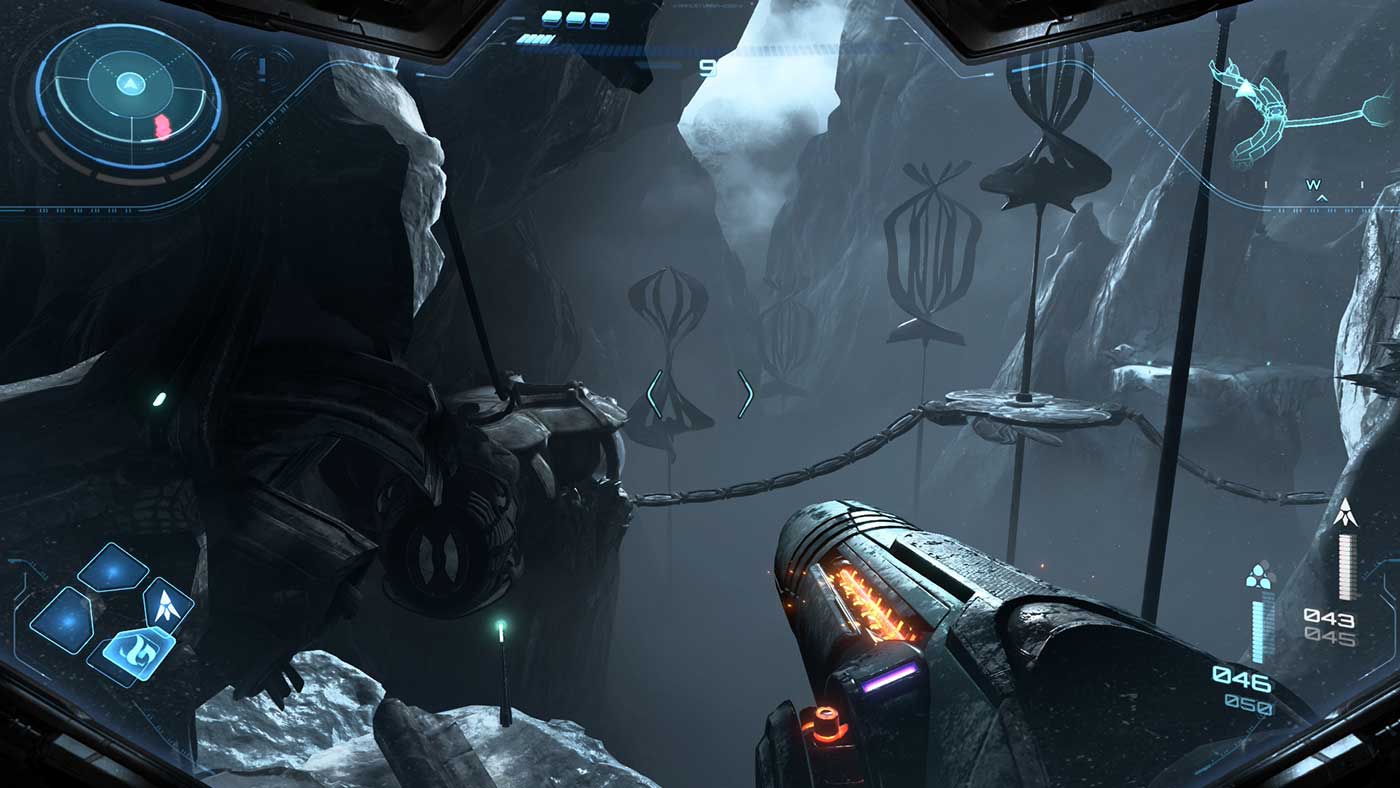
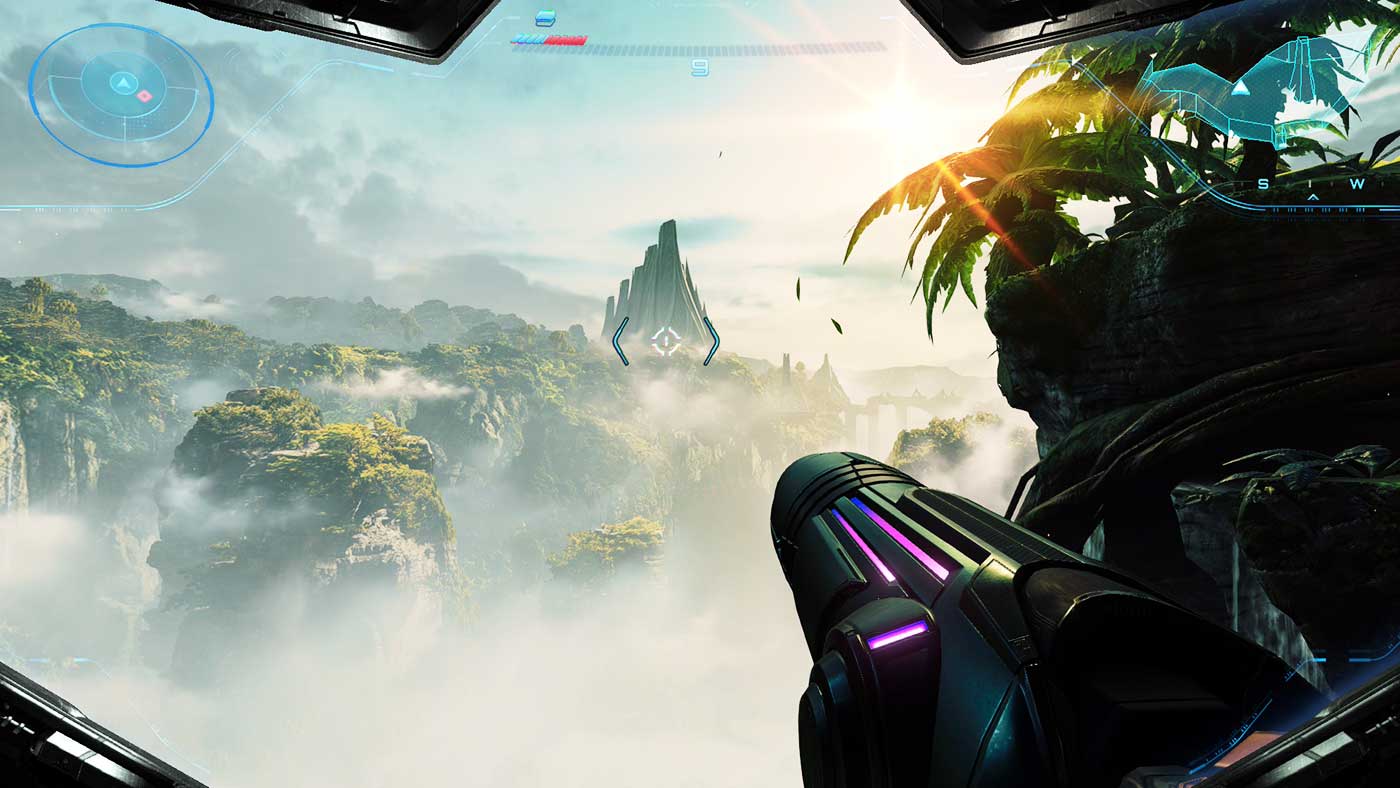
Though there are no missteps in Beyond’s presentation, which is simply first-class. One of the best-looking games that Nintendo has published, Beyond is truly a looker. Much has already been said about the display options, but it’s encouraging to report that both run admirably on the Switch 2 hardware. But this dedication to presentation isn’t just technical – it has a strong artistic aspect too. Bringing together this strong technical prowess with even stronger artistic design helps to create a world that feels alive.
There is truly nothing like exploring an alien world in a Metroid Prime game, and Beyond delivers on that in droves. I can’t tell you how many times these little moments, like walking through a snowy tundra and seeing frost and condensation gather on Samus’ cannon, helped immerse me in a world that felt alive and breathing. It’s a level of fidelity that we’re not used to seeing from Nintendo, and one that really sets Beyond apart from their other games. Combine this with a soundtrack that sounds like it’s lifted from the previous games, and you’ve got a genuine and authentic Metroid Prime experience in Beyond.
And that’s really the simplest takeaway I can make from Metroid Prime 4: Beyond. It feels like an authentic Metroid Prime experience in every way, without sacrificing the identity of the games that helped forge its legacy so many years ago. While there are some missteps, particularly with its story that goes almost nowhere, Metroid Prime 4: Beyond is well beyond what any fan could have hoped for, and a step in the right direction for the Metroid series.