




Make no mistake: BALL x PIT has me by the balls. To borrow a tremendous turn of phrase, it’s groin-grabbingly good. It’s a slick combination of Breakout, Vampire Survivors, and Cult of the Lamb that will, after five minutes, through a moreish and palatable mix of brick-breaking, ball-fusing, and base-building, be evident enough that the smelting pot of a final product that it is hits like freaking crack.
After a cataclysm erases the city of Ballbylon, leaving nothing but a pit in its wake, it quickly becomes a destination for treasure hunters who venture out on what are often one-way expeditions as they fall to the layers-deep horrors that wait. Your goal is to rake the pit of its resources to rebuild and reinstate Ballbylon to its former glory, enlisting an entourage of heroes as you go. It’s a simple premise, and there’s no “story” that unfolds, BALL x PIT is a gameplay-first kind of title that places replay value and style at the forefront.
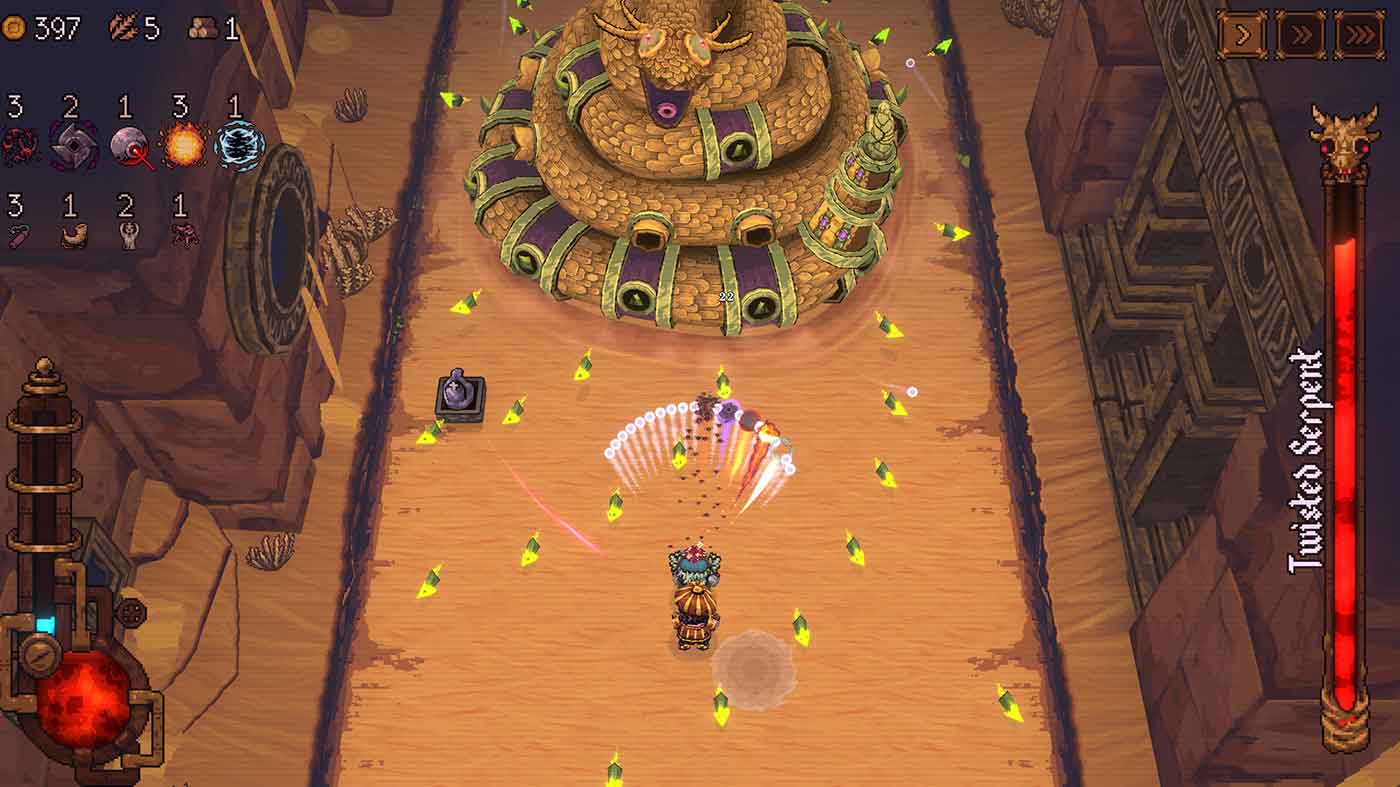
The crux of the most engaging gameplay on offer combines Breakout and Vampire Survivors, as you fire balls in a shoot ‘em up fashion at enemies that descend down the screen, kind of like the notes of a Rock Band’s track highway. The roguelike nature of it sees you fire off a combination of regular balls—referred to in-game as baby balls—and specials to dispatch enemies before they can reach the bottom of their lane and attack. Unlike Vampire Survivors, where enemies can come from any angle, BALL x PIT’s levels are set up like a scrolling grid, upon which enemies, power-ups, and resources spawn in at random.
The game lets you toggle a few key gameplay aspects, such as auto-fire, which I pretty much kept on as default, and game speed, which allows you to buy some time when things get a little hectic. In terms of “mastering” the basic tenets of BALL X PIT, the one thing that helped me turn a corner is the mechanic of catching your special balls so that you’re able to get them back in play quicker. Once they reach the bottom after pinging about, they’ll return to you naturally, but these lost seconds can prove costly. I do believe that catching will be the mechanic that separates the good and great players.
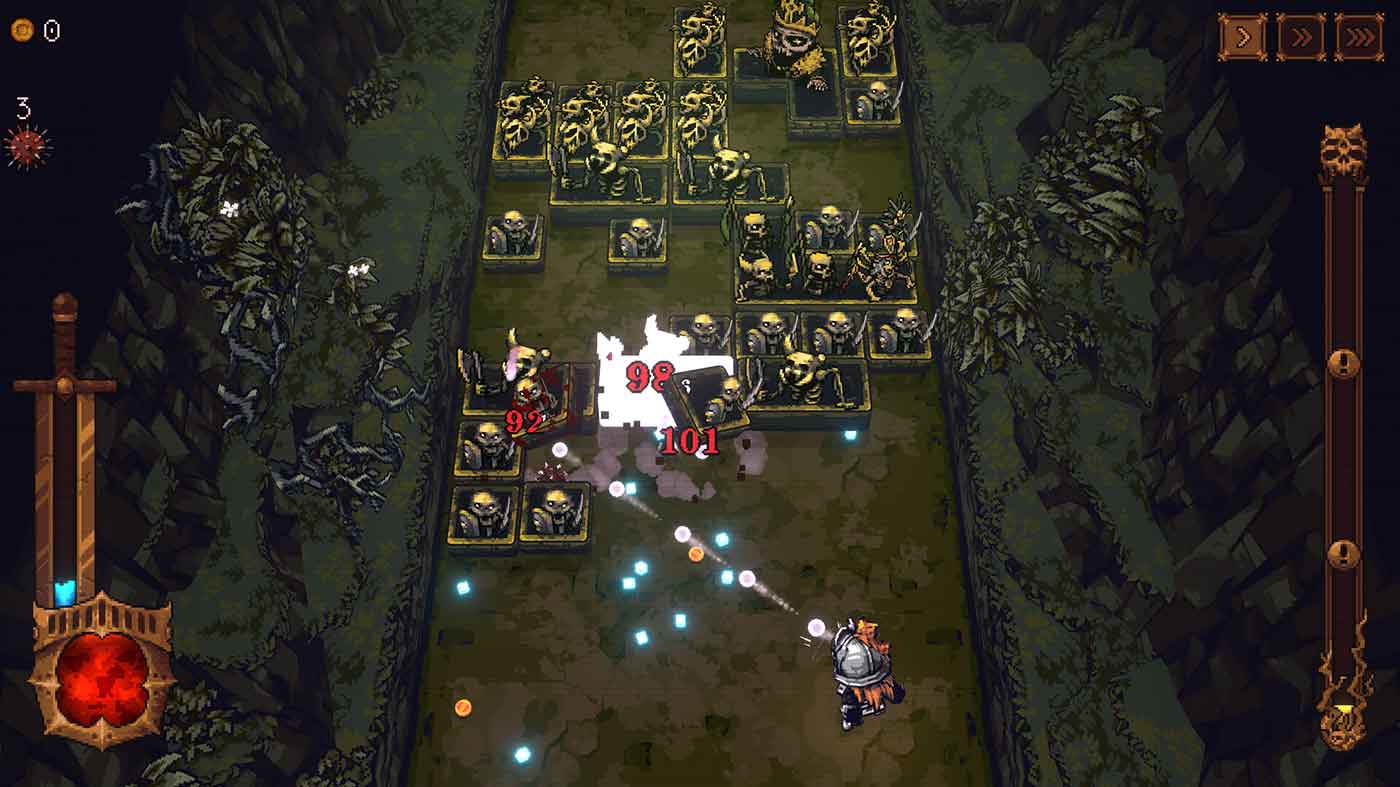
While the game itself is a novel enough approach to the classic Breakout formula, your ability to level up, fuse, and evolve ball combinations, as well as collect passive buffs, is where every “run” lives and breathes, and really delivers on the replayable roguelike promise of the game. At random, enemies will drop a small, warbling atom of sorts that’ll, depending on your build at the time, grant you the options of fission (to level up your inventory), fusion (to combine balls to crazy effect, and free space up for more balls), or evolution (which serves as a kind of final form for these fusions). Some inflict status effects like bleed or poison, while others are more immediate area of effect attacks that can take out clusters of enemies and, clearly, combining the two forms of offense can lead to some pretty over-the-top plays that feels like having your cake and eating it too.
Although you begin with a simple warrior archetype, a default entry-level class of sorts, I do love how creative the developer got with the extra heroes you can add to the roster throughout the journey. Some might have a starting special that best suits a build you’re trying for, while others genuinely change the game feel entirely, like the Cohabitants—a duo who fire and control independently, meaning you’re able to have two, albeit slightly weaker, bullet streams while on offense. That said, get the right drops and it’s a character where things can escalate quickly.
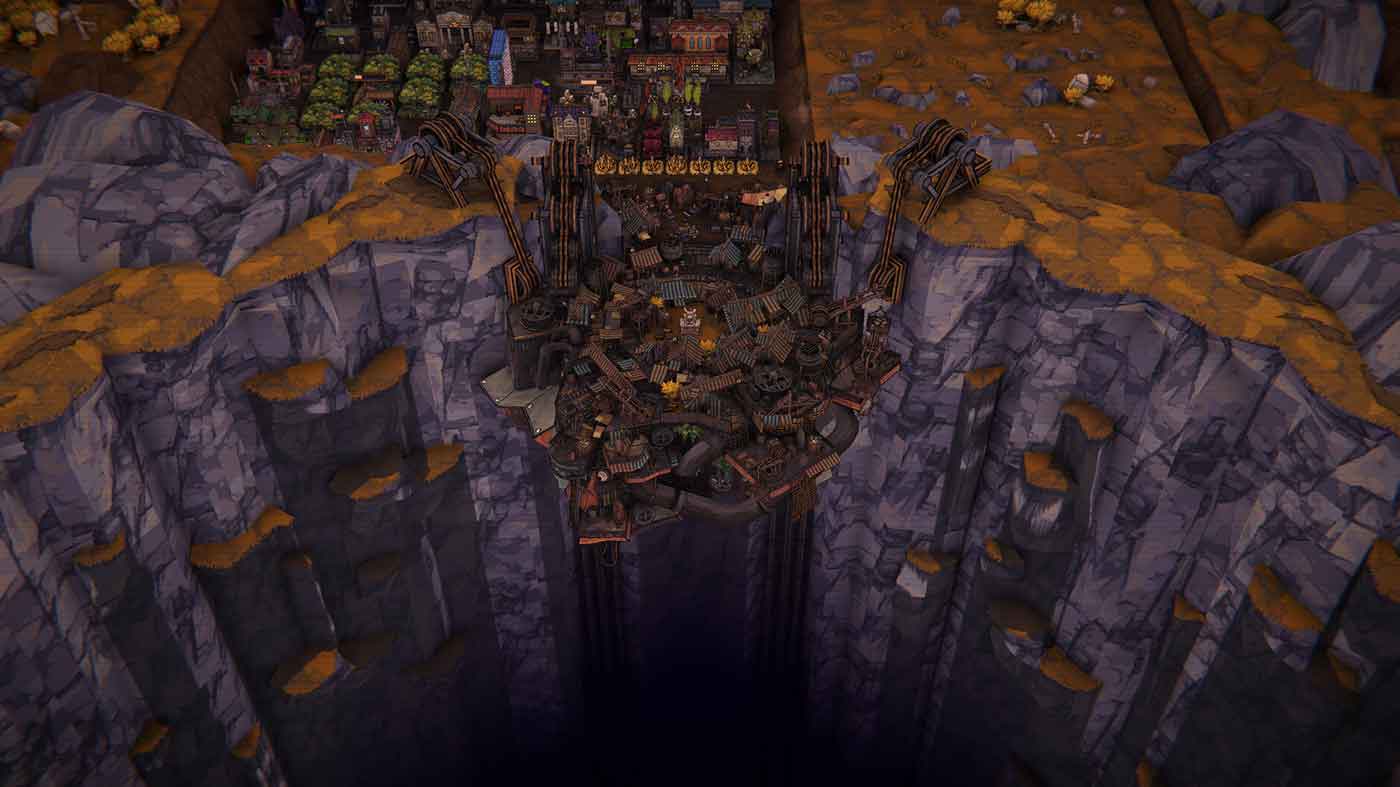
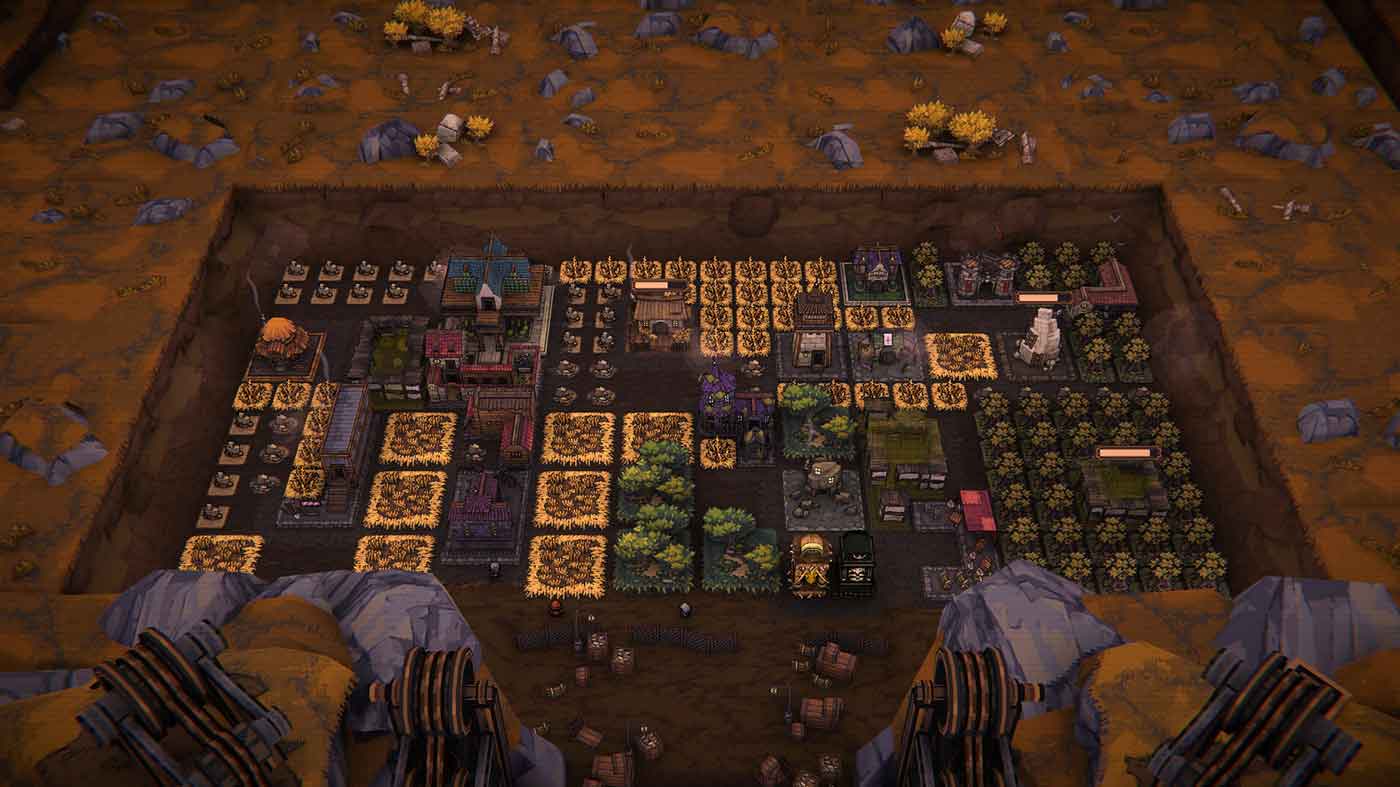
As someone who generally loathes city-building mechanics, I find BALL x PIT’s to be, at the very least, palatable. The game doesn’t burden you, the player, or detract from the core loop to make resource gathering a chore. In fact, it happens rather passively, meaning the ability to hop in with what you’ve got on hand to build up and improve your township in between runs is quick, easy, and manages to benefit the overall goal of descending deeper into the pit. And even the act of plotting and city-planning doesn’t come across as stressful, as the game allows you to rearrange your town’s grid at any stage as it expands in scope. I wouldn’t recommend turning a blind eye to the city-building, however, it’s tied intrinsically to buffing stats, unlocking heroes, and giving you that persistent, ever-improving footing to kick off from to remind you that you are improving.
So often I bounce off roguelikes like this feeling that either I’m getting nowhere banging my head against the same wall, or that my time isn’t being respected. And there was a brief moment with BALL x PIT where I felt I might have hit my limit, staring down a new layer after only just scraping past the prior one. Something clicked and I managed to one-shot the next layer, which was like a wind in my sails to keep me going. More than anything, this game handles progression and resources so well that even a catastrophic run never feels like a loss—returning to your base means you’re still able to build, send your party on a resource run, or simply go again, once more into the breach.
As I didn’t come away humming any particular riffs, I’ve got to confess that there aren’t any true earworms on the game’s soundtrack, however, it does well enough to match the energy of the game’s action. The game’s visual identity, on the other hand, isn’t quite as forgettable. It cleverly blends pixel art, 3D modelling, and shader and particle effects that come together to paint a fantastical, ethereal image. I loved the attention to giving each of the special balls, and their many permutations, an instantly recognisable look, as to make the game surprisingly readable at its breakneck, buttery smooth pace, even through the numbers and flashy hit markers.
Even as the so-called “Devolver guy” here, BALL x PIT is one that has kind of come out of nowhere for me. It’s the best kind of roguelike in that it’s replayable without being needlessly punishing, you progress even if the face of failure, and it’s a clever genre-gumbo that is so moreish and well executed that even its debatably “worst” parts don’t get in the way of the fun.