On paper, Mass Effect Andromeda sounded like it might end up being a complete disaster. The creator is no longer involved, the development team is different, and the storyline has completely removed itself from the original trilogy. We’ve seen this dance before, but somehow Mass Effect: Andromeda manages to surprise and rise above everything that threatened to stand in its way, even if we have seen some of these tricks before.
Mass Effect: Andromeda takes place between the events of Mass Effect 2 and 3. In a response to ongoing threats, the Citadel council wishes to populate homeworlds outside of the Milky Way, in the Andromeda galaxy. You play as either Scott or Sara Ryder, members of this Andromeda Initiative, as they explore the new and vast Andromeda Galaxy for viable locations for a new home. There is, of course, a hostile threat – a strange race known as the Kett, who wish to enslave those who have come to Andromeda. The Kett are lead by the Archon, a mysterious figure who provides the bulk of the core mystery to the story.
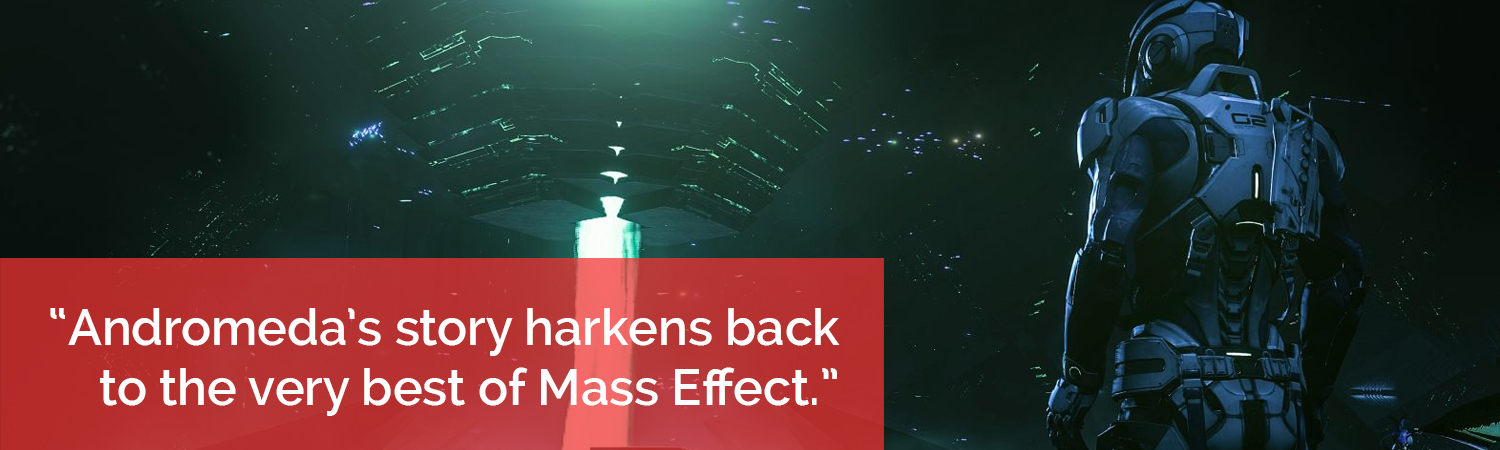
Those lured into the franchise by its likeable characters and their interactions will be pleased to hear that Andromeda is no different. At first, it’ll be hard to forget the greats like Garrus, Thane, Liara and Wrex, but you’ll slowly grow with these new guys just as you did with the original crew of the Normandy. It’s interacting with them and the many denizens of Andromeda that really brings things home – whether it’s moments of galactic, political intrigue and negotiation or bittersweet discoveries, Mass Effect Andromeda’s story harkens back to the very best moments of the original Mass Effect. This feels like a Space Opera again.
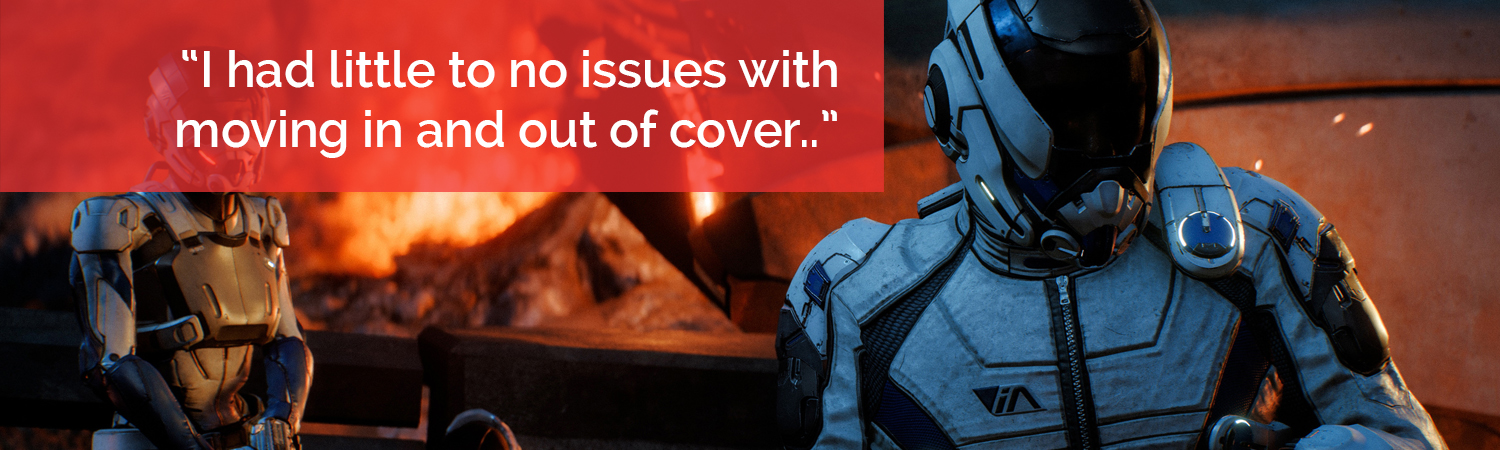
It’s a trend that most games are incorporating, but one that feels right at home given Andromeda’s emphasis on both action and exploration. Cover has changed too, with your character automatically hugging cover when near an object. Some players may find frustration in not being able to assign this action to a button and be in control of it, though in my play of the game I had little to no issues with moving in and out of cover (even if it was a bit strange to get used to initially).
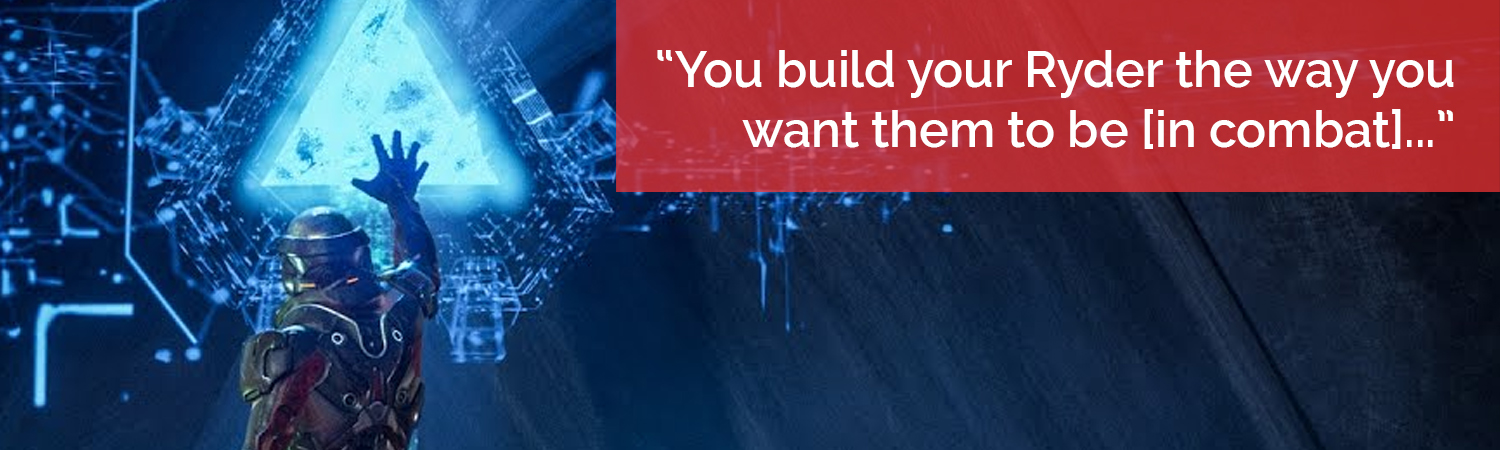
Profiles change the way your character behaves, usually augmenting the skills you favour with your experience points. Spending mainly on Tech skills? The engineer profile will make those abilities more powerful, as an example. Such a system feels like a great leveraging of the depth of Mass Effect 1’s skill system with the streamlining of Mass Effect 2 and 3, but with the freedom that Andromeda is so keen to provide as an experience.
This decision feels like a baffling dumbing down of the system that has remained largely prevalent through the original trilogy’s changes in design. But for some reason in Andromeda it’s entirely absent, which is perplexing at best. You can switch between “loadouts” you create yourself, but this is slightly more cumbersom than just having the bulk of your powers appear on a power wheel.
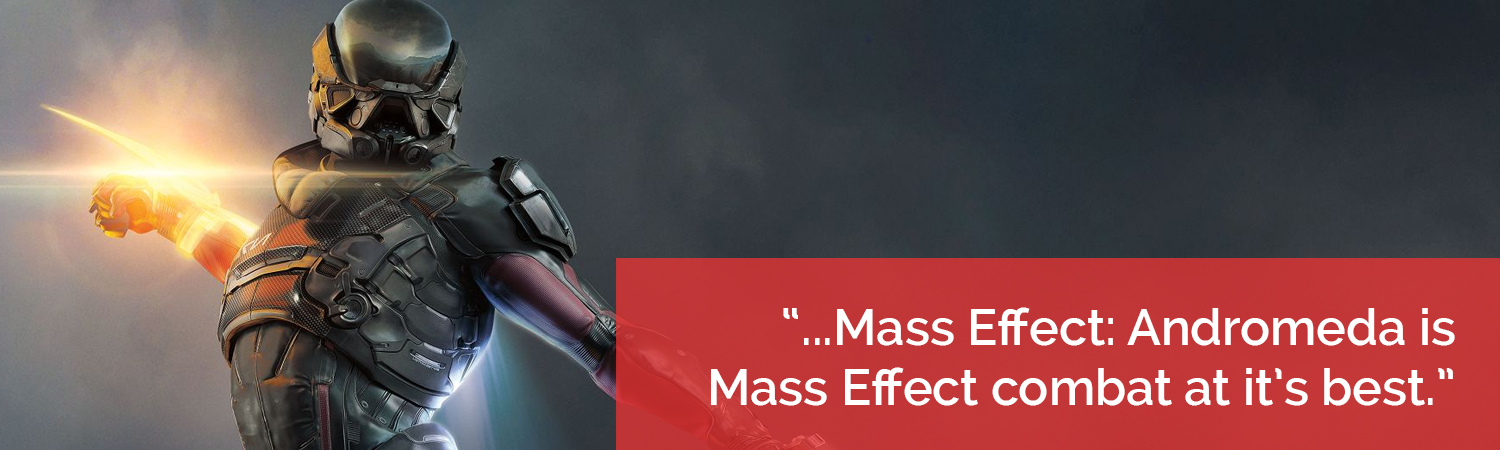
Despite these shortcomings, Mass Effect: Andromeda is Mass Effect combat at its best. It’s fast, it’s frenetic, and it’s incredibly smooth. It’s fun to work out how powers interact with one another to create some devastating combos
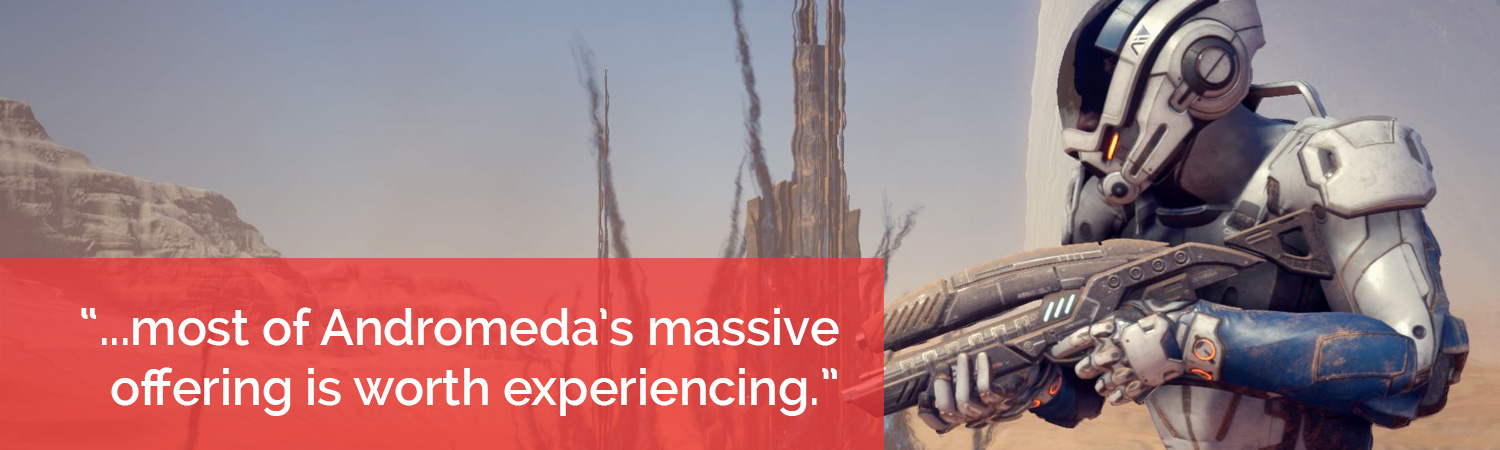
The resounding question that most BioWare fans are asking is just how much Andromeda borrows from its cousin, Dragon Age Inquisition. In short, the design is influenced by Inquisition, but most of the cumbersome fetch quests and incessant menu browsing that made Inquisition such a slog has been refined or removed in Andromeda. There is the odd side quest here and there that is typically “MMO” in design, but most of Andromeda’s massive offering is worth experiencing.
There are just so many stories waiting to be told here in both the main quest and side content, which is why Andromeda feels like such a generous offering – so much so that I’d estimate that most seasoned players would take at least forty or so hours (probably more) to see everything that the game and its many worlds has to offer. But what’s great is the the diversity of the stories told – companion missions improve the performance of your team in battle but also provide great character building moments. Whether it’s happy, sad, jubilant or sombre, there’s a wealth of emotions in the game’s writing that feels right at home in Andromeda.
On the other end of the spectrum, the character models are wildly inconsistent – some look amazing, while others lack detail. Such problems are only exacerbated by poor animations and dead, lifeless stares during key dialogue scenes. These problems have never been truly game breaking for me personally, as much of these issues plagued the original trilogy of Mass Effect games as well. However, given that no improvements have been made, it is a disappointing shortcoming.
Mass Effect: Andromeda manages to successfully bring back the sense of exploration and discovery that fans have longed for since the original Mass Effect, whilst honing and improving the already enjoyable combat mechanics of Mass Effect 3. The result is something truly special – a metaphorical slow burn, a hybrid that is sure to appeal to fans of both the original game and its flashier sequels. Despite this, Andromeda is hampered slightly by its lack of visual polish and presentation, which can kill the wonder and fantasy as quickly as it builds it.
The Xbox One version of this game was played for the purpose of this review. You can read our review policy HERE.