

Press Start may receive a commission when you buy from links on our site at no extra cost to you.
It’s been a long five years since PRAGMATA’s original 2020 reveal. A game meant to launch only 2 years later would be subject to no less than three delays, and even one instance of the release date being moved forward. After all this time, PRAGMATA is finally here, and it’s perhaps one of CAPCOM’s most unique experiences yet. Its numerous complexities make it clear why its extended development timeline was necessary, and while it doesn’t deliver on all fronts, it more than makes up for it in the areas that matter the most.
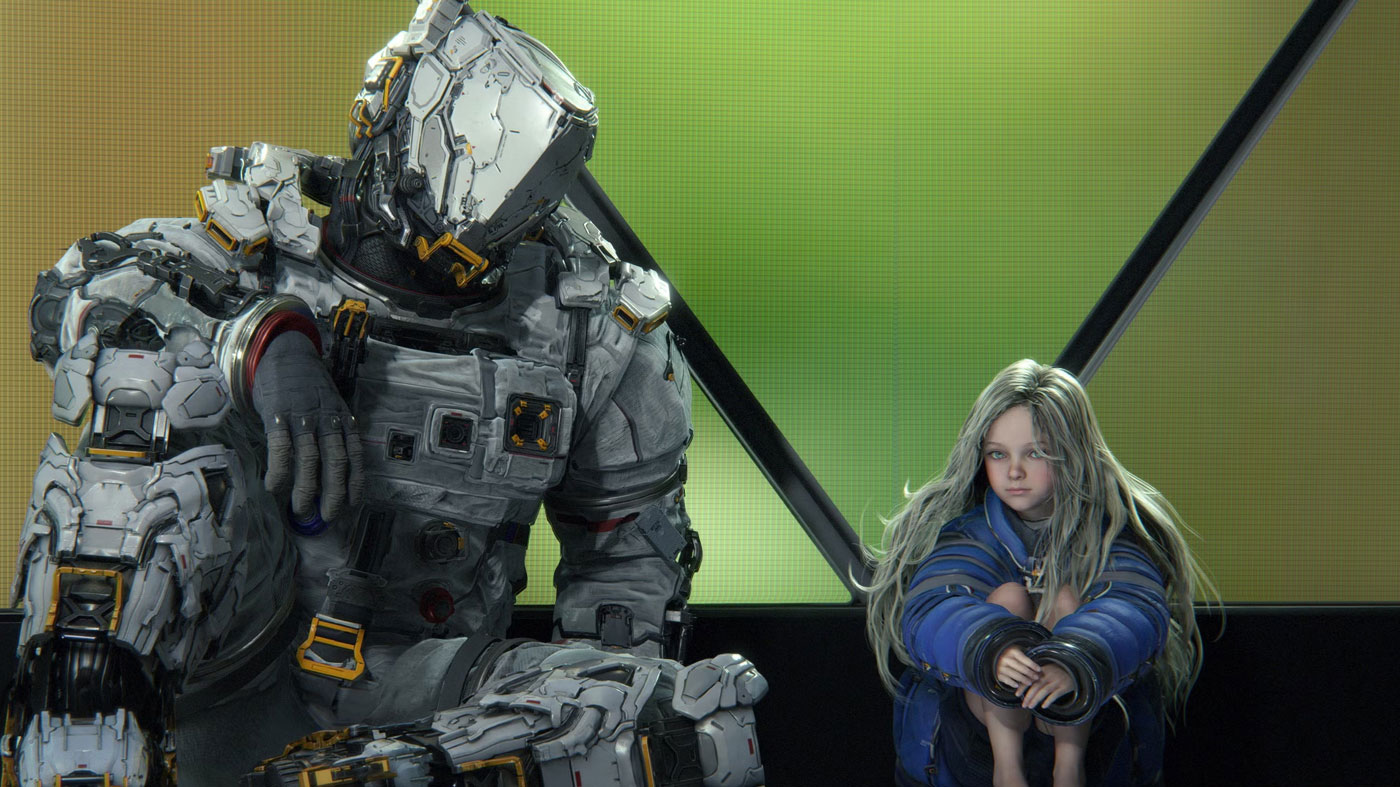
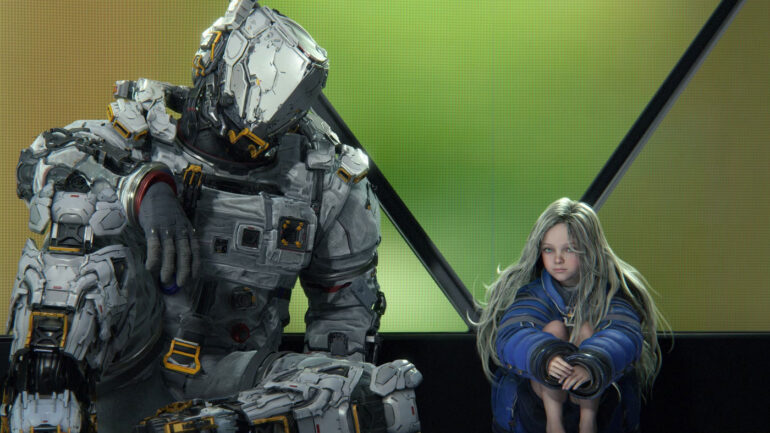
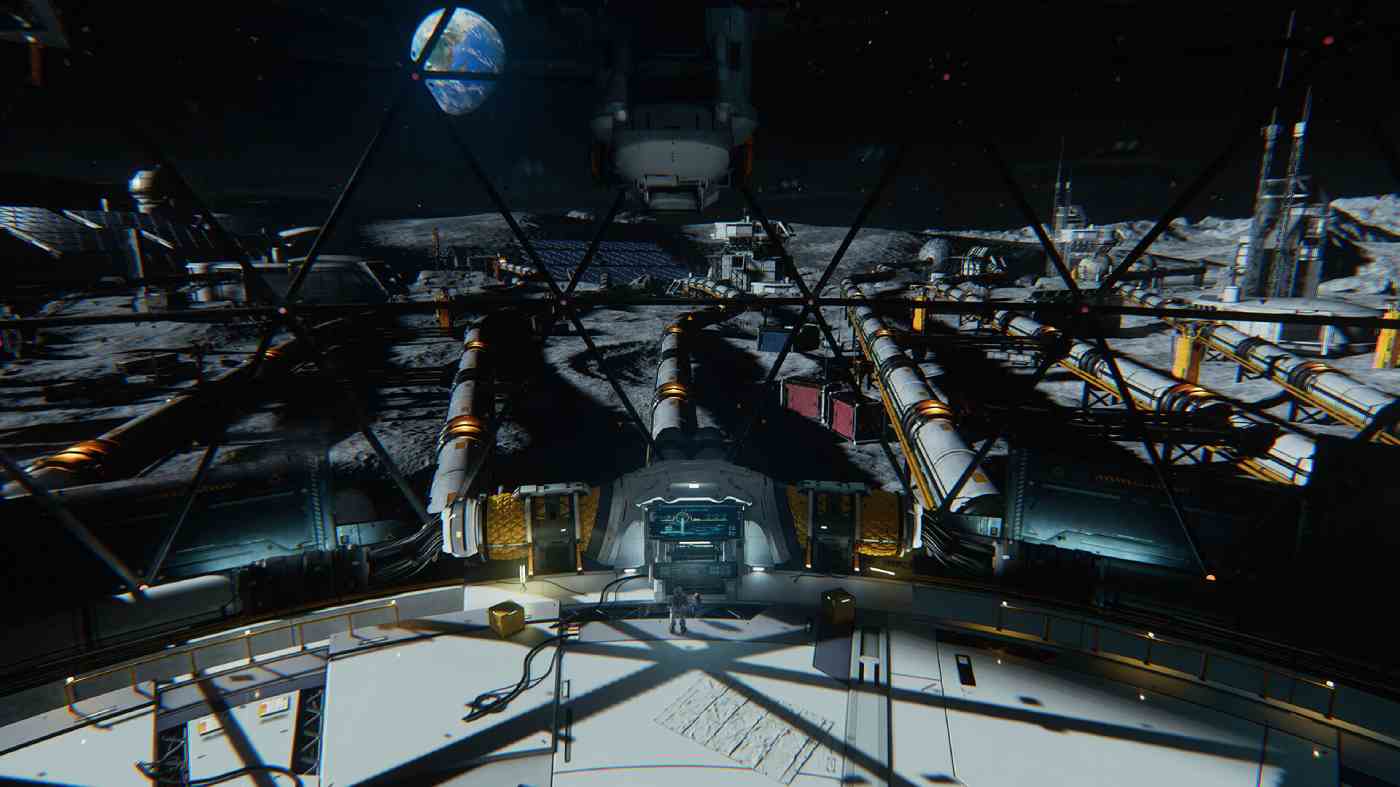
PRAGMATA has something of a dual-protagonist setup – following Hugh, a system auditor dispatched to investigate a seemingly abandoned lunar research station, and Diana, one of the many remaining androids on the moon. Unlike many of the other bots that wander desolate halls and empty labs, Diana is designed to look and function like a human, creating something of a father/daughter dynamic between the duo. The two find themselves targeted by IDUS, another AI governing the entire station, which has gone rogue. With no path forward and mechanised dangers lurking around every corner, Hugh and Diana search for a way off the station while uncovering what happened to its inhabitants.
This setup and initial set dressing do a great job of establishing the overall mood and tone of PRAGMATA. I was fully on board with this premise in its opening hours, but I feel that PRAGMATA never really finds its footing in the narrative department. There isn’t enough time spent fleshing out the relationship between Hugh and Diana in any meaningful way. Sure, they have a few nice moments, but I felt generally apathetic due to some pretty weak characterisation, especially when it comes to Hugh.
Much of what happens here is fairly forgettable. Even PRAGMATA’s most pivotal plot moments feel predictable, robbing them of any real narrative revelation. There’s a good chunk of time also spent on what happened to the lunar research station and its original purpose. While I think it’s broadly satisfying, it feels like it sits in the background as you uncover story beats through holograms and data entries. It’s very clear what kind of story CAPCOM wanted to tell here and the impact they wanted it to have, but it just didn’t land for me by the time credits had rolled.
For what it’s worth, I did get a lot of enjoyment out of watching Diana grow. Her childlike curiosity and bubbly energy are infectious, and both contrast nicely against Hugh’s more nihilistic worldview and gritty personality. She’s endearingly naive, eager to learn, and prodding at Hugh about current events or what life is like back on earth. It’s especially heartwarming to see her play with collectible toys you can find throughout the station, or when she brings Hugh a drawing she’s clearly worked very hard on.
This relationship dynamic is also foundational to PRAGMATA’s gameplay. While you primarily control Hugh in combat and exploration, Diana’s links to the station as an android allow her to hack various devices and even the rogue bots that IDUS sends after you. Aiming at something hackable will bring up a grid, which can be activated by holding the hack button. You can then navigate the grid as a quick puzzle, passing through nodes to reach the end of the puzzle and activate the hack. It sounds one-note, but the way this is all implemented in combat is genius.
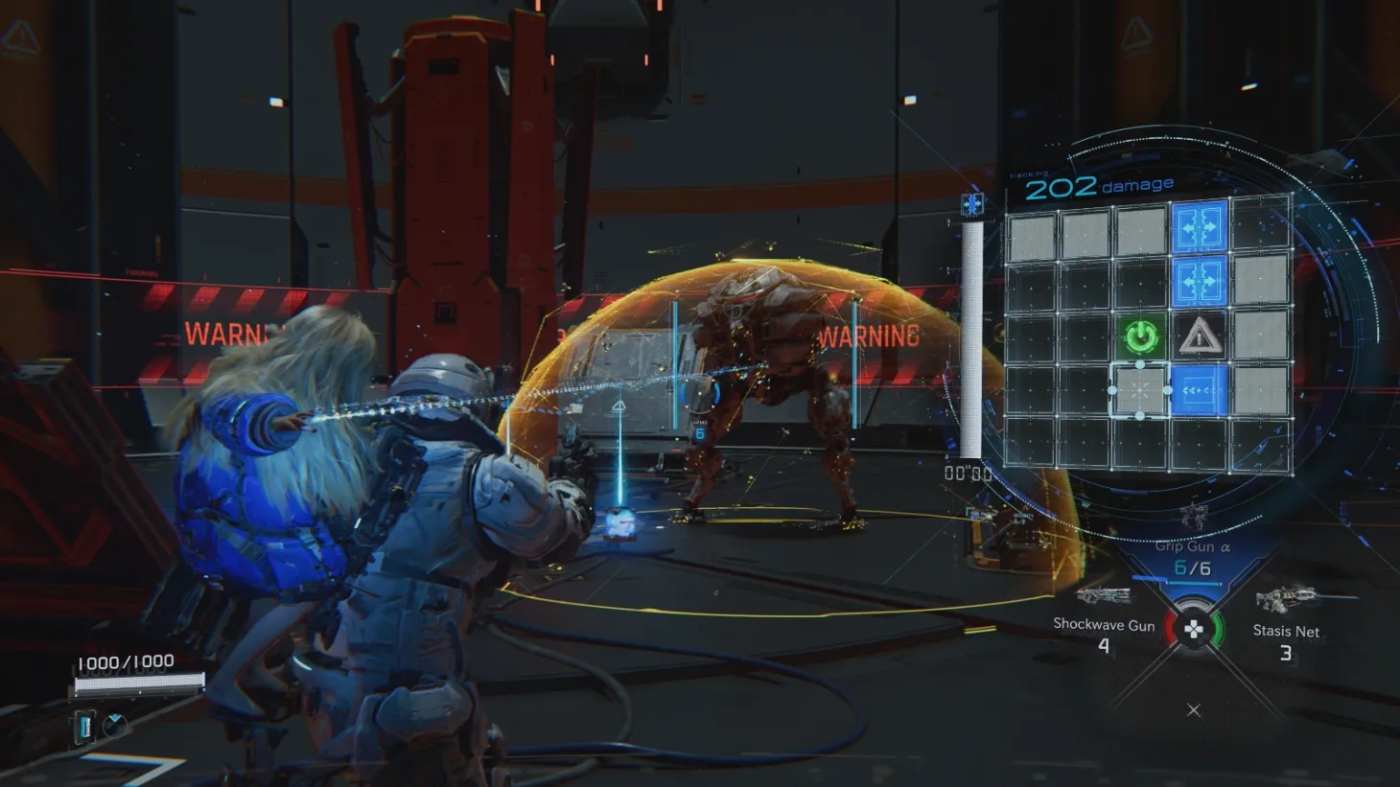
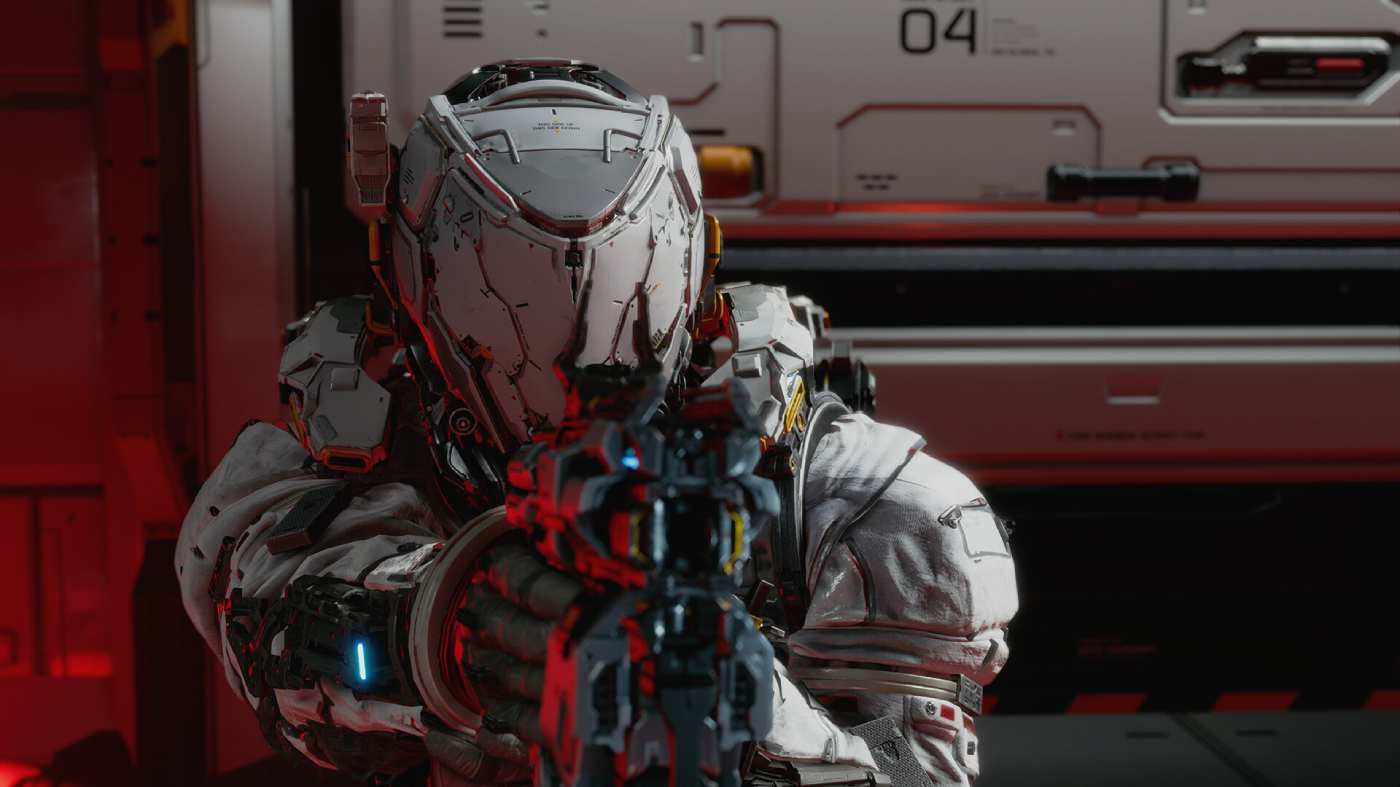
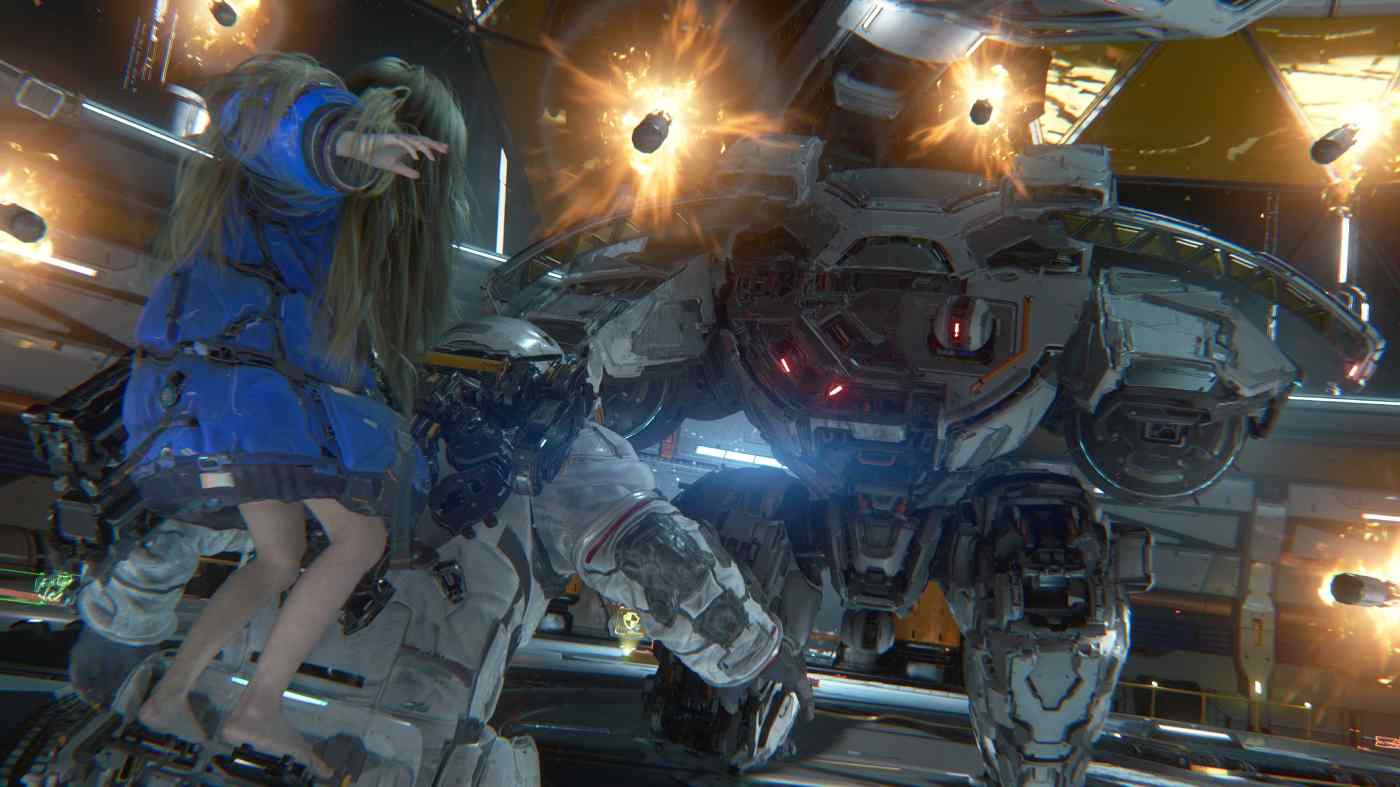
Hugh is a fairly capable action protagonist, but the station’s many robots are all heavily armoured and resistant to Hugh’s primary weapon, the Grip Gun. It’s only through hacking with Diana that you can compromise these bots, opening them up and exposing their intricate insides for big damage. It’s a straightforward loop when there’s only one or two adversaries, but it’s when the game throws you into arenas with numerous enemies that it really puts you to the test.
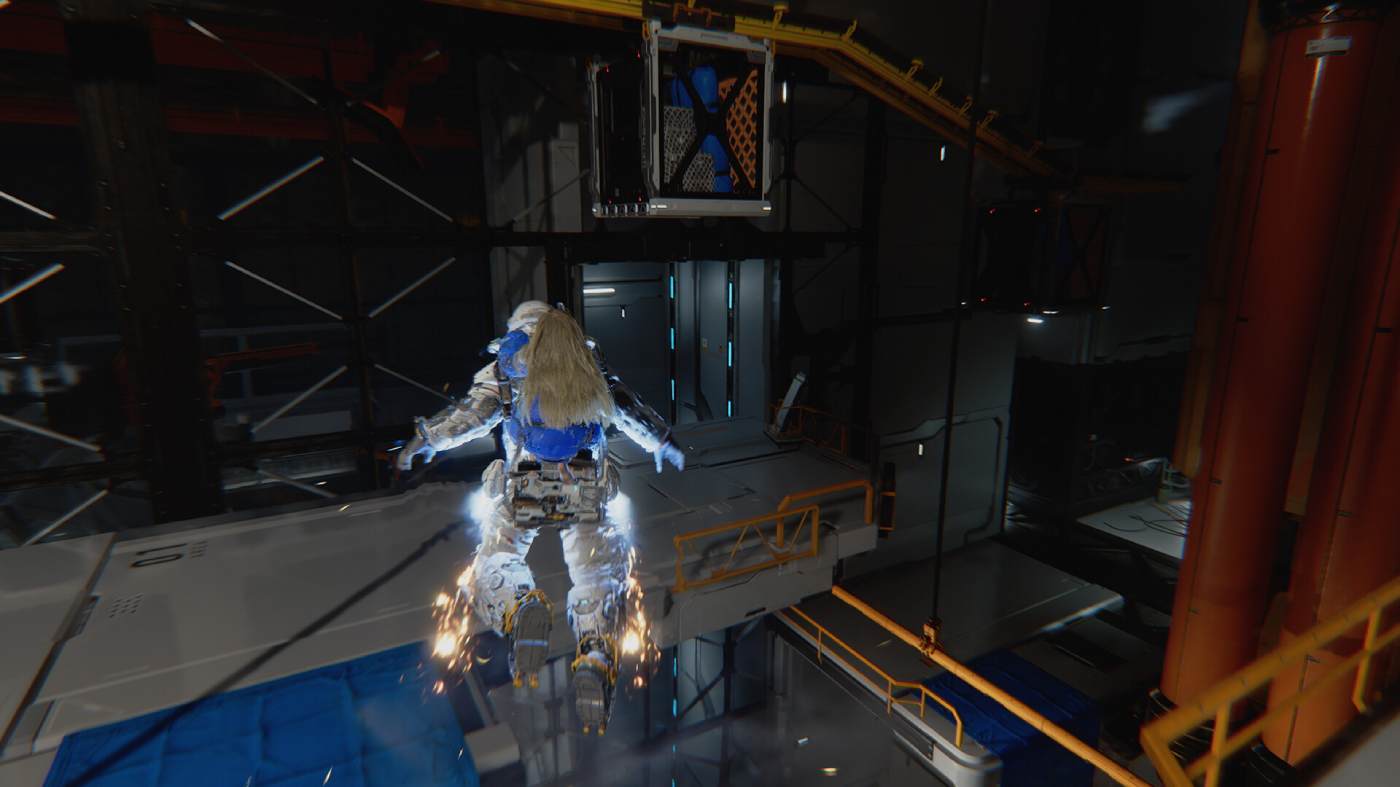
It’s an exercise in resource management, crowd control, and target prioritisation. Hugh’s bulky space suit is made nimble by thrusters that allow for quick dodges, so you’ll often dart around the battlefield while trying to hack an enemy. You can also unlock the ability to perfect dodge, causing a time slowdown, and overheating bots through damage and hacks will leave them open to a flashy and powerful attack.
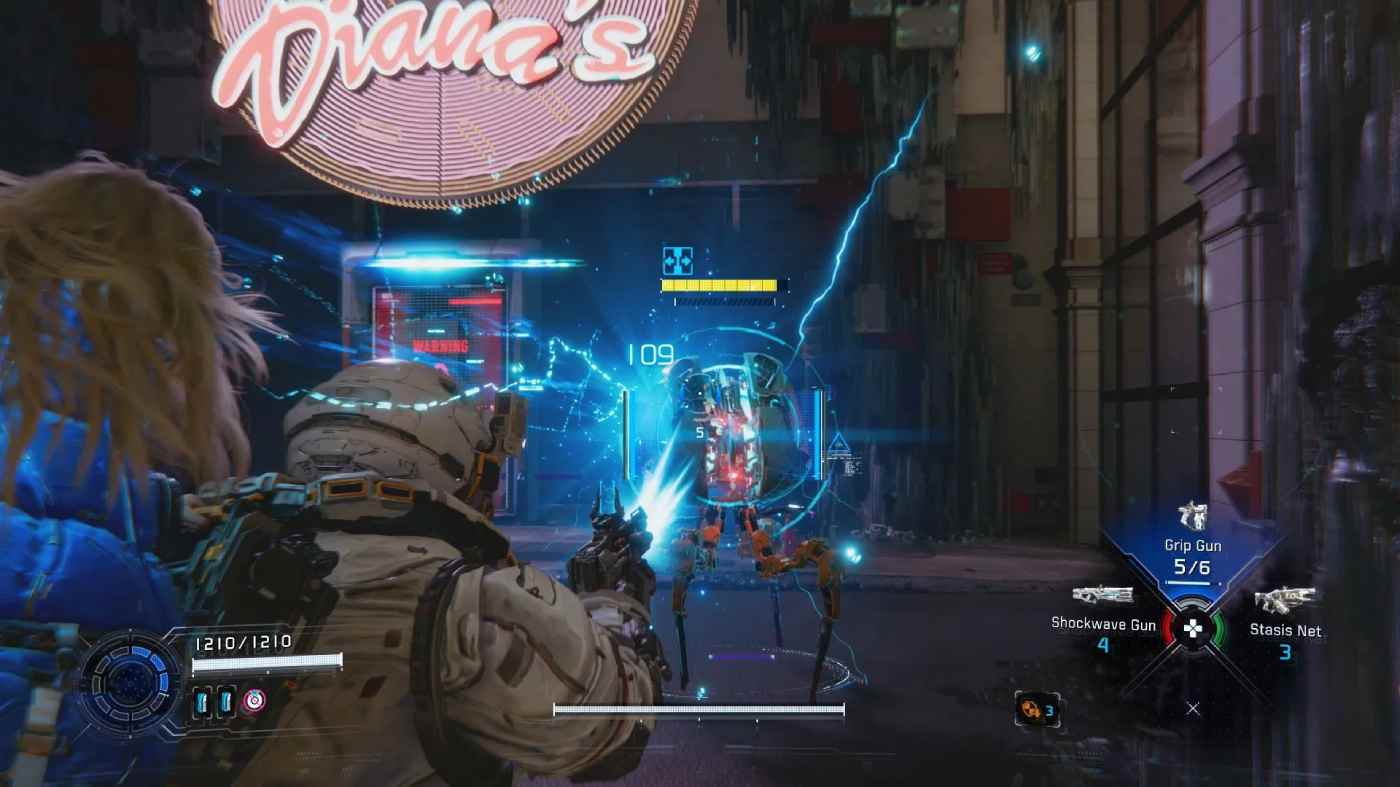
To aid you in all the chaos, you’ll need to make the most of consumable weapons called Units. Units come in different flavours – Attack Units deal heavy damage, Tactical Units provide some sort of crowd control or utility, and Defense Units either distract the enemy or mitigate damage. There are a few to choose from in each category, but once the ammo is used up, the Unit is discarded.
Hacking Nodes are the other piece of this resource management puzzle. These are nodes that populate Diana’s hacking grids, empowering your hacks if you pass through them on the grid. As you activate these nodes, you’ll slowly drain their usage, eventually depleting them. These are also quite varied in their applications. Where the Multihack Node will apply your hack to multiple targets, the Confuse Node will cause enemies to attack each other.
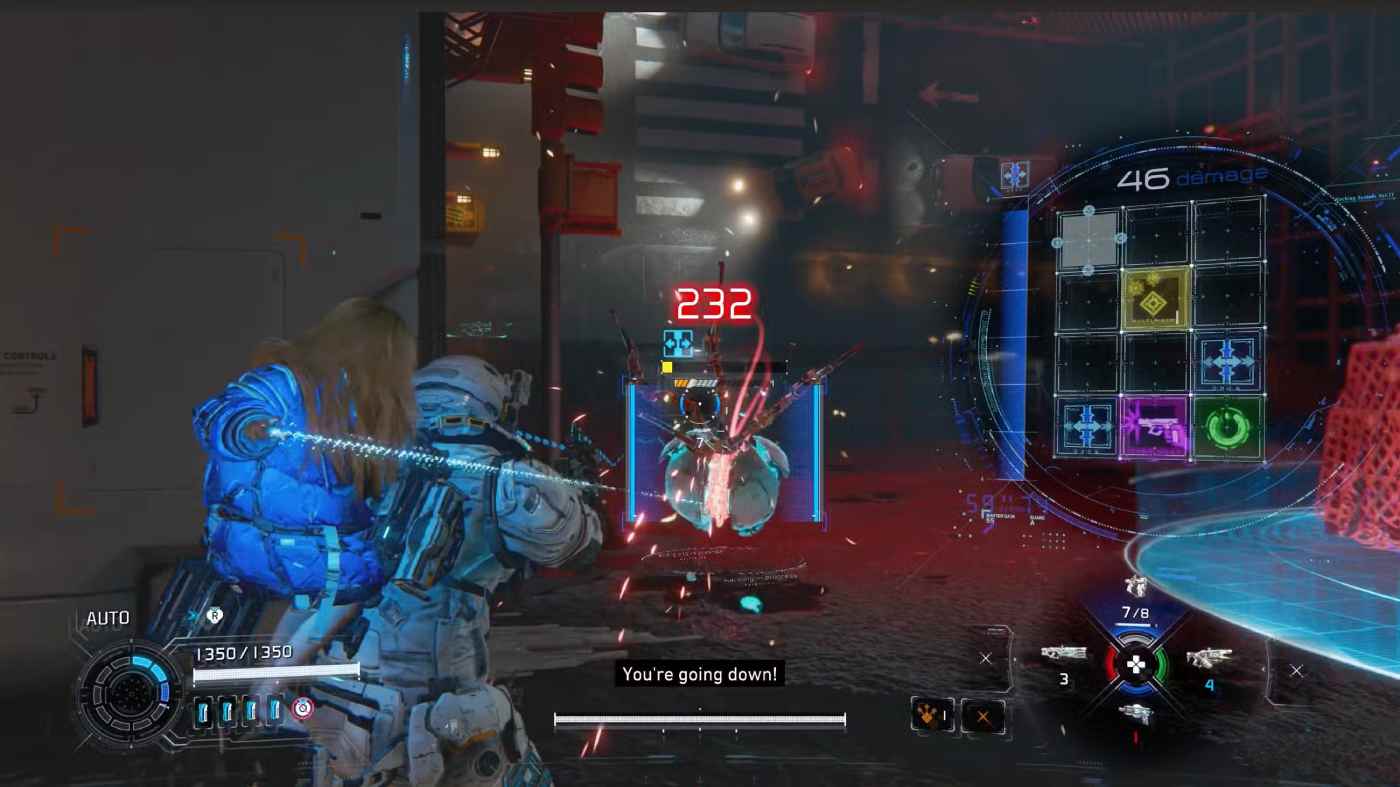
When you combine these things, you can create some pretty lethal combinations. Juggling these consumable weapons and nodes in large arenas is immensely satisfying. It’s designed in such a way that you’ll quickly get into a flow state, darting about the arena as you swap between weapons to manage and obliterate enemies. Combat especially shines in optional Red Gate rooms, where enemy variety is taken full advantage of, and also in its thrilling boss fights.
BIG W has the best launch price for $89
While combat is aplenty here, there’s also a fair bit of exploring to do. While PRAGMATA’s zones are linear, venturing off the beaten path is frequently rewarded. You can find Lunafilament, Upgrade Components, and more to improve Hugh and Diana’s capabilities. You can also upgrade each of the Hacking Nodes and the different Units to heighten their efficiency on all fronts.
This is all done within the Shelter, a sort of hub area that you’ll frequent as you explore the station. You’re incentivised to come back here often, as healing is relatively sparse in PRAGMATA. Hugh starts with a few Repair Cartidges that recover lost health, but there’s no way to get these back without returning to the shelter. There are frequent checkpoints in the form of escape hatches, but it does add a degree of tension to exploration, because dying sends you back to the Shelter.
I do wish a little more had been done with this system, though. There isn’t any real punishment for getting greedy and pushing further into the zone you’re exploring. There’s no threat of losing progress or collected currencies, so it ends up being a hassle more than anything else as you’re forced to travel back to wherever you died when it could’ve just respawned you at the start of the fight.
This is further exacerbated by enemies respawning each time you leave a zone. It feels like there was meant to be something more going on with this system that didn’t make the cut. There’s no real reason that the aforementioned escape hatches couldn’t have been turned into checkpoints with the ability to upgrade and restock. It ends up contributing nothing to the overall gameplay loop and ends up feeling like a hassle more than anything else.
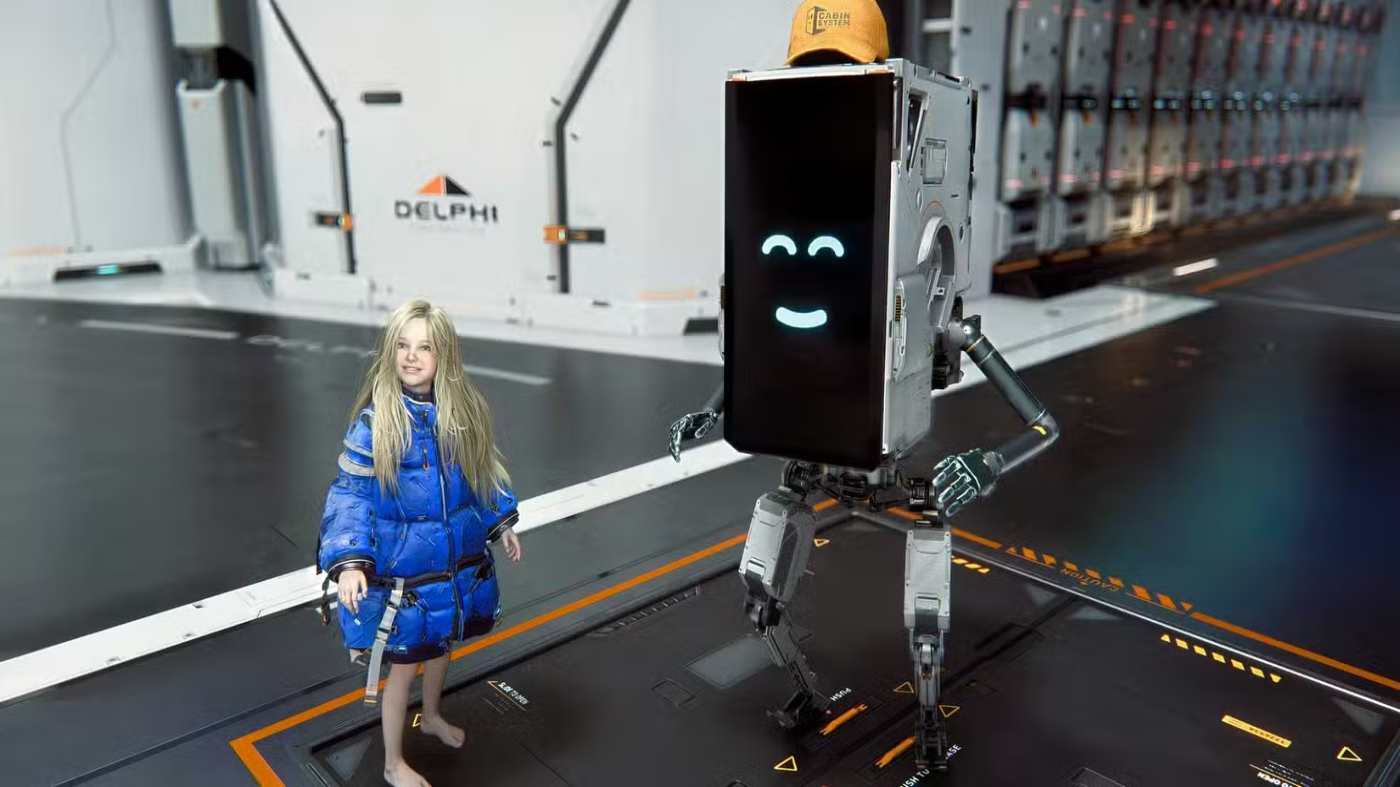
The Shelter is also home to Training Simulations, which can be completed to earn resources and Cabin Coins. Cabin Coins are used to play bingo back in the Shelter, often rewarding you with new mods, data entries, Repair Cartridge charges, and even alternate costumes for Hugh and Diana. It’s a good bit of fun to engage with between your ventures into the different zones, and it’s always satisfying to complete a full board.
With all this exploration and optional side content, there’s a fair bit going on in PRAGMATA. While I initially thought the main story would run on the shorter side, it’s a tightly paced 10 hours that bows out gracefully before any of its ideas or systems can get old. For those who want to delve deeper, there’s plenty to sink your teeth into after the credits roll, outside of finding all the collectibles and completing the challenging Red Gate rooms. The complexity of combat also means replay value is quite high, especially when you get into the higher difficulties.
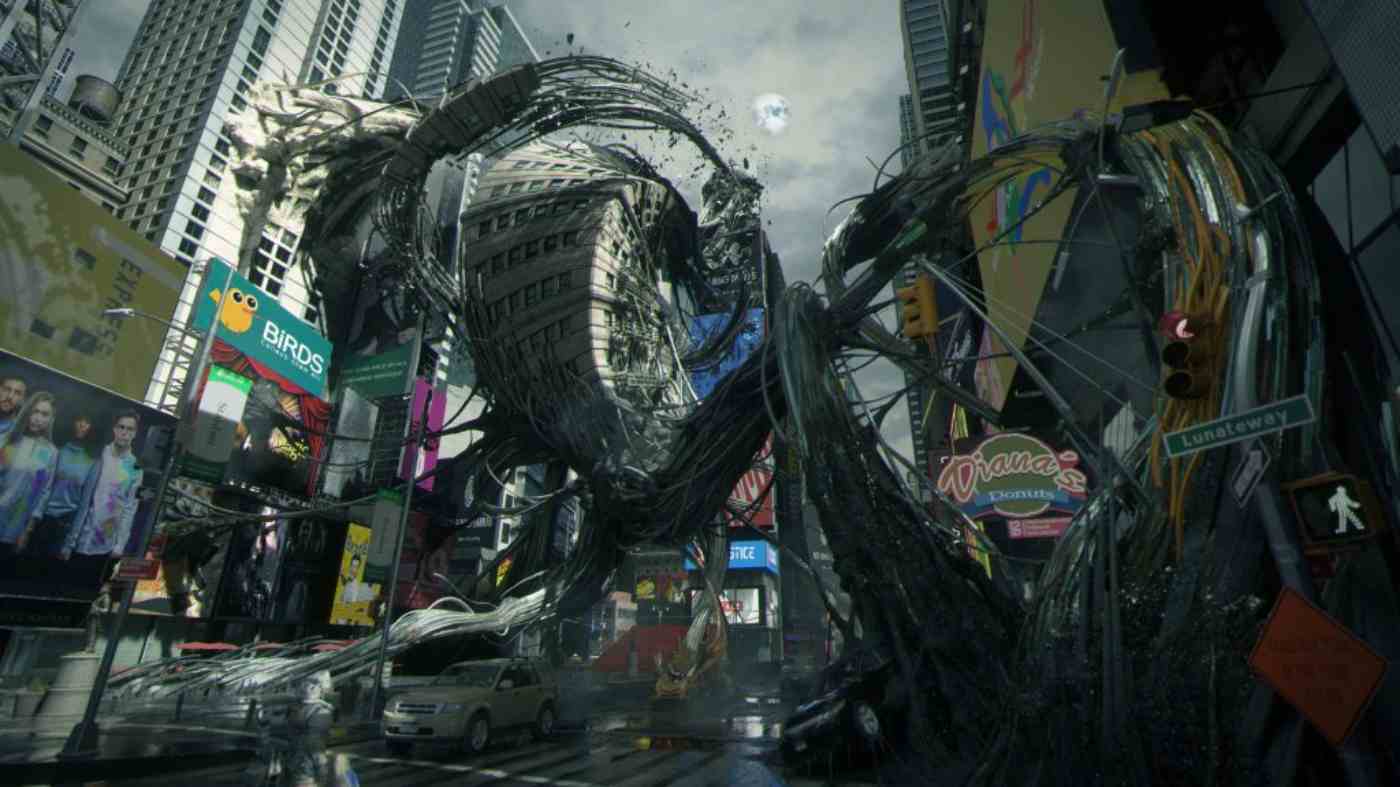
You may also be surprised to learn that PRAGMATA is very visually varied for a setting surrounded by grey moon-dust. This highly futuristic lunar base has been using Lunafilament – a resource mined from the moon – to print unique environments within the facility. You have the typical research labs and production lines, but there’s also a Lunafilament-printed Times Square, an indoor forest filled with lush greenery, and more that I won’t spoil here. It is, unsurprisingly, another fantastic showcase for an engine that just keeps on giving.
Outside of the standard RE Engine hallmarks like hair strands and excellent performance, PRAGMATA also brings with it some truly inspired enemy design. There is a wide array of bots to combat here, but each has a unique visual identity, some of which are genuinely unsettling. Between the level of detail and the way they change once they’re hacked and exposed, PRAGMATA is always offering you something to gawk at.
Despite a troubled development cycle, PRAGMATA is one of CAPCOM’s most unique and inspired projects in some time. It’s blend of puzzle and third-person action in its combat makes for a complex sandbox that encourages mastery in a way that few games do. There are a few half-baked ideas here and a largely forgettable story, but the combat flow and overall gameplay loop is so solid that it’s easy to forget about PRAGMATA’s shortcomings.