



Although Supermassive was able to find success with their episodic Dark Pictures Anthology, with House of Ashes being regarded as far and away the best of the lot, their next title, Directive 8020, marks a shift away from their original plans. That’s despite the title beginning its development as the first in the anthology’s “second season.” Though they’ve kept busy, the break between following the first season’s conclusion has afforded the team time and distance from the last entry to completely disregard their old branding and find a bigger audience for this so-called “fifth” Dark Pictures game.
While their past games have always played around with slasher movie tropes, the bigger picture has generally always nestled comfortably into either folklore or myth. The fact that it has taken them this long to take a dip into science fiction is rather staggering, but Directive 8020 is set to be full of all of that “in space, no one can hear you scream” goodness. Stranded in space, light-years from home, players can only hope to survive against a shapeshifting alien growth in what has been aptly described as “The Thing in space.”
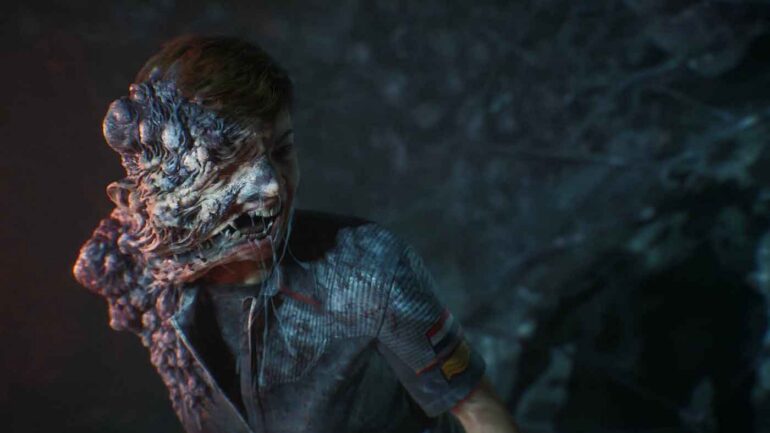
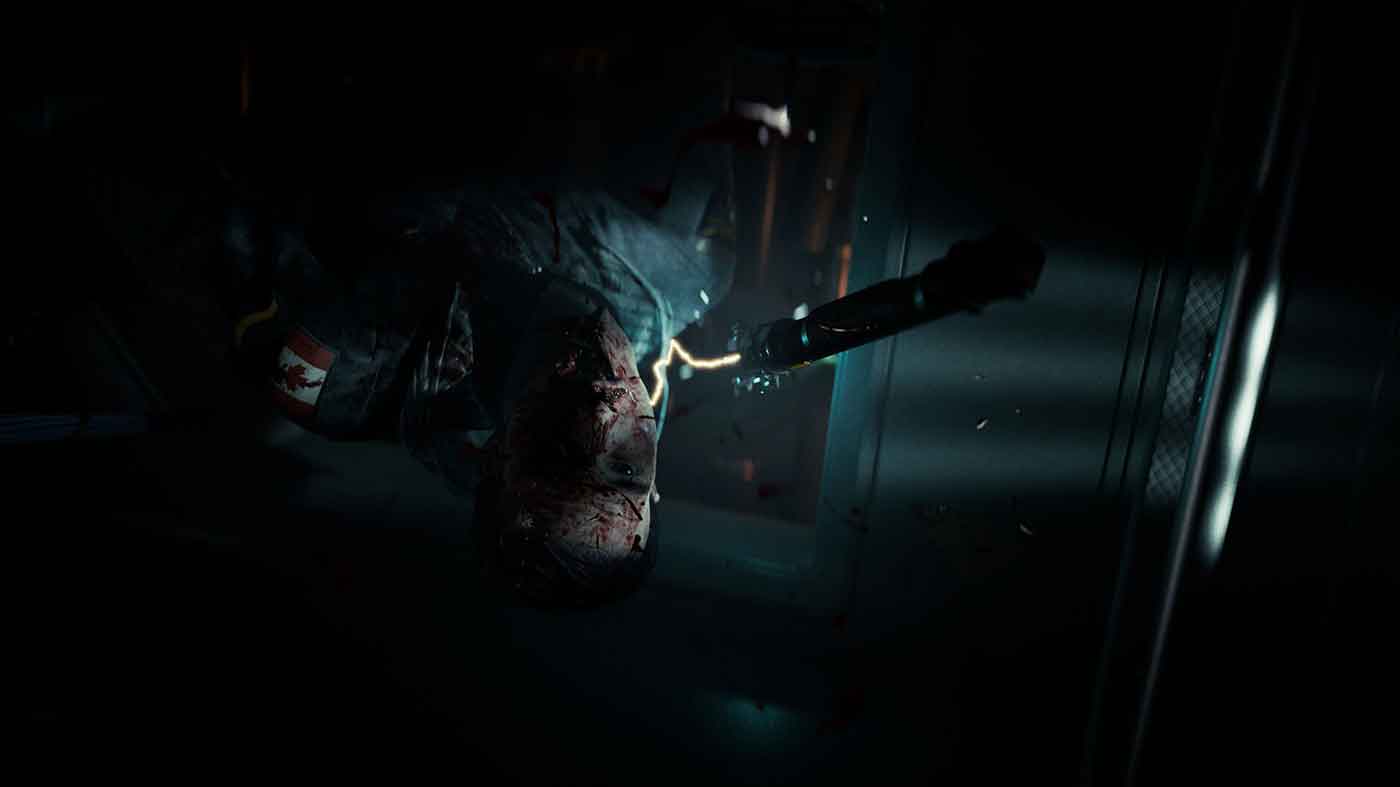
While it’s clear Supermassive has got back to the drawing board in an attempt to evolve their particular brand of interactive horror, this hands-on is a hard one in that it does serve to market the game’s new features; however, the chunk of game they’ve selected, a part of its fourth chapter, lacks larger context, lacks focus, and, most concerningly, it lacks scares. Of course, it’s not for lack of trying, as, at one point, a body tumbles toward you out of a vent with a wretchedly disfigured face. Though if The Thing is an inspiration for this game, and body horror is set to be this entry’s flavour, there wasn’t enough of that.
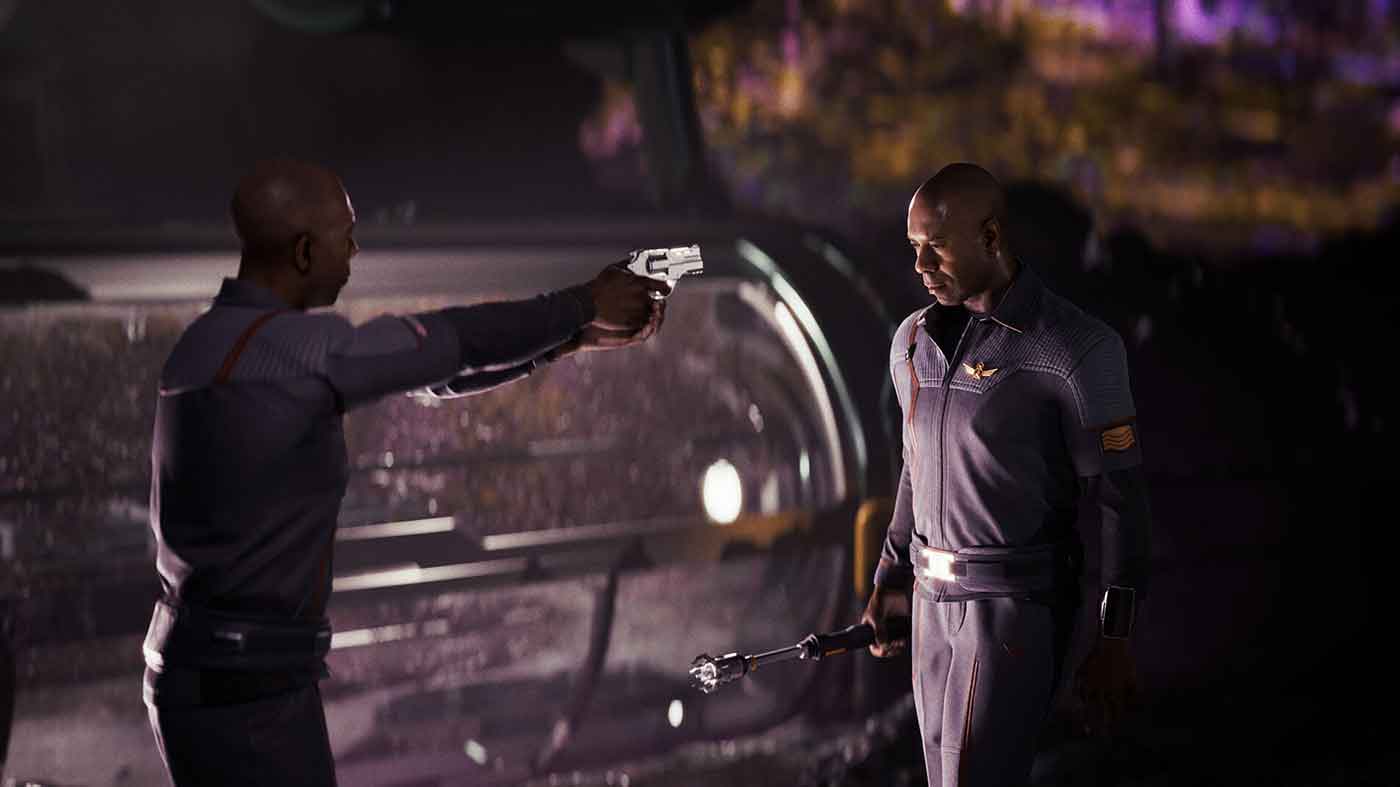
Even the overarching threat, a mysterious celestial organism, falls flat for me in the context of the chapter, as it instead manifests as a humanoid. While I expect it being able to mimic your crewmates to help in creating a tension so red hot, as interpersonal relationships teeter on a knife’s edge as paranoia grips the cast, it isn’t exactly scary or unnerving to have someone in a hoodie, brandishing a riot baton, twitching and swinging on you like a generic city mugger.
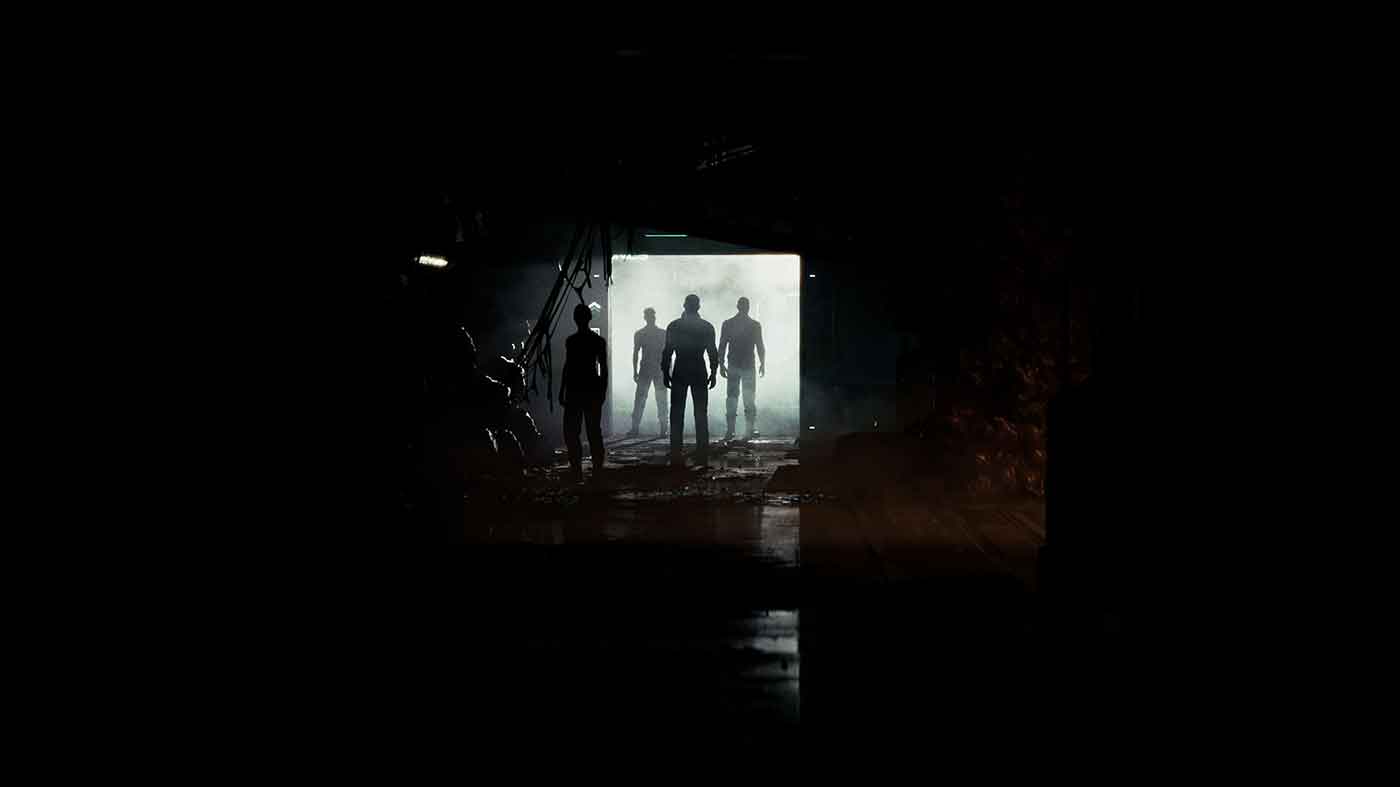
In short, I hope the threat isn’t limited to corridor stalkings and jump scares; I’d love for something a little more cosmic.
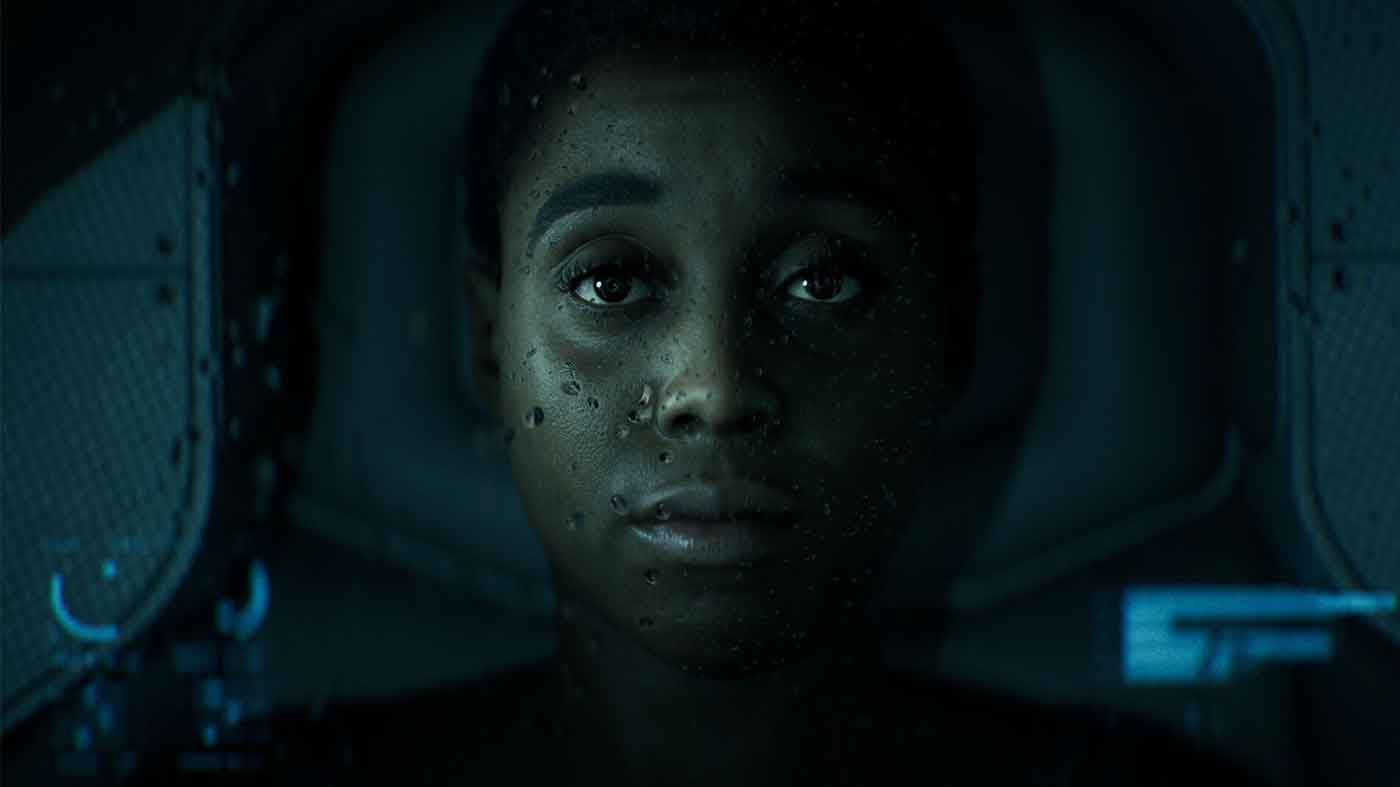
As is usually the case in Supermassive titles, you’ll rotate through the perspectives of five characters throughout a branching narrative. As is commonplace, permutations will emerge throughout nexus points, creating offshoots based on seemingly trivial decisions or deaths within the plot. The cast is led by cover athlete Lashana Lynch, known best for her roles in No Time to Die and Captain Marvel, continuing the developer’s tendency to place a spotlight on emerging stars. Granted, the preview was brief and bounced quickly from character to character, but there was nothing that made me care one way or another about whether this crew made it off the ship or not. The performances, based on what I’ve seen, lack the charisma, cohesion, and chemistry of past casts.
That might be unfairly setting the bar high, given Supermassive alumni have gone on to enjoy award-winning stardom, including Rami Malek and Jessie Buckley.
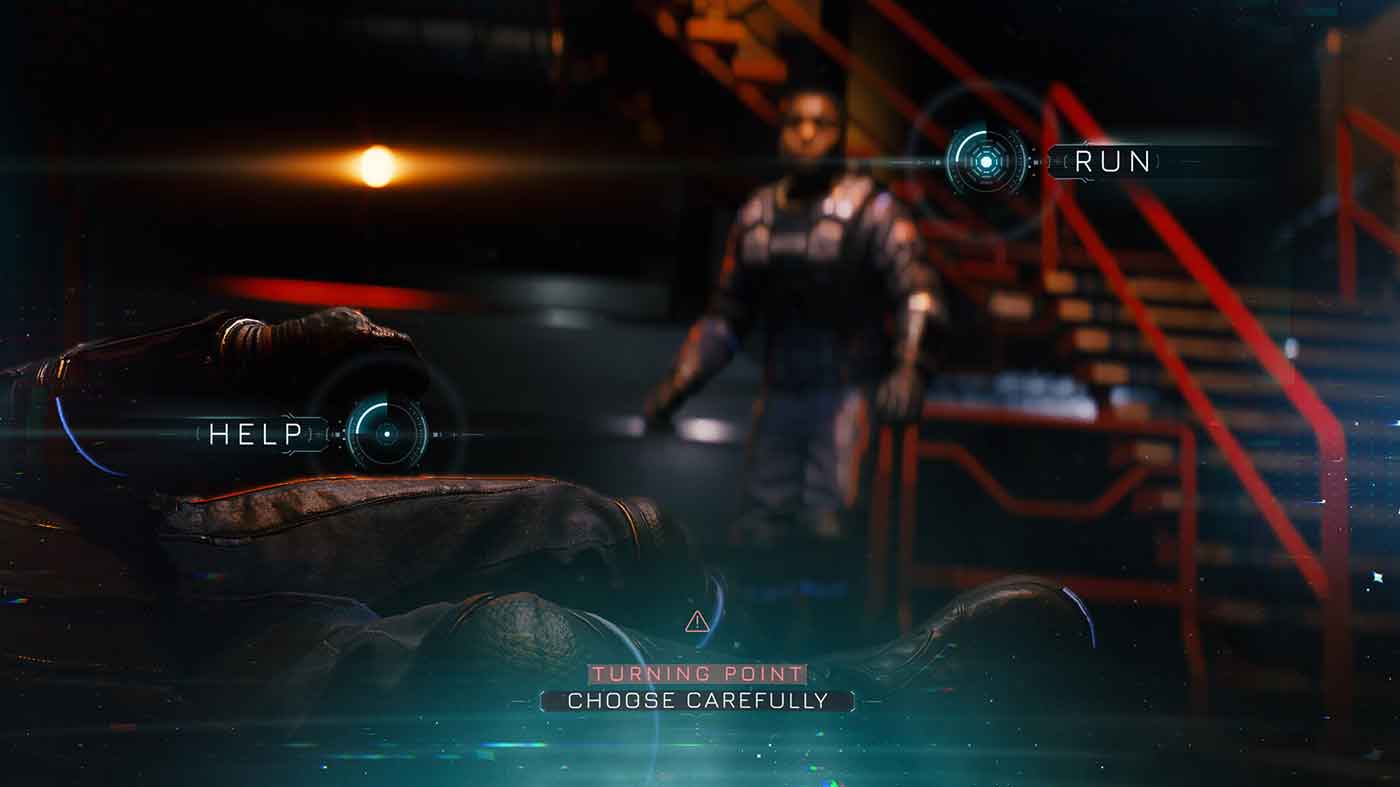
One of the exciting new features in Directive 8020, Turning Points, gives the player unprecedented control over story outcomes, giving them the ability to hit rewind at key junctures to explore the alternate “what ifs?” I think it’s a good move to appeal to the more casual player who might bemoan losing a favourite character in a momentary lapse of judgment. On the other hand, players who revel in the high-stakes, permadeath nature of other Supermassive games can opt for the harder mode that doesn’t allow these kinds of take-backs. I’ve enjoyed it whenever other choose-your-own-adventure games grant similar freedoms, so I think it’s a smart change.
Previous titles have limited themselves to rather basic exploration, minor problem-solving, and snap decisions that might cost a character their life. While all of that is still the case with Directive 8020, the team has included all-new stealth mechanics to even further flesh out that gameplay experience. Of course, these have their own outcomes and story ramifications, depending on whether you’re caught or not, but they’re not incredibly thrilling, and any tension felt is immediately undercut by the other new feature, a scan tool that highlights items or bodies of note, which did tend to remove the mystery of where the stalker might be.
The hands-on, which ran at somewhere between forty minutes and an hour, included two of these stealth sections, and I have a minor concern that they might lean too heavily on it to break up the game’s natural cinematic flow. As solid as the real-time stealth might be, with enhanced character movement and improved control over cameras going a long way to helping with it, I feel as though the new action focus creates a slight tonal clash that doesn’t always mesh with the game’s general horror vibe.
What isn’t at odds with the game’s horror is its setting, the crashed colony ship, Cassiopeia. Most riveting sci-fi horror, whether it’s a film like Alien or a game like Dead Space, invariably takes place aboard an inescapable tin can in the void of space. It’s claustrophobic and, provided the player isn’t funneled through the same cold, clinical walkways and vents, it has potential to be one of the franchise’s more memorable settings.
Outside of the performance capture, which is generally top-notch with the Dark Pictures titles, the Cassiopeia stands tall as the feature piece for a gorgeous suite of Unreal Engine 5 bells and whistles, including path-traced lighting, which creates an eerie sense of place. Another integral feature in any Dark Pictures game is the many forms death can take, and although I expect this game won’t shirk its responsibility to deliver glorious, wet gore, the worst this preview threw at me, aside from the aforementioned victim in the vent, was a brief moment where I emerged from a scuffle second-best and limped away with an eye with all of the structural integrity of a scrambled egg.
While I think the chunk of game chosen to showcase the series’ iterative improvements is rough and probably isn’t the game’s best step forward, the changes made have enormous potential to enrich the overall game experience so that Directive 8020 doesn’t feel like every other game that preceded it. I do have some concerns regarding the game’s big bad and whether they’ll be reduced to a manic stalker mimic for eight hours, the game’s pacing and how prevalent stealth might be, and the likability of the cast itself, but, as a whole, I think Directive 8020 is doing interesting enough things to stay fresh within the interactive-horror space that Supermassive helped define with Until Dawn.