




Press Start may receive a commission when you buy from links on our site at no extra cost to you.
It’s been a big year for the Ninja. Ninja Gaiden 2: Black brought the series back in a big way, paving the way for a brand new game in Ninja Gaiden 4. Even more recently, The Game Kitchen brought back the classic Ninja Gaiden in the incredible Ninja Gaiden: Ragebound. But almost two years ago, SEGA also threw its hat in the ring with a whole bunch of properties making a comeback in a big way. The first of these games, at first glance, looks like a classic Shinobi game. But Shinobi: Art of Vengeance is so much more – it’s an excellent action game that pays remarkable homage to Shinobi’s past while bringing together all of the advances in modern 2D platformers. It’s fast, it’s hard, and it’s incredibly satisfying.
However, to bring things down, we need to start by discussing the plot. Perhaps the weakest aspect of Shinobi: Art of Vengeance is that the plot is incredibly pedestrian and really only serves to move you from level to level. It’s a fairly typical story – the leader of the Oboro clan, Joe Musashi, returns home to find his village burnt to the ground. The culprits, the ENE corporation, led by Lord Ruse, claim full responsibility. Seeking revenge for those he’s lost, Joe sets off on a path to topple the ENE empire and get revenge. It’s a simple story with minimal surprises, marred by some jarringly empty voice work for the game’s colourful cast of characters.
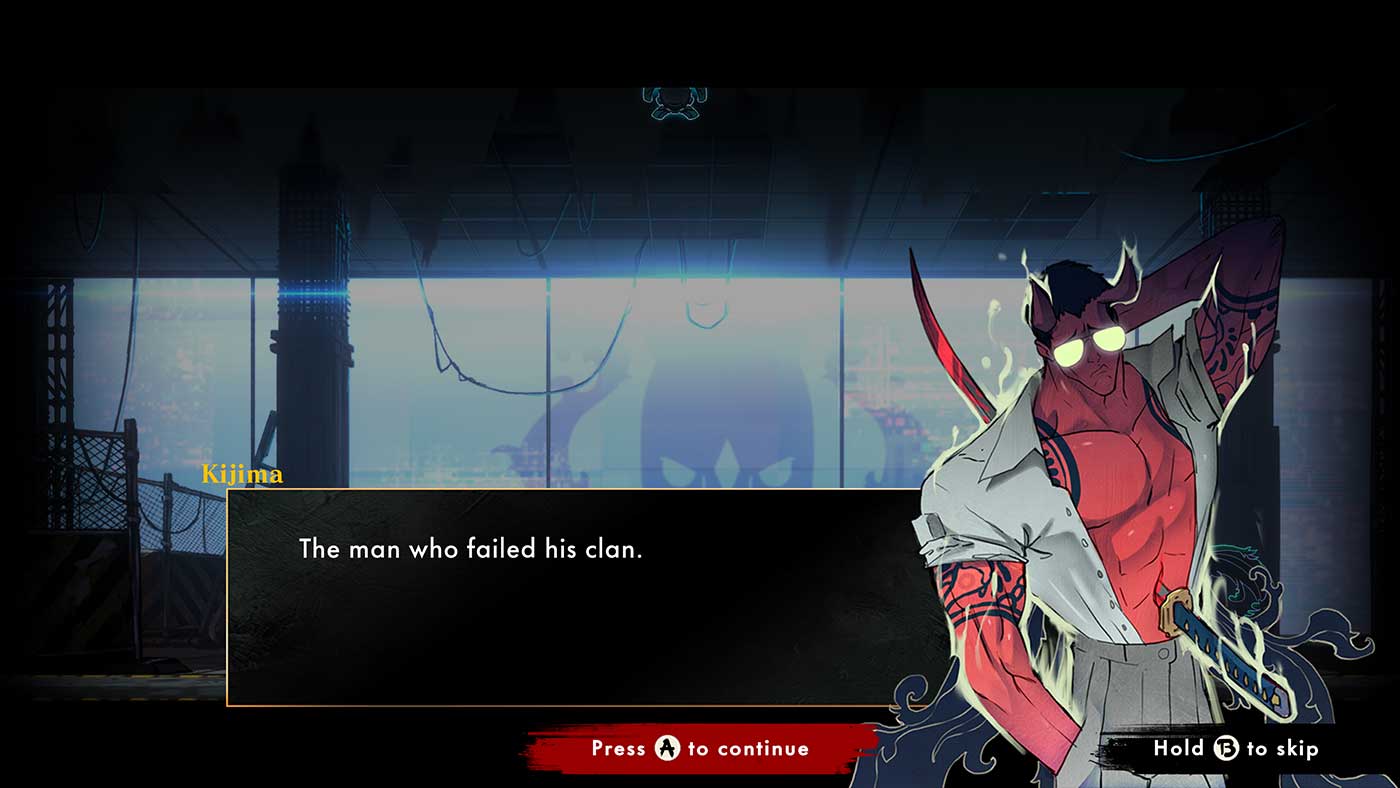
Thankfully, the ho-hum plot is genuinely the only bad aspect of Shinobi: Art of Vengeance. The game itself plays like a hybrid of the old Shinobi games, many modern platformers, with some light elements of Metroid sprinkled in. Structured by levels, each level has a primary path for you to get through, with a boss to defeat at the end of each. Enemies no longer die in one hit, like the previous 2D Shinobi games, but the combat system has been juiced up to play like a modern action game to compensate.
From the moment you control Joe, he feels like his older counterparts. He can walk, run, slide, jump, and double jump, and eventually gain access to other abilities that aid in traversal. It’s essential that a game of this ilk gets the movement right, and thankfully, Shinobi does just that. It’s a fast and responsive game to play, and in a game where pixel-perfect platforming matters, it’s good to see the team get the basics right here. It’s even better when you unlock new abilities and get to zip your way around levels in a way that you couldn’t previously.
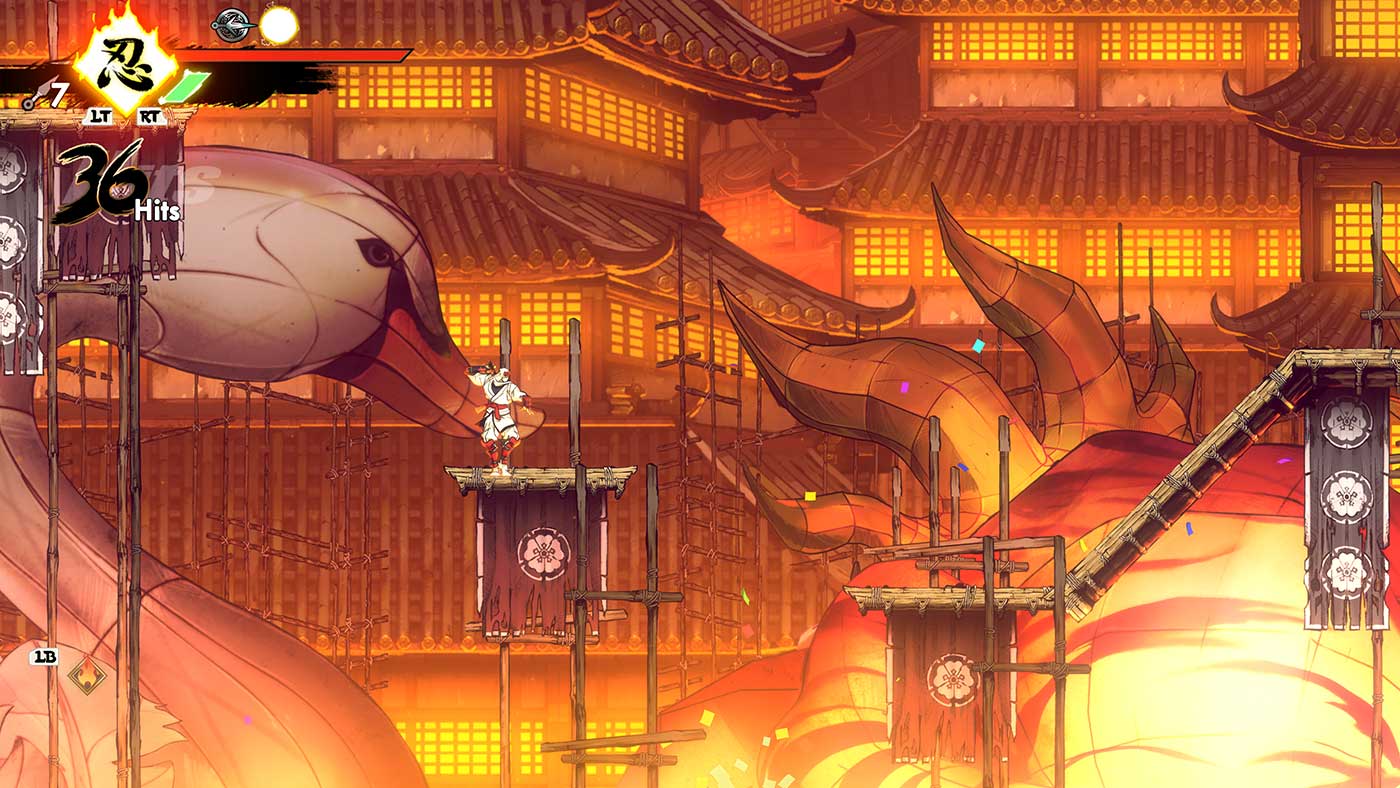
Where Shinobi differs most from its predecessors is in how it handles combat, though it’s hardly a bad thing. While the trademark kunai are still an option – and almost essential for min-maxing your damage output-most of Joe’s attacks revolve around his sword. You have both heavy and light attacks, with different combos coming out depending on the combination you input. You can even juggle your enemies and, with the help of a handy evade mechanic, can reposition yourself and attack almost infinitely if you’re crafty enough. This is where Shinobi feels most like a marriage of the 2D and 3D games, and, again, once you unlock more abilities, it can be fun to literally play with your enemies on the ground and in the air with the right string of attacks.
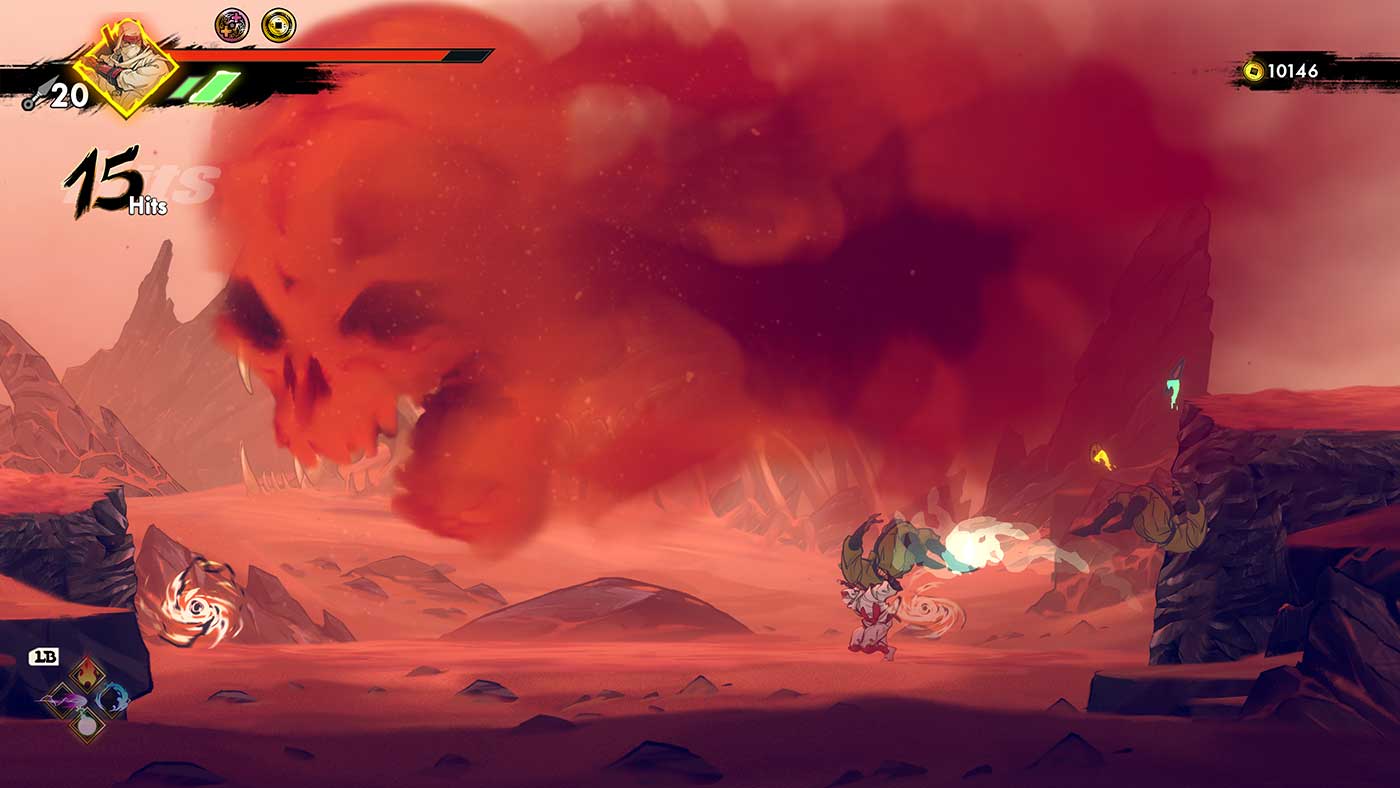
The depth of the combat comes from everything else surrounding it. Joe has access to a whole bunch of magic abilities, called Ninpo, as in previous games. There are also amulets that activate a buff when you hit a certain number on your combo meter. These encourage precise and careful play as getting hit resets your combo, but it’s the way the game uses the now ubiquitous stagger meter that sets Shinobi apart from other action games like this. Certain moves will build up stagger on certain opponents, while others might deplete their armour faster. A full stagger meter, however, can mean Joe can pull off a flashy execution, which kills everyone on-screen with a full meter. It feels perfectly balanced – not too cheesy to be a crutch, but at the same time not too difficult to pull off that you’ll never bother. It’s essential to master these techniques to navigate some of the more formidable challenges the game presents.
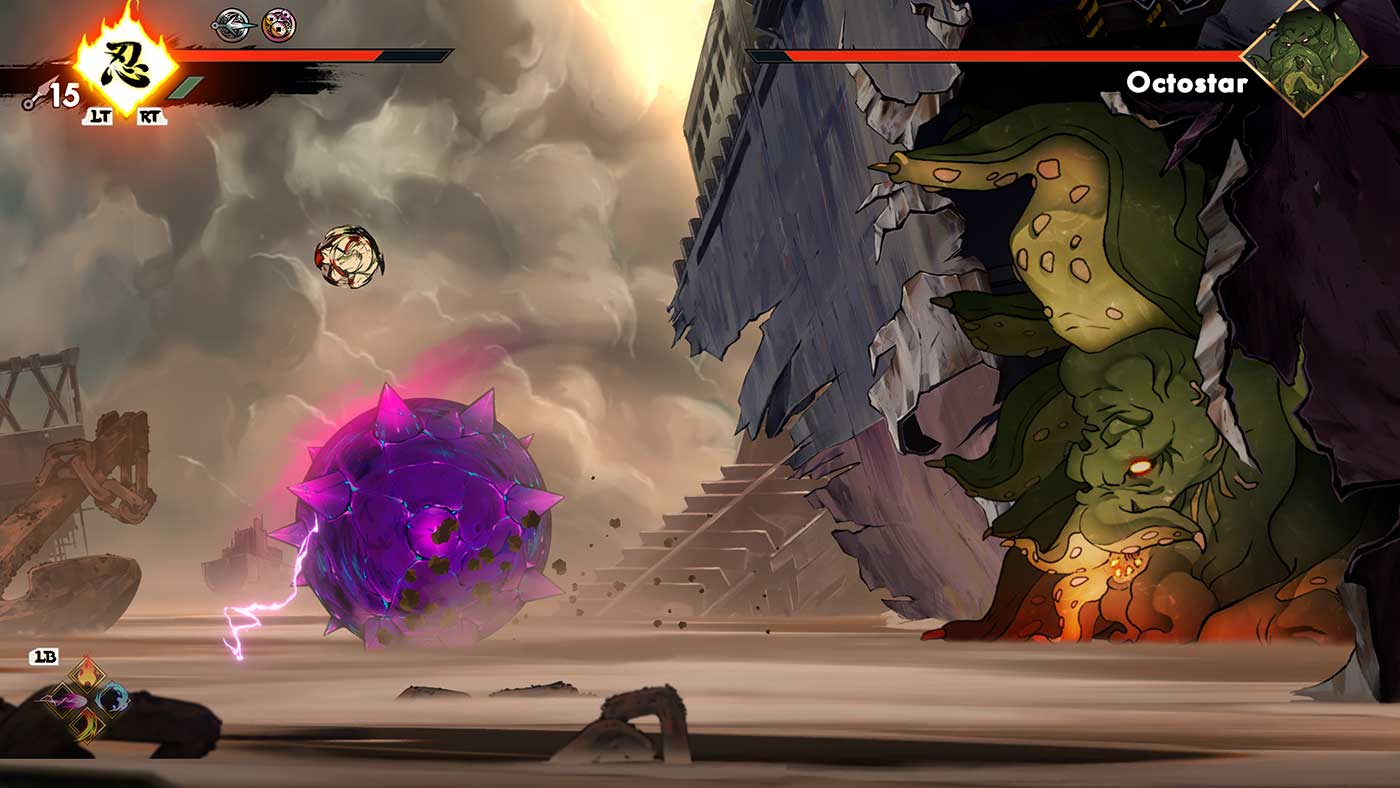
While the critical path through Shinobi is manageable, especially if you’re used to games like these, some of the optional challenges you’ll come across in Shinobi are tough. Upon completion of any level, you can revisit that level to explore, Metroid-style, using new abilities to open up new paths. Most of the levels are peppered with various collectibles and activities to complete, including Ankou Rifts, which typically took me twenty to thirty minutes to clear and represent some of the most complex challenges in the game. The balance of optional content to explore and find in Shinobi feels just right – there aren’t so many that you just can’t be bothered, but they’re scattered just regularly enough throughout each level that I never missed an opportunity to go off the beaten path to find them. In short, exploration is equal parts rewarding and inviting, thanks in part to a generous fast travel system.
The strong sense of exploration is further enhanced by the fact that the level variety keeps things interesting from start to finish. Every level in Shinobi is unique and, brought to life by the same team who brought us the Wonder Boy remake and Streets of Rage 4, you can only imagine just how strong the art direction is. It’s not just about the design of these levels that makes Shinobi such a hoot to play through; it’s the variety of objectives on offer here as you progress through each of them. I’ll admit that there isn’t much holding these drastically different levels together besides the simplistic story, but when the variety of level design here is so strong, it’s hard to be too bothered by it. Some levels even pay strong homage to the older games, including an awesome jetski level that feels ripped straight from Shinobi III.

And it’s this strong approach to pacing and knowing when to slot in a shorter level that helps keep Shinobi: Art of Vengeance fresh for the entirety of its eight to ten-hour runtime. Those looking for full completion will easily stretch this out to anywhere from fifteen to twenty hours. But it doesn’t stop there, with a boss rush mode and an arcade mode that strips the game of its story elements and ranks you at the end of each completion.
If you’ve read this far, you’ve no doubt noticed just how much of a looker Art of Vengeance is. While this Westernised art style clashes a little with a series with such strong roots in Japanese history, Shinobi: Art of Vengeance is an incredible-looking game. Joe himself, coupled with every enemy and every world, looks great and animates well. Every stage is dripping with personality, some literally. It’s all in all a great-looking game. Despite this, I wish I could say the same for the games soundtrack, which, while not bad, is just there. It’s a rather unmemorable set of tracks that do little to inspire the same levels of excitement as the electronica-heavy soundtracks of the original games did.
Whenever a long-dormant franchise returns and achieves moderate success, it is tempting to describe the game leading said return as a “return to form”. Such a statement implies that Shinobi experienced a fall from grace. While I’m quick to disagree, even I could find charm in the last game released for the 3DS over a decade ago, Shinobi: Art of Vengeance, is beyond a return to form. It’s a triumphant return. It takes everything learnt from the series so far to deliver a unique and tightly tuned experience that only gets me excited for whatever SEGA is reviving next.